

Tetramorium rhetidum
- Scientific Name
- Tetramorium rhetidum
- Tribe
- Crematogastrini
- Subfamily
- Myrmicinae
- Author
- Bolton, 1980
- Distribution
- Found in 2 countries
Tetramorium rhetidum Overview
Tetramorium rhetidum is an ant species of the genus Tetramorium. It is primarily documented in 2 countries , including Côte d'Ivoire, Tanzania, United Republic of. Detailed taxonomic data and occurrence records can be further explored via authoritative databases such as AntWeb or the Global Biodiversity Information Facility (GBIF).
Tetramorium rhetidum
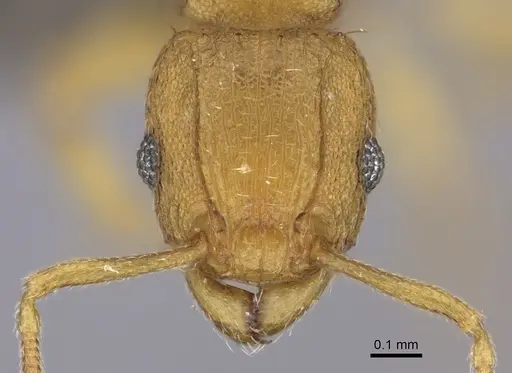
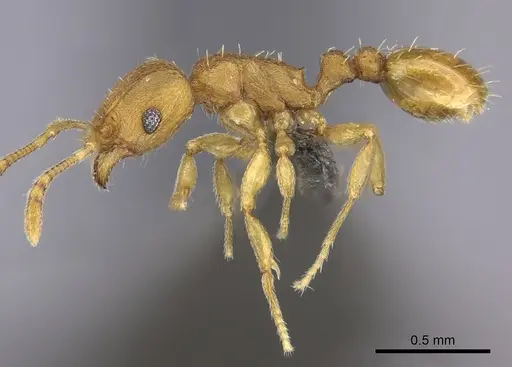
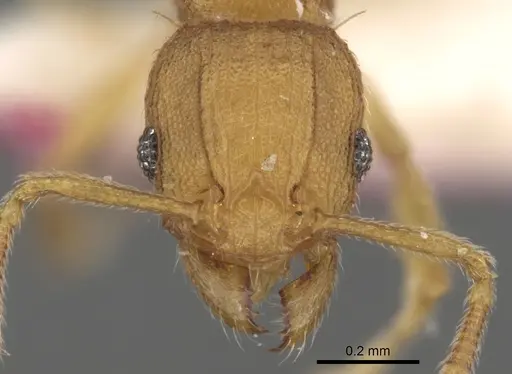
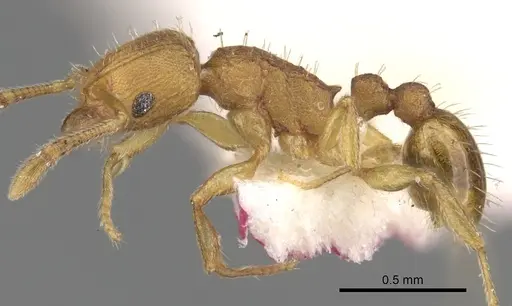
Tetramorium rhetidum is a tiny yellow ant species native to the rainforests of West and Central Africa [1]. Workers measure just 2.0-2.1mm, making them one of the smaller ant species you'll encounter in the hobby. They belong to the Tetramorium simillimum species group and can be identified by their bright yellow coloration, dense elongate hairs on the abdomen, and their distinctly ovate eyes that are drawn out into a point at the front [1].
This is a ground-nesting forest species found throughout Ghana, Cameroon, Democratic Republic of Congo, Gabon, Ivory Coast, Tanzania, and South Africa. Most specimens come from leaf litter samples, with some collected from soil and under logs [1]. Their small size and ground-nesting habits mean they prefer humid, shaded environments with plenty of organic matter. They appear in urban surveys in Côte d'Ivoire, suggesting they can tolerate some human modification to their habitat [2][3].
Quick Summary
- Difficulty: Easy
- Origin & Habitat: West and Central African rainforests, Ghana, Cameroon, DRC, Gabon, Ivory Coast, Tanzania, South Africa. Found in leaf litter, soil, and under logs in forest habitats [1].
- Colony Type: Colony structure is unconfirmed for this species. Based on typical Tetramorium patterns, likely single-queen (monogyne) colonies.
- Founding: Claustral
- Size & Growth:
- Queen: Unconfirmed, estimated 4-5mm based on genus patterns
- Worker: 2.0-2.1mm [1]
- Colony: Unknown, likely several hundred workers based on similar Tetramorium species
- Growth: Moderate
- Development: 6-10 weeks estimated based on related Tetramorium species (Development time inferred from genus-level data for similar small Myrmicinae, actual timing unconfirmed for this species)
- Antkeeping:
- Temperature: Keep at 22-26°C, they inhabit tropical rainforest zones so warmth and humidity are important [1]
- Humidity: High humidity preferred (70-80%). Keep the nest substrate consistently moist but not waterlogged. These forest floor ants need damp conditions [1]
- Diapause: Unlikely, being a tropical species, they probably do not require a true diapause. They may show reduced activity during cooler periods.
- Nesting: Y-tong (AAC) nests or plaster nests work well. Their small size means narrow chambers are appropriate. Provide a moisture source connected to the nest to maintain humidity. They prefer dark, humid nesting sites similar to their forest floor habitat [1]
- Behavior: Generally peaceful and non-aggressive. Like most Tetramorium, they are not known for stinging, Myrmicinae in the Crematogastrini tribe have reduced stingers. Workers are small but active foragers. Escape prevention is critical due to their tiny 2mm size, they can squeeze through standard test tube barriers. Use fine mesh and tight-fitting lids [1].
- Common Issues: escape prevention is critical, their tiny 2mm size means they can slip through the smallest gaps, high humidity requirements can lead to mold if ventilation is poor, slow founding phase, claustral queens may take months to raise first workers, small colony size means they are vulnerable to disturbance during early stages, wild-caught colonies may harbor parasites from their native habitat
Housing and Nest Setup
For such tiny ants, you'll want a nest with appropriately scaled chambers. Y-tong (AAC) nests work excellently because they hold humidity well and provide the dark environment these forest-floor species prefer. Plaster nests are another good option, the porous material helps maintain stable humidity. Whatever you choose, ensure the chambers are tight enough that workers can walk along walls without falling into open spaces. Connect a water reservoir to the nest setup to prevent drying out. For the outworld, a simple plastic container with a secure lid works fine, just make sure any gaps are sealed with cotton or fine mesh since these 2mm ants will find any escape route [1].
Feeding and Diet
Tetramorium rhetidum likely accepts the standard ant diet of sugar sources and protein. Offer sugar water (1:4 sugar to water ratio) or honey diluted with water as a constant sugar source. For protein, small soft-bodied insects work best given their tiny size, fruit flies, pinhead crickets, or small mealworm pieces are appropriate. Like other small Myrmicinae, they probably forage primarily on the ground surface for honeydew and small arthropods. Feed every 2-3 days, removing uneaten protein within 24 hours to prevent mold. A small shallow feeding dish helps contain spills and makes cleanup easier.
Temperature and Humidity Control
Being a tropical rainforest species from West Africa, T. rhetidum needs warm and humid conditions. Maintain temperatures between 22-26°C, this range supports normal colony activity and brood development. A small heat mat placed under one end of the nest can create a gentle temperature gradient, allowing ants to self-regulate. Humidity is more critical than temperature, aim for 70-80% relative humidity within the nest. Use a moisture reservoir connected to the nest or regularly check that the substrate stays damp. Avoid placing the nest near air conditioning or heating vents that could cause rapid drying. A digital thermometer-hygrometer combo helps you monitor conditions accurately. [1]
Colony Founding and Early Development
Queens likely follow the typical Tetramorium claustral founding pattern, they seal themselves into a small chamber and survive entirely on stored fat reserves until their first workers emerge. This means you should place your founding queen in a small test tube setup with a water reservoir, then leave her completely alone for 4-8 weeks. Do not disturb, feed, or check on her during this time, opening the tube can kill the colony. Once the first nanitic workers emerge (they'll be smaller than normal workers), you can begin offering tiny amounts of sugar water and small protein items. Growth is slow initially, a colony may take 6-12 months to reach 50 workers. Patience is key with small species like this.
Handling and Observation
These tiny yellow ants are not aggressive and pose no threat to keepers. However, their small size makes them challenging to observe in detail. Use a magnifying glass or macro lens if you want to appreciate their identification features, the dense abdominal hairs and ovate eyes are distinctive. When cleaning the outworld or moving nest components, work slowly and gently. Avoid blowing on the ants or making sudden movements, as this can stress colonies. Unlike larger ants, they won't defend the nest aggressively, so handling risk is low. Their small size also means they dry out quickly if exposed to open air, keep handling sessions brief and return them to their humid setup promptly. [1]
Frequently Asked Questions
How long does it take for Tetramorium rhetidum to raise first workers?
Expect 6-10 weeks from egg to first worker under optimal conditions (24-26°C, high humidity). This is typical for small Myrmicinae. The claustral queen will seal herself in and you may not see any activity for 2-3 months, this is normal. First workers (nanitics) will be smaller than mature workers.
What do Tetramorium rhetidum ants eat?
They accept standard ant foods, sugar water or honey for carbohydrates, and small soft-bodied insects for protein. Fruit flies, small mealworm pieces, and similar tiny prey items work well. Remove uneaten protein within 24 hours to prevent mold.
Can I keep Tetramorium rhetidum in a test tube?
Yes, test tubes work well for founding colonies and small colonies up to 50-100 workers. Use a standard test tube setup with a water reservoir and cotton plug. Ensure the tube is kept humid and in darkness. You'll need to move them to a larger formicarium once the colony grows beyond what the test tube can comfortably hold.
Do Tetramorium rhetidum ants sting?
No, this species is not known for stinging. As a member of Myrmicinae in the Crematogastrini tribe, they have a reduced stinger and are not aggressive toward keepers. They are completely safe to handle with basic precautions.
Are Tetramorium rhetidum good for beginners?
Yes, they are considered easy to keep due to their straightforward care requirements. They don't need special diets, don't sting, and tolerate typical room conditions once you provide adequate humidity and warmth. The main challenge is their tiny size requiring good escape prevention.
How big do Tetramorium rhetidum colonies get?
Colony size is not well documented, but based on similar Tetramorium species, expect colonies of several hundred workers at maturity. Growth is moderate, it may take 1-2 years to reach 100+ workers under good conditions.
Do Tetramorium rhetidum need hibernation?
No, being a tropical African species, they do not require hibernation. They may show reduced activity during cooler periods, but a true diapause is not necessary. Simply maintain normal warm, humid conditions year-round.
Why are my Tetramorium rhetidum escaping?
Their tiny 2mm size means they can escape through gaps you might not notice. Use fine mesh (at least 0.5mm), seal all lid edges with cotton or tape, and avoid using standard barriers that work for larger ants. Check for gaps around any tubing connections and ensure your outworld lid fits tightly.
When should I move my colony to a formicarium?
Move from a test tube to a formicarium when the colony reaches 50-100 workers or when the test tube's water reservoir runs dry frequently. A Y-tong or plaster nest works well for small Tetramorium species. Make the transition gradually by connecting the formicarium to the test tube and allowing workers to explore before moving the queen.
What temperature range is best for Tetramorium rhetidum?
Keep them at 22-26°C. Being from tropical African rainforests, they prefer warmth. A temperature gradient allowing them to choose their preferred spot is ideal, place a small heat mat under one end of the nest set to low.
Can I keep multiple Tetramorium rhetidum queens together?
Colony structure is unconfirmed for this species, but combining unrelated queens is not recommended. Most Tetramorium species establish single-queen colonies. If you have multiple founding queens, house them separately to avoid conflict.
Is Tetramorium rhetidum invasive anywhere?
No, this species is native to West and Central Africa and has not been documented as invasive elsewhere. However, always check local regulations before keeping any ant species and never release colonies into non-native environments.
References

This caresheet is licensed under CC BY-SA 4.0 .
CASENT0235779
View on AntWeb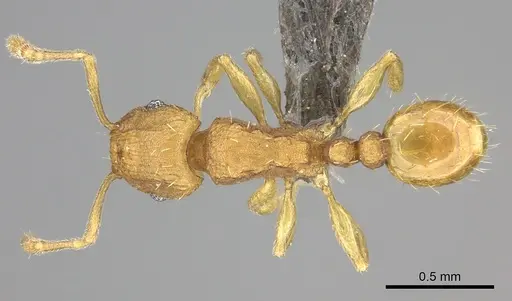
CASENT0280867
View on AntWeb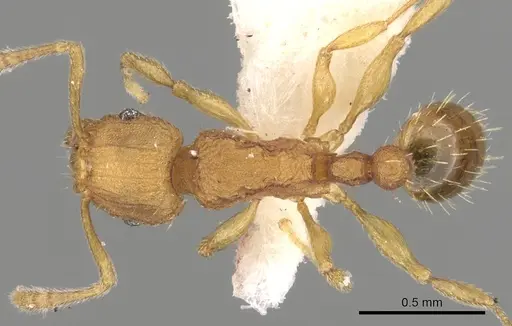
Literature
Loading...Loading products...