

Tetramorium raptor
- Scientific Name
- Tetramorium raptor
- Tribe
- Crematogastrini
- Subfamily
- Myrmicinae
- Author
- Hita Garcia, 2014
- Distribution
- Found in 1 countries
Tetramorium raptor Overview
Tetramorium raptor is an ant species of the genus Tetramorium. It is primarily documented in 1 countries , including Cameroon. Detailed taxonomic data and occurrence records can be further explored via authoritative databases such as AntWeb or the Global Biodiversity Information Facility (GBIF).
Tetramorium raptor
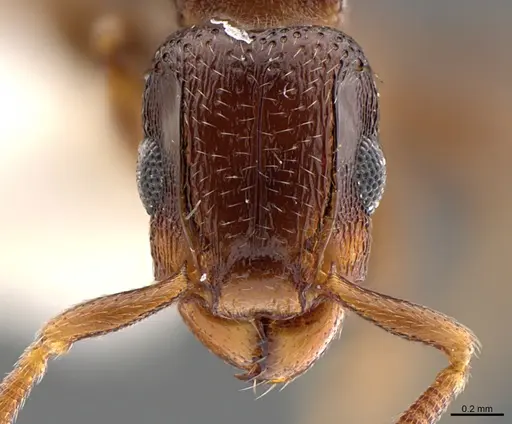
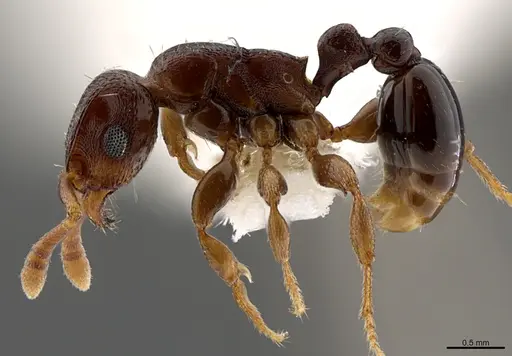
Tetramorium raptor is a tiny rainforest ant native to West Africa (Cameroon, Nigeria, Benin). Workers measure just 2.5-3mm in body length, making them one of the smaller Tetramorium species. They have a uniformly dark brown to black body with lighter brown legs and antennae, large eyes for spotting prey, and short propodeal teeth. The species name 'raptor' means 'thief' or 'robber' in Latin, referring to their predaceous lifestyle, these ants are active termite hunters that hunt in single file through leaf litter [1][2].
What makes T. raptor special is their specialized predatory behavior. Unlike many ants that supplement their diet with honeydew and seeds, these ants are dedicated predators that primarily hunt termites and other small invertebrates in the rainforest floor. They nest in small cavities within rotting logs or twigs in leaf litter, and their well-developed antennal scrobes (grooves) help protect their antennae while foraging through tight spaces [1][2].
Quick Summary
- Difficulty: Medium
- Origin & Habitat: Rainforest leaf litter in West Africa (Cameroon, Nigeria, Benin). Found in rotten logs, twigs, and among decaying vegetation on the forest floor [1][2].
- Colony Type: Single-queen colonies (monogyne). The species is only known from worker castes, queen caste has not been described [1].
- Colony: Monogyne
- Founding: Claustral
- Size & Growth:
- Queen: Undescribed, queen measurements not available in scientific literature [1]
- Worker: 2.5-3mm (WL 0.88-0.93mm) [1]
- Colony: Unknown, likely small colonies typical of litter-dwelling Tetramorium species
- Growth: Unknown, likely moderate based on typical Tetramorium patterns
- Development: 6-10 weeks (estimated based on related Tetramorium species and tropical litter ant development) (Development time is estimated, no specific studies on T. raptor development exist. Tropical litter ants typically develop faster than temperate species due to year-round warm conditions.)
- Antkeeping:
- Temperature: Keep at 24-28°C, these are tropical rainforest ants that need warm, stable conditions. A heating cable on one side of the nest creates a suitable gradient [1].
- Humidity: High humidity required, think damp rainforest floor. Keep the nest substrate consistently moist but not waterlogged. These ants live in leaf litter that stays damp but has good air flow [1][2].
- Diapause: No, as a tropical species from West Africa, they do not require hibernation. Keep them at warm temperatures year-round [1].
- Nesting: Small chambers scaled to their tiny size work best. Y-tong (AAC) nests with narrow passages or small test tube setups with moist substrate mimic their natural rotting wood habitat. Avoid large, open spaces, they prefer tight, enclosed chambers [1].
- Behavior: These ants are active predators that hunt termites and other small invertebrates. They forage in single file through leaf litter, using their large eyes to spot prey. Workers are small but determined, with short propodeal teeth that may be used in prey handling. They are not aggressive toward humans and rarely sting. Escape prevention is critical due to their very small size, they can squeeze through standard mesh barriers [1][2].
- Common Issues: escape prevention is critical, their tiny size means they can slip through standard mesh barriers without fine mesh (0.3mm or smaller), predatory diet means they need live prey, sugar water alone will not sustain them, high humidity requirements can lead to mold if ventilation is poor, small colony size means slower population growth, beginners may lose patience, wild-caught colonies may carry parasites that can devastate captive populations
Housing and Nest Setup
Tetramorium raptor is a tiny ant that needs appropriately scaled housing. Y-tong (AAC) nests with narrow chambers or small test tube setups work well. The nest should have small, tight chambers that match their natural nesting in rotting twigs and logs. Keep the nest substrate consistently moist, these rainforest ants need damp conditions, but ensure some dry areas exist so ants can self-regulate. A water reservoir connected to the nest helps maintain humidity. Because of their tiny size, use fine mesh (0.3mm or smaller) on all ventilation holes and escape barriers. A small outworld with a foraging area allows them to hunt prey [1][2].
Feeding and Diet
These ants are dedicated predators that need live prey to thrive. Their primary food source in the wild is termites, which they hunt individually or in small groups through leaf litter. In captivity, offer small live prey like fruit flies, pinhead crickets, and especially termites (if available). They will likely accept other small arthropods like springtails and micro-arthropods. Sugar sources may be accepted occasionally but should not be relied upon as a primary food, their metabolism is tuned for protein-rich diets. Feed small prey items every 2-3 days, adjusting based on colony size and consumption rate [1][2].
Temperature and Humidity
As a West African rainforest species, T. raptor needs warm and humid conditions. Maintain temperatures between 24-28°C year-round, they do not tolerate cool conditions well. A heating cable on one side of the nest creates a temperature gradient while preventing the entire nest from drying out. Humidity should be high (70-85%) to mimic the damp rainforest floor. Use a water reservoir or moisture wicking to maintain substrate dampness. Good ventilation is essential to prevent mold while maintaining humidity, avoid stagnant air but also avoid excessive airflow that dries the nest [1][2].
Behavior and Foraging
Workers forage in single file through leaf litter, searching for termites and other small invertebrates. Their large eyes help them spot prey in the dim understory of the rainforest. They are active hunters rather than scavengers, and will chase down small prey. Workers have short propodeal teeth that may assist in handling prey. Colonies are likely small and decentralized, with workers moving freely between nest chambers and foraging areas. They are not particularly aggressive and rarely sting, their defense is primarily avoiding confrontation through their cryptic, litter-dwelling lifestyle [1][2].
Colony Establishment
Since only workers have been described scientifically, colony establishment details are inferred from related species. Queens likely perform claustral founding, sealing themselves in a small chamber and raising the first brood alone on stored fat reserves. The first workers (nanitics) will be smaller than mature workers and will begin foraging once the colony grows. Growth rate is moderate but colonies remain small compared to many Tetramorium species. Founding queens have not been observed in captivity, so specific recommendations for colony founding are based on typical Myrmicinae patterns [1].
Frequently Asked Questions
Can I keep Tetramorium raptor in a test tube?
Yes, test tubes work well for founding colonies. Use a small test tube with a water reservoir and keep it humidified. The tiny size of these ants means you should use a narrow-bore test tube or modify it to create a tight fit. Transfer to a small formicarium or Y-tong nest once the colony reaches 20-30 workers [1].
What do Tetramorium raptor ants eat?
They are predators that need live prey. Their primary food in the wild is termites, so offer small live insects like fruit flies, pinhead crickets, and termites. They will also accept other small arthropods. Sugar water may be occasionally accepted but should not be their main food source [1][2].
How long does it take for Tetramorium raptor to raise first workers?
Estimated 6-10 weeks from egg to first worker based on related Tetramorium species and tropical litter ant development patterns. No specific studies exist on this species' development timeline. The first workers (nanitics) will be smaller than fully grown workers [1].
Do Tetramorium raptor ants sting?
They have short propodeal teeth but are not known for stinging. These tiny ants are not aggressive toward humans and rarely pose any threat. Their small size and cryptic lifestyle mean they avoid confrontation [1].
Are Tetramorium raptor ants good for beginners?
They are rated as medium difficulty. While small and interesting, their predatory diet and high humidity needs make them more challenging than seed-eating or omnivorous species. Beginners should have experience with small tropical ants before attempting this species [1].
Do Tetramorium raptor ants need hibernation?
No, as a West African rainforest species, they do not hibernate. Keep them warm (24-28°C) year-round. Cool temperatures can slow their metabolism and may harm the colony [1].
How big do Tetramorium raptor colonies get?
Colony size is unknown but likely remains small, probably under 500 workers. This is typical for litter-dwelling Tetramorium species that live in small cavities in rotting wood. They do not form large supercolonies [1].
Why are my Tetramorium raptor ants dying?
Common causes include: too low temperature (keep above 24°C), too dry conditions (maintain humidity), lack of live prey (they need protein), or escape through fine gaps (use 0.3mm mesh). Wild-caught colonies may also carry parasites that can kill captive populations [1][2].
When should I move Tetramorium raptor to a formicarium?
Move them when the test tube becomes crowded or the water reservoir needs frequent refilling. For this small species, a small Y-tong nest or naturalistic setup with small chambers works best. Ensure the formicarium maintains high humidity [1].
Can I keep multiple Tetramorium raptor queens together?
Not recommended. This species appears to be monogyne (single queen) in the wild. Combining unrelated queens has not been documented and would likely result in fighting. Stick to single-queen colonies [1].
References

This caresheet is licensed under CC BY-SA 4.0 .
CASENT0195628
View on AntWeb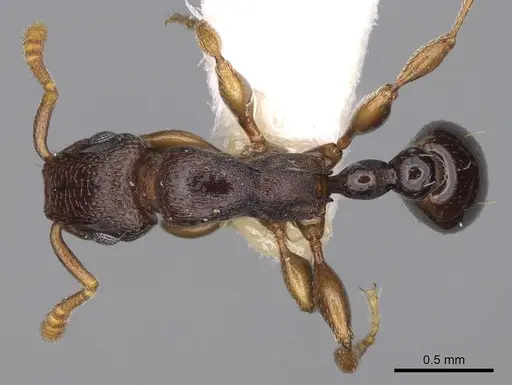
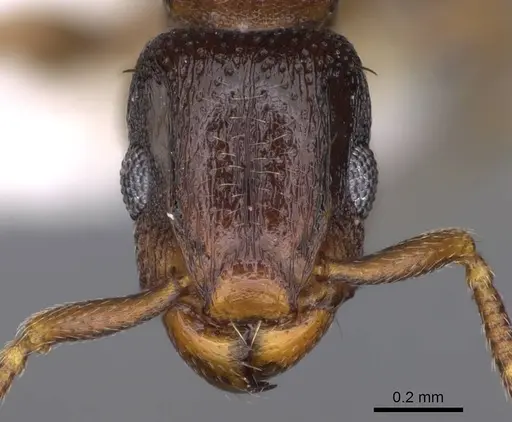
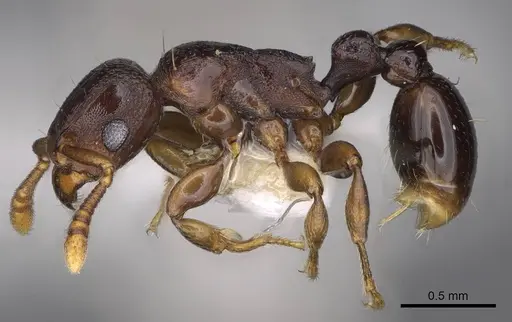
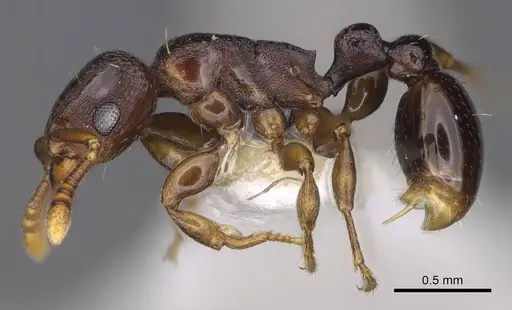
CASENT0195634
View on AntWeb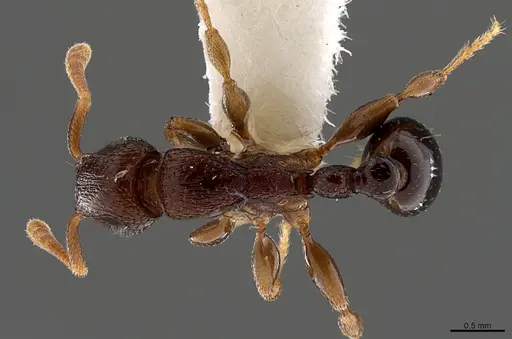
Literature
Loading...Loading products...