

Tetramorium pulchellum
- Scientific Name
- Tetramorium pulchellum
- Tribe
- Crematogastrini
- Subfamily
- Myrmicinae
- Author
- Emery, 1897
- Distribution
- Found in 1 countries
Tetramorium pulchellum Overview
Tetramorium pulchellum is an ant species of the genus Tetramorium. It is primarily documented in 1 countries , including Papua New Guinea. Detailed taxonomic data and occurrence records can be further explored via authoritative databases such as AntWeb or the Global Biodiversity Information Facility (GBIF).
Tetramorium pulchellum
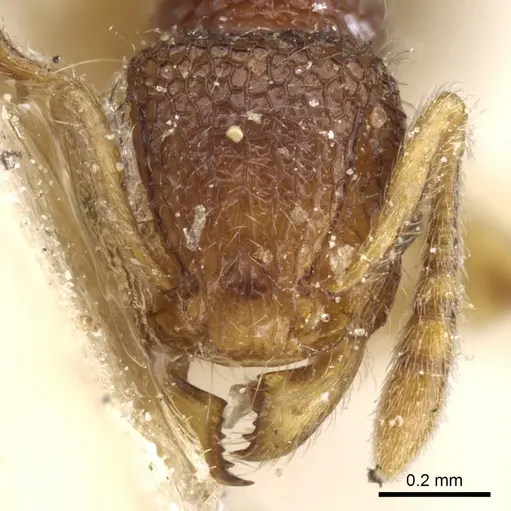
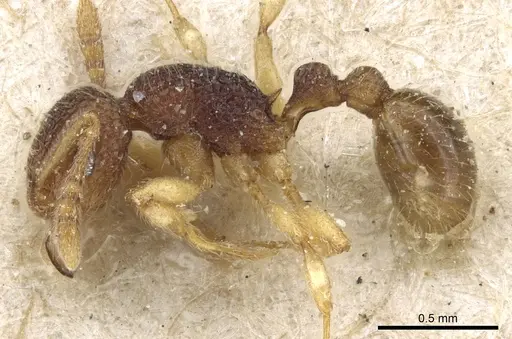
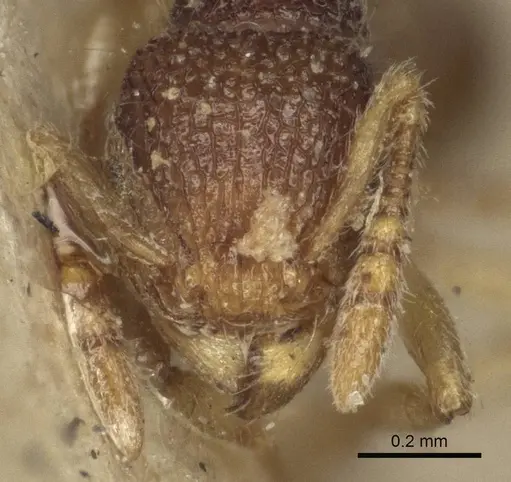
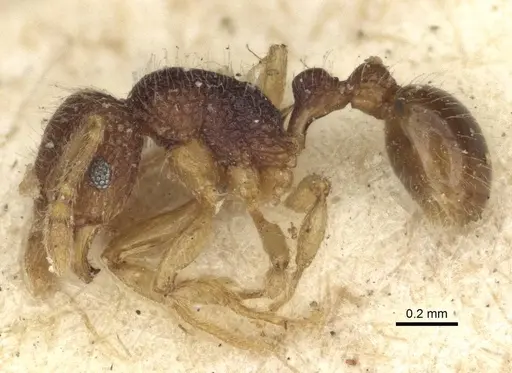
Tetramorium pulchellum is a tiny rainforest ant native to New Guinea and Singapore, measuring just 2.8-3.0mm in worker length. Workers are uniformly brown with yellowish legs and have a distinctive coarse reticulate-rugulose sculpture on their head, a key identifying feature of this species within the Tetramorium scabrosum group. The pronotal corners are broadly rounded, distinguishing them from the closely related T. scabrosum which has angular corners. This species belongs to the Myrmicinae subfamily and is found in rainforest and montane forest leaf litter samples [1].
These ants inhabit the forest floor layer in tropical rainforests, with nest abundance peaking at mid-elevations around 900m based on field surveys [2]. They are part of a genus known for creating small colonies in confined spaces, and their tiny size means they require excellent escape prevention in captivity.
Quick Summary
- Difficulty: Medium
- Origin & Habitat: Native to New Guinea (Australasian region) and Singapore (Indomalayan region). Found in rainforest and montane forest leaf litter [1]. Field surveys show peak nest abundance at approximately 900m elevation [2].
- Colony Type: Colony structure is not well documented. Based on typical Tetramorium patterns, colonies likely have a single queen (monogyne) with moderate worker counts.
- Colony: Monogyne
- Founding: Claustral
- Size & Growth:
- Queen: Unconfirmed, estimated 5-7mm based on genus patterns
- Worker: 2.8-3.0mm
- Colony: Likely under 500 workers based on typical Tetramorium colony sizes
- Growth: Moderate
- Development: Estimated 6-8 weeks at optimal temperature based on related Tetramorium species (Development time is estimated from genus-level data since species-specific timing is unconfirmed)
- Antkeeping:
- Temperature: Keep at 22-26°C, this range reflects their tropical rainforest origin and aligns with elevation data showing peak abundance at mid-elevations where temperatures are moderate [2]. Avoid temperatures above 30°C.
- Humidity: High humidity is essential, aim for 70-85% relative humidity. These ants live in rainforest leaf litter where conditions stay consistently moist. Provide a moist substrate but ensure some drier areas exist for the ants to self-regulate.
- Diapause: Unlikely required, as a tropical species, they probably do not need a true hibernation period. However, a slight cooling period during winter months may be beneficial if room temperatures drop significantly.
- Nesting: Prefers tight, humid spaces typical of forest floor ants. A Y-tong (AAC) nest or moist plaster nest works well. They do well in naturalistic setups with damp soil and leaf litter. Keep the nest substrate consistently moist but not waterlogged.
- Behavior: Workers are small and active, foraging through leaf litter and soil. They are not particularly aggressive but will defend their nest if threatened. Their tiny size makes them excellent escape artists, fine mesh barriers (at least 0.5mm) are essential. They likely form moderate-sized colonies and may show territorial behavior around their nest entrance. Foraging occurs primarily in the substrate and along surfaces.
- Common Issues: escape prevention is critical due to their very small 2.8-3.0mm size, they can squeeze through standard test tube cotton, high humidity requirements can lead to mold issues if ventilation is poor, tropical species may struggle if temperatures drop below 20°C, small colony size means they are vulnerable to disturbance, handle gently during transfers, wild-caught colonies may contain parasites that can devastate captive colonies
Housing and Nest Setup
For such a tiny ant, you'll need to think small. A Y-tong (AAC) nest with narrow chambers works well, or you could use a moist plaster nest. The key is providing tight-fitting chambers that match their litter-dwelling lifestyle, these ants naturally live in confined spaces within forest floor debris. Test tubes can work for founding colonies but require excellent escape prevention due to their small size. A naturalistic setup with damp soil, small stones, and leaf litter mimics their natural environment and helps them feel secure. Whatever nest type you choose, ensure it maintains high humidity without becoming waterlogged. Place the nest in a darkened area as these forest floor ants prefer dim conditions. [2][1]
Temperature and Humidity
Keep your colony at 22-26°C, this reflects their origin from tropical rainforests at moderate elevations. The elevation data showing peak nest abundance at around 900m suggests they prefer stable, moderate temperatures rather than hot conditions [2]. Avoid placing the nest near direct heat sources or in areas that experience temperature swings. Humidity is critical: aim for 70-85% relative humidity. The nest substrate should feel consistently damp but never soggy. You can achieve this by using a water reservoir connected to the nest or by misting the outworld regularly. However, balance humidity with adequate ventilation to prevent mold growth, which can quickly kill small colonies.
Feeding and Diet
Like most Tetramorium species, T. pulchellum is likely omnivorous, feeding on small insects, honeydew, and other sweet substances. Offer small protein sources appropriate to their tiny size, fruit flies, pinhead crickets, or small mealworms work well. They will likely accept sugar water or honey as an energy source. Feed small amounts every 2-3 days and remove any uneaten prey to prevent mold. Since they are small foragers, they probably prefer multiple small feeding events rather than large meals. Always ensure fresh water is available, either through a moist cotton ball or a small water tube. [1]
Colony Establishment
When you acquire a founding queen, place her in a small test tube setup with a water reservoir. She will likely seal herself into a chamber and begin laying eggs, this is claustral founding behavior typical of the genus. Do not disturb her during this period. The first workers (nanitics) will be smaller than mature workers and may take 6-8 weeks to emerge, depending on temperature. Once workers emerge, you can begin offering small food items in the outworld. Wait until the colony grows to at least 10-15 workers before considering a transfer to a larger nest. Be very careful during any transfer, these tiny ants are easily crushed and can escape through the smallest gaps. [1]
Escape Prevention
This is absolutely critical for T. pulchellum. At just 2.8-3.0mm, workers can squeeze through gaps that seem impossible. Use fine mesh (at least 0.5mm) on all ventilation holes. Ensure all connections between the nest and outworld are tight-fitting. Apply fluon or similar barriers to the rim of the outworld. Even with these precautions, check regularly for escapes. If you notice workers outside the setup, investigate immediately, small ants can establish satellite colonies quickly if given the chance. [1]
Frequently Asked Questions
How long does it take for Tetramorium pulchellum to produce first workers?
Expect 6-8 weeks from egg to first worker at optimal temperature (22-26°C). This is an estimate based on related Tetramorium species since species-specific development timing is unconfirmed. The first workers will be smaller (nanitics) and may take additional time to develop into full-sized workers.
Do Tetramorium pulchellum ants need hibernation?
No, hibernation is not required. As a tropical species from New Guinea and Singapore rainforests, they do not experience cold winters that would trigger diapause. However, if room temperatures drop significantly in winter, a slight reduction to around 18-20°C may be appropriate but is not mandatory.
Can I keep multiple Tetramorium pulchellum queens together?
Not recommended. While colony structure is not well documented for this species, combining unrelated queens typically leads to fighting. If you acquire multiple founding queens, house them separately. If you find a queen with workers already present, assume she is the sole reproductive and keep her alone.
What do Tetramorium pulchellum ants eat?
They are omnivorous. Offer small live prey like fruit flies or tiny crickets for protein, and sugar water or honey for carbohydrates. They will likely also scavenge on small organic matter. Feed small amounts every 2-3 days and remove uneaten food promptly.
Are Tetramorium pulchellum ants aggressive?
They are not particularly aggressive toward humans but will defend their nest if threatened. Workers are small and while they may bite, the effect is minimal. Their main defense is staying hidden in their nest chambers rather than engaging in open aggression.
How big do Tetramorium pulchellum colonies get?
Based on typical Tetramorium patterns, colonies likely reach several hundred workers at maximum. This is not a large species, workers are only 2.8-3.0mm. Expect slow to moderate growth from a founding colony.
Why are my Tetramorium pulchellum ants dying?
Common causes include: temperature stress (too hot above 30°C or too cold below 18°C), humidity issues (too dry or too wet leading to mold), escape-related losses, or parasites from wild-caught colonies. Check your setup parameters first. Also ensure you are not overfeeding, uneaten prey creates mold that can be deadly.
What size formicarium is best for Tetramorium pulchellum?
A Y-tong (AAC) nest with narrow chambers or a moist plaster nest works best. The chambers should be appropriately scaled to their tiny 2.8-3.0mm size. Avoid large, open spaces that would make them feel exposed. A naturalistic setup with damp soil also works well.
Do Tetramorium pulchellum ants sting?
They may bite if handled roughly, but they are not known for stinging. As Myrmicinae, they have a stinger but it is rarely used defensively by this small species.
Is Tetramorium pulchellum a good species for beginners?
This is a moderate difficulty species. While not the hardest, their small size and high humidity requirements make them less forgiving than larger, more adaptable species. They are better suited for keepers who already have some experience with tropical ants and understand the importance of escape prevention.
References

This caresheet is licensed under CC BY-SA 4.0 .
CASENT0280894
View on AntWeb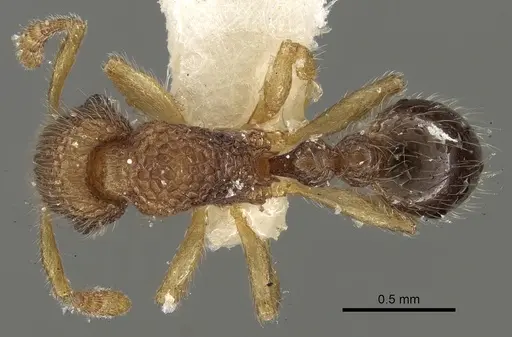
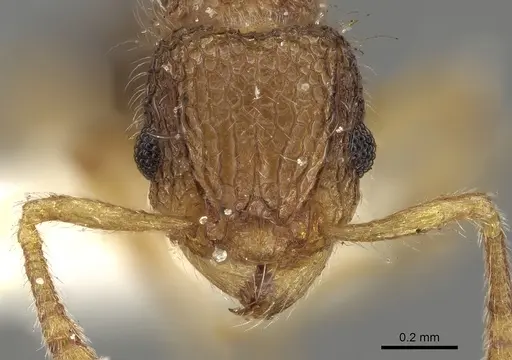
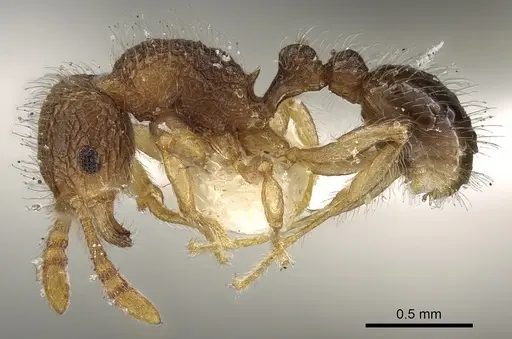
CASENT0435179
View on AntWeb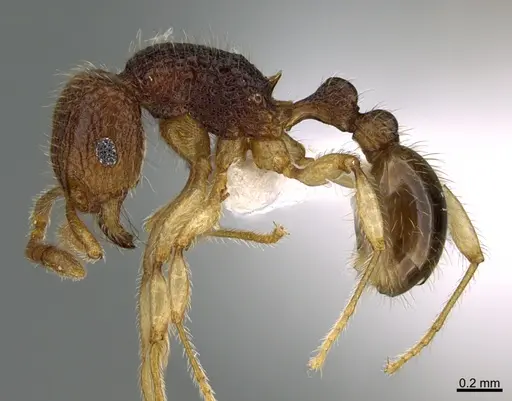
CASENT0904856
View on AntWeb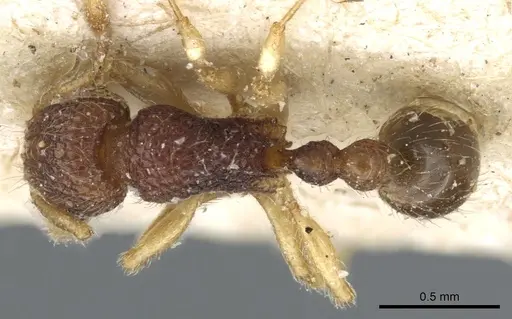
CASENT0916592
View on AntWeb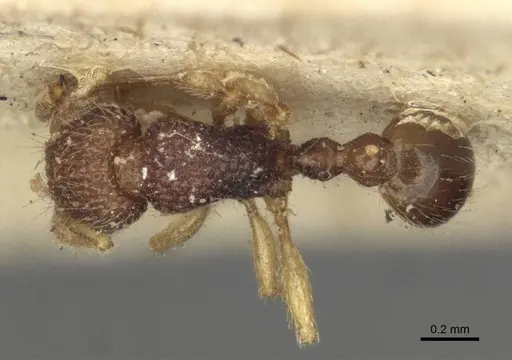
Literature
Loading...Loading products...