

Tetramorium pogonion
- Scientific Name
- Tetramorium pogonion
- Tribe
- Crematogastrini
- Subfamily
- Myrmicinae
- Author
- Bolton, 1980
- Distribution
- Found in 1 countries
Tetramorium pogonion Overview
Tetramorium pogonion is an ant species of the genus Tetramorium. It is primarily documented in 1 countries , including Namibia. Detailed taxonomic data and occurrence records can be further explored via authoritative databases such as AntWeb or the Global Biodiversity Information Facility (GBIF).
Tetramorium pogonion
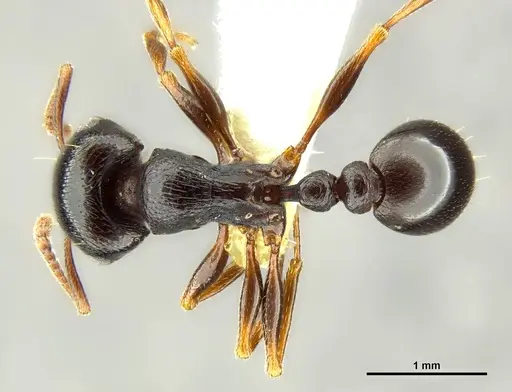
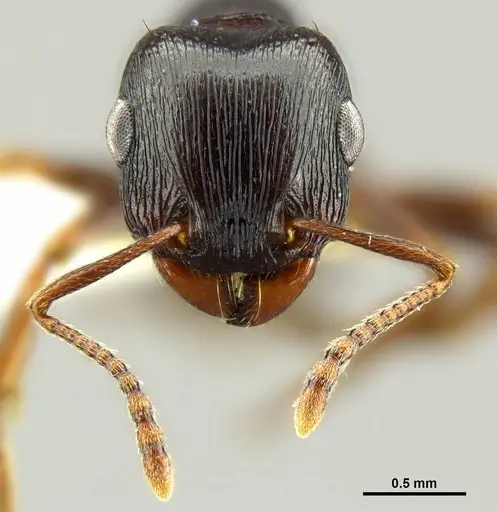
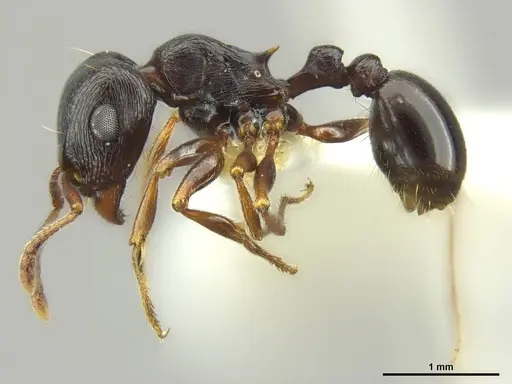
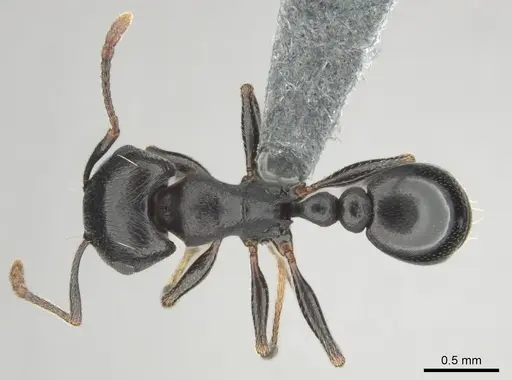
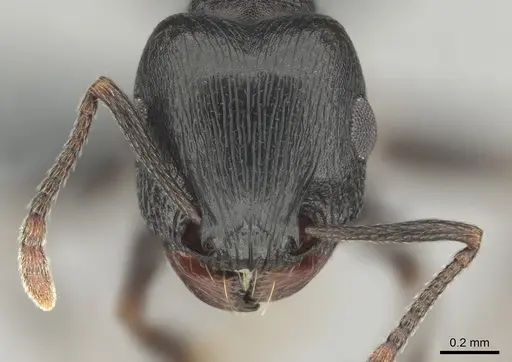
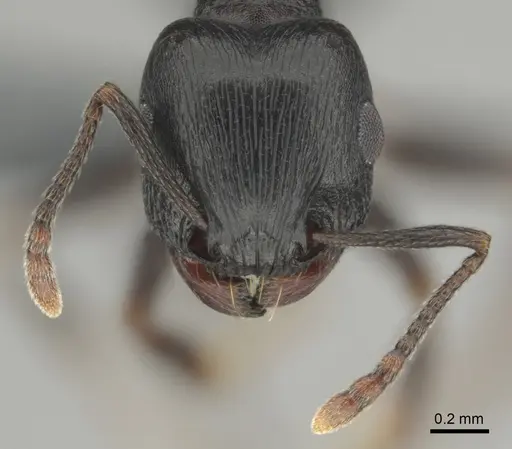
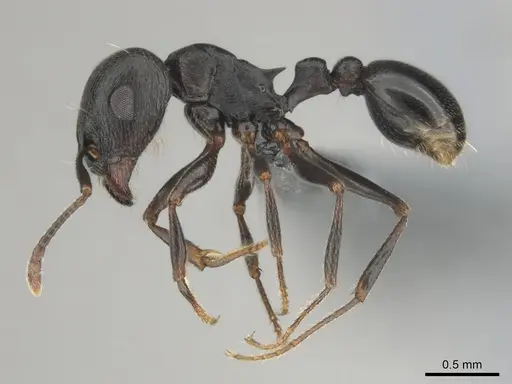
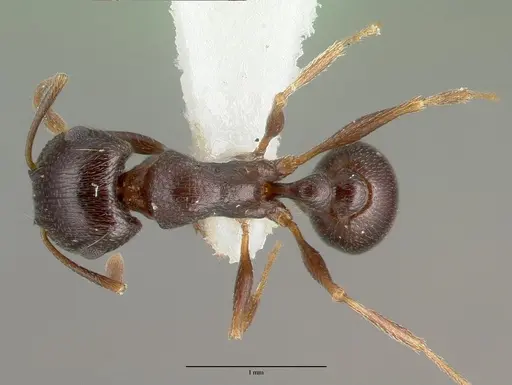
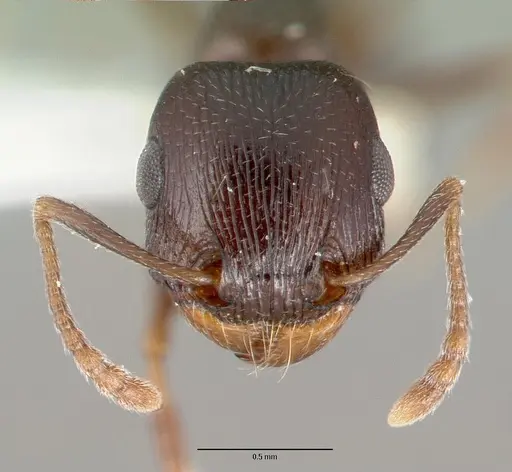
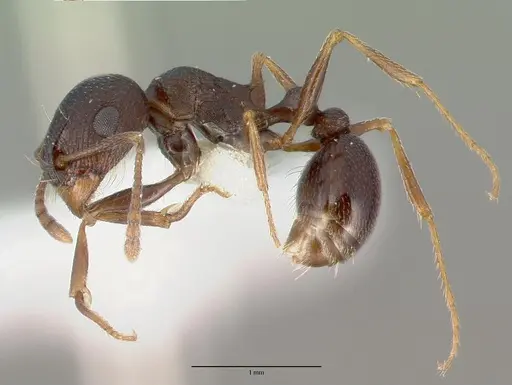
Tetramorium pogonion is a small, dark brown seed-harvesting ant native to the arid regions of Namibia and South Africa. Workers measure just 3.8-4.1mm, making them one of the smaller Tetramorium species in the solidum group [1][2]. This species is easily identified by its head being broader in front of the eyes than behind, a unique trait among its relatives [1]. They have relatively large eyes and a specialized psammophore (a basket of hairs under the head) that helps them move sand particles while foraging [1].
This ant inhabits the harsh Namib Desert and surrounding savannah woodlands, where it survives in extremely dry conditions [1][3]. A 2019 survey found them across five different habitat types in the Richtersveld, from alluvial terrace gravels to aeolian sands, showing remarkable adaptability to arid environments [3]. As seed harvesters, they collect and store seeds as their primary food source, a behavior common to the solidum group.
Quick Summary
- Difficulty: Medium
- Origin & Habitat: Namib Desert and Namib Savannah Woodlands in Namibia and South Africa. Found in arid habitats including desert, savannah woodland, and areas adjacent to rivers [1][3].
- Colony Type: Colony structure is unconfirmed. As a Tetramorium species, they are likely single-queen colonies (monogyne), but this has not been directly studied.
- Size & Growth:
- Queen:{.size-link} Queens have been collected but exact measurements are not readily available in the provided data. Based on related Tetramorium species, queens are likely 6-8mm.
- Worker:{.size-link} 3.8-4.1mm [1][2]
- Colony: Colony size is unconfirmed. Based on the 2019 survey capturing 113 specimens in 22 traps, colonies appear to maintain moderate populations [3].
- Growth: Growth rate is unconfirmed. As a small seed-harvester, expect moderate growth.
- Development: Estimated 6-8 weeks based on typical Tetramorium development patterns. (Development timeline has not been directly studied for this species. Estimates based on genus-level data.)
- Antkeeping:
- Temperature: Keep at 22-26°C. This species comes from the warm Namib Desert, so they tolerate higher temperatures well. A gentle gradient with a heating cable on one side of the nest works well.
- Humidity: Keep relatively dry, aim for 40-60% humidity. This is an arid-adapted species that naturally inhabits desert environments. The nest substrate should be lightly moist but never waterlogged, with dry areas available.
- Diapause: Unconfirmed. Based on their Namib Desert origin, they may not require a strong diapause. Some winter slowdown around 15-18°C may be beneficial but is not mandatory.
- Nesting: This species naturally nests in soil and under stones in arid ground. A Y-tong (AAC) nest or naturalistic setup with dry substrate works well. Avoid overly humid conditions. Test tubes can work for founding colonies but monitor for mold.
- Behavior: Seed-harvesting ants that collect and store seeds. They are generally peaceful and not aggressive toward keepers. Workers are small (under 5mm) so escape prevention should be moderate, they can fit through small gaps but are not among the tiniest ants. They are diurnal foragers, active during the cooler parts of the day in their natural habitat.
- Common Issues: dry conditions can kill founding colonies, monitor initial setup closely, mold is a major risk if substrate stays too moist, small size means they can slip through standard test tube barriers if not careful, seeds may sprout in the nest if not properly dried or stored, wild-caught colonies may have parasites that affect survival in captivity
Housing and Nest Setup
Tetramorium pogonion is an arid-adapted species that prefers dry conditions. For founding colonies, a small test tube setup works well, use a standard test tube with a cotton plug creating a water reservoir at one end. Keep the water section small to prevent flooding and monitor for mold growth.
For established colonies, a Y-tong (AAC) nest works excellently because it allows you to control humidity precisely. These ants prefer dry nests, so avoid setups that trap moisture. A naturalistic terrarium with a sandy substrate can also work well, mimicking their natural Namib Desert habitat. Ensure the outworld (foraging area) is clearly separated from the nest chamber.
Escape prevention should be moderate, these ants are small (under 5mm) but not tiny enough to require fine mesh barriers. Standard fluon barriers on smooth surfaces should suffice. [1][3]
Feeding and Diet
As a seed-harvesting species, T. pogonion collects and stores seeds as their primary food source. In captivity, you can offer a variety of small seeds, millet, sesame, and grass seeds are all readily accepted. Dry the seeds thoroughly before offering to prevent sprouting in the nest.
While primarily seed-eating, they will also accept small protein sources. Offer small insects like fruit flies, pinhead crickets, or mealworms occasionally. Sugar water or honey can be offered but is not a natural part of their diet, some keepers report mixed success with sugar sources.
Feed seeds continuously (refill when consumed) and offer protein 2-3 times per week. Remove any uneaten seeds or prey after 48 hours to prevent mold. [3]
Temperature and Seasonal Care
This species comes from the hot Namib Desert, so they tolerate warm conditions well. Keep the nest area at 22-26°C for optimal activity and brood development. A heating cable on one side of the nest creates a gentle temperature gradient that ants can choose from.
They can tolerate temperatures into the low 30s°C for short periods, but avoid prolonged exposure to extreme heat. Room temperature (around 20-24°C) is generally suitable for this species.
Diapause requirements are unclear. Based on their desert origin, they likely do not require a true hibernation. Some keepers report reduced activity in winter months, which can be simulated by lowering temperatures to 15-18°C for 2-3 months if desired, but this is not strictly necessary. [1]
Colony Founding
Colony founding behavior has not been directly documented for this species. Based on typical Tetramorium patterns, the queen likely seals herself in a small chamber (claustral founding) and raises the first workers alone using stored fat reserves.
When founding a colony, provide a small, dark space like a test tube. The queen will remain inside, laying eggs and tending to brood until the first workers (nanitics) emerge. Do not disturb the founding chamber during this time, typically 4-8 weeks depending on temperature.
The first workers will be smaller than normal workers (nanitics) and the colony will grow gradually as more workers hatch. Be patient, small species often grow more slowly than larger ants.
Behavior and Temperament
Tetramorium pogonion is a peaceful species that is well-suited to ant keeping. Workers are small and generally non-aggressive. They are diurnal foragers, actively searching for seeds and small prey during the day.
In the wild, they inhabit harsh desert environments, so they are resilient and adaptable. They are not known for being escape artists, but their small size means they can slip through gaps that larger ants cannot. Use standard barrier methods and check connections regularly.
Their most interesting behavioral trait is seed harvesting, they collect seeds and store them in the nest, similar to harvester ants. This makes them fascinating to watch as they transport seeds back to the colony. [3]
Frequently Asked Questions
How long does it take for Tetramorium pogonion to have first workers?
The exact timeline is unconfirmed, but based on typical Tetramorium development, expect first workers (nanitics) around 6-8 weeks after the queen lays eggs. Temperature affects this significantly, warmer conditions (around 24-26°C) speed development, while cooler temperatures slow it down.
Can I keep Tetramorium pogonion in a test tube?
Yes, test tubes work well for founding colonies. Use a standard test tube with a small water reservoir (about 1/4 of the tube) sealed with cotton. Keep the setup dry and dark. Monitor for mold and replace the test tube if mold becomes a problem.
What do Tetramorium pogonion ants eat?
They are seed harvesters, their primary food is small seeds like millet, sesame, and grass seeds. They also accept small insects (fruit flies, pinhead crickets) for protein. Sugar sources like honey water may be accepted but are not a natural part of their diet.
Do Tetramorium pogonion ants sting?
As a Myrmicinae species, they have a stinger. However, their small size means any sting would be very mild. They are not aggressive and typically flee rather than fight when disturbed.
Are Tetramorium pogonion ants good for beginners?
This species is rated as medium difficulty. They are resilient (coming from harsh desert environments) but require specific dry conditions that differ from many common pet ants. Their small size and seed-harvesting behavior make them interesting but require some experience with humidity control.
How big do Tetramorium pogonion colonies get?
Colony size is unconfirmed, but based on related species and the 2019 survey data (113 specimens across 22 traps), colonies likely reach several hundred workers at maximum. Growth is moderate, expect several months to reach 50+ workers.
Do Tetramorium pogonion ants need hibernation?
Diapause requirements are unclear. Based on their Namib Desert origin, they likely do not require true hibernation. Some winter slowdown is possible if kept at room temperature year-round. If you want to simulate seasons, lowering to 15-18°C for 2-3 months in winter is optional.
Why are my Tetramorium pogonion dying?
The most common issues are: 1) Too much humidity, this is a desert species that prefers dry conditions, 2) Mold from wet substrate, 3) Disturbance during founding, queens need peace to raise first workers, 4) Temperature stress, avoid extremes. Check your setup and reduce humidity if workers seem sluggish or mold appears.
When should I move Tetramorium pogonion to a formicarium?
Wait until the colony has at least 50-100 workers before moving to a larger setup. For seed-harvesters, a Y-tong or naturalistic setup works best. Moving too early can stress the colony. Ensure the new setup maintains dry conditions.
Can I keep multiple Tetramorium pogonion queens together?
Colony structure is unconfirmed for this species. Based on typical Tetramorium behavior, they likely have single-queen colonies. Combining unrelated queens is not recommended as it may result in fighting. If you have multiple foundresses, keep them in separate setups.
Report an Issue
The current care sheet is based fully on literature. See inconsistencies, or something that's incorrect? Please , it will be resolved after review from an admin. Contributing to the blogs tab also helps providing information, to make us be able to further improve the caresheets. Thank you for your support!
References

This caresheet is licensed under CC BY-SA 4.0 .
Literature
Loading...Loading products...