

Tetramorium pleganon
- Scientific Name
- Tetramorium pleganon
- Tribe
- Crematogastrini
- Subfamily
- Myrmicinae
- Author
- Bolton, 1979
- Distribution
- Found in 3 countries
Tetramorium pleganon Overview
Tetramorium pleganon is an ant species of the genus Tetramorium. It is primarily documented in 3 countries , including Madagascar, Saudi Arabia, Yemen. Detailed taxonomic data and occurrence records can be further explored via authoritative databases such as AntWeb or the Global Biodiversity Information Facility (GBIF).
Tetramorium pleganon
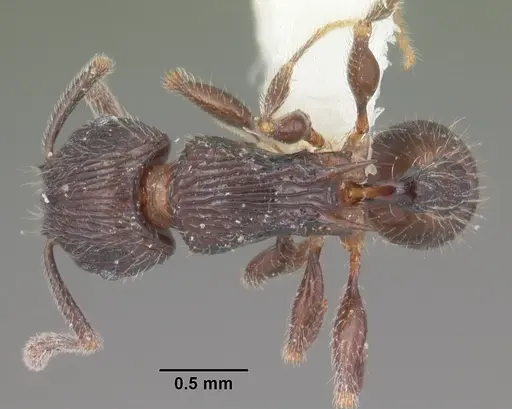
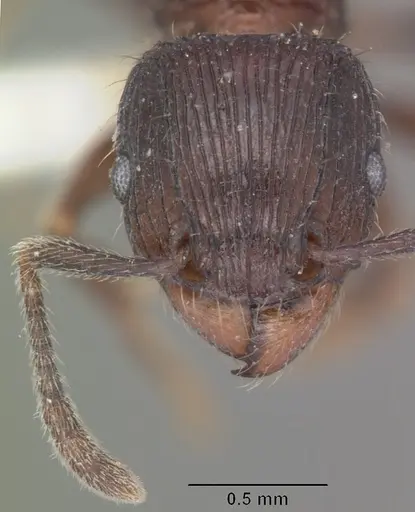
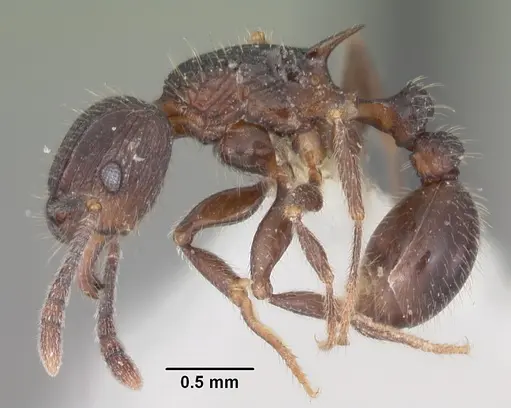
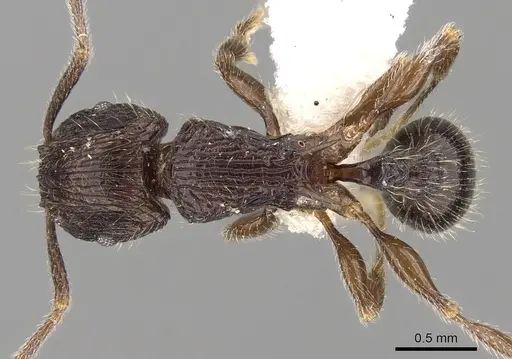
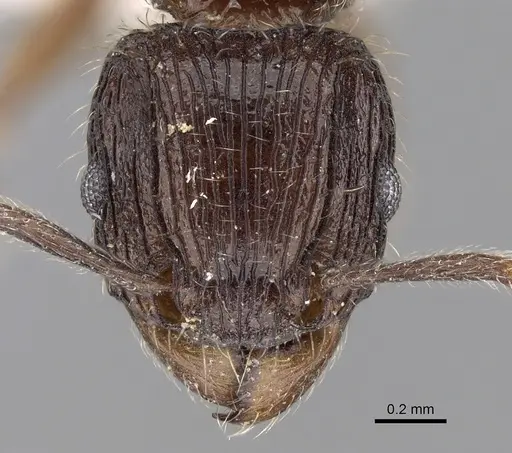
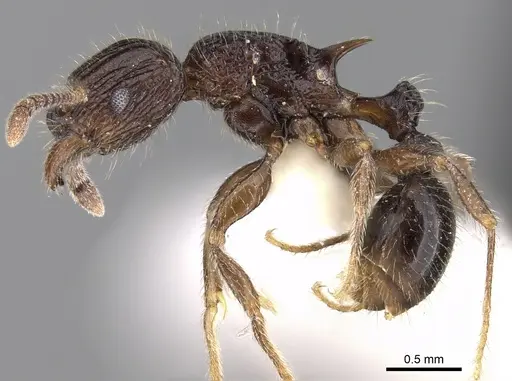
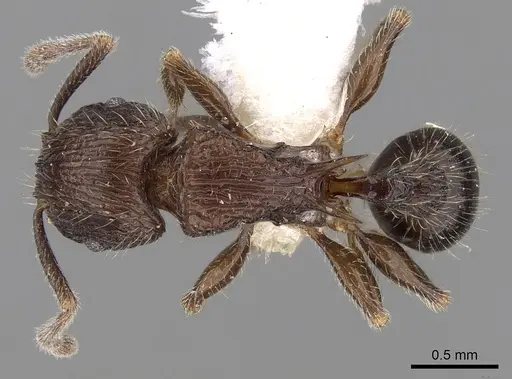
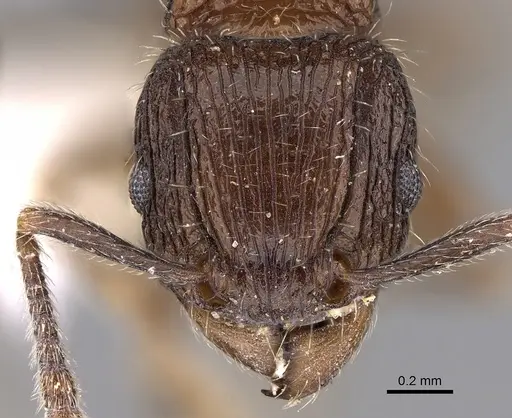
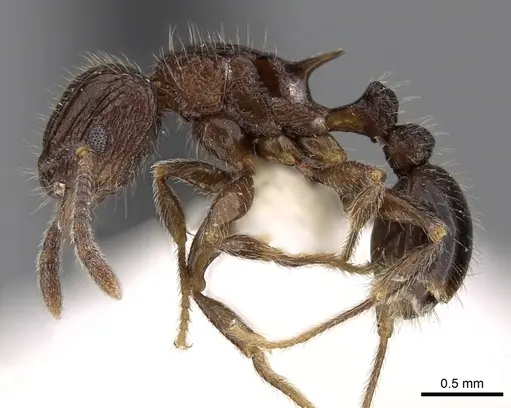
Tetramorium pleganon is a small, dark ant species native to Madagascar. Workers measure 0.87-1.05mm in head length with a distinctive appearance featuring a head longer than wide, very long propodeal spines, and a uniformly very dark brown to black body [1]. This species belongs to the Tetramorium tortuosum species group, specifically the T. jedi species complex, and is easily recognized by its strongly rugose petiolar node dorsum and the fine reticulate-punctate sculpture covering the first gastral tergite [1]. Despite its wide distribution across Madagascar from Zombitse in the south to Ambato in the north, T. pleganon shows remarkably little morphological variation throughout its range.
What makes T. pleganon particularly interesting is its habitat flexibility. While found in rainforest, montane rainforest, and tropical dry forest, this species appears to thrive in disturbed and open habitats like Uapaca woodland, savannah grassland, and degraded forests, making it one of the more adaptable Tetramorium species in Madagascar [1]. This adaptability suggests it may be relatively forgiving in captive care compared to more specialized forest-dwelling species.
Quick Summary
- Difficulty: Easy
- Origin & Habitat: Madagascar, widespread across the island from Zombitse and Kalambatrita in the south to Ambato and Antsahabe in the north. Found at elevations from 70-160m in degraded forest areas [1]. The species shows preference for disturbed and open habitats including Uapaca woodland, savannah grassland, and degraded forests, though it also occurs in rainforest, montane rainforest, and tropical dry forest [1].
- Colony Type: Likely monogyne (single queen) based on typical Tetramorium genus patterns. Colony structure is unconfirmed in scientific literature.
- Size & Growth:
- Queen: Undocumented, estimated 5-7mm based on congeneric Tetramorium species
- Worker: 0.87-1.05mm head length, approximately 3-4mm total length [1]
- Colony: Estimated several hundred workers based on similar Tetramorium species
- Growth: Moderate, inferred from typical Tetramorium development patterns
- Development: Estimated 6-8 weeks based on typical Tetramorium genus development at warm temperatures (Development timeline is inferred from related species, specific data for T. pleganon is unavailable)
- Antkeeping:
- Temperature: Keep at 22-26°C, Madagascar is tropical/warm, so this species prefers warmer conditions. A slight gradient allows workers to regulate their temperature preference.
- Humidity: Moderate humidity, 50-70%. This species tolerates drier conditions than typical rainforest ants due to its presence in savannah and degraded forest habitats.
- Diapause: No, as a tropical species from Madagascar, T. pleganon does not require hibernation. Maintain consistent warm temperatures year-round.
- Nesting: Y-tong (AAC) nests work well given their small worker size. Plaster nests or test tube setups are also suitable. Provide moderate substrate moisture without waterlogging.
- Behavior: T. pleganon is a relatively calm, non-aggressive species typical of the genus. Workers are active foragers that search for seeds, small insects, and honeydew. Due to their small size (under 4mm), escape prevention is important, use fine mesh barriers and ensure any gaps in housing are sealed. They are not known to be particularly defensive or sting painfully.
- Common Issues: small size means escapes are likely without fine mesh barriers, tropical species requires consistent warmth, cold temperatures can slow or stop brood development, limited documented care information requires keepers to adapt from genus-level knowledge, wild-caught colonies may carry parasites that can impact captive health
Housing and Nest Setup
For T. pleganon's small workers (under 4mm), Y-tong (AAC) nests with narrow chambers work excellently. The tight passages match their natural foraging paths and help maintain appropriate humidity levels. Test tube setups are also suitable, especially for founding colonies, use a water reservoir tube connected to a cotton barrier to provide humidity. Plaster nests can work but monitor moisture levels carefully as this species prefers moderately dry conditions over saturated substrate. Regardless of nest type, ensure excellent escape prevention: their small size allows them to squeeze through surprisingly small gaps. Use fine mesh on any ventilation holes and check all connection points regularly. [1]
Feeding and Diet
Like most Tetramorium species, T. pleganon is omnivorous. Offer a varied diet including small protein sources (fruit flies, small mealworms, cricket pieces) and carbohydrate sources (sugar water, honey diluted with water). They will also collect seeds when available, some keepers report Tetramorium showing seed-processing behavior. Feed protein sources 2-3 times per week and keep a constant sugar water supply. Remove uneaten food after 24-48 hours to prevent mold issues. Given their small size, ensure prey items are appropriately sized, anything larger than their head width may be ignored.
Temperature and Seasonal Care
As a Madagascar species, T. pleganon thrives in warm conditions. Maintain temperatures between 22-26°C year-round, this species does not require hibernation or cooling periods. A heating cable on one side of the nest can create a beneficial temperature gradient, allowing workers to choose their preferred warmth. Avoid temperatures below 20°C for extended periods, as this is a tropical species not adapted to cool conditions. Room temperature within this range is often sufficient without additional heating. Monitor colony activity levels, workers becoming sluggish often indicates temperatures that are too cool. [1]
Colony Development
T. pleganon colonies likely start claustrally, the queen seals herself in a chamber and raises the first brood using stored fat reserves until nanitic (first) workers emerge. This is typical for the Tetramorium genus. Expect the first workers (nanitics) to appear 6-8 weeks after founding, though this timeline is estimated from related species rather than documented specifically for T. pleganon. Initial colony growth is typically slow, with the queen producing only a small number of eggs. Once the first workers emerge, colony growth accelerates as workers take over foraging and brood care. A mature colony likely reaches several hundred workers over 1-2 years under optimal conditions.
Behavior and Temperament
T. pleganon displays typical Tetramorium behavior, workers are active, methodical foragers that establish clear trails to food sources. They are not particularly aggressive or defensive compared to some ant genera, making them manageable for keepers. Workers communicate through chemical signals and can recruit nestmates to food discoveries. Their small size makes them less intimidating than larger ant species, though they can still deliver a mild sting if threatened. The species shows adaptability to varying conditions in the wild, which likely translates to reasonable hardiness in captivity. Observe their foraging patterns, active, spread-out searching indicates a healthy, content colony. [1]
Frequently Asked Questions
How long does it take for Tetramorium pleganon to produce first workers?
Expect first workers (nanitics) to emerge 6-8 weeks after the queen lays eggs, assuming optimal temperatures around 24-26°C. This estimate is based on typical Tetramorium genus development patterns, as specific development data for T. pleganon is not documented. Initial founding is claustral, the queen seals herself in and raises the first brood alone.
Can I keep Tetramorium pleganon in a test tube setup?
Yes, test tube setups work well for T. pleganon, especially for founding colonies. Use a water reservoir tube connected via cotton to provide humidity. The small worker size means you should ensure the cotton barrier is properly packed to prevent escapes. Once the colony grows beyond 30-50 workers, consider moving to a Y-tong or plaster nest.
Do Tetramorium pleganon ants sting?
Yes, like most Myrmicinae ants, T. pleganon can sting. However, their sting is mild due to their small size, most keepers report minimal discomfort comparable to a minor mosquito bite. They are not considered dangerous or particularly aggressive.
What temperature do Tetramorium pleganon need?
Keep T. pleganon at 22-26°C. This tropical Madagascar species prefers warm conditions year-round and does not require hibernation. Room temperature within this range is often sufficient. Avoid temperatures below 20°C for extended periods.
Are Tetramorium pleganon good for beginners?
Yes, T. pleganon is considered a good beginner species. Their small size, omnivorous diet, and adaptability to varying conditions make them relatively forgiving. The main requirements are maintaining warm temperatures and ensuring good escape prevention due to their tiny worker size.
How big do Tetramorium pleganon colonies get?
Based on similar Tetramorium species, T. pleganon colonies likely reach several hundred workers at maturity. Exact colony size is unconfirmed for this species, but typical Tetramorium colonies range from 200-1000 workers. Growth is moderate, taking 1-2 years to reach moderate size under good conditions.
What do Tetramorium pleganon eat?
T. pleganon is omnivorous. Offer small protein sources like fruit flies, small mealworms, or cricket pieces 2-3 times per week. Provide constant access to sugar water or diluted honey. They may also collect small seeds. Remove uneaten food after 24-48 hours.
Do Tetramorium pleganon need hibernation?
No, T. pleganon does not require hibernation. As a tropical species from Madagascar, they need consistent warm temperatures year-round. Maintaining 22-26°C continuously is important for colony health and development.
Why are my Tetramorium pleganon escaping?
T. pleganon's small worker size (under 4mm) makes them excellent escape artists. Check all connection points, lid seams, and ventilation holes. Use fine mesh (at least 0.5mm or smaller) on any openings. Ensure any tubing connections are secure and free of gaps. Their small size means they can squeeze through gaps you might not notice.
Can I keep multiple Tetramorium pleganon queens together?
Combining unrelated queens is not recommended, Tetramorium species are typically monogyne (single queen) in captivity. While wild colony structure is unconfirmed for this specific species, forcing multiple queens together often results in fighting. If you acquire a colony, assume it is single-queen and house accordingly.
References

This caresheet is licensed under CC BY-SA 4.0 .
Literature
Loading...Loading products...