

Tetramorium placidum
- Scientific Name
- Tetramorium placidum
- Tribe
- Crematogastrini
- Subfamily
- Myrmicinae
- Author
- Bolton, 1979
- Distribution
- Found in 1 countries
Tetramorium placidum Overview
Tetramorium placidum is an ant species of the genus Tetramorium. It is primarily documented in 1 countries , including Mexico. Detailed taxonomic data and occurrence records can be further explored via authoritative databases such as AntWeb or the Global Biodiversity Information Facility (GBIF).
Tetramorium placidum
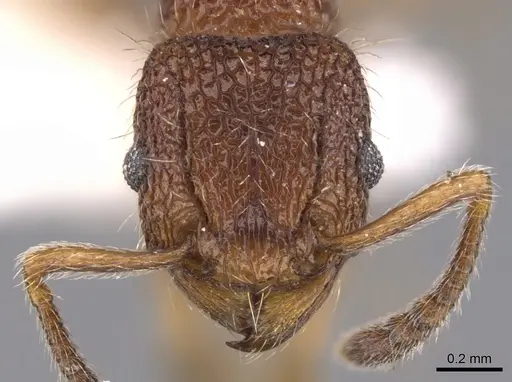
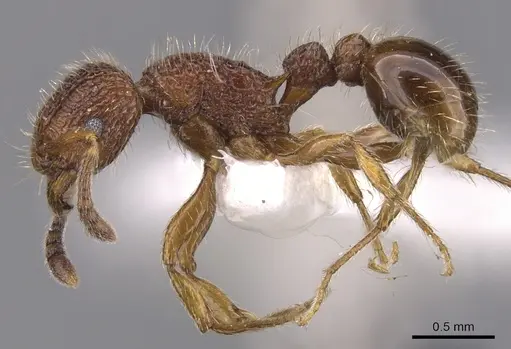
Tetramorium placidum is a small ant species belonging to the Tetramorium tortuosum species group. Workers measure just 0.66-0.72mm in head width, making them among the smaller ant species you'll encounter [1][2]. They have a pale to dark brown homogeneous coloration throughout their body, and their petiole (the narrow waist section) has a smooth dorsal surface without any sculpture [3][4]. This species is native to Mexico, specifically found in the Jalisco and Nayarit states in the Neotropical region [5][2]. The species was described by Bolton in 1979 and is known only from the worker caste, queens and males have not yet been described [1].
What makes T. placidum interesting is its placement in the tortuosum group, which contains several native New World Tetramorium species. Compared to relatives like T. bicolorum, T. placidum is notably smaller [1]. Like other Tetramorium, these ants are ground-nesting and likely play a role in their local ecosystem as omnivorous foragers.
Quick Summary
- Difficulty: Medium
- Origin & Habitat: Native to the Neotropical region of Mexico, specifically found in Jalisco and Nayarit states [5][2]. They inhabit tropical and subtropical environments where they nest in soil or under stones.
- Colony Type: Unconfirmed colony structure, only worker caste has been described. Based on typical Tetramorium patterns, likely single-queen (monogyne) colonies, but this has not been directly studied for this species.
- Size & Growth:
- Queen: Unknown, queens have not been described in scientific literature [1]. Based on related Tetramorium species, queens are likely 5-8mm.
- Worker: 0.66-0.72mm head width [1][2]. Total body length approximately 2-3mm.
- Colony: Unknown, no colony size data exists for this species. Related Tetramorium species typically reach several hundred to a few thousand workers.
- Growth: Unknown, estimated as moderate based on genus patterns. Expect 6-10 weeks from egg to first worker at optimal temperature.
- Development: Estimated 6-10 weeks based on typical Tetramorium development [1]. This is inferred from related species as no direct observations exist for T. placidum. (Development time is temperature-dependent. Warmer temperatures within acceptable range will speed development, while cooler temperatures will slow it.)
- Antkeeping:
- Temperature: Keep at 22-26°C based on their Neotropical distribution. This is an estimate, no specific thermal studies exist for this species. A heating cable on one side of the nest can create a gradient.
- Humidity: Moderate to high humidity preferred, similar to other Neotropical Tetramorium. Keep the nest substrate moist but not waterlogged. They likely prefer conditions similar to their natural habitat in western Mexico.
- Diapause: Unknown for this species. Many Mexican Tetramorium may not require true hibernation but may have reduced activity during cooler seasons.
- Nesting: Natural nesting is in soil or under stones. In captivity, a Y-tong (AAC) nest, plaster nest, or naturalistic setup with moist substrate works well. Their small size means they need tight-fitting chambers and narrow passages.
- Behavior: These are small, ground-dwelling ants that likely forage on the ground surface. They are probably generalist omnivores, eating small insects, honeydew, and potentially seeds, typical Tetramorium diet. Their small size means excellent escape prevention is critical, they can squeeze through tiny gaps. They are likely not aggressive but may bite if threatened. Activity level is probably moderate, with workers actively foraging for food.
- Common Issues: very small size makes escape prevention critical, use fine mesh and tight-fitting lids, limited scientific data means care is based on genus-level inferences rather than species-specific research, queen and male castes unknown, cannot confirm founding behavior or colony structure, slow growth typical of small Myrmicinae may test keeper patience, humidity control is important, too dry causes brood death, too wet causes mold
Housing and Nest Setup
For these tiny ants, you'll need a nest scaled to their small size. A Y-tong (AAC) nest works well because the chambers can be kept appropriately narrow. Plaster nests are another good option, they hold humidity well and allow you to create properly sized tunnels. Naturalistic setups with a soil substrate and flat stones on top also mimic their natural environment. Whatever nest type you choose, ensure the chambers are tight enough that workers can touch both walls when walking through, too wide and they feel insecure. For the outworld, a simple container with a secure lid is sufficient since they're not strong climbers. Use a test tube setup for the founding colony, with the queen in a dark chamber. Since they're so small, escape prevention must be excellent, even tiny gaps in lid seals can allow escapes. [1][2][3]
Feeding and Diet
Tetramorium placidum is likely an omnivorous generalist like most other Tetramorium species. Offer a variety of foods including sugar water or honey as an energy source, and protein sources like small insects (fruit flies, pinhead crickets, small mealworms). They may also accept seeds or other plant matter, which is common in the genus. Feed small amounts initially and observe what they accept. Remove uneaten food after 24-48 hours to prevent mold. For a founding colony, a small drop of honey or sugar water and occasional tiny prey items will sustain the queen until her first workers emerge. Once workers arrive, maintain a constant sugar source and offer protein 2-3 times per week.
Temperature and Seasonal Care
As a Neotropical species from western Mexico, T. placidum prefers warm conditions. Aim for 22-26°C in the nest area. You can use a heating cable on one side of the nest to create a temperature gradient, allowing ants to self-regulate by moving to warmer or cooler areas. Avoid temperatures below 18°C or above 30°C for extended periods. Whether they need a true diapause (winter rest) is unknown, many Mexican ant species don't experience harsh winters and may only have reduced activity during cooler months. If your colony shows reduced activity in winter, simply lower temperatures slightly (by 2-4°C) rather than forcing a full hibernation. Monitor your colony's behavior and adjust accordingly. [5][2]
Handling and Observation
These tiny ants are not suitable for handling, their small size makes them easy to accidentally crush and difficult to handle safely. Observation is best done through the nest walls. Their pale to dark brown coloration is uniform throughout the body, and the smooth petiole dorsal surface is a key identifying feature [3][4]. When observing, watch for foraging behavior, brood development, and colony activity patterns. Keepers interested in the tortuosum group will appreciate the subtle identification features, the lack of sculpture on the petiole distinguishes this species from relatives.
Growth and Development
The development timeline for T. placidum is not directly documented. Based on typical Tetramorium patterns and their small size, expect 6-10 weeks from egg to worker at optimal temperature. The first workers (nanitics) will likely be smaller than mature workers. Growth rate is likely moderate, not as fast as larger species like Camponotus, but steady once the colony establishes. Be patient during the founding phase, the queen will seal herself in and may not be visible for weeks. Avoid disturbing the nest during this critical period. Once workers emerge, the colony will gradually grow, with population increasing over several months to years. [1]
Frequently Asked Questions
How long does it take for Tetramorium placidum to produce first workers?
The exact timeline is unknown for this species, but based on typical Tetramorium development, expect 6-10 weeks from egg to first worker at optimal temperature (22-26°C). This is an estimate since no direct observations exist for T. placidum.
What do Tetramorium placidum ants eat?
They are likely omnivorous generalists like other Tetramorium. Offer sugar water or honey for energy, and small protein sources like fruit flies, tiny crickets, or small mealworms. They may also accept seeds. Remove uneaten food after 24-48 hours.
Are Tetramorium placidum ants good for beginners?
This species is rated as Medium difficulty. While small ants can be challenging due to escape risk and slower growth, their generalist diet and typical Tetramorium hardiness make them manageable for keepers with some experience. The main challenge is the limited species-specific data available.
Do Tetramorium placidum ants need hibernation?
Diapause requirements are unknown for this species. As a Mexican Neotropical species, they likely don't need true hibernation. If kept at room temperature year-round (20-24°C), they will likely remain active. You may reduce feeding slightly during winter months.
How big do Tetramorium placidum colonies get?
Colony size is unknown for this species. Based on related Tetramorium, expect several hundred to a few thousand workers at maturity. Growth will be gradual over several years.
Can I keep multiple Tetramorium placidum queens together?
Colony structure is unconfirmed for this species, only workers have been described. Based on typical Tetramorium patterns, they likely form single-queen colonies. Combining unrelated queens is not recommended without species-specific data.
What temperature is best for Tetramorium placidum?
Keep nest temperatures at 22-26°C based on their Neotropical distribution in Mexico. A slight gradient allowing warmer and cooler areas is ideal. Avoid temperatures below 18°C or above 30°C.
Why are my Tetramorium placidum escaping?
Their very small size (0.66-0.72mm head width) means they can squeeze through tiny gaps. Use excellent escape prevention: fine mesh barriers, tight-fitting lids, and seal any gaps or cracks in your setup. Even a millimeter gap is enough for them to escape.
Is Tetramorium placidum aggressive or does it sting?
As a small Myrmicinae, they likely have a stinger but its potency is minimal given their tiny size. They are probably not aggressive toward humans and will only defend if directly threatened. Their small size makes them more likely to flee than fight.
When will Tetramorium placidum queens be described?
The queen caste has not yet been described in scientific literature. This species was described in 1979 by Bolton, but only workers have been collected and documented. Future field work in Jalisco and Nayarit may eventually reveal the queen.
References

This caresheet is licensed under CC BY-SA 4.0 .
CASENT0901046
View on AntWeb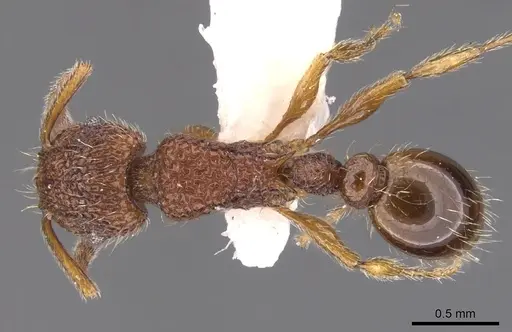
Literature
Loading...Loading products...