

Tetramorium nipponense
- Scientific Name
- Tetramorium nipponense
- Tribe
- Crematogastrini
- Subfamily
- Myrmicinae
- Author
- Wheeler, 1928
- Distribution
- Found in 5 countries
Tetramorium nipponense Overview
Tetramorium nipponense is an ant species of the genus Tetramorium. It is primarily documented in 5 countries , including China, Hong Kong, Japan. Detailed taxonomic data and occurrence records can be further explored via authoritative databases such as AntWeb or the Global Biodiversity Information Facility (GBIF).
Tetramorium nipponense
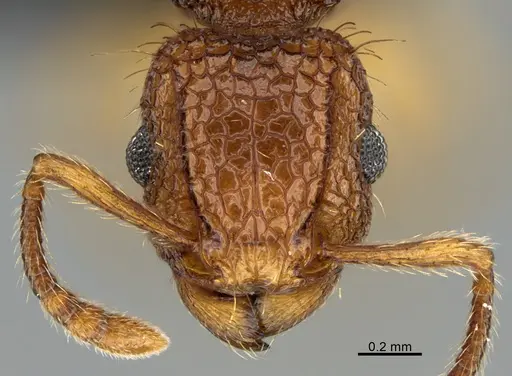
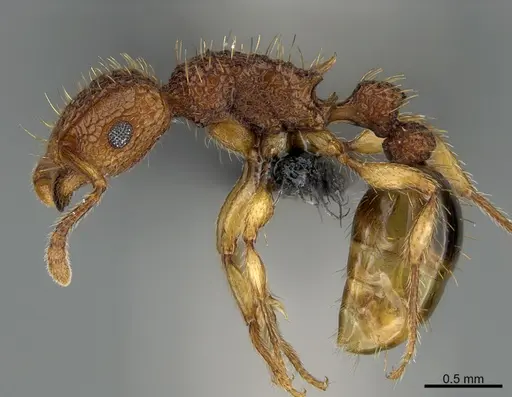
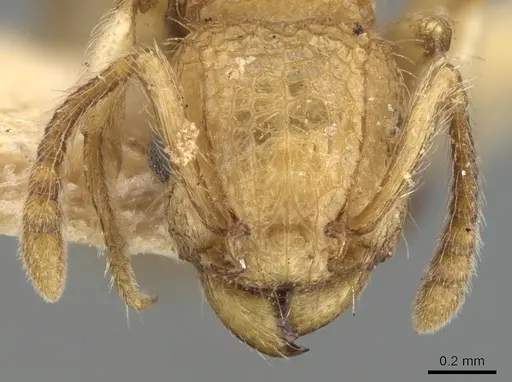
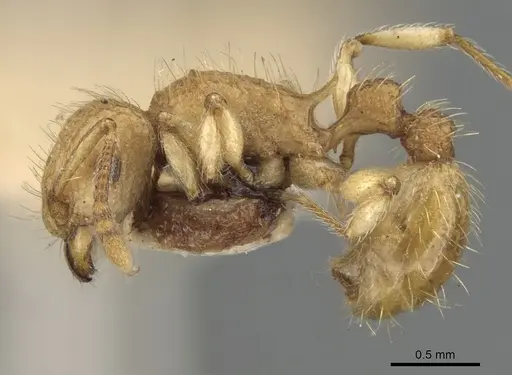
Tetramorium nipponense is a small Myrmicinae ant native to East Asia, ranging from Japan through China to Southeast Asia. Workers measure 2.8-3.7mm with a uniformly yellow to yellowish-brown body, though some specimens show slight color variation on the gaster [1]. This species is distinguished by its long, upward-curving propodeal spines and numerous erect hairs on the head and body, with the longest hairs on the frontal carinae exceeding the maximum diameter of the eye [2]. The head and alitrunk have a characteristic reticulate-rugose sculpture, and the petiole node is notably higher at the posterior margin than the anterior [1].
This species stands out for its arboreal nesting habits, unlike many Tetramorium species that are strictly ground-nesting, T. nipponense frequently nests in decayed tree trunks, hollow stems, and under bark [3]. Colonies are polygynous (multiple queens) and can be aggressive toward neighboring colonies of the same species, which differs from its close relative T. bicarinatum that forms unicolonial populations [4]. In South Korea, colonies have been found with around 10 queens and approximately 200 workers [4].
Quick Summary
- Difficulty: Medium
- Origin & Habitat: Native to East Asia, found in Japan (Honshu, Shikoku, Kyushu, Nansei Islands), southern China, Taiwan, Bhutan, Vietnam, and Thailand [1][5]. Inhabits rainforest, disturbed forests, and woodland margins. Nests in decayed tree trunks, bamboo stems, under bark, and under stones. Prefers damp forest environments rather than dry or coastal areas [1][4].
- Colony Type: Polygynous, colonies contain multiple queens (around 10 documented in South Korean colonies) with several hundred workers [4]. Unlike the related T. bicarinatum, colonies show aggression toward each other and are not unicolonial.
- Colony: Polygyne
- Founding: Claustral
- Size & Growth:
- Queen: 3.5-4mm [2]
- Worker: 2.8-3.7mm [1][2]
- Colony: Approximately 200 workers in typical colonies, with up to several hundred workers [4]
- Growth: Moderate
- Development: 6-8 weeks (estimated based on typical Tetramorium development) (Development time estimated from genus-level data, specific timing for this species has not been directly studied)
- Antkeeping:
- Temperature: Keep at 20-26°C, they tolerate a range but prefer warmth. In their native range (Japan, southern China), they experience warm summers and cool winters. Room temperature within this range works well.
- Humidity: Prefers moderate to high humidity, they are found in damp forests and nest in decaying wood. Keep the nest substrate moderately moist but not waterlogged. Their relative T. bicarinatum prefers drier conditions, but T. nipponense favors more moist habitats [1].
- Diapause: Yes, requires a winter rest period. In their native Japan and Korea, they experience cold winters. Reduce temperature to around 10-15°C for 2-3 months during winter.
- Nesting: Arboreal nesting preferences, they naturally nest in decayed wood, tree hollows, and under bark. In captivity, they do well in wood-based nests (Y-tong, plaster with wood insert) or test tubes with access to a humid foraging area. They will also nest under stones in naturalistic setups.
- Behavior: Generally peaceful but territorial, workers are not particularly aggressive but will defend the nest. They forage on tree trunks and the forest floor, gathering small arthropods and insect debris [4]. They are attracted to both sweet (honey) and protein (cheese) baits [6]. Workers are active both during the day and at night, with notable nocturnal activity near lights [7]. They have functional stingers but rarely use them, their primary defense is biting. Escape prevention is moderate as they are small but not particularly prone to escaping.
- Common Issues: colonies can be slow to establish, polygynous colonies may have longer founding periods, excessive moisture can be problematic, they prefer damp but not wet conditions, wild-caught colonies may have parasites or diseases that cause colony failure, colonies may be aggressive toward each other, keep separate if you have multiple colonies, their small size means escape prevention should be adequate but not extreme like for tiny species
Housing and Nest Preferences
T. nipponense is an arboreal species that naturally nests in decaying wood, tree hollows, and under bark [3]. In captivity, provide a nest that mimics these conditions. Y-tong (AAC) nests work well, as do plaster nests with a wood insert or naturalistic setups with rotting wood pieces. They also accept test tubes with a humid foraging area, though they may prefer to nest in the wood portion rather than just the tube. Because they are polygynous (multiple queens), they can tolerate larger nest spaces than single-queen species. Provide a water tube or moisture source to maintain humidity, as they prefer damp conditions. The foraging area should be spacious enough for their foragers, which travel along surfaces searching for small prey.
Feeding and Diet
In the wild, foragers gather small arthropods including isopods and insect debris from tree trunks and the forest floor [4]. They are omnivorous and accept both protein and sugar sources. Offer small insects (fruit flies, small mealworms, pinhead crickets) as protein, and sugar water, honey, or ripe fruit for carbohydrates. They are attracted to both honey and cheese baits in the wild [6]. Feed them small prey items 2-3 times per week, and keep a constant sugar source available. Remove uneaten prey after 24 hours to prevent mold. Because they are small ants, prey items should be appropriately sized, avoid offering anything larger than their workers.
Temperature and Seasonal Care
Keep your colony at 20-26°C for optimal activity and growth. They are native to warm-temperate to tropical regions (Japan, southern China, Southeast Asia) and tolerate a range of temperatures. Room temperature (around 22-24°C) is typically suitable. During winter in temperate regions, they require a diapause (winter rest) period of 2-3 months. Reduce temperatures to 10-15°C in winter to simulate natural seasonal cycles. This rest period is important for colony health and may trigger reproductive behavior (alates) in the following season. Do not keep them at room temperature year-round without a winter break, this can weaken the colony over time. [1][4]
Colony Structure and Behavior
T. nipponense forms polygynous colonies with multiple queens working together, South Korean colonies have been documented with around 10 queens and approximately 200 workers [4]. Unlike the related T. bicarinatum which forms unicolonial populations with no aggression between nests, T. nipponense colonies show aggression toward each other when their territories overlap [4]. This means if you keep multiple colonies, they should be separated to prevent fighting. Queens are slightly larger than workers (3.5-4mm vs 2.8-3.7mm) and have more developed thorax sculpture. Alates (reproductives) emerge in August and mating likely occurs shortly after [4]. Workers are active foragers that search both on the ground and on vertical surfaces like tree trunks.
Differentiating from Similar Species
T. nipponense is often confused with its close relative T. bicarinatum (the penny ant), which is widespread and sometimes introduced globally. You can tell them apart by several features: T. nipponense has longer body hairs, a lighter and more uniform coloration without a dark band on the gaster, and higher posterior petiolar margin [1]. Additionally, T. nipponense prefers damp forest habitats while T. bicarinatum favors coastal and disturbed areas [4]. In captivity, if your ants came from a temperate Asian source (Japan, Korea, China), they are likely T. nipponense. T. bicarinatum is more likely if they came from tropical regions or are known to be introduced populations.
Frequently Asked Questions
Can I keep Tetramorium nipponense in a test tube?
Yes, test tubes work for founding colonies, but they prefer wood-based nesting. If using a test tube, provide a second tube with damp cotton as a water source and consider adding a small piece of rotting wood or bark in the outworld for them to explore. They are arboreal by nature, so they will do better long-term in a Y-tong or plaster nest with wood material.
How long until Tetramorium nipponense produces first workers?
Expect 6-8 weeks from egg to first worker at room temperature (around 24°C). This is an estimate based on typical Tetramorium development, specific timing for this species has not been directly studied. The claustral queen will seal herself in and raise the first brood alone without foraging.
Can I keep multiple Tetramorium nipponense queens together?
Yes, this species is naturally polygynous with multiple queens in a single colony. However, if you are combining unrelated foundresses, introduce them carefully. Once established, colonies are typically peaceful internally but will show aggression toward other colonies of the same species.
Do Tetramorium nipponense ants sting?
Yes, they have functional stingers as members of the subfamily Myrmicinae. However, they rarely sting and their sting is mild. They are not considered dangerous to humans. Their primary defense is biting, and they will only use their stinger if provoked or handled roughly.
Are Tetramorium nipponense good for beginners?
They are moderate difficulty, easier than some tropical species but not as straightforward as common Lasius or Camponotus. They require attention to humidity (they prefer damp conditions) and benefit from a winter rest period. Their polygynous colony structure can make them more forgiving of queen loss, but they are less common in the hobby than other species.
Do Tetramorium nipponense need hibernation?
Yes, they require a winter rest period. In their native Japan and Korea, they experience cold winters. Reduce temperatures to 10-15°C for 2-3 months during winter. This diapause is important for colony health and may trigger reproductive alate production in the following season.
What do Tetramorium nipponense eat?
They are omnivorous. Offer small insects (fruit flies, small mealworms, pinhead crickets) as protein 2-3 times per week. Keep a constant sugar source available (sugar water, honey). They are attracted to both sweet and protein baits in the wild.
Why are my Tetramorium nipponense dying?
Common causes include: too dry conditions (they prefer damp wood/nests), excessive moisture causing mold, temperatures too cold or too hot, stress from moving the nest too often, or parasites from wild-caught colonies. Check humidity levels first, they are from damp forests and need consistent moisture. Also ensure they have appropriate-sized prey and sugar.
How big do Tetramorium nipponense colonies get?
Colonies typically reach several hundred workers. South Korean colonies have been documented with around 200 workers and 10 queens. They are not among the largest Tetramorium species but can form substantial colonies over time.
When do Tetramorium nipponense alates emerge?
Alates (reproductives) emerge in August in their native range, with mating likely occurring shortly after [4]. If you keep a colony long-term, you may see winged queens and males develop in summer after a proper winter diapause.
What's the difference between T. nipponense and T. bicarinatum?
T. nipponense has longer body hairs, lighter more uniform coloration (no dark gaster band), and prefers damp forests. T. bicarinatum is unicolonial (no aggression between nests) and favors coastal/disturbed areas. T. nipponense is polygynous with aggressive inter-colony behavior. If your ants came from Japan or Korea, they are likely T. nipponense.
References

This caresheet is licensed under CC BY-SA 4.0 .
CASENT0119142
View on AntWeb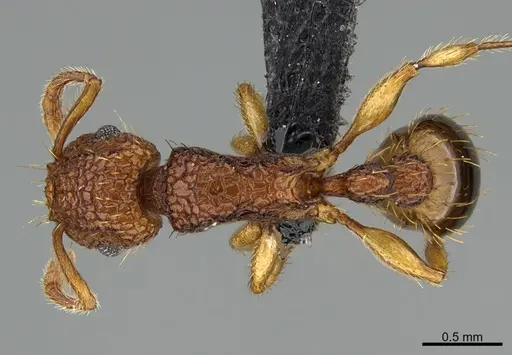
CASENT0901077
View on AntWeb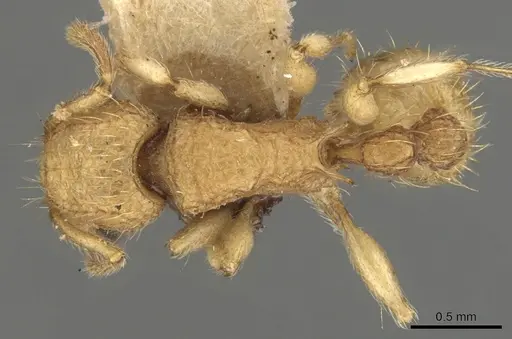
Literature
Loading...Loading products...