

Tetramorium nazgul
- Scientific Name
- Tetramorium nazgul
- Tribe
- Crematogastrini
- Subfamily
- Myrmicinae
- Author
- Hita Garcia & Fisher, 2012
- Distribution
- Found in 2 countries
Tetramorium nazgul Overview
Tetramorium nazgul is an ant species of the genus Tetramorium. It is primarily documented in 2 countries , including Madagascar, Saudi Arabia. Detailed taxonomic data and occurrence records can be further explored via authoritative databases such as AntWeb or the Global Biodiversity Information Facility (GBIF).
Tetramorium nazgul
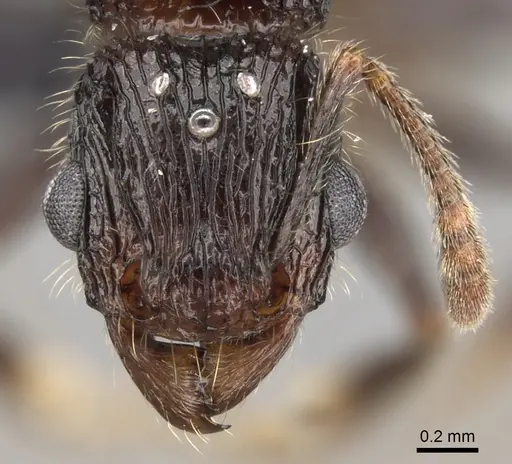
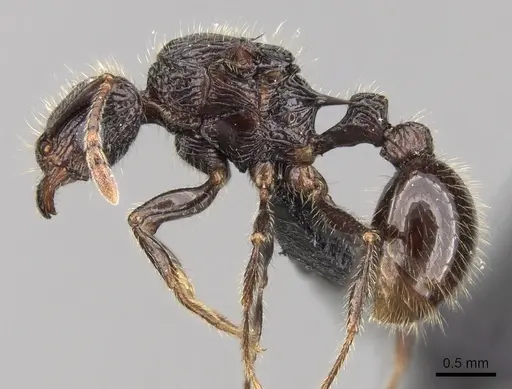
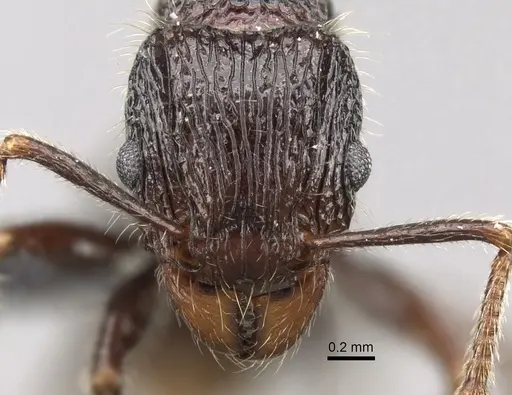
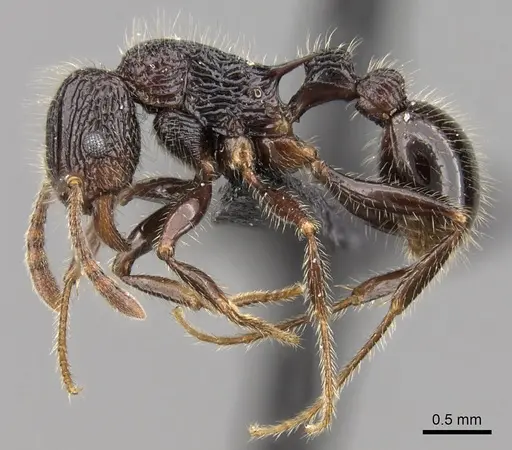
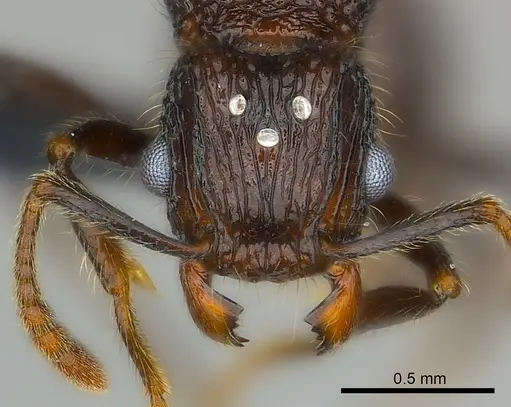
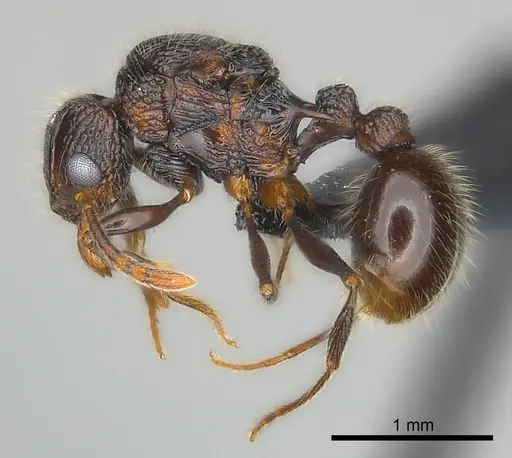
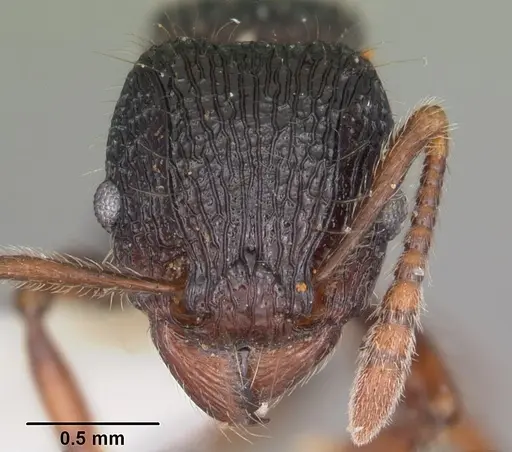
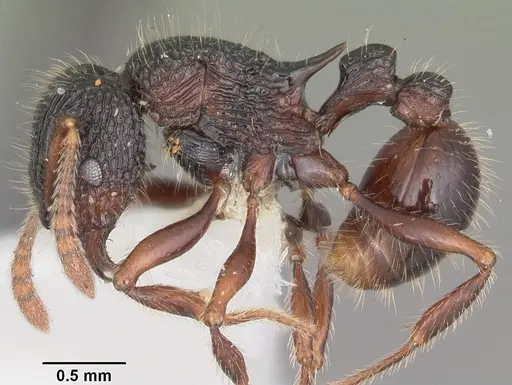
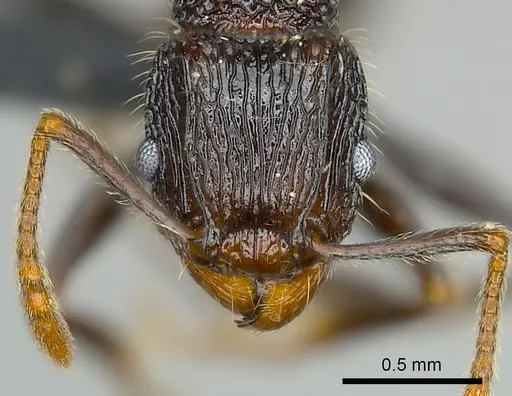
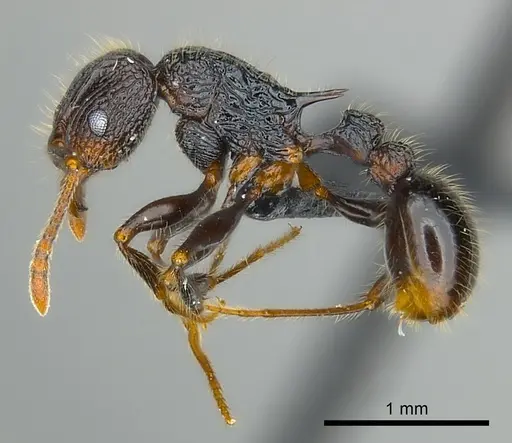
Tetramorium nazgul is a small, dark ant native to Madagascar, first described in 2012. Workers measure 0.95-1.06mm in head length with a distinctive dark brown to black body [1]. This species belongs to the Tetramorium tortuosum species group within the T. smaug species complex, making it part of a lineage of specialized leaf-litter ants found only in Madagascar [1]. The species name 'nazgul' comes from J.R.R. Tolkien's Lord of the Rings, referring to the Ringwraiths, a fitting name for these dark, mysterious ants [2].
What makes T. nazgul stand out is its remarkable spination, it has very long propodeal spines (PSLI 39-43) and notably long antennal scapes compared to related species [1]. These ants inhabit the leaf litter layer of tropical dry forests and montane rainforests at elevations between 700-1100 meters [1]. They appear to be ground-dwelling specialists, living in the humid micro-environment beneath the forest floor. This is a relatively new species to science with limited available information, so much of captive care must be inferred from what we know about related Tetramorium species and their natural history.
Quick Summary
- Difficulty: Medium
- Origin & Habitat: Native to Madagascar, specifically found in the Malagasy region. Known from three locations: Analalava and Zombitse (tropical dry forests) and Ambohijanahary (montane rainforest). Elevation range 700-1100m [1]. This species is a leaf-litter inhabitant, living in the humid layer beneath forest vegetation [1].
- Colony Type: Unconfirmed. Based on typical Tetramorium patterns, likely single-queen (monogyne) colonies. No specific data on colony structure or queen morphology available for this species.
- Size & Growth:
- Queen:{.size-link} Unknown, queen measurements not documented in available literature [1].
- Worker:{.size-link} Workers are 0.95-1.06mm in head length (HL), with head width 0.85-0.98mm and Weber's length 1.23-1.39mm [1]. These are small ants, comparable in size to many other Tetramorium leaf-litter species.
- Colony: Unknown, colony size has not been documented. Based on similar Tetramorium species, likely reaches several hundred workers.
- Growth: Unknown, no development data available. Estimated as moderate based on genus patterns.
- Development: Unconfirmed, no direct development data exists. Based on typical Tetramorium patterns from related species, expect 6-10 weeks at optimal temperature. Signal this as an estimate. (Development timeline is inferred from genus-level data rather than species-specific research.)
- Antkeeping:
- Temperature: Based on Madagascar's tropical climate and montane rainforest habitat, aim for 22-26°C. Provide a gentle gradient allowing workers to self-regulate. Avoid temperatures below 18°C or above 30°C. Room temperature within this range is acceptable.
- Humidity: High humidity is essential, these are leaf-litter ants from humid forest environments. Keep nest substrate consistently moist but not waterlogged. Target 70-85% humidity equivalent in the nest area. Provide a water source and occasional misting of the outworld.
- Diapause: No, Madagascar species do not experience true winter dormancy. They may show reduced activity during cooler periods but do not require a hibernation period. Maintain consistent temperatures year-round.
- Nesting: These ants prefer humid, enclosed spaces. Test tubes work well for founding colonies. For established colonies, Y-tong (AAC) nests or plaster nests with good moisture retention are suitable. The nest should have tight chambers scaled to their small size. Provide an outworld for foraging.
- Behavior: Tetramorium nazgul is a small, ground-dwelling ant. Workers are dark brown to black and relatively active foragers within the leaf litter layer. Based on genus behavior, they are likely generalist foragers, collecting seeds, small insects, and honeydew. Their small size (under 1mm workers) means escape prevention is critical, they can squeeze through tiny gaps. Use fine mesh and tight-fitting lids. They are not aggressive toward keepers but will defend their nest if threatened. Workers have functional stingers in the Myrmicinae subfamily, though their small size limits sting effectiveness on humans.
- Common Issues: Very small worker size means escape prevention must be excellent, use fine mesh barriers and tight lids, Limited species-specific information makes care somewhat experimental, monitor colony response closely, High humidity requirements can lead to mold issues if ventilation is poor, As a newly described species, wild-caught colonies may have unknown parasites or diseases, No documented captive breeding success exists yet, be prepared for a learning curve
Housing and Nest Setup
For Tetramorium nazgul, you'll want to replicate their natural leaf-litter habitat. Test tubes work well for founding colonies, use a standard test tube setup with a water reservoir sealed with a cotton plug. The tube should be kept humid but not flooded. For established colonies, Y-tong (AAC) nests or plaster nests provide good humidity control. The chambers should be appropriately sized for their tiny workers, tight spaces help them feel secure. Always use excellent escape prevention: these ants are very small and can squeeze through gaps you might not expect. Fine mesh on any ventilation holes is essential. Provide an outworld for foraging with a shallow water dish and feeding area. [1][2]
Feeding and Diet
Based on typical Tetramorium behavior, these ants are generalist foragers. In captivity, offer a varied diet: protein sources like small insects (fruit flies, pinhead crickets, mealworms), and sugar sources like diluted honey or sugar water. Since they are leaf-litter inhabitants, they likely naturally scavenge for small arthropods and may tend aphids for honeydew. Feed small amounts every 2-3 days, removing uneaten food promptly to prevent mold. Always provide a fresh water source. Start with small prey items appropriate to their tiny size and adjust based on what they accept. [2]
Temperature and Humidity
Maintain temperatures between 22-26°C, which matches their Madagascar montane rainforest and dry forest origins. A slight temperature gradient allows workers to choose their preferred zone. Room temperature in most homes falls within this range. Humidity is more critical, these leaf-litter ants need 70-85% relative humidity in the nest. Keep the nest substrate consistently moist but not waterlogged. A water reservoir in test tube setups helps maintain humidity. Monitor for condensation: too much means poor ventilation, too little means the nest is drying out. Avoid placing the nest near air conditioning vents or heating elements that cause temperature fluctuations. [1]
Colony Development
Since this is a newly described species with limited research, colony development is not well documented. Based on typical Tetramorium patterns, expect claustral founding where the queen seals herself in a chamber and raises the first workers alone on stored fat reserves. First workers (nanitics) will be smaller than mature workers. Growth rate is estimated as moderate, expect several months to reach 50+ workers. The colony will likely grow to several hundred workers over time, though exact maximum size is unknown. Be patient with founding colonies, they can be slow to establish and sensitive to disturbances. [1]
Behavior and Temperament
These are small, ground-dwelling ants that likely spend most of their time in the leaf litter layer. Workers are dark brown to black and relatively active foragers. They are not particularly aggressive toward humans but will defend their nest if threatened. Their very small size means they are not a stinging threat to keepers, while Myrmicinae ants have stingers, these tiny workers would struggle to penetrate human skin. The most important behavioral consideration is their escape risk: at under 1mm worker size, they can access remarkably small openings. Excellent escape prevention is non-negotiable. [1]
Frequently Asked Questions
How long does it take for Tetramorium nazgul to raise first workers?
The exact timeline is unconfirmed for this species. Based on typical Tetramorium development patterns, expect 6-10 weeks from egg to first worker at optimal temperature (22-26°C). Founding colonies can be slow, be patient and avoid disturbing the queen during the founding phase.
Can I keep Tetramorium nazgul in a test tube?
Yes, test tubes work well for founding colonies. Use a standard setup with a water reservoir at one end, sealed with cotton. Keep the tube humid but not flooded. Once the colony reaches 30-50 workers, consider moving to a larger formicarium or Y-tong nest.
Do Tetramorium nazgul ants sting?
Tetramorium ants belong to the Myrmicinae subfamily, which has functional stingers. However, these are very small ants (workers under 1mm) and their sting is unlikely to penetrate human skin. They are not considered dangerous to keepers.
What do Tetramorium nazgul eat?
Based on typical Tetramorium behavior, they are generalist foragers. Offer small insects (fruit flies, tiny crickets, mealworms) as protein, and sugar water or diluted honey as carbohydrates. They likely accept honeydew if kept with aphids. Feed small amounts every 2-3 days.
Are Tetramorium nazgul good for beginners?
This species is rated as Medium difficulty. While not the most challenging ant, there is limited species-specific captive breeding information available. Beginners should be prepared for a learning curve and may want to start with more established species in the hobby.
How big do Tetramorium nazgul colonies get?
Colony size is not documented for this species. Based on similar Tetramorium species, expect colonies to reach several hundred workers over time. Growth is moderate, plan for a colony that will need upgrading to larger housing as it develops.
Do Tetramorium nazgul need hibernation?
No, as a Madagascar species, they do not experience true winter. They do not require a diapause period. Maintain consistent temperatures year-round (22-26°C). They may show slightly reduced activity during cooler periods but this is not hibernation.
Why are my Tetramorium nazgul escaping?
Their small size (under 1mm workers) means they can squeeze through tiny gaps. Review your escape prevention: use fine mesh (at least 0.5mm), ensure all lid seals are tight, and check for any gaps around tubing connections. Even small gaps that seem insignificant to us are large openings to these tiny ants.
Can I keep multiple Tetramorium nazgul queens together?
Colony structure is unconfirmed for this species. Based on typical Tetramorium patterns, they likely have single-queen colonies. Combining unrelated queens is not recommended without species-specific research. If you obtain a multi-queen colony, keep them together only if they are already established as a group.
What temperature is best for Tetramorium nazgul?
Aim for 22-26°C. This matches their natural habitat in Madagascar's tropical forests and montane areas. Room temperature in most homes falls within this range. If needed, a heating cable on one side of the nest can provide a gentle gradient. Avoid temperatures below 18°C or above 30°C.
Report an Issue
The current care sheet is based fully on literature. See inconsistencies, or something that's incorrect? Please , it will be resolved after review from an admin. Contributing to the blogs tab also helps providing information, to make us be able to further improve the caresheets. Thank you for your support!
References

This caresheet is licensed under CC BY-SA 4.0 .
CASENT0028556
View on AntWeb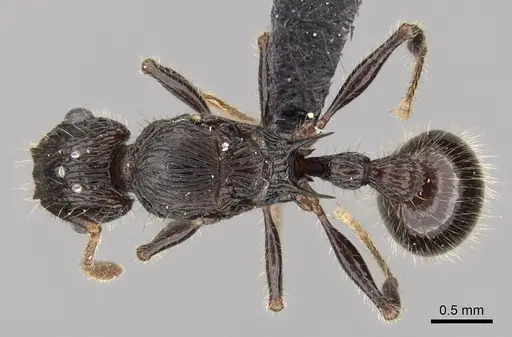
CASENT0028625
View on AntWeb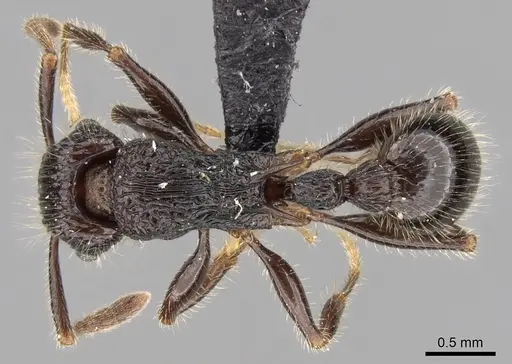
CASENT0030059
View on AntWeb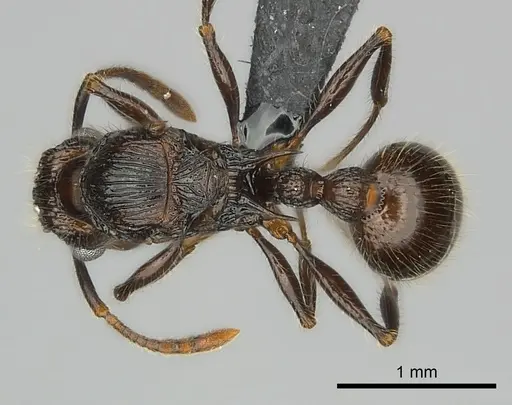
CASENT0102983
View on AntWeb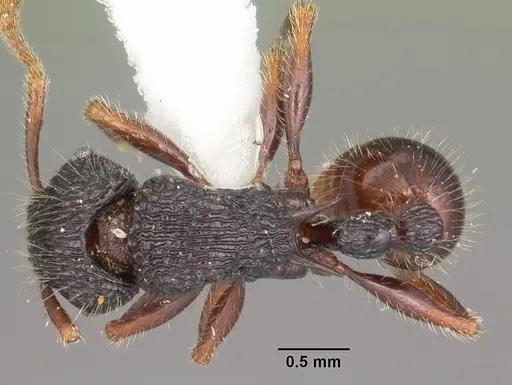
CASENT0496733
View on AntWeb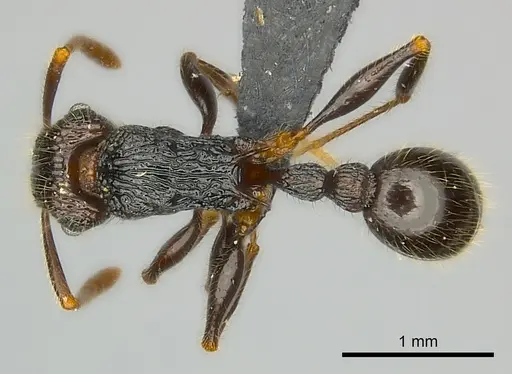
Literature
Loading...Loading products...