

Tetramorium merina
- Scientific Name
- Tetramorium merina
- Tribe
- Crematogastrini
- Subfamily
- Myrmicinae
- Author
- Hita Garcia & Fisher, 2014
- Distribution
- Found in 1 countries
Tetramorium merina Overview
Tetramorium merina is an ant species of the genus Tetramorium. It is primarily documented in 1 countries , including Madagascar. Detailed taxonomic data and occurrence records can be further explored via authoritative databases such as AntWeb or the Global Biodiversity Information Facility (GBIF).
Tetramorium merina
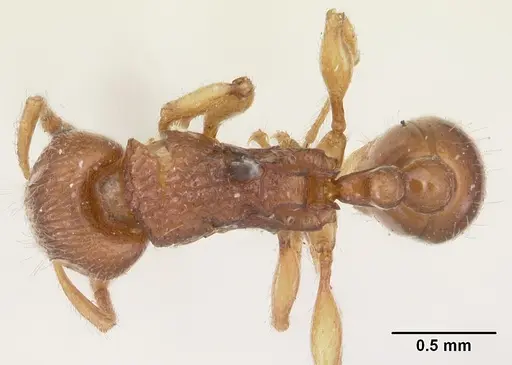
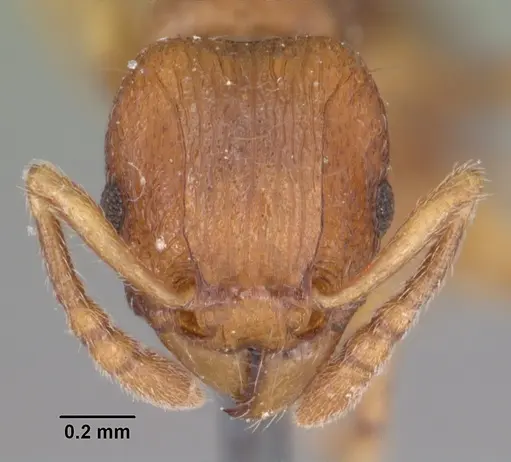
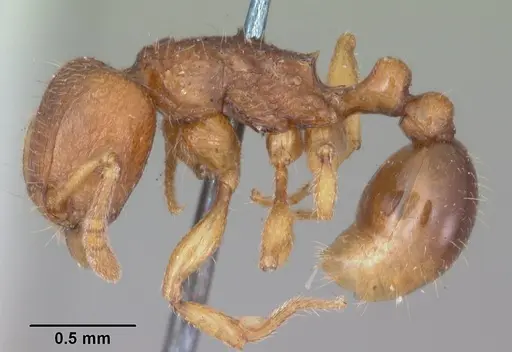
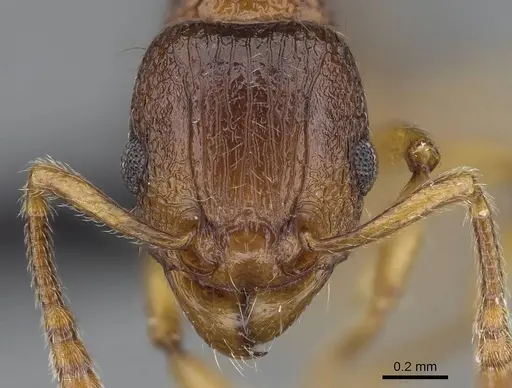
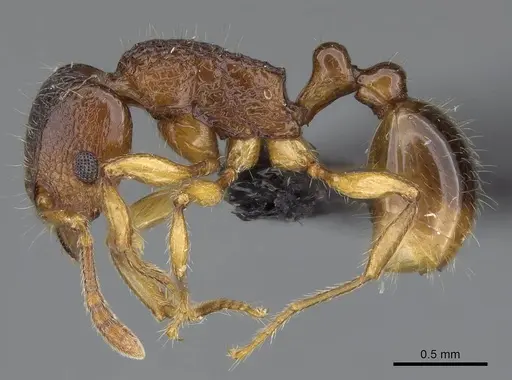
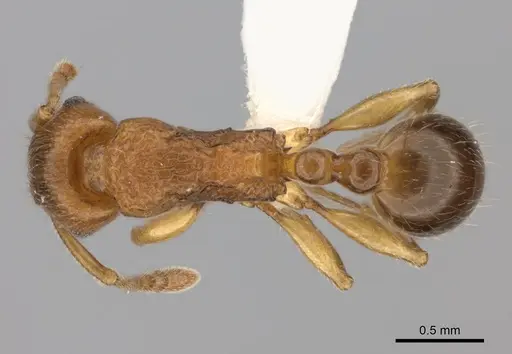
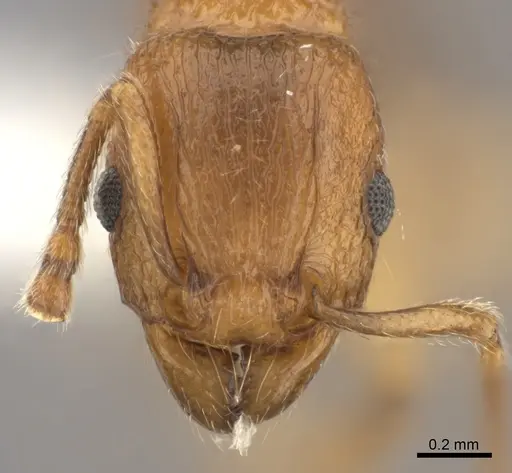
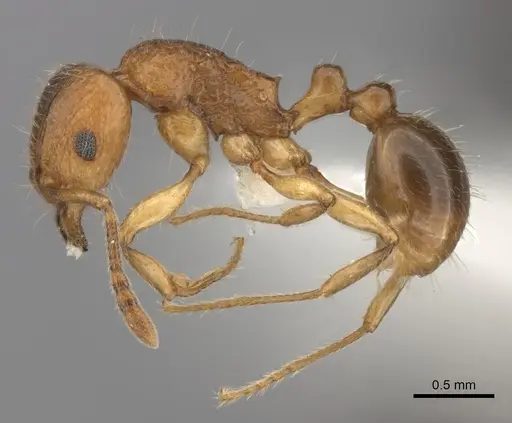
Tetramorium merina is a medium-sized ant species belonging to the Tetramorium schaufussii species group, native to the Central Highlands of Madagascar. Workers measure approximately 4-5mm with a robust, dark brown body and notably large eyes. The species was described in 2014 and is named after the Merina people of Madagascar, whose traditional kingdom boundaries closely match the species' distribution range [1]. These ants inhabit montane rainforests at elevations of 1410-1700m, living primarily in leaf litter where they nest in rotting wood or soil [1][2]. The species is morphologically stable, unlike its close relatives T. schaufussii and T. xanthogaster which show significant variation, T. merina maintains a consistent appearance across its range. It can be distinguished from related species by its larger size, reduced propodeal spines (appearing as small teeth rather than elongated spines), and the presence of long standing hairs on the waist segments [1].
Quick Summary
- Difficulty: Medium
- Origin & Habitat: Central Highlands of Madagascar, montane rainforests at elevations of 1410-1700m [1][2]
- Colony Type: Likely single-queen colonies (monogyne) based on typical Tetramorium genus patterns. Colony founding is presumed claustral, queens seal themselves in and raise first workers alone using stored fat reserves, as is common in this genus. These traits remain unconfirmed for this specific species.
- Size & Growth:
- Queen: Unconfirmed, estimated 6-8mm based on genus patterns and worker size
- Worker: 4-5mm (HW 0.69-0.79mm, WL 1.01-1.10mm) [1]
- Colony: Unconfirmed, likely several hundred workers based on typical Tetramorium colony sizes
- Growth: Moderate, estimated based on genus patterns
- Development: 6-10 weeks estimated based on related Tetramorium species at optimal temperature (Development time is estimated, no specific studies on T. merina. Related species in the schaufussii group typically develop in 6-10 weeks at room temperature.)
- Antkeeping:
- Temperature: Keep at 20-24°C. As a montane species from Madagascar's Central Highlands, they prefer cooler conditions than typical tropical ants. Start at room temperature (around 22°C) and adjust based on colony activity, if workers become sluggish, slightly warm, if they avoid the heated area, reduce temperature [1].
- Humidity: Keep the nest substrate moderately moist. These ants live in leaf litter in montane rainforests, so they prefer damp but not waterlogged conditions. The substrate should feel damp to the touch with some drier areas available for the ants to regulate their own humidity [1][2].
- Diapause: Unconfirmed, likely does not require a strong diapause as they come from a relatively mild subtropical highland climate. However, a slight winter slowdown period at 15-18°C may be beneficial. More research is needed on their seasonal requirements.
- Nesting: Provide a naturalistic setup with leaf litter, rotting wood, or a moist substrate. In captivity, a Y-tong (AAC) nest or plaster nest works well. They prefer tight chambers and narrow passages scaled to their medium size. Keep the nest humid but ensure adequate ventilation to prevent mold [1][2].
- Behavior: These are relatively docile ants with no significant defensive behaviors. Workers forage through leaf litter and are likely generalist feeders, hunting small invertebrates and tending aphids for honeydew. They are not aggressive and rarely bite. Escape risk is moderate, their 4-5mm size means standard formicarium barriers are effective, but they are small enough to squeeze through poorly sealed edges. Use standard escape prevention but no special measures are required beyond proper sealing.
- Common Issues: lack of specific care information, this is a newly described species with limited research, so keepers must adapt from related species, humidity management is critical, being leaf litter dwellers, they are prone to mold issues if kept too wet, slow colony growth may frustrate beginners, expect moderate growth rates and avoid overfeeding, temperature sensitivity, being from high elevation, they may struggle in warm rooms above 26°C, limited availability, this species is rarely available in the antkeeping hobby as it's newly described and from a restricted range
Natural History and Distribution
Tetramorium merina is endemic to the Central Highlands of Madagascar, a region known for its exceptional ant diversity. The species was described in 2014 by Hita Garcia and Fisher and named in honor of the Merina people, the dominant ethnic group in the highlands whose traditional kingdom boundaries closely match the ant's distribution [1]. These ants are found only in montane rainforests at elevations between 1410 and 1700 meters, making them one of the higher-elevation Tetramorium species in Madagascar [1]. The species co-occurs in sympatry with two close relatives, T. schaufussii and T. xanthogaster, but remains morphologically distinct without any intermediate forms, indicating strong species boundaries [1]. The type locality is Réserve Spéciale d'Ambohitantely, a protected area of montane rainforest where the holotype was collected from a rotting log [1].
Identification and Distinguishing Features
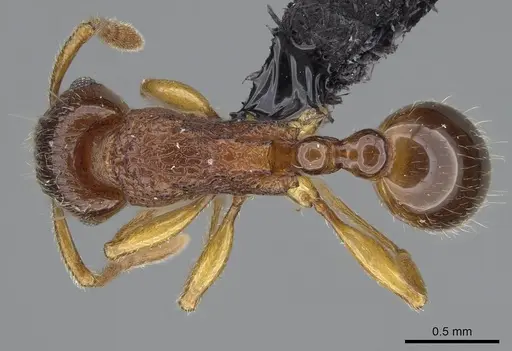
Within the Tetramorium schaufussii species complex, T. merina stands out as a relatively large species. Workers have a head width (HW) of 0.69-0.79mm and Weber's length (WL) of 1.01-1.10mm, making them larger than most related species [1]. The most distinctive features are the very short propodeal spines (reduced to small triangular teeth with PSLI values of only 8-11), the rounded nodiform petiolar node, and the presence of long standing hairs on the waist segments, a trait that helps distinguish them from similar species like T. sikorae which lacks pilosity on the waist [1]. The eyes are relatively large (OI 26-28), and the body is uniformly light to dark brown with the gaster often darker than the rest of the body [1]. For antkeepers, the combination of large eyes, short propodeal spines, and hairy waist segments are the key features to identify this species.
Housing and Nest Setup
Based on their natural habitat in leaf litter and rotting wood, these ants do best in naturalistic or semi-naturalistic setups that mimic the forest floor. A Y-tong (AAC) nest or plaster nest with moist substrate works well, providing the humidity retention they need while allowing for observation [2]. The nest should have chambers scaled to their 4-5mm worker size, not too large or too small. Include a water reservoir or moisture gradient so the ants can self-regulate their humidity. Since they come from montane rainforests, avoid temperatures above 26°C as this may stress the colony. Provide an outworld with leaf litter, soil, and small hiding spots to simulate their natural leaf litter environment. Standard escape prevention is sufficient, their medium size means they cannot squeeze through properly sealed formicarium edges.
Feeding and Diet
Like most Tetramorium species, T. merina is likely a generalist forager that feeds on small invertebrates, honeydew from aphids, and nectar. In captivity, offer a varied diet including sugar water or honey as an energy source, and protein sources such as small insects (fruit flies, pinhead crickets, mealworms) [2]. They are not specialized predators, so any small live or dead arthropods will likely be accepted. Feed protein sources 2-3 times per week and provide a constant sugar source. Remove uneaten food after 24-48 hours to prevent mold. Since they are leaf litter foragers, they will likely send workers out to hunt and collect food rather than relying on trophallaxis from tended aphids.
Temperature and Seasonal Care
As a montane species from 1400-1700m elevation in Madagascar's Central Highlands, T. merina prefers cooler temperatures than many tropical ants. Keep the nest at 20-24°C, with a slight gradient if possible. Room temperature (around 22°C) is likely ideal. Avoid placing the nest in direct sunlight or near heat sources that could push temperatures above 26°C. During winter, a slight reduction to 15-18°C may simulate their natural seasonal cycle, though their highland origin means they may not require a true diapause. Monitor colony activity, if workers become lethargic, check temperature, if they avoid the heated side, reduce heat. The key is stability, avoid sudden temperature swings. [1]
Colony Development and Growth
The colony development timeline for T. merina specifically has not been studied, but based on related Tetramorium species, expect 6-10 weeks from egg to first worker (nanitic) at optimal temperature [1]. Initial colony growth is typically slow as the queen raises her first few workers alone. Once the first nanitics emerge, growth accelerates but remains moderate compared to faster-growing genera like Lasius or Tapinoma. Colonies likely reach several hundred workers over time, though the maximum size is unconfirmed. Be patient with founding colonies, disturbing the queen during the claustral founding period can be fatal. Do not feed the queen during founding, she has sufficient fat reserves to raise her first brood alone.
Frequently Asked Questions
How long does it take for Tetramorium merina to raise their first workers?
The exact timeline for T. merina is unconfirmed, but based on related Tetramorium species, expect 6-10 weeks from egg to first worker at room temperature (around 22°C). The queen will seal herself in during claustral founding and raise the first brood alone using stored fat reserves. Do not disturb the founding chamber during this period.
What temperature is best for Tetramorium merina?
Keep Tetramorium merina at 20-24°C. As a montane species from Madagascar's Central Highlands, they prefer cooler conditions than typical tropical ants. Room temperature around 22°C is ideal. Avoid temperatures above 26°C as this may stress the colony.
Can I keep Tetramorium merina in a test tube?
Yes, test tubes work well for founding colonies. Use a standard test tube setup with a water reservoir and cotton plug. Keep the tube in a dark, humid location at 20-24°C. Once the colony grows beyond 20-30 workers, consider moving them to a more spacious nest like a Y-tong or plaster formicarium.
What do Tetramorium merina ants eat?
They are generalist feeders. Offer sugar water or honey as an energy source, and small insects like fruit flies, pinhead crickets, or mealworms for protein. Feed protein 2-3 times per week and provide constant access to sugar. Remove uneaten food after 24-48 hours to prevent mold.
Are Tetramorium merina ants aggressive?
No, they are relatively docile. They are not particularly aggressive and rarely bite. Workers are small-medium at 4-5mm and are more likely to flee than fight. Standard formicarium handling is safe.
Do Tetramorium merina ants need hibernation?
Hibernation requirements are unconfirmed. As a montane species from a mild subtropical climate, they likely do not require a true diapause. However, a slight winter slowdown at 15-18°C may be beneficial. More research is needed on their exact seasonal requirements.
How big do Tetramorium merina colonies get?
The maximum colony size is unconfirmed for this species. Based on related Tetramorium species, colonies likely reach several hundred workers over time. Growth is moderate, expect several months to a year to reach 50+ workers from a founding colony.
Is Tetramorium merina a good species for beginners?
This species is rated as medium difficulty. While not the most challenging ant, there is limited species-specific care information available since it was described in 2014. Beginners should be comfortable adapting care from related Tetramorium species. The main challenges are maintaining proper humidity and avoiding overheating.
Do Tetramorium merina ants sting?
Tetramorium species have a functional stinger but their sting is mild. These ants are not aggressive and rarely use their stinger. The sting sensation would be similar to a minor bee sting, brief pain and mild irritation. Handle gently and they are unlikely to sting.
When should I move Tetramorium merina to a formicarium?
Move from a test tube to a proper nest when the colony reaches 20-30 workers and the test tube shows signs of drying or crowding. A Y-tong or plaster nest with moisture gradient works well. Ensure the new nest can maintain humidity and has appropriately sized chambers for their 4-5mm workers.
References

This caresheet is licensed under CC BY-SA 4.0 .
Literature
Loading...Loading products...