

Tetramorium ictidum
- Scientific Name
- Tetramorium ictidum
- Tribe
- Crematogastrini
- Subfamily
- Myrmicinae
- Author
- Bolton, 1980
- Distribution
- Found in 1 countries
Tetramorium ictidum Overview
Tetramorium ictidum is an ant species of the genus Tetramorium. It is primarily documented in 1 countries , including Gabon. Detailed taxonomic data and occurrence records can be further explored via authoritative databases such as AntWeb or the Global Biodiversity Information Facility (GBIF).
Tetramorium ictidum
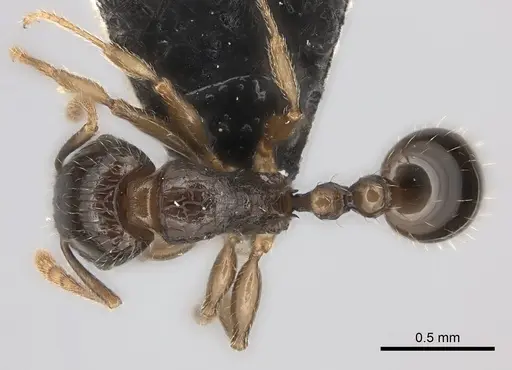
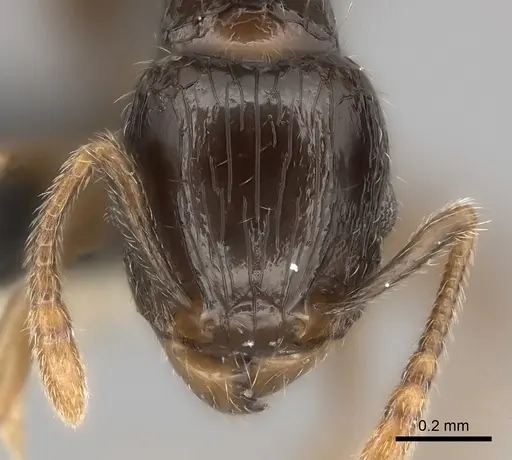
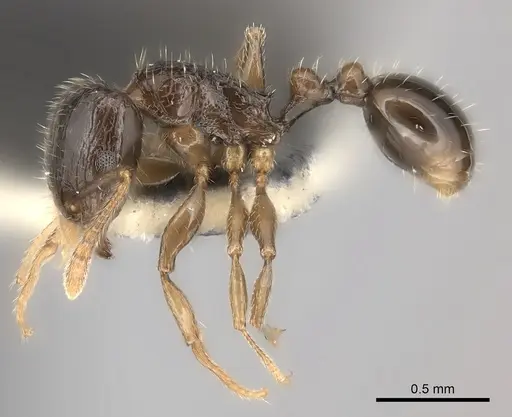
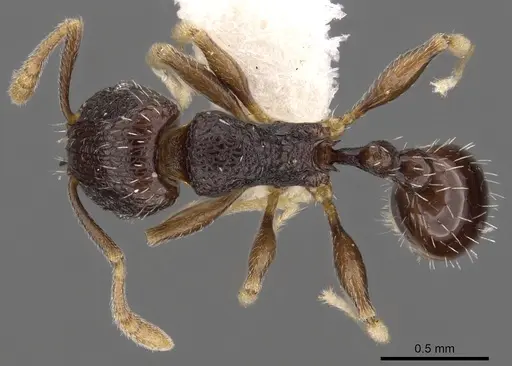
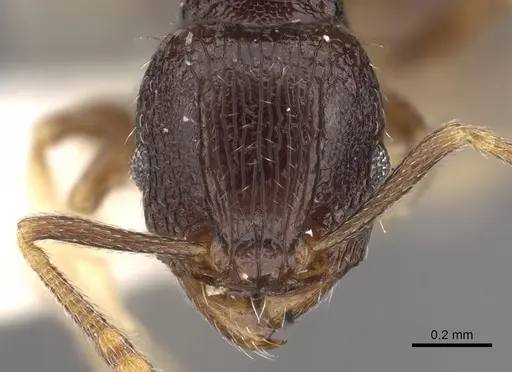
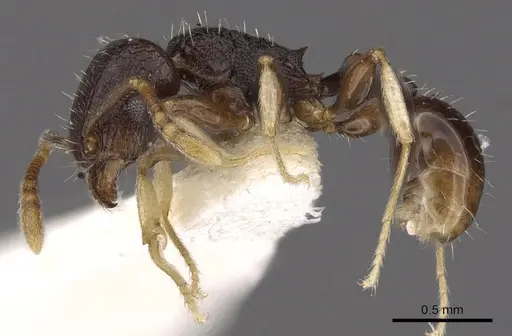
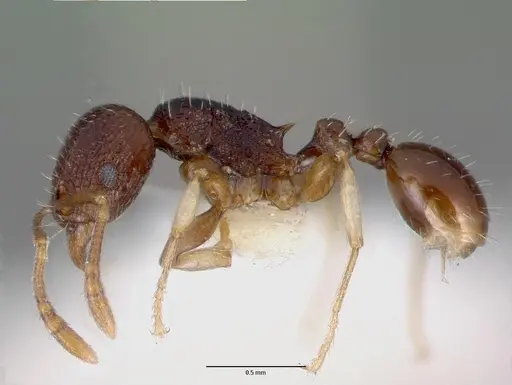
Tetramorium ictidum is a small, uniformly dark brown ant measuring 2.7-2.9mm in total length. It belongs to the Tetramorium camerunense species group and is part of a complex of four uniformly dark-colored species. The workers have a distinctive feature: conspicuous ground-sculpture on the dorsum of the head, which helps separate this species from its relatives. The petiole node is as long as or slightly longer than broad when viewed from above, and the pronotum is densely rugulose. These ants are native to the Afrotropical region, with confirmed populations in Cameroon, Gabon, Ghana, and Uganda.
What makes T. ictidum particularly interesting is its unexpected nesting behavior. Early collections only found workers in leaf litter samples, leading researchers to classify it as a 'litter' species. However, more recent studies in central African forests confirmed these ants actually nest in the canopy, they were observed nesting directly in focal trees, showing that this species is arboreal rather than ground-dwelling [1][2]. This is unusual for a species once thought to be a leaf-litter dweller.
Quick Summary
- Difficulty: Medium
- Origin & Habitat: Found in Cameroon, Gabon, Ghana, and Uganda. This species strongly prefers moist habitats, collections come from rainforest canopy samples and swamp forest litter [3]. The canopy nesting is unusual since early specimens were only known from leaf litter samples.
- Colony Type: Colony structure is unconfirmed. Based on typical Tetramorium patterns, likely single-queen colonies, but this has not been directly studied.
- Size & Growth:
- Queen: Unconfirmed, no documented measurements for queens
- Worker: 2.7-2.9mm total length, HW 0.62-0.66mm
- Colony: Likely small to moderate, typical Tetramorium colonies reach several hundred workers
- Growth: Moderate, estimated based on typical Tetramorium development
- Development: 6-10 weeks at optimal temperature, estimated based on related Tetramorium species (Development time is unconfirmed for this specific species. Related Tetramorium species typically take 6-10 weeks from egg to worker at warm temperatures.)
- Antkeeping:
- Temperature: Keep around 24-28°C, these are tropical ants from rainforest habitats. A gentle gradient allowing them to choose their preferred temperature works well.
- Humidity: High humidity is essential, they come from rainforest canopy and swamp forest habitats. Keep the nest substrate consistently moist but not waterlogged. Mist occasionally and provide a water tube.
- Diapause: No, as a tropical species from central Africa, they do not require hibernation. Maintain warm temperatures year-round.
- Nesting: Arboreal nesting preference suggests they do well in Y-tong (AAC) nests or plaster nests with moisture chambers. The small worker size means narrow chambers work better. Avoid completely dry setups.
- Behavior: These ants are subordinate at food baits, they retreat when confronted by more aggressive species rather than fighting [1][2]. This peaceful temperament means they are not aggressive and unlikely to bite. Workers are small (under 3mm) so escape prevention is important, use fine mesh and tight-fitting lids. They are not known to be escape artists, but their small size means they can slip through small gaps.
- Common Issues: high humidity is critical, dry conditions will stress and kill colonies since they're adapted to rainforest canopy, small size means escapes are possible without proper barriers, use fine mesh and check lid seals regularly, subordinate behavior means they may lose food competition to larger, more aggressive ants if housed in shared spaces, tropical warmth requirements mean room temperature alone may be insufficient in cooler climates, consider gentle heating
Housing and Nest Setup
Since T. ictidum is arboreal and prefers moist conditions, a Y-tong (AAC) nest or plaster nest with moisture chambers works well. The small worker size (under 3mm) means you should use narrow chambers and passages scaled to their body size. A test tube setup can work for founding colonies, but monitor moisture levels carefully, these ants need consistent dampness without flooding. The nest should have a water reservoir or moisture chamber to maintain humidity. Avoid completely dry formicarium setups, as dry conditions will stress and kill these rainforest-adapted ants. An outworld area for foraging completes the setup. [1][2][3]
Feeding and Diet
Like most Tetramorium species, these ants are generalist feeders that likely consume honeydew, small insects, and seeds in the wild. In captivity, offer sugar water or honey as a constant energy source. For protein, provide small live prey like fruit flies, pinhead crickets, or mealworm pieces. Since they are small ants, prey items should be appropriately sized, nothing larger than their body width. Feed protein 2-3 times per week and keep sugar sources available at all times. Remove uneaten prey after 24 hours to prevent mold.
Temperature and Humidity
Maintain temperatures between 24-28°C, these are tropical ants from central African rainforests and need consistent warmth. A heating cable on one side of the nest can create a temperature gradient, allowing workers to self-regulate. Place the heating element on top of the nest to avoid evaporating moisture too quickly. Humidity is critical: keep the nest substrate consistently moist but not waterlogged. The substrate should feel damp to the touch. Mist the nest occasionally and ensure the water tube is always filled. Poor humidity quickly stresses these ants. [1][2]
Behavior and Colony Dynamics
T. ictidum workers are small and peaceful, studies show they behave as subordinate species at food baits, retreating rather than fighting when confronted by more aggressive ants [1][2]. This means they are not aggressive and unlikely to deliver a painful sting. Workers are active foragers but their small size means they cannot tackle large prey. The colony likely consists of a single queen plus workers, brood, and potentially alates (reproductive ants). As the colony grows, you may see alates develop in the colony, these are the winged reproductive males and females that will leave to start new colonies.
Growth and Development
The development timeline for T. ictidum specifically has not been documented, but based on related Tetramorium species, expect 6-10 weeks from egg to worker at optimal temperature. The first workers (nanitics) will be smaller than fully-grown workers. Growth rate is moderate, not the fastest but steady under proper conditions. The colony will likely remain small to moderate in size, potentially reaching several hundred workers over time. Patience is key during the founding stage, a newly mated queen may take several months to establish her first worker batch.
Frequently Asked Questions
How long does it take for Tetramorium ictidum to get their first workers?
The exact timeline is unconfirmed, but based on related Tetramorium species, expect 6-10 weeks from egg to first worker at optimal temperature (around 26°C). The queen will lay eggs, which develop through larval and pupal stages before emerging as workers. This process takes longer in cooler temperatures.
Do Tetramorium ictidum ants sting?
Myrmicinae ants like Tetramorium have functional stingers, but this species is small and peaceful. They are subordinate at baits and unlikely to sting unless directly threatened. Even if they do sting, the effect would be minimal due to their tiny size.
What size colony does Tetramorium ictidum reach?
Colony size is unconfirmed but likely reaches several hundred workers based on typical Tetramorium patterns. They are not among the largest Tetramorium species, so expect moderate colony sizes rather than massive supercolonies.
Can I keep multiple Tetramorium ictidum queens together?
Colony structure has not been studied for this species. Based on typical Tetramorium behavior, they likely form single-queen colonies. Combining unrelated queens is not recommended since this has not been documented and could result in fighting.
Do Tetramorium ictidum need hibernation?
No, these are tropical ants from central African rainforests. They do not require hibernation or winter cooling. Maintain warm temperatures (24-28°C) year-round. Cooler temperatures will slow their metabolism and may stress the colony.
What do Tetramorium ictidum eat?
They are generalist feeders. Offer sugar water or honey as a constant energy source, and small live prey like fruit flies, small crickets, or mealworm pieces for protein. Feed protein 2-3 times per week and remove uneaten prey after 24 hours.
Are Tetramorium ictidum good for beginners?
This species is rated Medium difficulty. They require high humidity and warm temperatures, which can be challenging to maintain consistently. Their small size also requires attention to escape prevention. If you have experience with tropical Myrmicinae and can maintain proper humidity, they can be a rewarding species to keep.
Why are my Tetramorium ictidum dying?
The most common causes are low humidity (they need consistently moist conditions), temperatures that are too cool (below 24°C), or escape through small gaps. Check that the nest substrate stays damp, temperatures are in the 24-28°C range, and that all lid seals are secure. Dry conditions kill these rainforest-adapted ants quickly.
When should I move Tetramorium ictidum to a formicarium?
Keep them in a test tube setup for the founding stage. Once the colony reaches 30-50 workers and you see consistent brood development, you can consider moving to a formicarium. The transition should include a familiar moisture source and similar humidity levels to reduce stress.
References

This caresheet is licensed under CC BY-SA 4.0 .


Literature
Loading...Loading products...