

Tetramorium curtulum
- Scientific Name
- Tetramorium curtulum
- Tribe
- Crematogastrini
- Subfamily
- Myrmicinae
- Author
- Emery, 1895
- Distribution
- Found in 2 countries
Tetramorium curtulum Overview
Tetramorium curtulum is an ant species of the genus Tetramorium. It is primarily documented in 2 countries , including Brunei Darussalam, Malaysia. Detailed taxonomic data and occurrence records can be further explored via authoritative databases such as AntWeb or the Global Biodiversity Information Facility (GBIF).
Tetramorium curtulum
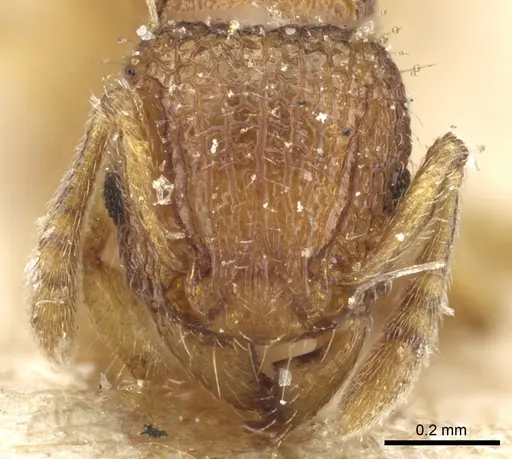
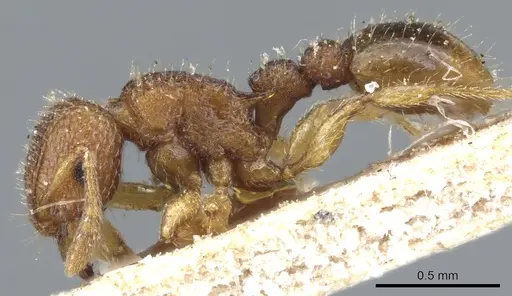
Tetramorium curtulum is a tiny ant measuring just 2.8-3.1mm in total length, belonging to the Myrmicinae subfamily [1]. Workers are yellowish brown to reddish brown with small eyes that are distinctive within the scabrosum species group, most related species have much larger eyes [1]. The head and body are covered in numerous hairs, and the antennae have longer stiff hairs projecting beyond the short pubescence [1]. This species is a member of the Tetramorium scabrosum group, recognizable by its reduced eye size compared to relatives [1].
These ants live in rainforest leaf litter across Southeast Asia, where they forage on the ground both day and night . They show a strong preference for ground-level habitats rather than tree trunks, and are attracted to food baits placed at ground level . Their trophic position indicates they function as predators or scavengers in the leaf litter ecosystem [2][3].
Quick Summary
- Difficulty: Medium
- Origin & Habitat: Found across the Indomalaya region including Borneo, Indonesia, Malaysia, Myanmar, Singapore, and southern China (Hainan Province) [4]. In their native range, they live in rainforest leaf litter, one collection specifically notes they were found in rainforest leaf litter [4]. They show statistically significant preference for ground habitat over arboreal sites .
- Colony Type: Colony structure is unconfirmed. Based on typical Tetramorium patterns, likely single-queen colonies, but this requires verification.
- Size & Growth:
- Queen: Unknown, not documented in available literature [1]
- Worker: 2.8-3.1mm total length [1]
- Colony: Unknown, no colony size data available
- Growth: Unknown, no development data available
- Development: Estimated 4-8 weeks based on typical tropical Myrmicinae development (Development time is unconfirmed for this species. Tropical Tetramorium species typically develop faster than temperate species due to consistently warm temperatures.)
- Antkeeping:
- Temperature: Keep at 24-28°C, they are a tropical species from rainforest habitats. Room temperature (22-25°C) is likely suitable, but a slight heating gradient can encourage activity.
- Humidity: High humidity is essential, these ants live in rainforest leaf litter where conditions are consistently damp [4]. Keep the nest substrate moist but not waterlogged, with some drier areas available. Aim for 70-85% humidity in the nest area.
- Diapause: No, as a tropical species, they do not require hibernation. They remain active year-round in captivity.
- Nesting: Natural nesting occurs in leaf litter and rotting wood. In captivity, a small test tube setup works well for founding colonies. For established colonies, a Y-tong (AAC) nest or small acrylic formicarium with tight chambers scaled to their tiny size works best. Avoid large, open spaces.
- Behavior: These are small, ground-dwelling ants that forage primarily on the ground surface. They are not aggressive and typically flee from threats rather than engage. However, their tiny size (under 3mm) makes them excellent escape artists, they can squeeze through remarkably small gaps. They are scavengers/predators in the leaf litter ecosystem, likely feeding on small invertebrates and sweet liquids. Activity patterns show no significant day/night preference .
- Common Issues: escape prevention is critical, their tiny size allows them to squeeze through standard barrier gaps, small size means they need very small prey items like springtails or fruit flies, high humidity requirements can lead to mold issues if ventilation is poor, wild-caught colonies from leaf litter may contain parasites that can devastate captive colonies, slow founding phase, claustral queens may take weeks sealed in before first workers emerge
Housing and Nest Setup
For Tetramorium curtulum, you need to match the setup to their tiny size. A standard test tube setup works well for founding colonies, use a small test tube with a cotton plug for the water reservoir, ensuring the chamber is appropriately sized for a claustral queen. For established colonies, a Y-tong (AAC) nest with narrow chambers or a small acrylic formicarium works best. The chambers should be tight-fitting, these ants are only 2.8-3.1mm and can escape through surprisingly small gaps. Avoid large, open spaces in the nest as these small ants feel more secure in compact chambers. A layer of substrate (soil or plaster) should be kept consistently moist to match their rainforest leaf litter origin. [4]
Feeding and Diet
Based on their trophic position in the wild (δ15Ncor values of 5.79-6.44 indicate a predator/scavenger role in the ecosystem), these ants are primarily protein feeders [2][3]. Offer small live prey items appropriate to their size: fruit flies, pinhead crickets, small mealworms, and most importantly, springtails are ideal. They will also accept sugar sources like honey water or sugar water, though protein should form the bulk of their diet. Feed small amounts 2-3 times per week, removing any uneaten prey after 24 hours to prevent mold. Because of their tiny size, portion sizes should be very small, a single fruit fly is a substantial meal for these ants.
Temperature and Humidity
As a tropical species from Southeast Asian rainforests, Tetramorium curtulum needs warm, humid conditions. Keep the nest area at 24-28°C, room temperature in most homes falls within this range, but you may need a heating cable on one side of the nest during cooler months. Use a digital thermometer to monitor temperatures. Humidity is critical: maintain 70-85% relative humidity in the nest area. The substrate should feel damp to the touch but never waterlogged. You can achieve this by keeping the water reservoir in test tube setups full, or by misting the nest area regularly. However, balance humidity with adequate ventilation to prevent mold growth, stagnant, overly humid air is as dangerous as dry conditions. [4]
Escape Prevention
This is perhaps the most critical aspect of keeping Tetramorium curtulum. At just 2.8-3.1mm, these ants are exceptional escape artists that can squeeze through gaps that seem impossible. Use multiple layers of defense: apply Fluon or similar barrier gel to the edges of formicarium lids, ensure all connection points are sealed, and consider using fine mesh (0.5mm or smaller) on any ventilation holes. Even a tiny crack around a lid is an escape route for these ants. Check enclosures daily, especially in the first weeks of establishing a colony. When using test tube setups, wrap parafilm around the connection points where tubing meets the outworld.
Colony Establishment
If you obtain a founding queen, she will likely seal herself in a small chamber (claustral founding, based on typical Tetramorium behavior). She will remain sealed while laying eggs and raising the first brood on her stored fat reserves. Do not disturb her during this phase, checking too frequently can cause her to abandon or consume her brood. First workers (nanitics) will be smaller than mature workers and may take 4-8 weeks to emerge, depending on temperature. Once workers emerge, they will begin foraging for food. Introduce small prey items near the nest entrance. The colony will grow slowly at first but accelerates once the first generation of workers is established.
Frequently Asked Questions
How long does it take for Tetramorium curtulum to have first workers?
The exact timeline is unconfirmed, but based on typical tropical Myrmicinae development, expect 4-8 weeks from egg to first worker at optimal temperature (24-28°C). The claustral queen seals herself in and raises the first brood on stored fat reserves, so patience is essential during the founding phase.
Can I keep Tetramorium curtulum in a test tube?
Yes, a test tube setup works well for founding colonies. Use a small test tube with a cotton water reservoir. The tube should be appropriately sized, not too large for the queen to feel secure. Keep the setup humid and warm, and provide small prey items once workers emerge.
What do Tetramorium curtulum ants eat?
They are predators/scavengers in the wild. In captivity, feed small live prey like springtails, fruit flies, and tiny crickets. They will also accept sugar water or honey. Protein should form the main diet, with sugar offered occasionally.
Do Tetramorium curtulum ants sting?
As Myrmicinae, they have a stinger, but given their tiny size (under 3mm), any sting would be negligible to humans. They are not aggressive and will typically flee rather than defend.
Are Tetramorium curtulum good for beginners?
This species is rated as Medium difficulty. While Tetramorium as a genus is generally hardy, the small size and specific humidity requirements make them more challenging than larger, more adaptable species. Beginners should master easier species first.
How big do Tetramorium curtulum colonies get?
Colony size data is not available in the literature. Based on their small worker size and leaf litter habitat, colonies likely reach several hundred workers at most, similar to other Tetramorium species.
Do Tetramorium curtulum need hibernation?
No, they are a tropical species from Southeast Asia and do not require hibernation. They remain active year-round in captivity. Simply maintain warm, humid conditions throughout the year.
Why are my Tetramorium curtulum escaping?
Their tiny size (2.8-3.1mm) makes them excellent escape artists. Review your escape prevention: apply Fluon to lid edges, use fine mesh on vents, and seal all connection points. Even tiny gaps that seem insignificant can allow escape.
What temperature is ideal for Tetramorium curtulum?
Keep them at 24-28°C. This matches their tropical rainforest origin. Room temperature (22-25°C) in most homes is acceptable, but a slight heating gradient can encourage activity and faster brood development.
References

This caresheet is licensed under CC BY-SA 4.0 .
CASENT0280892
View on AntWeb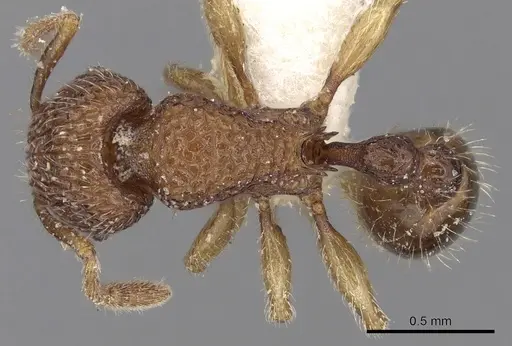
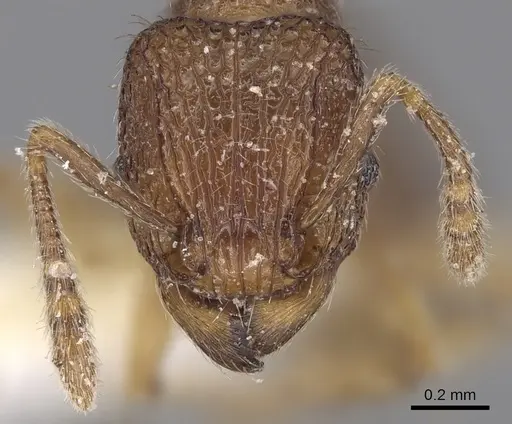
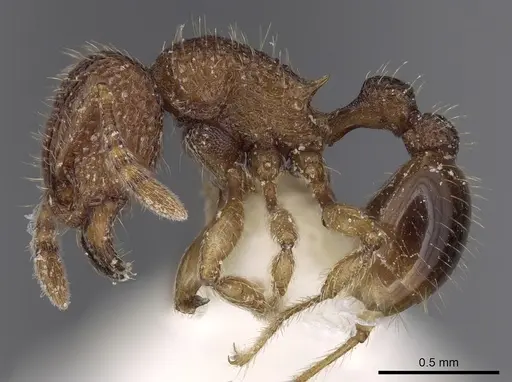
CASENT0904853
View on AntWeb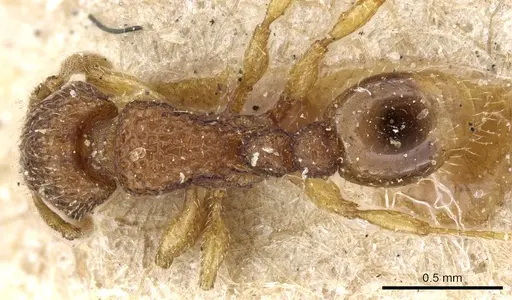
Literature
Loading...Loading products...