

Tetramorium candidum
- Scientific Name
- Tetramorium candidum
- Tribe
- Crematogastrini
- Subfamily
- Myrmicinae
- Author
- Bolton, 1980
- Distribution
- Found in 2 countries
Tetramorium candidum Overview
Tetramorium candidum is an ant species of the genus Tetramorium. It is primarily documented in 2 countries , including Rwanda, Tanzania, United Republic of. Detailed taxonomic data and occurrence records can be further explored via authoritative databases such as AntWeb or the Global Biodiversity Information Facility (GBIF).
Tetramorium candidum
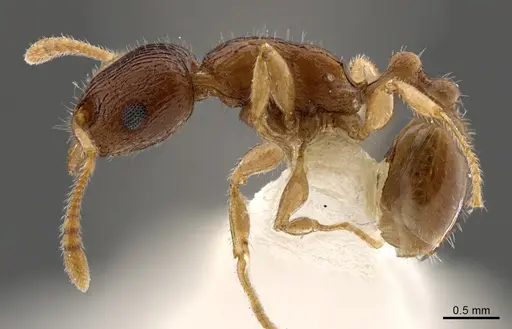
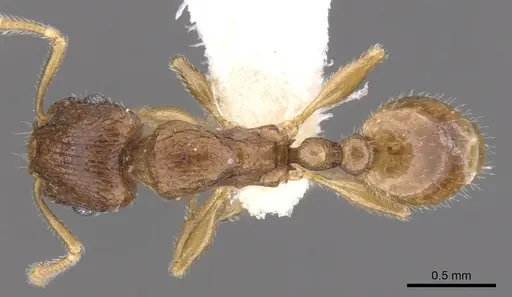
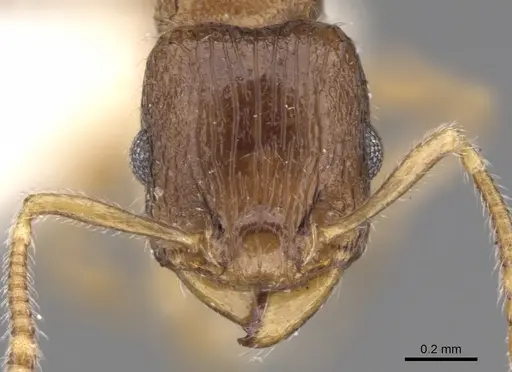
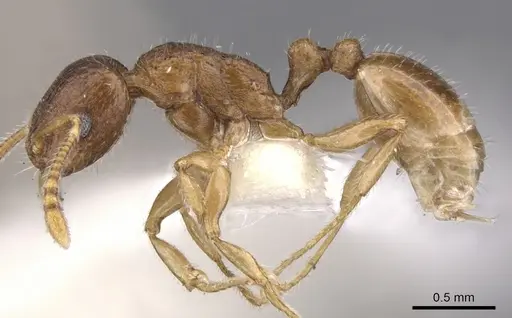
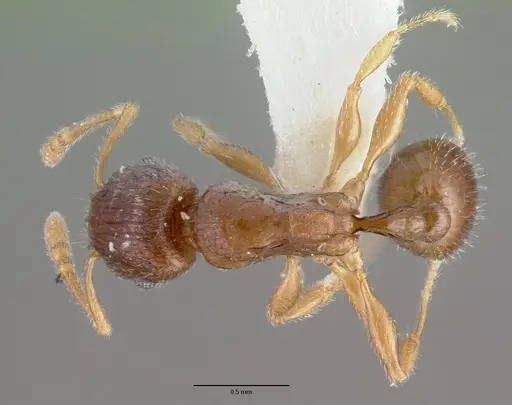
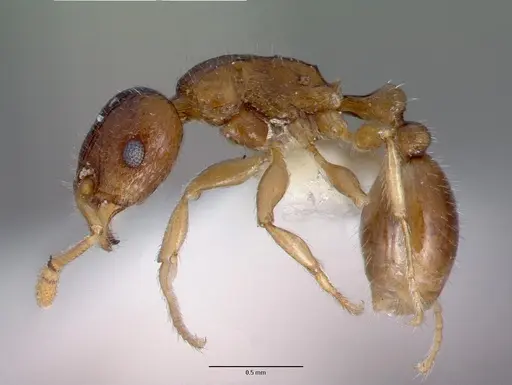
Tetramorium candidum is a small ant species measuring 3.1-3.3mm in total length, with workers displaying a light brown coloration and yellowish brown appendages [1]. The species belongs to the Myrmicinae subfamily and was formally described by Bolton in 1980. Workers are characterized by their smooth and shining gaster, short fine acute hairs on dorsal body surfaces, and distinctive suberect to subdecumbent short pubescence on both the leading edges of the antennal scapes and the dorsal surfaces of hind tibiae. These ants are part of the dumezi-complex and can be distinguished from related species like T. isipingense by their completely smooth and shining gaster, whereas T. isipingense has a finely and densely punctulate gaster.
The species has been documented across the Afrotropical region, with confirmed sightings in the Democratic Republic of Congo (the type locality at Lwiro River near Bukavu at 1950m elevation), Rwanda (Nyungwe tropical rain forest), Kenya, and Tanzania (Mkomazi Game Reserve) [2][1]. Found in high-altitude locations and tropical rainforest environments, this appears to be a forest-dwelling species, though its specific biology and colony structure remain unstudied.
Quick Summary
- Difficulty: Unknown
- Origin & Habitat: Democratic Republic of Congo, Rwanda, Kenya, and Tanzania. Type locality is Lwiro River,47km north of Bukavu at 1950m elevation. Found in tropical rainforest (Rwanda) and savannah environments (Tanzania). [1][2]
- Colony Type: Unconfirmed, colony structure and queen number have not been documented in scientific literature
- Size & Growth:
- Queen: Unknown, not described in available literature
- Worker: 3.1-3.3mm total length [1]
- Colony: Unknown, no colony size data available
- Growth: Unknown
- Development: Unknown, no development data available for this species (Development timeline is unconfirmed. Based on typical Tetramorium patterns, expect 6-10 weeks at optimal temperature, but this is an estimate.)
- Antkeeping:
- Temperature: Based on high-altitude (1950m) and tropical rainforest habitat, likely prefers moderate temperatures around 20-24°C. Provide a temperature gradient allowing ants to self-regulate.
- Humidity: Based on tropical rainforest collection sites in Rwanda, likely requires moderate to high humidity (60-80%). Keep substrate consistently moist but not waterlogged.
- Diapause: Unknown, no documented overwintering behavior. High-altitude origin suggests potential for cooler period dormancy, but specifics are unconfirmed.
- Nesting: No specific nesting data available. Based on typical Tetramorium behavior and forest habitat, likely nests in soil or under stones. In captivity, a test tube setup or small acrylic/plaster nest with moist substrate would be appropriate.
- Behavior: Behavior is unstudied. Based on typical Tetramorium genus traits, these are likely ground-nesting ants with moderate foraging activity. Their small size (3.1-3.3mm) means escape prevention is important, use fine mesh barriers. Temperament is likely similar to other Tetramorium species: generally non-aggressive but will defend the nest if threatened.
- Common Issues: completely unstudied biology means care requirements are largely inferred, monitor colony closely and adjust conditions based on behavior, small worker size (3.1-3.3mm) creates escape risk, use tight-fitting lids and fine mesh barriers, no colony size data available, growth expectations are uncertain, no documented diet preferences, start with standard ant foods (sugar sources, small protein prey) and observe acceptance, high-altitude origin may mean they are sensitive to overheating, avoid temperatures above 28°C
Identification and Distinguishing Features
Tetramorium candidum workers are small ants measuring 3.1-3.3mm in total length, making them comparable in size to many other small Tetramorium species. The most distinctive morphological features include the smooth and shining gaster (abdomen), which quickly separates this species from its close relative T. isipingense, the latter has a finely and densely punctulate gaster. Workers also possess erect to suberect short pubescence on the hind tibiae and on the leading edges of the antennal scapes, a feature shared only with T. isipingense within the dumezi-complex. The dorsal body surfaces are covered with numerous short fine acute hairs, though these are notably shorter than the maximum diameter of the eye. The body coloration is light brown with yellowish brown appendages.[1]
Distribution and Habitat
This species has a scattered distribution across the Afrotropical region. The type locality is in the Democratic Republic of Congo, specifically the Lwiro River area approximately 47km north of Bukavu, at an elevation of 1950m. This high-altitude location suggests the species can tolerate cooler conditions than typical lowland tropical ants. The species has been recorded in Rwanda at the Nyungwe tropical rain forest (Karamba site), representing the first record for that country. In Tanzania, a single specimen was collected from Mkomazi Game Reserve on Heywoodia lucens, indicating potential arboreal or tree-associated behavior. The presence in both high-altitude DRC and tropical Rwanda suggests adaptability to different forest environments. [1][2]
Temperature and Care
Since no specific care data exists for this species, we must make informed inferences from its natural habitat. The high-altitude type locality (1950m in DRC) and tropical rainforest collection in Rwanda suggest moderate temperature requirements, aim for roughly 20-24°C as a starting point. Avoid overheating, as high-altitude origins typically indicate sensitivity to excessive heat. Provide a temperature gradient within the enclosure so ants can self-regulate by moving between warmer and cooler areas. A heating cable on one side of the nest (placed on top to avoid drying) can create this gradient. Monitor colony activity: if workers cluster consistently in cooler areas, reduce temperatures, if they seem sluggish and cluster near warmth, slight increases may help. The moderate elevation of the type locality suggests they may tolerate brief cooler periods but should not be exposed to cold temperatures typical of temperate species hibernation.
Humidity and Nesting
Based on collection in Rwanda's tropical rainforest and the humid conditions typical of such habitats, these ants likely require moderate to high humidity levels (60-80% relative humidity). Keep the nest substrate consistently moist but not waterlogged, the substrate should feel damp to the touch with no standing water. Allow some variation within the enclosure so ants can choose between moister and slightly drier areas. For nesting in captivity, standard setups work well: test tubes with water reservoirs (filled cotton) provide consistent moisture, or small acrylic/plaster nests designed for small Myrmicinae ants. The small worker size (3.1-3.3mm) means chambers and passages should be appropriately scaled, avoid large, open spaces that might make them feel exposed. Adequate ventilation is important to prevent mold while maintaining humidity.
Feeding and Diet
The diet of Tetramorium candidum has not been documented, but typical Tetramorium species are generalist omnivores that readily accept sugar sources (honey, sugar water) and protein (small insects, mealworms, fruit flies). Start by offering a sugar water solution (roughly 1:4 sugar to water ratio) and small protein items like fruit fly pupae or tiny pieces of mealworm. Observe acceptance and adjust feeding accordingly. Given their small size, prey items should be appropriately sized, very small arthropods or pre-killed insect pieces work better than large prey. Feed protein roughly 2-3 times per week, and ensure sugar sources are available continuously, replacing every 2-3 days to prevent fermentation. Remove any uneaten prey after 24-48 hours to maintain enclosure hygiene.
Behavior and Temperament
Specific behavioral observations for this species are unavailable in scientific literature. However, Tetramorium species generally are not particularly aggressive and focus on foraging for food rather than defending territory. Workers are likely active foragers that search for both sugar sources and small prey. The small worker size (3.1-3.3mm) means these ants can potentially escape through very small gaps, excellent escape prevention is essential. Use tight-fitting lids, apply fluon or similar barrier products to container edges, and ensure any ventilation holes are covered with fine mesh (at least 0.5mm or finer). Unlike some larger ant species, they are not strong climbers on smooth surfaces but can easily navigate rough textures and fabric. Expect moderate activity levels, not among the most active ants but certainly not sluggish.
Frequently Asked Questions
How long does it take for Tetramorium candidum to produce first workers?
The egg-to-worker development timeline is unconfirmed for this species, no scientific data exists on their development. Based on typical Tetramorium genus patterns, expect approximately 6-10 weeks from egg to first worker at optimal temperature (around 22-24°C). However, this is an estimate and actual times may vary.
What do Tetramorium candidum ants eat?
Diet is unconfirmed for this specific species. Based on typical Tetramorium behavior, they likely accept sugar sources (honey, sugar water) and small protein prey (fruit flies, tiny insects, mealworm pieces). Start with sugar water continuously available and small protein offerings 2-3 times weekly. Adjust based on what your colony actually accepts.
Can I keep Tetramorium candidum in a test tube?
Yes, a test tube setup is appropriate for this species, especially for founding colonies. Use a small test tube with a water reservoir (cotton-filled section) to maintain humidity. The small worker size (3.1-3.3mm) means even standard test tube setups work well. Ensure excellent escape prevention, their small size allows them to squeeze through tiny gaps.
Do Tetramorium candidum ants sting?
Tetramorium species belong to the Myrmicinae subfamily, which includes ants with functional stingers. However, Tetramorium ants are not known for particularly painful stings and are generally docile. The sting risk is minimal compared to some other Myrmicinae like Pogonomyrmecini (harvester ants). Still, individual reactions vary, and some people may experience mild irritation.
What temperature should I keep Tetramorium candidum at?
Based on their high-altitude origin (1950m in DRC) and tropical rainforest habitat in Rwanda, aim for moderate temperatures around 20-24°C. Avoid overheating, temperatures above 28°C may be harmful. Provide a temperature gradient so ants can self-regulate. Start at room temperature (if within this range) and adjust based on colony behavior.
How big do Tetramorium candidum colonies get?
Colony size is unconfirmed for this species, no scientific data exists on maximum colony sizes. Based on typical Tetramorium species and their small worker size (3.1-3.3mm), colonies likely remain relatively modest, possibly under several hundred workers. Related species in the genus typically form colonies ranging from dozens to a few hundred individuals.
Are Tetramorium candidum good for beginners?
Difficulty level is difficult to assess since this species has no documented care history. The lack of biological data means you will be largely pioneering husbandry techniques based on inference from related species. This makes it a species for experienced antkeepers who can interpret colony behavior and adjust conditions accordingly, rather than beginners who benefit from species with well-documented care requirements.
Do Tetramorium candidum need hibernation?
Diapause requirements are unconfirmed. The high-altitude origin (1950m) suggests they may experience seasonal temperature variations, but specific overwintering behavior has not been documented. If your colony shows reduced activity during cooler months, a brief cool period (perhaps 2-3 months at 15-18°C) may be appropriate, but this is speculative. Monitor your colony's annual activity cycle and adjust accordingly.
Why are my Tetramorium candidum dying?
Without species-specific data, common causes could include: temperature stress (too hot or too cold), humidity issues (too dry or waterlogged), escape-related mortality (check for tiny gaps), poor nutrition, or stress from inadequate nesting space. Since biology is unstudied, systematic issues may be at play. Document your conditions carefully and make one change at a time to identify problems. Consider consulting experienced keepers who have worked with similar Tetramorium species.
References

This caresheet is licensed under CC BY-SA 4.0 .

Literature
Loading...Loading products...