

Tetramorium bicolorum
- Scientific Name
- Tetramorium bicolorum
- Tribe
- Crematogastrini
- Subfamily
- Myrmicinae
- Author
- Vásquez-Bolaños, 2007
- Distribution
- Found in 1 countries
Tetramorium bicolorum Overview
Tetramorium bicolorum is an ant species of the genus Tetramorium. It is primarily documented in 1 countries , including Mexico. Detailed taxonomic data and occurrence records can be further explored via authoritative databases such as AntWeb or the Global Biodiversity Information Facility (GBIF).
Tetramorium bicolorum
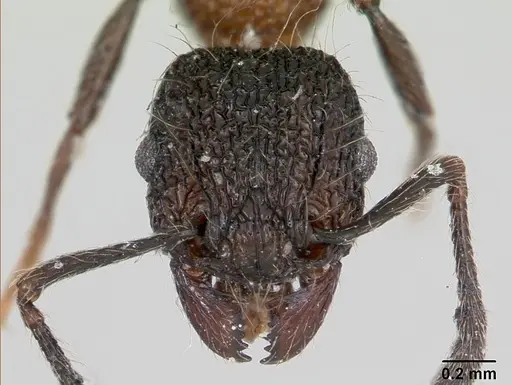
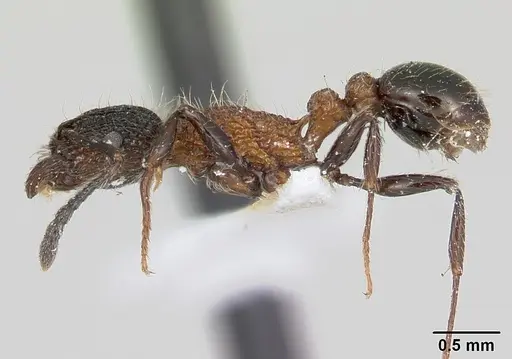
Tetramorium bicolorum is a small, bicolored ant native to the Neotropical region of Mexico. Workers measure 3.4-3.8mm with a distinctive two-tone coloration: dark brown head and gaster contrasting with an orange mesosoma, petiole, and postpetiole [1]. The species belongs to the Tetramorium tortuosum group, characterized by 11 antennal segments, propodeal spines, and striate mandibles [1]. Queens are larger at 4.5-4.9mm and have proportionally much larger eyes than workers [1]. This species was described in 2007 and remains poorly studied in captivity.
These ants inhabit pine-oak and cloud forests in the highlands of Jalisco, Mexico, at elevations between 1400-2200m [1]. Colonies are small and colonies are not numerous, the ants are very fast moving and not aggressive [1]. They nest under small stones at the base of pine trees, forming little colonies [1]. This combination of small colony size, fast movement, and docile temperament makes them an interesting species for experienced antkeepers seeking something different from common hobby species.
Quick Summary
- Difficulty: Medium
- Origin & Habitat: Native to the Neotropical region of Mexico, specifically Jalisco state. Found in pine-oak forest and mesophilic mountain cloud forest at elevations of 1400-2200m [1].
- Colony Type: Colony structure is unconfirmed, wild colonies are small but the exact queen number (single-queen or multi-queen) has not been documented. Based on typical Tetramorium patterns, likely single-queen colonies.
- Size & Growth:
- Queen: 4.5-4.9mm [1]
- Worker: 3.4-3.8mm [1]
- Colony: Colony size is unconfirmed, described as 'little colonies' in the wild [1]. Likely under 500 workers based on related species.
- Growth: Growth rate is unconfirmed, likely moderate based on typical Tetramorium development.
- Development: Estimated 6-8 weeks at optimal temperature based on genus-level data for Tetramorium species [1]. (Development timeline has not been directly studied for this species. Expect similar timing to other Tetramorium species in the tortuosum group.)
- Antkeeping:
- Temperature: Keep at 20-24°C, they come from cool highland forests in Mexico so avoid overheating. Room temperature in most homes should work well. Do not exceed 26°C [1].
- Humidity: Moderate humidity around 50-70%. Their natural habitat is pine-oak forest, not tropical rainforest. Keep the nest substrate slightly moist but allow some drying between waterings.
- Diapause: Diapause requirements are unconfirmed. Given their Mexican origin from high elevations (1400-2200m), they likely experience a mild winter slowdown rather than true hibernation. Consider a cool period around 15-18°C for 2-3 months during winter.
- Nesting: In nature they nest under stones in pine-oak forest [1]. In captivity, a Y-tong (AAC) nest or plaster nest works well. Provide a small chamber setup since colonies remain small. A test tube setup is suitable for founding colonies.
- Behavior: These ants are very fast moving and not aggressive [1]. They are generalist foragers, like most Tetramorium species, meaning they will scavenge for various food sources rather than specializing in hunting [1]. Workers are small (3.4-3.8mm) so escape prevention should be moderate, standard barriers work but check for gaps. Their small colony size and docile nature mean they are best suited for observation rather than active defense displays. They are not known to sting significantly.
- Common Issues: small colony size means slower population growth, don't expect rapid expansion, limited availability since the species is rarely kept in captivity, high elevation origin means they may not tolerate warm conditions, fast movement can make them difficult to observe closely, diapause requirements are unclear, guesswork may cause seasonal problems
Housing and Nest Setup
For founding colonies, a standard test tube setup works well. Fill the tube with water and plug with cotton, providing a dark area for the queen. Once workers arrive (typically 4-8 weeks), you can keep them in the test tube or transfer to a small formicarium. A Y-tong (AAC) nest or plaster nest with small chambers suits their small colony size [1]. Avoid large, open spaces, these ants prefer tight, cozy quarters. Since colonies stay small, you don't need expansive setups. For the outworld, a simple container with a textured floor works fine for foraging. Escape prevention should be standard, these ants are small but not particularly adept at climbing smooth surfaces.
Feeding and Diet
Tetramorium bicolorum is a generalist forager, like other species in the genus [1]. Offer a varied diet including protein sources (small insects like fruit flies, pinhead crickets, or mealworms) and carbohydrates (sugar water, honey, or diluted honey water). Feed protein 2-3 times per week and keep a constant sugar source available. Since colonies remain small, portion sizes should be tiny, a few insects per week is sufficient. Remove uneaten food after 24-48 hours to prevent mold. Fresh water should always be available.
Temperature and Seasonal Care
These ants come from cool highland forests in Mexico at 1400-2200m elevation, so they prefer cooler conditions than many ant species [1]. Keep temperatures between 20-24°C, this is comfortably room temperature for most homes. Avoid temperatures above 26°C, which could stress the colony. During winter, consider providing a mild cool period around 15-18°C for 2-3 months, simulating their natural seasonal cycle. This species likely experiences cooler winters in its mountain habitat rather than tropical conditions year-round. Monitor colony behavior: if workers become sluggish, the temperature may be too low, if they avoid the heated areas, it may be too warm.
Behavior and Observation
These ants are described as very fast moving and not aggressive in the wild [1]. Workers zoom around quickly during foraging, which can make them entertaining to watch. Their small size (3.4-3.8mm) means you'll need good lighting and possibly a magnifying glass to see details. They are not defensive and won't bite or sting significantly, making them safe for handling if needed. Since colonies are small, you can observe the entire social structure without a massive population. The bicolored appearance (dark head and gaster contrasting with orange mesosoma) is striking and makes identification easy. Their fast movement combined with small size means careful feeding, offer tiny prey items they can manage.
Colony Development
Queen size is 4.5-4.9mm, making them substantial for the worker size [1]. The founding process likely follows typical Tetramorium patterns: the queen seals herself in a chamber (claustral founding) and raises the first workers on stored body fat. Expect 4-8 weeks from egg to first worker at optimal temperature. First workers (nanitics) will be smaller than mature workers. Growth is likely moderate, these ants form 'little colonies' in the wild, so don't expect rapid expansion to thousands of workers [1]. Colony size probably maxes out around a few hundred workers. Patience is key with this species, small, slow-growing colonies are the norm, not a sign of problems.
Frequently Asked Questions
How long does it take for Tetramorium bicolorum to have first workers?
Expect first workers 6-8 weeks after the queen lays eggs, based on typical Tetramorium development patterns [1]. This timeline assumes optimal temperature around 20-24°C. The exact timing has not been documented for this specific species.
How big do Tetramorium bicolorum colonies get?
Colony size is unconfirmed but likely remains small, described as 'little colonies' in the wild [1]. Based on related species, expect a maximum of a few hundred workers, not thousands. This makes them suitable for keepers who prefer observing small, manageable colonies.
What temperature do Tetramorium bicolorum ants need?
Keep them at 20-24°C, they come from cool Mexican highland forests [1]. Room temperature is usually ideal. Avoid temperatures above 26°C, as this species prefers cooler conditions than tropical ants.
Do Tetramorium bicolorum ants sting?
This species is described as not aggressive [1]. As Myrmicinae, they have a stinger but rarely use it defensively. These ants are more likely to flee than fight. The sting, if used, would be mild.
Are Tetramorium bicolorum good for beginners?
This species is rated Medium difficulty. While not aggressive, they are rarely available and have specific temperature requirements (cool conditions). They are better suited for intermediate antkeepers who have experience with founding colonies and can provide appropriate conditions. The difficulty is not in aggression but in availability and specific care needs.
What do Tetramorium bicolorum ants eat?
They are generalist foragers, offer small insects (fruit flies, pinhead crickets, mealworms) for protein and sugar water or honey for carbohydrates [1]. Feed protein 2-3 times per week with constant sugar water available. Portion sizes should be small since colonies remain modest in size.
Do Tetramorium bicolorum need hibernation?
Diapause requirements are unconfirmed, but given their high-elevation Mexican origin (1400-2200m), they likely benefit from a mild cool period [1]. Consider 2-3 months at 15-18°C during winter rather than full hibernation. This simulates their natural seasonal cycle in mountain forests.
Can I keep multiple Tetramorium bicolorum queens together?
Colony structure (single-queen vs multi-queen) has not been documented for this species [1]. Combining unrelated queens is not recommended since we don't know their social structure. Start with one queen per colony for best results.
Why is this species called bicolorum?
The name 'bicolorum' means 'of two colors' in Latin and refers to the ant's distinctive bicolored appearance [1]. They have a dark brown head and gaster contrasting with an orange mesosoma, petiole, and postpetiole. This striking coloration makes them easy to identify.
References

This caresheet is licensed under CC BY-SA 4.0 .
CASENT0173926
View on AntWeb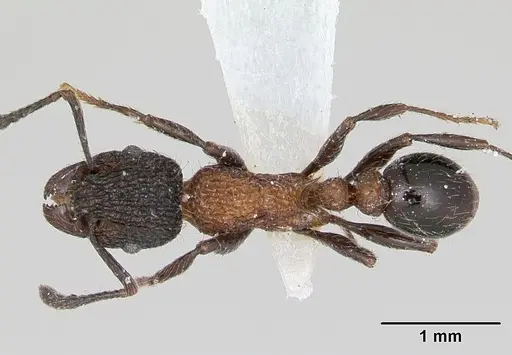
CASENT0914507
View on AntWeb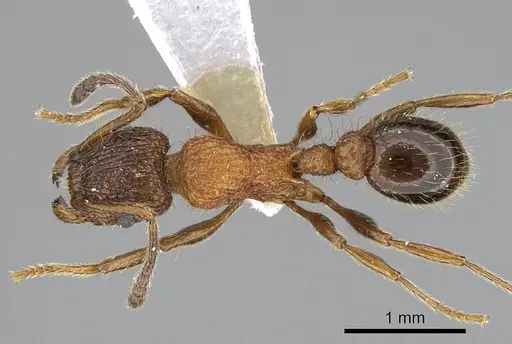


Literature
Loading...Loading products...