

Tetramorium ataxium
- Scientific Name
- Tetramorium ataxium
- Tribe
- Crematogastrini
- Subfamily
- Myrmicinae
- Author
- Bolton, 1980
- Distribution
- Found in 11 countries
Tetramorium ataxium Overview
Tetramorium ataxium is an ant species of the genus Tetramorium. It is primarily documented in 11 countries , including Congo, Democratic Republic of the, Central African Republic. Detailed taxonomic data and occurrence records can be further explored via authoritative databases such as AntWeb or the Global Biodiversity Information Facility (GBIF).
Tetramorium ataxium
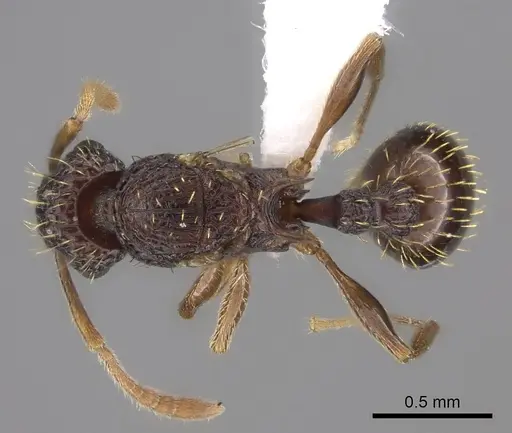
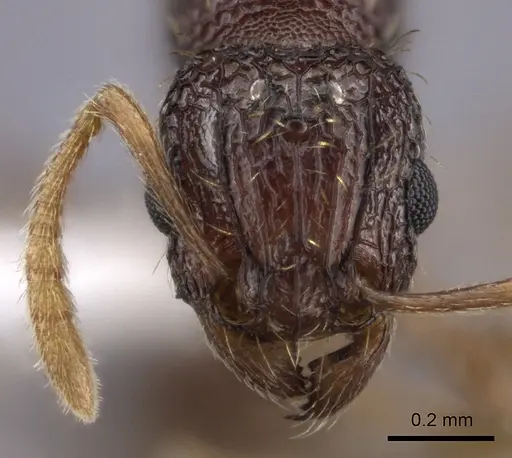
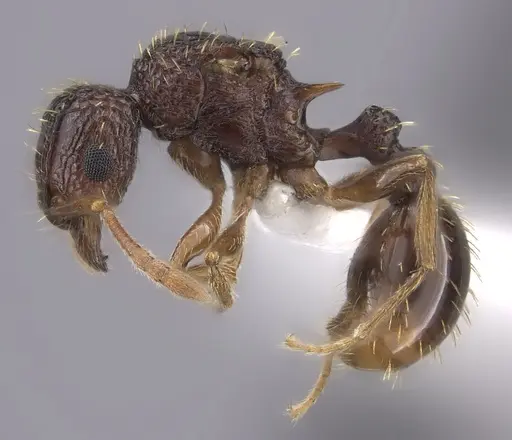
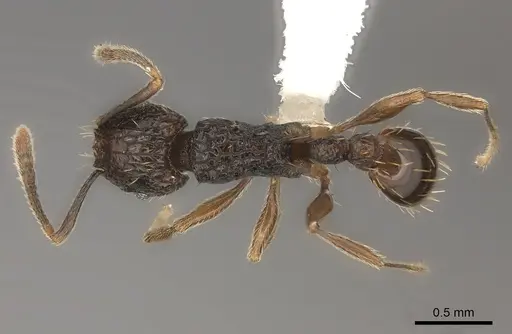
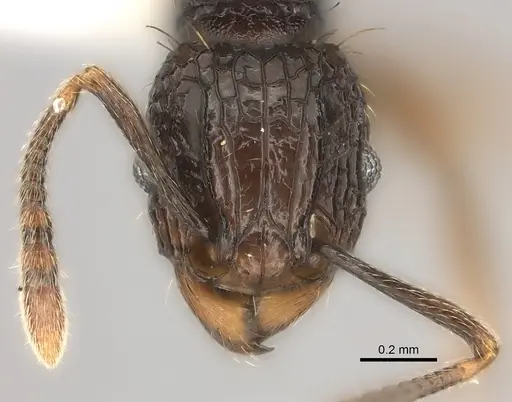
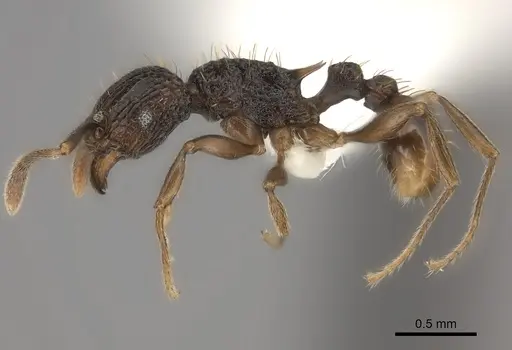
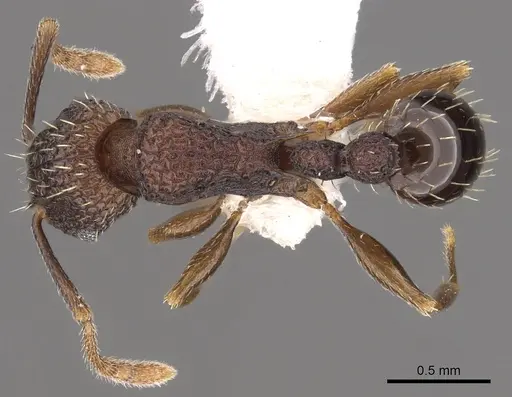
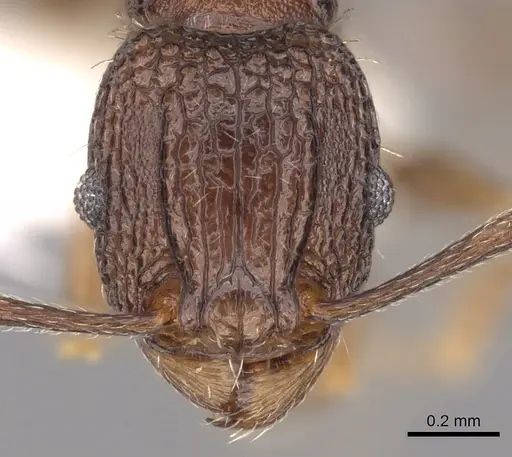
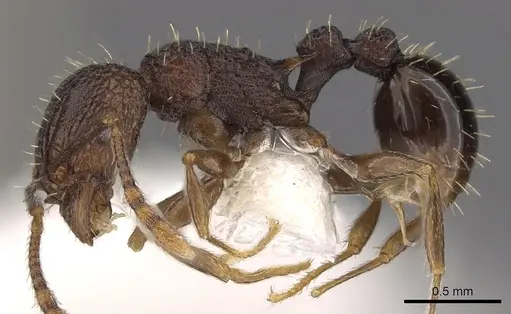
Tetramorium ataxium is a small, dark brown to blackish ant species native to West Africa, measuring 3.0-3.5mm in worker length [1]. It belongs to the flabellum-complex within the genus Tetramorium, characterized by notably long scapes (antennae), coarse body sculpture, and rectangular petiole shape [1]. This species is the most common and widely distributed member of its group across West Africa, found in countries including Nigeria, Ghana, Ivory Coast, Cameroon, and the Democratic Republic of Congo [1][2]. Workers have coarse, often blunted hairs covering their dorsal surfaces and display a distinctive reticulate-rugose sculpture on the alitrunk and pedicel segments [1].
These ants inhabit rainforest leaf litter and forest floor environments, where they nest under stones or within decaying organic matter [1]. They are part of the Crematogastrini tribe within Myrmicinae and are closely related to Tetramorium geminatum, T. sigillum, and T. kestrum, which share similar morphological features like long scapes and coarse pilosity [1].
Quick Summary
- Difficulty: Medium
- Origin & Habitat: West Africa including Nigeria, Ghana, Ivory Coast, Cameroon, Central African Republic, Congo, Democratic Republic of Congo, Gabon, Guinea, and Senegal. Found in rainforest leaf litter, other forest habitats, and savannah areas [1][2].
- Colony Type: Colony structure is not well documented in scientific literature. Most Tetramorium species are single-queen (monogyne) colonies, though this specific species has not been studied for colony type.
- Founding: Claustral
- Size & Growth:
- Queen: Not described in available literature, queen measurements are unknown [1]
- Worker: 3.0-3.5mm total length [1]
- Colony: Colony size data is not available for this species [1]
- Growth: Moderate, based on typical Tetramorium development patterns
- Development: 6-8 weeks, estimated based on related Tetramorium species development at warm temperatures (Development time is inferred from genus-level data, as species-specific timing has not been documented)
- Antkeeping:
- Temperature: Keep at 24-28°C, these are tropical forest ants that prefer warm, stable conditions [1]. A gentle heating gradient allows workers to regulate their temperature preference.
- Humidity: High humidity of 70-85%, they naturally live in rainforest leaf litter where conditions remain consistently moist. Keep the nest substrate damp but not waterlogged.
- Diapause: No, as a tropical species from West Africa, they do not require hibernation. Maintain warm conditions year-round.
- Nesting: Provide a naturalistic setup with moist substrate (soil or plaster nest) that mimics their forest floor habitat. They will nest in damp soil chambers and under stones. Y-tong nests also work well for this size ant.
- Behavior: Workers are active foragers across the forest floor, searching for small prey and honeydew. They are not particularly aggressive but will defend their nest if threatened. Their small size (3mm) means they can squeeze through standard formicarium gaps, use fine mesh barriers and tight-fitting lids to prevent escapes. They are day-active and maintain moderate colony activity levels.
- Common Issues: escape prevention is critical due to their small 3mm size, they easily slip through standard barriers, high humidity requirements can lead to mold growth if ventilation is inadequate, tropical species may struggle if temperatures drop below 22°C, wild-caught colonies may harbor parasites from leaf litter habitat, slow colony growth compared to faster-developing species may frustrate beginners
Housing and Nest Setup
Tetramorium ataxium does well in naturalistic setups that replicate their rainforest floor habitat. Use a moist soil mixture or plaster nest that maintains high humidity. The nest should have chambers scaled to their small 3mm size, tight passages and small chambers help them feel secure. A water reservoir connected to the nest maintains moisture without flooding. Place the setup in a warm area (24-28°C) away from direct sunlight. Provide an outworld with a shallow water dish and feeding area. For escape prevention, use fine mesh barriers as these tiny ants can squeeze through gaps that larger species cannot [1].
Feeding and Diet
Like other Tetramorium species, T. ataxium workers are generalist foragers that collect small insects, honeydew, and nectar. In captivity, offer small protein sources like fruit flies, pinhead crickets, and mealworm pieces. Sugar water or honey can be offered as an energy source, though acceptance varies individually. Feed small amounts 2-3 times per week, removing uneaten food within 24 hours to prevent mold. Their small size means prey items should be appropriately sized, tiny insects and arthropods are more natural than large prey items. [1]
Temperature and Seasonal Care
Maintain temperatures between 24-28°C year-round. These tropical ants do not tolerate cool conditions and have no diapause requirement. Avoid temperature fluctuations and keep them away from air conditioning vents or cold windows. If your room temperature falls below 22°C, use a small heating cable on one side of the nest to create a warm zone. Monitor colony activity, workers should be actively foraging throughout the setup. Reduced activity often indicates temperatures that are too low. There is no winter rest period for this species [1].
Colony Development
Colony growth is expected to be moderate, following typical Tetramorium patterns. From egg to first worker (nanitic) takes approximately 6-8 weeks at optimal warm temperatures. The first workers will be smaller than mature workers and may take several months before the colony reaches 20-30 workers. Colonies likely reach several hundred workers at maturity, though exact maximum size is undocumented. Founding queens seal themselves in (claustral founding) and survive on stored fat reserves until first workers emerge, similar to other Tetramorium species. [1]
Behavior and Temperament
Workers are active foragers that patrol the leaf litter layer in search of small prey and sugary substances. They are not particularly aggressive and typically flee from threats rather than attack. However, they will bite if their nest is directly threatened. The species shows typical Myrmicinae behavior with moderate colony defensiveness. Their small size makes them less imposing than larger ant species, but they remain capable of maintaining established territories within their enclosure. Provide enrichment opportunities like scattered debris and varied terrain in the outworld. [1]
Frequently Asked Questions
How long does it take for Tetramorium ataxium to produce first workers?
Expect first workers (nanitics) to emerge 6-8 weeks after the queen lays eggs, assuming temperatures are maintained at 24-28°C. This timeline is based on typical Tetramorium development patterns, as species-specific data is not available.
What temperature do Tetramorium ataxium ants need?
Keep them at 24-28°C year-round. These are tropical rainforest ants that do not tolerate cool temperatures. If your room is below 22°C, provide supplemental heating with a small heating cable on one part of the nest.
Do Tetramorium ataxium ants need hibernation?
No, they do not require hibernation. As a West African tropical species, they need warm conditions maintained year-round. There is no diapause period for this ant.
How big do Tetramorium ataxium colonies get?
The exact maximum colony size is not documented in scientific literature. Based on related Tetramorium species, colonies likely reach several hundred workers at maturity. Growth rate is moderate.
What do Tetramorium ataxium ants eat?
They are generalist foragers that accept small insects, fruit flies, and other tiny arthropods as protein sources. They will also consume sugar water, honey, or nectar. Feed small prey items 2-3 times per week.
Can I keep Tetramorium ataxium in a test tube setup?
Yes, a test tube setup works well for founding colonies. Ensure the water reservoir is properly sized to maintain humidity without flooding. Once the colony reaches 20-30 workers, consider moving to a naturalistic or Y-tong formicarium.
Are Tetramorium ataxium ants aggressive?
They are not particularly aggressive. Workers will flee from threats but may bite if their nest is directly threatened. They are generally docile compared to some other Myrmicinae species.
Do Tetramorium ataxium ants sting?
As members of the subfamily Myrmicinae, they possess a stinger. However, their small size and docile nature mean stings are rare and minimally painful to humans.
Why are my Tetramorium ataxium ants escaping?
Their small 3mm size allows them to squeeze through standard barrier gaps. Use fine mesh (0.5mm or smaller) and ensure all lid seams are tight. Apply fluon or similar barriers to escape-proof your setup.
Is Tetramorium ataxium good for beginners?
This species is rated as medium difficulty. While not the easiest species, they are manageable for keepers who can maintain warm, humid conditions year-round. Their small size and escape risk require attention to housing security.
What humidity level do Tetramorium ataxium ants need?
Maintain high humidity of 70-85%. These rainforest leaf litter ants need consistently moist substrate. Use a water reservoir connected to the nest and monitor for drying.
References

This caresheet is licensed under CC BY-SA 4.0 .
Literature
Loading...Loading products...