

Tetramorium ambatovy
- Scientific Name
- Tetramorium ambatovy
- Tribe
- Crematogastrini
- Subfamily
- Myrmicinae
- Author
- Hita Garcia & Fisher, 2012
- Distribution
- Found in 1 countries
Tetramorium ambatovy Overview
Tetramorium ambatovy is an ant species of the genus Tetramorium. It is primarily documented in 1 countries , including Madagascar. Detailed taxonomic data and occurrence records can be further explored via authoritative databases such as AntWeb or the Global Biodiversity Information Facility (GBIF).
Tetramorium ambatovy
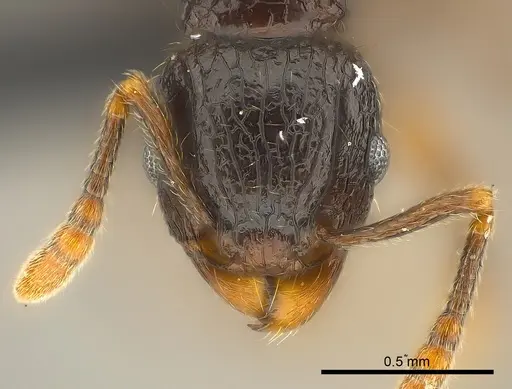
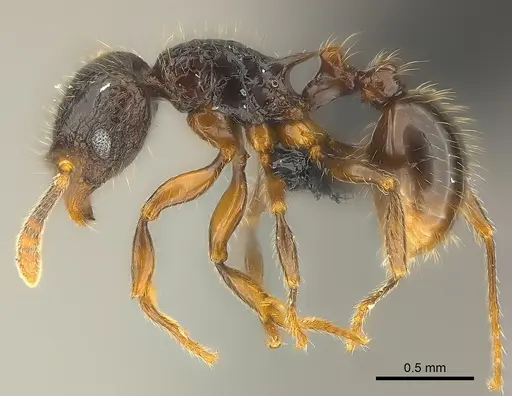
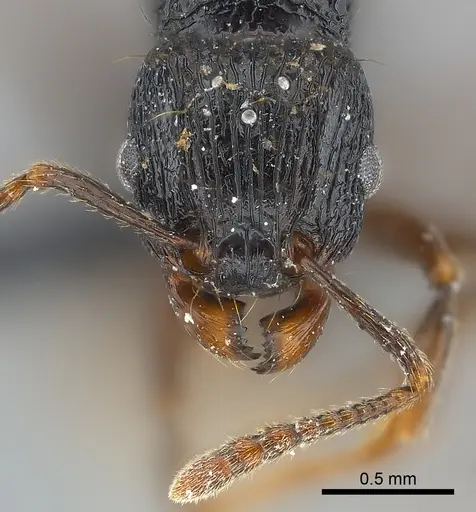
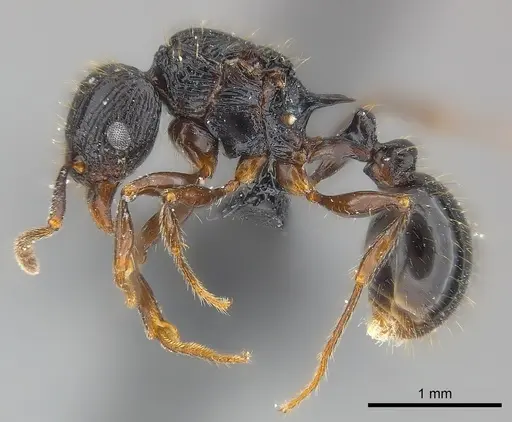
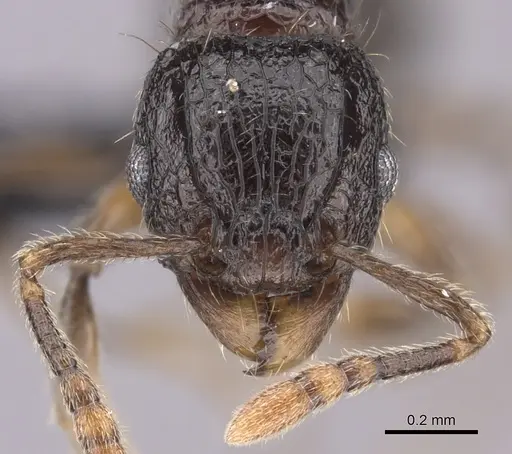
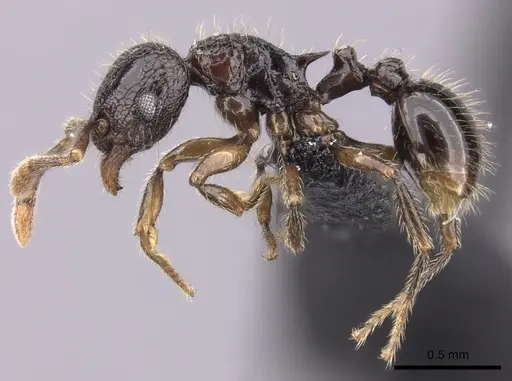
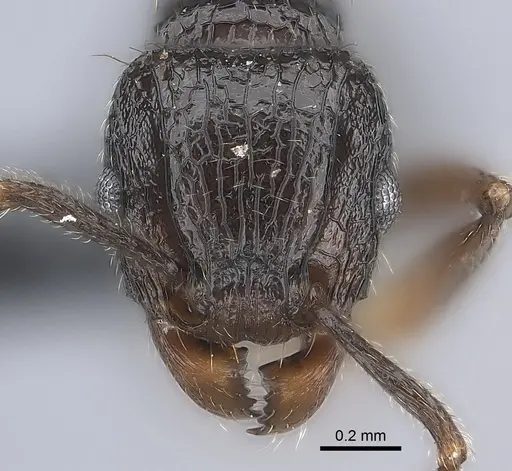
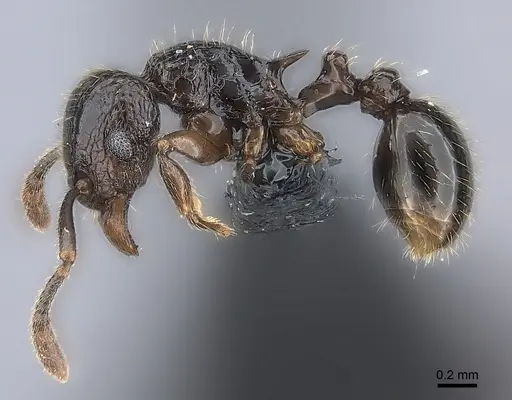
Tetramorium ambatovy is a tiny ant species native to Madagascar, first described in 2012. Workers measure just 0.66-0.72mm in head length, making them one of the smaller Tetramorium species [1]. They belong to the Tetramorium dysalum species group and can be identified by their fine, irregular rugulae on the mesosomal dorsum and their comparatively large eyes [1]. These ants are uniformly brownish with lighter-colored appendages and have long, spinose propodeal spines. They inhabit montane and lowland rainforests at elevations between 140-1088 meters, where they live in the leaf litter layer [1][2].
This species has a disjunctive distribution in Madagascar, found primarily in a strip extending from Ambatovy and Andasibe-Mantadia north to Ambatovaky, with an isolated record from Andohahela in the southwest [1]. As a leaf-litter dwelling species, they prefer humid, shaded forest floor conditions and are likely generalist foragers typical of the genus.
Quick Summary
- Difficulty: Medium
- Origin & Habitat: Montane and lowland rainforests of Madagascar at elevations 140-1088m, collected from leaf litter [1][2]
- Colony Type: Colony structure is unconfirmed, likely monogyne based on typical Tetramorium patterns
- Colony: Monogyne
- Founding: Claustral
- Size & Growth:
- Queen: Undescribed in scientific literature, estimated 4-5mm based on genus patterns
- Worker: 0.66-0.72mm head length (HL),0.65-0.71mm head width (HW) [1]
- Colony: Unknown, likely several hundred workers based on typical leaf-litter Tetramorium species
- Growth: Moderate, inferred from related species
- Development: Estimated 6-8 weeks at optimal temperature based on genus patterns (Development time not directly studied, estimates based on typical Tetramorium development at room temperature)
- Antkeeping:
- Temperature: Keep at 20-24°C, they come from cooler montane rainforests so avoid overheating. Based on their elevation range (140-1088m), they prefer conditions cooler than typical tropical ants [1]
- Humidity: High humidity required, these are leaf-litter ants from humid rainforests. Keep the nest substrate consistently moist but not waterlogged. Provide a gradient with damp areas and slightly drier spots for choice [3]
- Diapause: Unknown, Madagascar species may have reduced activity during cooler months but true diapause is not documented
- Nesting: Use a naturalistic setup with leaf litter or a Y-tong/plaster nest with small chambers. They prefer tight spaces scaled to their tiny size. Avoid dry conditions, they are adapted to the humid forest floor [3][2]
- Behavior: These are tiny, ground-dwelling ants that likely forage in the leaf litter layer. They are probably non-aggressive and not known for stinging. Their small size (under 1mm) means escape prevention is critical, use fine mesh and tight-fitting barriers. Based on typical Tetramorium behavior, they are generalist foragers that likely scavenge and collect honeydew [1].
- Common Issues: escape prevention is critical due to their tiny size, they can squeeze through standard barrier gaps, dry conditions quickly lead to colony decline, monitor humidity closely, slow founding if kept too cool, maintain warm but not hot temperatures, wild-caught colonies may be stressed from collection and transport, overfeeding can cause mold in small, humid nests
Housing and Nest Setup
Because of their tiny size (workers are under 1mm), Tetramorium ambatovy requires careful housing. A Y-tong nest with very small chambers works well, or you can use a naturalistic setup with a layer of damp leaf litter on top of plaster or soil. The key is maintaining high humidity while preventing escapes, use fine mesh (at least 0.5mm or tighter) on all openings. These ants are terricolous (ground-dwelling) and prefer dark, humid conditions [3]. Avoid acrylic nests with large chambers, the ants need tight spaces to feel secure. A test tube setup can work for founding colonies if kept humid, but monitor for drying.
Temperature and Humidity
These ants come from montane rainforests at elevations up to 1088m, meaning they prefer cooler conditions than typical tropical ants. Keep temperatures in the range of 20-24°C, avoid overheating above 26°C. High humidity is essential since they inhabit the humid forest floor in Madagascar. The substrate should feel consistently damp but never waterlogged. One study notes they prefer humid, dark conditions [3]. A small water reservoir connected to the nest helps maintain humidity. Room temperature (around 20-22°C) is often ideal for this species.
Feeding and Diet
Tetramorium species are generalist foragers. Feed small protein sources like fruit flies, pinhead crickets, or tiny insects appropriate to their size. They likely also collect honeydew from aphids or scale insects in captivity. Offer sugar water or honey water occasionally, though acceptance varies. Feed small amounts twice weekly and remove uneaten prey to prevent mold in the humid environment. Their tiny size means prey should be appropriately scaled, springtails or fruit fly pupae work well for this species. [2]
Colony Development
Queen founding is claustral, the queen seals herself in a small chamber and lives off stored fat reserves until her first workers emerge. Development from egg to worker likely takes 6-8 weeks at optimal temperature (around 22°C), based on typical Tetramorium patterns. The first workers (nanitics) will be smaller than normal workers. Growth rate is moderate, expect the colony to grow steadily over several months. Maximum colony size is unknown but likely reaches several hundred workers based on related species. Be patient during founding, queens can take 1-2 months before the first workers appear. [1]
Behavior and Temperament
These are small, ground-dwelling ants that are likely non-aggressive. They probably forage in the leaf litter layer rather than making visible trails. Workers are tiny (under 1mm) and can escape through remarkably small gaps, excellent escape prevention is mandatory. They are not known for stinging and pose no danger to keepers. Their large eyes relative to body size (OI 25-26) [1] may indicate some visual foraging behavior. Keep noise and vibration minimal as they prefer quiet, stable environments.
Seasonal Care
True diapause has not been documented for this species, but Madagascar does have seasonal variation. During cooler months (roughly May-October), you may notice reduced activity, this is normal. You do not need to induce full hibernation, but keeping them slightly cooler (around 18-20°C) during this period may be appropriate. Avoid temperature drops below 15°C. Maintain humidity year-round as drying is more dangerous than cold for this species. Monitor for mold in humid setups, especially during periods of lower activity. [2]
Frequently Asked Questions
How long does it take for Tetramorium ambatovy to have first workers?
Based on typical Tetramorium development, expect 6-8 weeks from egg to first worker at optimal temperature (around 22°C). The queen seals herself in during claustral founding and lives off stored fat until her first workers emerge. Be patient, founding can take 1-2 months before you see any workers.
What size colony does Tetramorium ambatovy reach?
Maximum colony size is not documented, but based on related leaf-litter Tetramorium species, expect several hundred workers. They are small ants and colonies grow moderately over time.
Do Tetramorium ambatovy ants sting?
They are not known for stinging and pose no danger to keepers. As Myrmicinae, they do have a stinger, but these tiny ants are non-aggressive and unlikely to use it.
What temperature do Tetramorium ambatovy need?
Keep them at 20-24°C. They come from montane rainforests in Madagascar, so they prefer cooler conditions than typical tropical ants. Avoid temperatures above 26°C.
Are Tetramorium ambatovy good for beginners?
This is a medium-difficulty species. The main challenges are their tiny size (escape prevention is critical) and their need for high humidity. If you have experience with small Myrmicinae and can maintain humid conditions, this species can be rewarding.
Do Tetramorium ambatovy need hibernation?
True diapause is not documented for this species. They may have reduced activity during cooler months but do not require full hibernation. You can keep them at slightly cooler temperatures (18-20°C) during winter.
Can I keep multiple Tetramorium ambatovy queens together?
Colony structure is not documented for this species. Based on typical Tetramorium patterns, single-queen colonies are most common. Combining unrelated queens is not recommended as it has not been studied.
References

This caresheet is licensed under CC BY-SA 4.0 .
CASENT0048186
View on AntWeb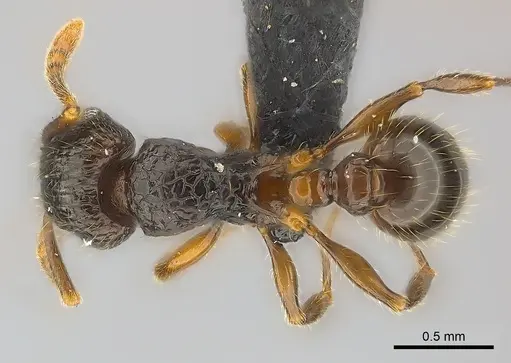
CASENT0117452
View on AntWeb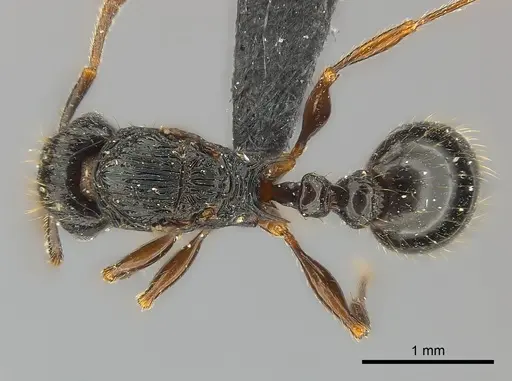
CASENT0124721
View on AntWeb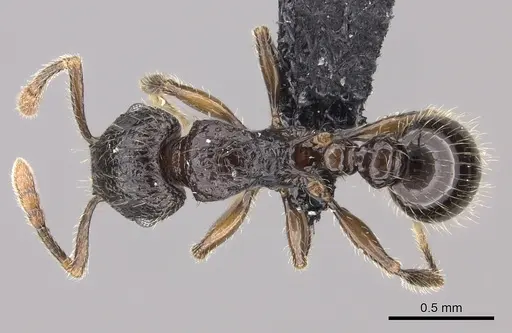
CASENT0163233
View on AntWeb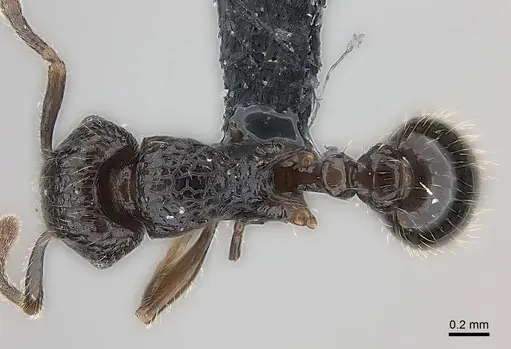
Literature
Loading...Loading products...