

Terataner balrog
- Scientific Name
- Terataner balrog
- Tribe
- Crematogastrini
- Subfamily
- Myrmicinae
- Author
- Hita Garcia, 2017
- Distribution
- Found in 1 countries
Terataner balrog Overview
Terataner balrog is an ant species of the genus Terataner. It is primarily documented in 1 countries , including Madagascar. Detailed taxonomic data and occurrence records can be further explored via authoritative databases such as AntWeb or the Global Biodiversity Information Facility (GBIF).
Terataner balrog
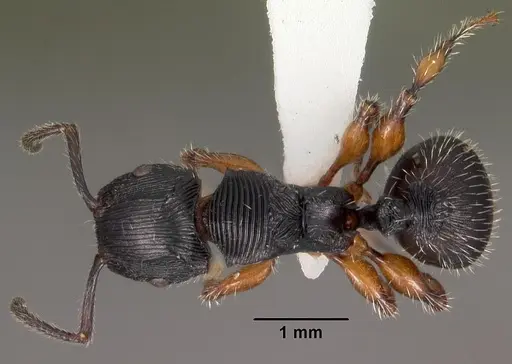
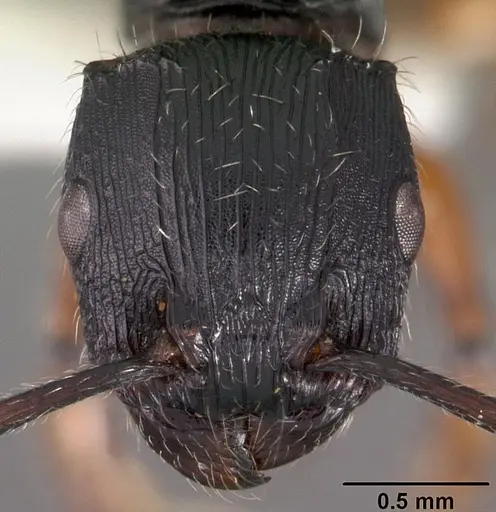
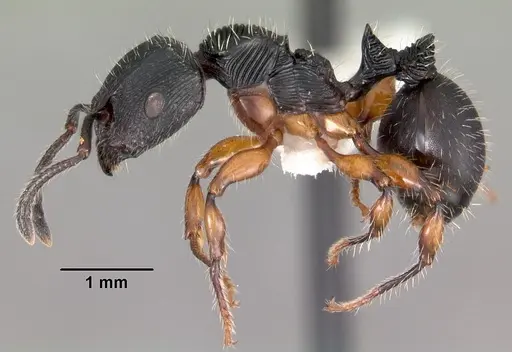
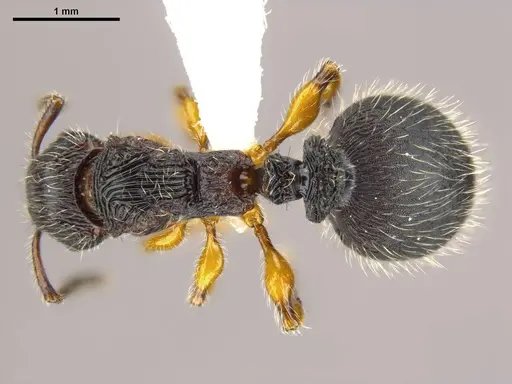
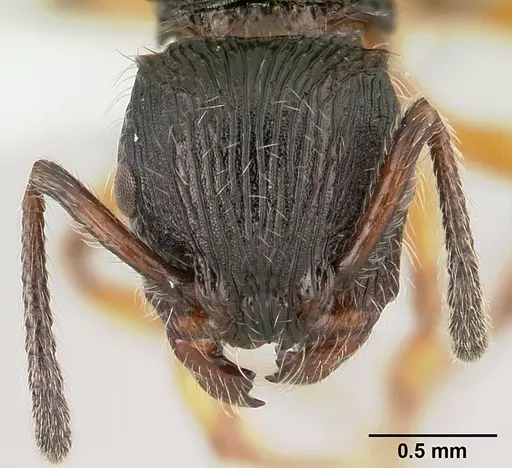
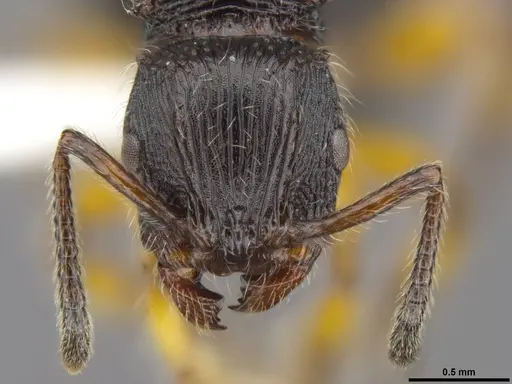
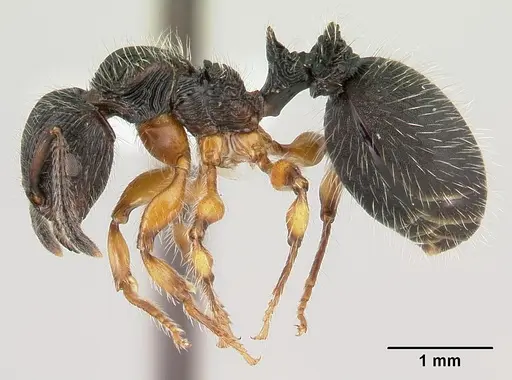
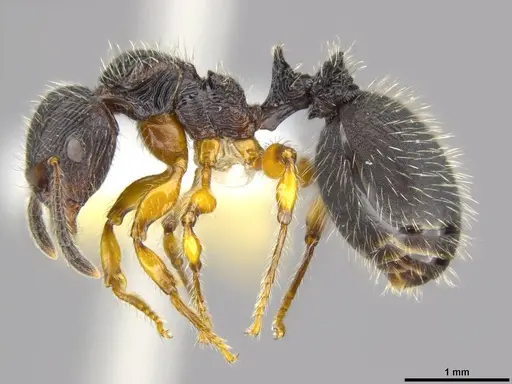
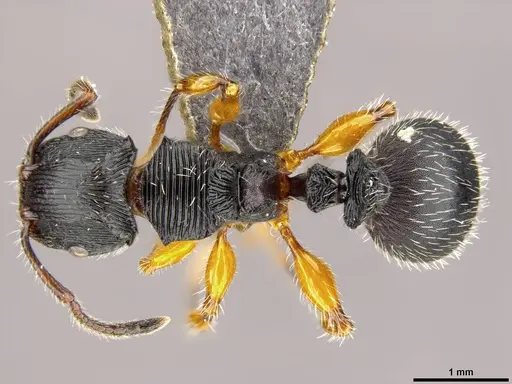
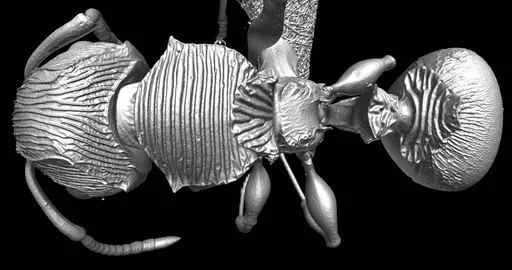
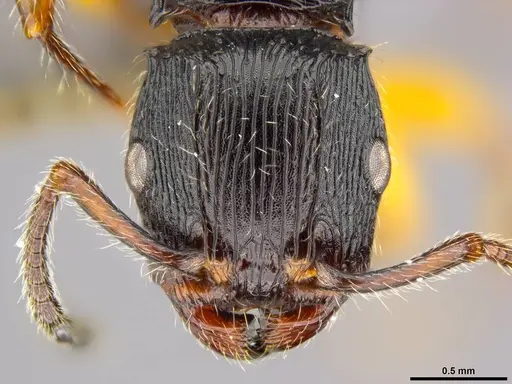
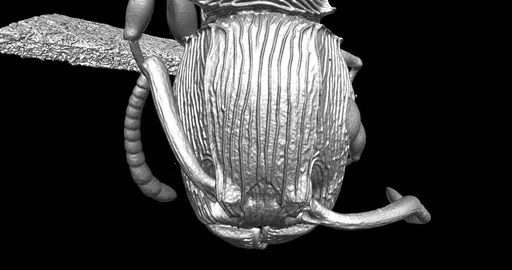
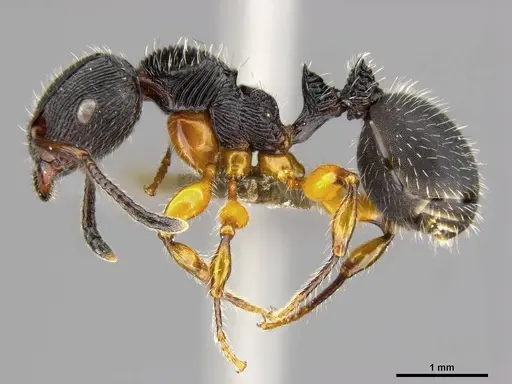
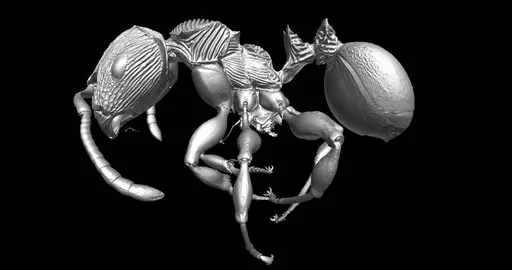
Terataner balrog is a striking myrmicine ant from the dry forests of western Madagascar. Workers are relatively small at 1.1-1.3mm head width, with a distinctive heavily sculpted appearance featuring unique transverse grooves on the pronotum and a shield-shaped postpetiole [1]. The entire body is very dark brown to black, almost black, with yellowish-orange legs creating a dramatic contrast. The name comes from the Balrog creature in Tolkien's Lord of the Rings, a reference to their dark, predatory lifestyle and heavily armored, horned appearance [2]. These ants have small horns on the back of the head visible in full-face view, making them look quite menacing under magnification. Colonies are monogynous with a single ergatoid queen, a wingless reproductive that closely resembles workers but has a much larger abdomen [1].
Quick Summary
- Difficulty: Expert
- Origin & Habitat: Arid western Madagascar, specifically Tsingy de Bemaraha and Kirindy forest, in tropical dry forest habitats [3][4].
- Colony Type: Monogynous colonies with a single ergatoid queen. Ergatoid queens are wingless and differ only subtly from workers, lacking both wings and ocelli, with an almost normal worker-like thorax [1].
- Colony: Monogyne
- Size & Growth:
- Queen: Ergatoid queens: 1.00-1.10mm head width,1.40-1.56mm total length [5]. Workers are actually slightly larger than queens: 1.11-1.33mm head width,1.46-1.84mm total length [3].
- Worker: 1.11-1.33mm head width,1.46-1.84mm total length [3].
- Colony: Unknown, no colony size data available.
- Growth: Unknown, no development timing data available for this species.
- Development: Unknown, no direct measurements available. Based on typical Myrmicinae patterns from similar tropical species, estimate 6-10 weeks at optimal temperature. (Development timeline has not been directly studied. Estimates based on genus-level patterns for Myrmicinae in tropical environments.)
- Antkeeping:
- Temperature: Keep around 24-28°C. Being from arid tropical Madagascar, they prefer warm conditions. A gentle gradient allowing cooler areas is beneficial.
- Humidity: Moderate humidity around 50-70%. These are forest-dwelling ants but from a relatively dry region, so avoid overly damp conditions.
- Diapause: Unlikely, being from Madagascar (a tropical island), they probably do not require a true hibernation period. However, a slight seasonal reduction in temperature during winter months may be beneficial.
- Nesting: In nature they nest in twigs and branches on low vegetation above ground, as well as in tree stumps on the ground and in roots [6]. For captivity, provide a naturalistic setup with small twigs/branches or a Y-tong/plaster nest with narrow chambers. They prefer elevated nesting sites.
- Behavior: Terataner balrog is a predatory ant genus, they hunt and capture small invertebrates. Workers are moderately active foragers found in lower vegetation and occasionally on the ground [7]. They are not particularly aggressive but will defend their colony. Escape prevention should be moderate, they are small but not among the tiniest ants. The ergatoid queen system means colonies have a single reproductive that looks nearly identical to workers, which is unusual and interesting to observe.
- Common Issues: no colony size data makes it difficult to plan for growth, start small and be prepared to expand, predatory diet means you need a constant supply of small live prey like fruit flies or springtails, nesting in twigs/branches means they may struggle in standard test tube setups, naturalistic or arboreal setups work better, ergatoid queens are nearly indistinguishable from workers, you may not realize you have a queen, very small size means escape prevention matters despite moderate escape risk assessment
Housing and Nest Setup
Terataner balrog presents unique housing challenges because in nature they nest in twigs and branches on low vegetation above ground, as well as in tree stumps and roots [6]. This arboreal nesting preference means standard test tube setups may not be ideal. A naturalistic setup with small pieces of twig or branch material works well, you can collect dry twigs, cut them to length, and hollow them out slightly. Alternatively, a Y-tong (AAC) or plaster nest with narrow chambers can work, especially if positioned to allow the colony to feel elevated. The key is providing enclosed spaces that mimic their natural twig-nesting behavior. For the outworld, include some vertical structures or plants where foragers can explore in the lower vegetation zone, since they naturally forage there [7].
Feeding and Diet
Terataner is a predatory genus, these ants actively hunt and consume small invertebrates. In captivity, you should offer small live prey such as fruit flies, springtails, small mealworms, and other micro-arthropods. They will likely accept protein-rich foods and may also consume honey or sugar water, though predatory species often prefer live prey. Feed small amounts of live prey regularly, the frequency depends on colony size, but offering prey every 2-3 days is a reasonable starting point. Remove any uneaten prey after 24 hours to prevent mold issues. A constant supply of fresh water is also essential. [2]
Temperature and Seasonal Care
Being from arid tropical Madagascar, Terataner balrog prefers warm conditions. Aim for temperatures in the 24-28°C range. Since they come from a tropical island that doesn't experience true winters, they likely do not require a hibernation period. However, you might consider a slight seasonal temperature reduction during winter months (dropping to around 20-22°C) to simulate natural seasonal variation, but this is optional. Avoid temperatures below 18°C for extended periods. Use a small heating cable or heating mat on one side of the nest to create a temperature gradient if your room temperature is below their preferred range. [4]
Understanding Ergatoid Queens
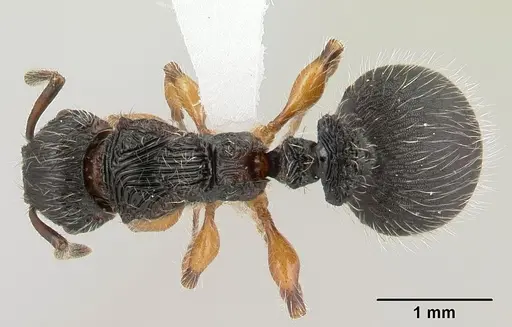
One of the most fascinating aspects of Terataner balrog is their ergatoid queen system. Unlike most ant species where queens are distinctly larger and winged, Terataner queens are ergatoid, meaning they are wingless and externally resemble workers very closely [1]. Ergatoid queens lack both wings and ocelli (simple eyes), and have an almost normal worker-like thorax. They are distinguishable from workers only by subtle characters: small spines or tubercles below the mesonotal groove, a unique pattern of rugae on the sides of the pronotum, and a greatly enlarged gaster (abdomen) [8]. In colonies, ergatoid queens have ovaries with 2-3 ovarioles. This means when keeping this species, identifying the queen requires careful observation, she looks almost like a larger worker with a big belly.
Colony Structure and Behavior
Terataner balrog colonies are monogynous, meaning they have a single queen [1]. This is consistent across all Malagasy Terataner species. Workers are remarkably uniform in appearance with little intraspecific variation, though there is some size variation. Ergatoid queens show more variation, particularly in the shape of the postpetiolar dorsum and sculpture on the dorsal promesonotum [9][10]. Workers forage in lower vegetation and occasionally on the ground [7]. The species is predatory, actively hunting small invertebrates. They are not typically aggressive toward humans but will defend their nest if threatened.
Frequently Asked Questions
Can I keep Terataner balrog in a test tube?
Test tubes are not ideal for this species. In nature they nest in twigs and branches on low vegetation above ground, as well as in tree stumps and roots. A naturalistic setup with small twig sections or a Y-tong/plaster nest works better than a standard test tube setup.
How long does it take for Terataner balrog to raise first workers?
The exact development timeline is unknown, it has not been directly studied. Based on typical Myrmicinae patterns for tropical species, expect approximately 6-10 weeks from egg to first worker at optimal temperature (around 24-28°C).
What do Terataner balrog eat?
Terataner is a predatory genus. Feed them small live prey like fruit flies, springtails, small mealworms, and other micro-arthropods. They may also accept honey or sugar water, but live protein should be their primary food source.
Do Terataner balrog ants sting?
Terataner belongs to the subfamily Myrmicinae, which includes many species with functional stingers. While not specifically documented for T. balrog, they likely can sting if threatened. However, they are small and not aggressive toward humans.
Are Terataner balrog good for beginners?
No, this is an expert-level species. There is very limited information about their care in captivity, they require specific arboreal-style nesting, need a constant supply of live prey, and have an ergatoid queen system that makes colony identification challenging. They are not recommended for beginners.
Do Terataner balrog need hibernation?
Probably not. Being from Madagascar, a tropical island, they likely do not require a true hibernation period. A slight seasonal temperature reduction during winter months may be beneficial but is not mandatory.
How big do Terataner balrog colonies get?
The maximum colony size is unknown, no colony size data is available in the scientific literature. Based on their size and the fact they are monogynous, colonies are likely modest in size, probably under a few hundred workers.
How can I identify the queen in Terataner balrog?
This is challenging because they have an ergatoid queen system, the queen is wingless and looks almost exactly like a worker. The main differences are: the ergatoid queen has a greatly enlarged gaster (abdomen), slightly smaller body size than workers, shorter antennal scapes, smaller eyes, and thicker femora. She may also have subtle differences in pronotal sculpture.
Can I keep multiple Terataner balrog queens together?
No, colonies are monogynous with a single queen. The ergatoid queen system means only one reproductive per colony. Combining unrelated queens is not recommended and has not been documented.
What makes Terataner balrog special compared to other ants?
Several things make them unique: they are named after Tolkien's Balrog due to their dark appearance and predatory nature. They have an extremely rare ergatoid queen system where queens are nearly indistinguishable from workers. They have unique pronotal sculpture (transverse grooves) not found in any related species. They nest arboreally in twigs rather than in soil.
References

This caresheet is licensed under CC BY-SA 4.0 .
Literature
Loading...Loading products...