

Temnothorax xanthos
- Scientific Name
- Temnothorax xanthos
- Tribe
- Crematogastrini
- Subfamily
- Myrmicinae
- Author
- Radchenko, 2004
- Distribution
- Found in 2 countries
Temnothorax xanthos Overview
Temnothorax xanthos is an ant species of the genus Temnothorax. It is primarily documented in 2 countries , including China, Korea, Republic of. Detailed taxonomic data and occurrence records can be further explored via authoritative databases such as AntWeb or the Global Biodiversity Information Facility (GBIF).
Temnothorax xanthos
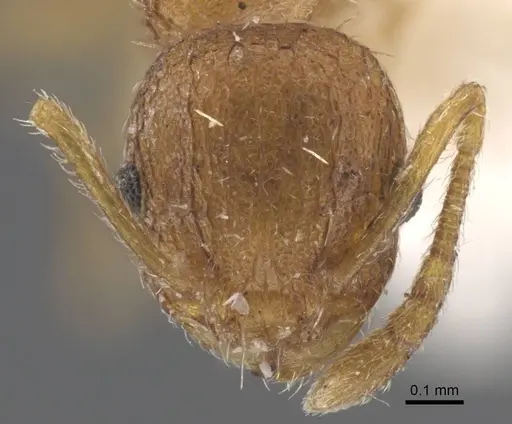
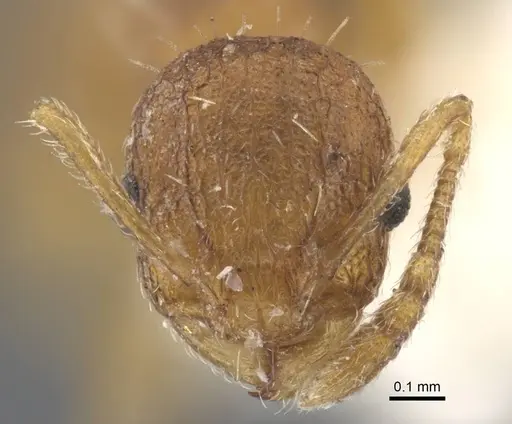
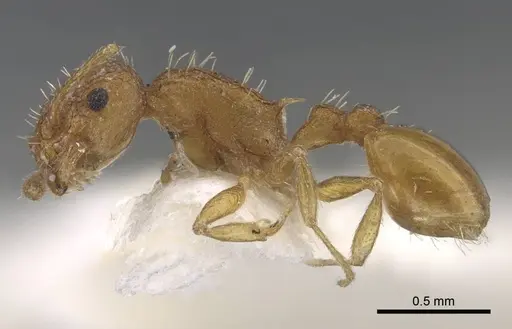
Temnothorax xanthos is a small, brightly colored ant native to the Palaearctic region, specifically found in North Korea and eastern China. Workers are uniformly ochreous-yellow throughout their body, making them quite distinctive among the typically darker Temnothorax species. They measure around 3-4mm as workers, with the queen being slightly larger. This species was formally described in 2004 and is notable for its uniformly yellow coloration and the peculiar shape of its head, which is broadly rounded above the eyes without marked occipital corners [1]. The propodeum (the section behind the waist) features very long, sharp spines that curve slightly downward [1]. Currently, no specific biological data exists for this species, researchers have noted that ecology remains unknown [1]. However, as a member of the genus Temnothorax, it likely shares many characteristics with its better-studied relatives, including nesting in small cavities and forming moderate-sized colonies.
Quick Summary
- Difficulty: Medium
- Origin & Habitat: This species is native to the Palaearctic region, specifically found in North Korea (Democratic People's Republic of Korea) and eastern China, particularly Jiangsu province [2]. In the wild, they likely inhabit temperate forest environments with moderate humidity, similar to other Temnothorax species. They probably nest in small cavities such as under stones, in rotting wood, or in rock crevices.
- Colony Type: Based on typical genus patterns, this is likely a monogyne (single-queen) species. Ergatoid (wingless replacement queens) have been documented in some related Temnothorax species, but this specific species has not been studied for colony structure. The colony size is unknown but likely reaches several hundred workers based on typical genus patterns.
- Colony: Monogyne
- Founding: Claustral
- Size & Growth:
- Queen: Estimated 5-6mm based on genus patterns [1]
- Worker: Approximately 3-4mm based on genus worker measurements [1]
- Colony: Unknown but likely several hundred workers based on typical Temnothorax colony sizes
- Growth: Moderate, typical for temperate species
- Development: Estimated 8-12 weeks based on typical Temnothorax development at room temperature (Development time is unconfirmed for this specific species. Related temperate Temnothorax species typically take 2-3 months from egg to first worker.)
- Antkeeping:
- Temperature: Keep at room temperature, ideally 18-24°C. This species comes from temperate regions (North Korea and northern China), so they prefer cooler conditions than tropical ants. A slight temperature gradient allowing workers to choose their preferred zone is beneficial.
- Humidity: Moderate humidity around 50-70%. These ants prefer somewhat damp nest conditions but not waterlogged. A well-hydrated but not saturated test tube setup works well.
- Diapause: Yes, as a species from temperate North Korea, they will likely require a winter hibernation period. Keep them at 5-10°C for 2-3 months during winter, typically from late autumn through early spring.
- Nesting: Small cavities suit this tiny ant best. Test tubes with water reservoirs work well for founding colonies. For established colonies, Y-tong (AAC) nests or small acrylic formicariums with tight chambers are appropriate. They prefer narrow passages that match their small size.
- Behavior: Temnothorax xanthos is likely a calm, non-aggressive species typical of the genus. Workers are small and quick-moving. They probably use tandem-running recruitment to direct nestmates to food sources, a common behavior in this genus. Escape prevention is critical due to their tiny size, they can squeeze through very small gaps. Use fine mesh barriers and ensure all openings are sealed. They are not known to sting and pose no danger to keepers.
- Common Issues: escape prevention is critical due to their very small size, they can slip through tiny gaps that larger ants cannot, lack of biological data means care requirements are based on genus inference rather than species-specific research, hibernation failure can kill colonies if proper cooling is not provided during winter months, overheating is a risk, keep away from direct heat sources as they prefer cooler temperatures, small colony size means losses have bigger impact, avoid disturbing founding colonies unnecessarily
Housing and Nest Setup
For founding colonies, a simple test tube setup works excellently. Fill a test tube one-third with water, push a cotton ball to create a water reservoir, then add a dry section for the queen to nest in. Cover the opening with cotton but leave enough space for ventilation while preventing escapes. The queen will seal herself into a chamber and remain there until her first workers emerge. For established colonies with 50+ workers, consider a small Y-tong (AAC) nest or acrylic formicarium with chambers scaled to their tiny size. The passages should be narrow, about 3-5mm wide suits workers comfortably. A small outworld (foraging area) connected to the nest allows you to offer food. Always use excellent escape prevention: fine mesh over all openings, fluon on rim edges, and check for gaps regularly. These tiny ants can escape through remarkably small spaces. [1]
Feeding and Diet
Like most Temnothorax species, T. xanthos likely accepts a varied diet of proteins and sugars. Offer sugar water or honey water as a constant energy source, a few drops on a small piece of cotton or in a test tube cap works well. For protein, offer small insects like fruit flies, small mealworms, or cricket pieces. Pre-kill larger prey to prevent escapes and make it easier for workers to handle. Feed protein every 2-3 days, removing any uneaten food within 24 hours to prevent mold. Related Temnothorax species also occasionally collect honeydew from aphids if available. Fresh water should always be available. Start with modest portions and adjust based on how quickly workers clear the food.
Temperature and Seasonal Care
This species prefers cooler temperatures than many common ant pets. Keep the nest area at 18-24°C, with room temperature (around 20-22°C) being ideal. Avoid placing the nest near heating elements or in direct sunlight, as overheating can be fatal. A gentle temperature gradient allows workers to regulate their own conditions. During winter, provide a hibernation period: gradually reduce temperature to 5-10°C over 2-3 weeks, maintain this for 2-3 months, then slowly warm them back up. This mimics natural seasonal cycles and supports colony health. Place them in a cool basement, garage, or refrigerator during hibernation. Do not feed during hibernation. If your room stays above 15°C year-round, you may skip hibernation, but this can reduce colony longevity.
Colony Development and Growth
The queen will lay eggs after mating and seal herself in a chamber. She relies on stored fat reserves to survive the founding period, this is called claustral founding. Eggs develop into larvae, then pupae, and finally emerge as nanitic (first) workers, which are typically smaller than normal workers. This process likely takes 8-12 weeks based on related species, though it is unconfirmed for this specific species. The first workers will then begin foraging to feed the colony, and the queen's role shifts to purely reproductive. Colony growth is moderate, expect several months to reach 50 workers, and potentially a year or more to reach 100+ workers. Patience is key with this genus. Avoid disturbing the queen during founding, stress can cause her to eat eggs or abandon the nest.
Behavior and Observation
Temnothorax ants are known for their interesting behaviors including tandem-running recruitment, where one worker leads another to food sources. Workers are active and alert, moving quickly through their territory. They are not aggressive and rarely bite. Their small size makes them less dramatic than larger ants, but their colonies often have charming, busy dynamics worth observing. Workers will patrol the outworld, recruit others to food, and tend to any brood. The bright yellow coloration makes workers easy to spot against dark substrates. Watch for dealate (wingless) queens in established colonies, these may be ergatoid replacement reproductives that can take over if the primary queen dies, a documented feature in some related Temnothorax species.
Frequently Asked Questions
How long does it take for Temnothorax xanthos to get their first workers?
The exact timeline is unconfirmed for this species, but based on related temperate Temnothorax species, expect 8-12 weeks from egg to first worker at room temperature (around 20°C). The queen seals herself in and raises the first brood alone using stored fat reserves.
What do Temnothorax xanthos ants eat?
They likely accept a standard ant diet: sugar sources (honey water, sugar water) for energy and small protein sources (fruit flies, small mealworms, cricket pieces) for growth. This follows typical Temnothorax feeding patterns.
Do Temnothorax xanthos ants need hibernation?
Yes, likely, this species comes from temperate North Korea and China, so a winter rest period is probably necessary. Keep them at 5-10°C for 2-3 months during winter. Skip feeding during this period.
Are Temnothorax xanthos good for beginners?
They are moderate difficulty. The main challenges are their tiny size (escape prevention is critical) and the lack of species-specific biological data. If you have experience with other small Myrmicinae ants, this is manageable. Beginners should start with more established species.
How big do Temnothorax xanthos colonies get?
Colony size is unconfirmed for this species, but based on typical Temnothorax patterns, they likely reach several hundred workers at maturity. Growth is moderate and takes many months.
Can I keep multiple Temnothorax xanthos queens together?
This is not recommended. Based on typical genus patterns, T. xanthos is likely monogyne (single-queen). Combining unrelated queens has not been studied for this species and would likely result in fighting.
What temperature is best for Temnothorax xanthos?
Keep them at 18-24°C, with 20-22°C being ideal. They prefer cooler conditions than tropical ants. Avoid overheating and direct sunlight. Room temperature is often suitable.
Do Temnothorax xanthos ants sting?
No, they are not known to sting and pose no danger to keepers. They are small and docile. As Myrmicinae, they have a stinger but rarely use it and it causes minimal irritation even if used.
When should I move my colony to a formicarium?
Wait until the colony has at least 30-50 workers and the test tube setup is becoming cramped. This typically takes 6-12 months after founding. Make sure the formicarium has appropriately sized chambers, passages should be 3-5mm wide.
Why is escape prevention important for this species?
Their very small size (3-4mm workers) means they can squeeze through gaps that larger ants cannot. Use fine mesh (at least 0.5mm), fluon on rim edges, and check all openings regularly. Even a tiny gap can result in colony loss.
Is Temnothorax xanthos invasive anywhere?
No, this species is native to North Korea and eastern China and has not been documented as invasive. However, never release ant colonies into the wild outside their native range.
Where does Temnothorax xanthos naturally live?
This species is found in the Palaearctic region, specifically North Korea and eastern China (Jiangsu province). They likely inhabit temperate forest environments with moderate humidity, nesting in small cavities under stones or in rotting wood.
References

This caresheet is licensed under CC BY-SA 4.0 .
CASENT0917212
View on AntWeb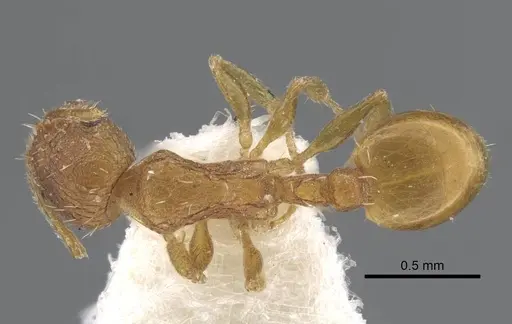
Literature
Loading...Loading products...