

Temnothorax variabilis
- Scientific Name
- Temnothorax variabilis
- Tribe
- Crematogastrini
- Subfamily
- Myrmicinae
- Author
- Salata <i>et al.</i>, 2018
- Distribution
- Found in 1 countries
Temnothorax variabilis Overview
Temnothorax variabilis is an ant species of the genus Temnothorax. It is primarily documented in 1 countries , including Greece. Detailed taxonomic data and occurrence records can be further explored via authoritative databases such as AntWeb or the Global Biodiversity Information Facility (GBIF).
Temnothorax variabilis
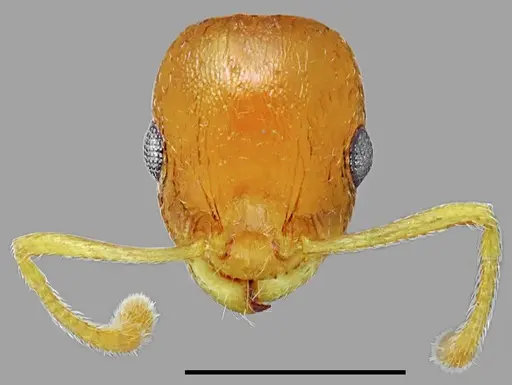
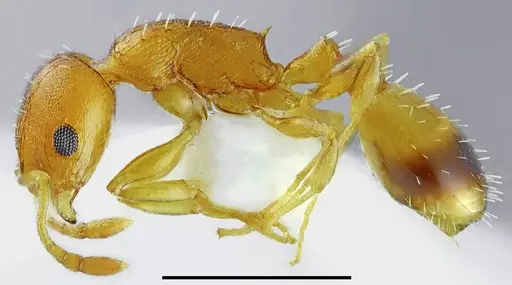
Temnothorax variabilis is a tiny yellow ant endemic to the island of Crete, Greece. Workers measure just 0.6mm in head length, making them one of the smaller ant species kept in captivity [1]. They belong to the T. luteus group, characterized by their uniformly bright yellow body with a distinctive narrow black band along the apical margin of the first gastral tergite (the rear section of their abdomen) [1]. This species has large eyes and lacks a metanotal groove, features that help distinguish it from related species like T. luteus and T. racovitzai [1].
This is a rare species that was only formally described in 2018,so much about its captive care remains undocumented [1]. In the wild, they inhabit dry open areas and occasionally deciduous forest litter on Crete [1][2]. The name 'variabilis' refers to the high variability in their body sculpture, with workers ranging from weakly to strongly sculpted [1]. As an island endemic with limited distribution, they represent a unique keeping challenge for enthusiasts interested in rare Mediterranean species.
Quick Summary
- Difficulty: Medium
- Origin & Habitat: Endemic to Crete, Greece, found in dry open areas and occasionally in litter of deciduous forests [1][2]
- Colony Type: Unconfirmed, likely single-queen colonies like most Temnothorax species
- Size & Growth:
- Queen: Unknown, not yet described in literature [1]
- Worker: 0.6mm head length (HL 0.556-0.654mm) [1]
- Colony: Unknown, likely small colonies typical of the genus
- Growth: Unknown
- Development: 6-10 weeks (estimated based on typical Temnothorax development) (Development timeline not directly studied, estimates based on genus-level data for related species)
- Antkeeping:
- Temperature: Keep at room temperature around 20-24°C, typical for Mediterranean Temnothorax species. A gentle gradient allows workers to choose their preferred zone.
- Humidity: Moderate, these are dry-adapted ants from Mediterranean Crete. Allow the nest to dry out partially between water additions, with some damp areas available.
- Diapause: Likely yes, Crete has mild winters. A 2-3 month cool period around 10-15°C is recommended during winter months.
- Nesting: Prefers small cavities, test tubes or Y-tong nests with narrow chambers work well. They naturally nest under stones and in small crevices in dry areas.
- Behavior: Temperament is typical of the genus, generally peaceful and non-aggressive. Workers are small and active, foraging for honeydew and small prey. Escape prevention is critical due to their tiny size, standard fine mesh barriers are essential. They are not known to sting aggressively but have functional stingers as Myrmicinae.
- Common Issues: tiny size means escapes are likely without fine mesh barriers, limited availability as a recently described species (2018), slow colony development may frustrate beginners, dry habitat requirements mean overwatering can be fatal, wild-caught colonies may have parasites specific to their island origin
Housing and Nest Setup
Temnothorax variabilis is a tiny ant that needs appropriately scaled housing. Test tube setups work well for founding colonies, use a small water reservoir with a cotton plug, keeping the tube partially horizontal so workers can move between the water chamber and dry areas. For established colonies, Y-tong (AAC) nests with narrow chambers or small acrylic formicaria work better than larger setups designed for big ants [1].
These ants come from dry Mediterranean areas, so the nest should not stay constantly wet. Allow the substrate to dry partially between water additions. A small piece of damp cotton or a tiny water reservoir provides enough moisture without creating the humid conditions that could kill this dry-adapted species. Keep the nest in a quiet location away from vibrations and direct sunlight.
Feeding and Diet
Like most Temnothorax species, these ants are omnivorous with a preference for sweet liquids and small protein sources. Offer sugar water or diluted honey water as a constant food source, a small drop on a piece of cotton or in a专门的 feeder works well. For protein, offer tiny prey items like fruit flies, small mealworms, or springtails. Being such small ants, their prey items must be appropriately sized [1].
In the wild, they likely forage for honeydew from aphids and small insects. Feed small amounts 2-3 times per week, removing any uneaten prey after 24 hours to prevent mold. The rare nature of this species in the wild suggests they may have specialized dietary preferences, but standard antkeeping fare is a good starting point. Monitor whether your colony accepts different foods and adjust accordingly.
Temperature and Seasonal Care
Keep your colony at room temperature, ideally around 20-24°C. These are Mediterranean ants from Crete, which has mild, wet winters and hot, dry summers. They do not need extreme heat, room temperature is sufficient for normal activity and brood development. A slight temperature gradient across the nest allows workers to regulate their own conditions.
During winter (roughly November through February), reduce temperatures to around 10-15°C to simulate their natural seasonal cycle. This cool period mimics the Mediterranean winter and helps maintain colony health. Do not feed heavily during this time as ants naturally slow down. Return to normal temperatures gradually in spring. This species is adapted to a Mediterranean climate with distinct seasons, so a winter rest period is likely important for long-term colony success. [1][2]
Behavior and Observation
Temnothorax variabilis workers are active and foragerous, though their tiny size makes them less conspicuous than larger ant species. They are not aggressive and do not pose any threat to keepers. Their small size also means they are excellent escape artists, even tiny gaps in your setup can lead to escapes.
Use fluon or similar barrier products on the edges of any formicarium, and ensure all ventilation holes are covered with fine mesh (at least 0.5mm). When observing them, you may notice they prefer to establish nests in enclosed spaces with limited entry points, this reflects their natural behavior of nesting under stones or in small cavities. They are a recently described species (2018), so observing their behavior in captivity can contribute to our understanding of this rare endemic ant. [1][2]
Acquiring and Legal Considerations
Temnothorax variabilis is endemic to Crete, meaning it is found nowhere else in the world naturally [1][2]. This makes it a rare and unusual species for antkeepers interested in unique Mediterranean fauna. If acquiring a colony, ensure it comes from a reputable breeder who has propagated the species rather than removing them from the wild.
Before purchasing, check your local regulations regarding ant keeping, some jurisdictions require permits for certain species. Never release this or any non-native ant species into the wild, as they could become invasive or disrupt local ecosystems. Captive breeding is the responsible way to maintain this species in the hobby while protecting wild populations.
Frequently Asked Questions
How long does it take for Temnothorax variabilis to produce first workers?
The exact development timeline has not been studied for this species. Based on typical Temnothorax development, expect 6-10 weeks from egg to worker at room temperature (20-24°C). The queen will remain sealed in her founding chamber until the first nanitic (first-generation) workers emerge, then the colony will begin foraging.
Can I keep Temnothorax variabilis in a test tube?
Yes, test tubes work well for founding colonies. Use a small setup with a water reservoir and cotton plug, positioned partially horizontal. The tiny size of these ants means you should use a test tube with an appropriate diameter, not too large, as they prefer enclosed spaces. Once the colony grows beyond 20-30 workers, consider moving to a small Y-tong or acrylic nest.
Do Temnothorax variabilis ants sting?
Yes, Temnothorax belongs to the Myrmicinae subfamily, which includes functional stingers. However, these ants are very small and not aggressive. Their sting is mild and rarely felt by humans. They pose no real danger to keepers.
What temperature do Temnothorax variabilis need?
Keep them at room temperature, around 20-24°C. This matches their Mediterranean origin on Crete. They do not need heating beyond normal room temperature. A slight gradient across the nest allows workers to choose their preferred zone.
Are Temnothorax variabilis good for beginners?
This species is not ideal for complete beginners due to its recently described status (2018) and limited availability. However, antkeepers with some experience with small Myrmicinae species should find them manageable. The main challenges are their tiny size (escape prevention is critical) and the need for appropriate winter cooling.
How big do Temnothorax variabilis colonies get?
Colony size is not documented in scientific literature. Based on typical Temnothorax patterns, colonies likely reach a few hundred workers at most. They are naturally a rare species with small colony sizes.
Do Temnothorax variabilis need hibernation?
Yes, a winter rest period is recommended. Reduce temperatures to around 10-15°C for 2-3 months during winter (roughly November-February). This mimics their natural Mediterranean seasonal cycle and supports long-term colony health. Do not feed heavily during this cool period.
What do Temnothorax variabilis eat?
They are omnivorous. Offer sugar water or honey water as a constant carbohydrate source. For protein, provide tiny prey like fruit flies, small mealworms, or springtails. Their small size means prey items must be appropriately sized.
Where is Temnothorax variabilis found?
This species is endemic to Crete, Greece, it is found nowhere else in the world naturally. They inhabit dry open areas and occasionally deciduous forest litter at elevations around 197 meters [1][2].
Why are my Temnothorax variabilis dying?
Common causes include: overwatering (they prefer dry conditions), poor escape prevention allowing escapes, temperatures too high or too low, and stress from too much handling. Their tiny size makes them vulnerable. Ensure the nest has drying periods between water additions, use fine mesh barriers, and keep at stable room temperature.
Can I keep multiple queens together?
Colony structure has not been studied for this species. Most Temnothorax are single-queen (monogyne) colonies. Combining unrelated queens is not recommended as Temnothorax queens typically fight. Start with a single founding queen for best success.
When should I move my colony to a formicarium?
Move from test tube to a small nest (Y-tong or acrylic) when the colony reaches 20-40 workers. Moving too early can stress the colony. Ensure the new setup has appropriately sized chambers, these tiny ants need narrow passages, not large open spaces.
References

This caresheet is licensed under CC BY-SA 4.0 .
CASENT0845941
View on AntWeb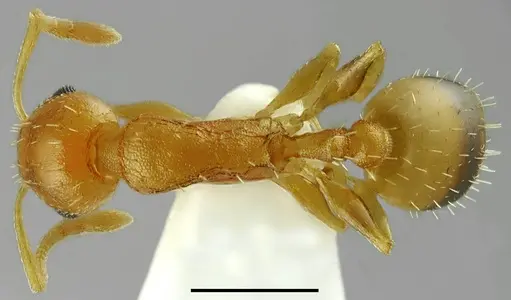
Literature
Loading...Loading products...