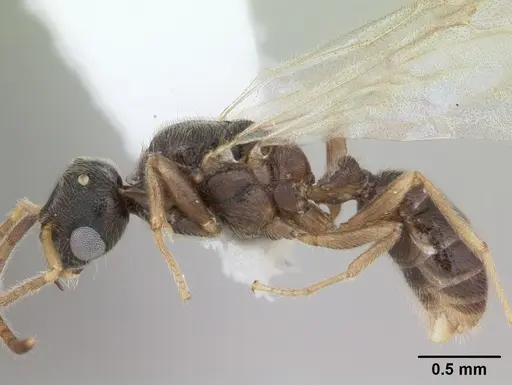
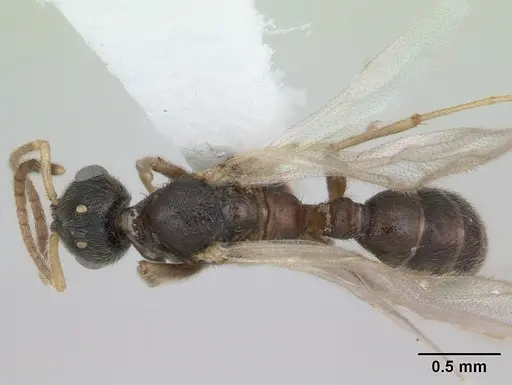
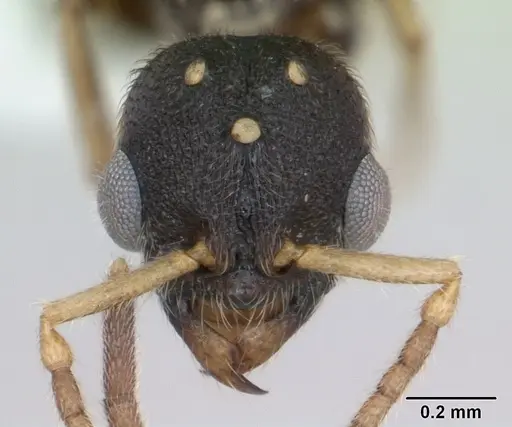
Typhlomyrmex clavicornis - "Clavate Blind Ant"
Typhlomyrmex clavicornis is a fascinating, small, and cryptic ant species belonging to the Ectatomminae subfamily. True to its genus name, which translates to 'blind ant,' workers of this species have significantly reduced or entirely absent eyes. They possess a distinct light brown coloration with whitish hairs and are notable for their prominent antennal club and unique, spine-like hairs on their mid-leg tibiae (mesotibiae). These ants are primarily subterranean, rarely seen foraging openly, and are characterized by their quadrangular head and a petiole that appears taller than it is long in side view.
- Difficulty: Hard
- Origin & Habitat: South America (widespread, including Colombia, Bolivia, Paraguay, Guyana, Brazil, French Guyana, and Surinam). in Deep soil strata (typically 10-30 cm deep), found in diverse environments including pastures, secondary forests, and primary rainforests. They nest and forage within the soil or rotting wood..
- Colony Type: Specific colony type (monogyne/polygyne) not well-documented; assumed monogyne for typical Ectatomminae., claustral (based on subterranean and cryptic nature, queen likely seals herself during founding) founding.
- Size & Growth:
- Queen: 4.0-5.0mm
- Worker: 3.0-3.5mm
- Colony: Small (hundreds). Slow growth.
- Antkeeping:
- Temperature: Maintain a stable temperature between 24-28°C (75-82°F) to mimic their tropical origins and promote healthy brood development..
- Humidity: High humidity is crucial, ideally ranging from 70-90%. Their deep subterranean habitat necessitates consistent moisture levels within the nest..
- Diapause: Not required. Not specified at Not specified.
- Nesting: Prefers nests that mimic deep soil environments. Suitable options include deep setups with natural soil, or artificial nests made from materials like plaster, ytong, or carefully constructed acrylic nests with ample substrate space. Focus on providing vertical depth rather than just horizontal spread..
- Behavior: Low (towards handler, but predatory towards prey) aggressiveness.
- Common Issues: Mold in nest, Colony stalling due to inadequate conditions, Difficulty in observation due to cryptic nature, Maintaining consistent deep humidity, Providing appropriate prey access.
Keeping Typhlomyrmex clavicornis presents a unique challenge for antkeepers due to their highly cryptic nature. These subterranean ants spend most of their lives deep within the soil or rotting wood, making direct observation of their colonies, foraging activities, and overall behavior quite rare. Unlike many popular ant species, you won't often see their workers marching across an outworld, which means setting up a formicarium that allows for some visibility into their tunnels, perhaps with a removable dark cover, is highly recommended to observe their fascinating underground world. Their preference for specific deep soil strata, as noted in their natural habitats, indicates that shallow setups might stress the colony.
A crucial aspect of their care is maintaining consistently high humidity levels, mirroring the conditions of their native rainforest and forest floor environments. Given their deep-dwelling habits, standard nests might not retain enough moisture throughout the entire setup. Consider employing setups with large water reservoirs or regularly hydrating the substrate deeply to prevent desiccation. Mold can be a concern with high humidity, so ensuring adequate ventilation while still preserving moisture balance is a delicate but necessary task for these sensitive ants.
Feeding these predatory ants can also be a unique experience. As they are adapted to a subterranean lifestyle, their foraging strategies are likely specialized for catching prey within their tunnels. Offering small, soft-bodied insects that can be introduced directly into the nest or through very small, secure openings in the substrate might be more effective than expecting them to venture far into an outworld for food. Their reduced eyes mean they rely heavily on chemical cues and vibrations for navigation and hunting, so prey placement should facilitate easy detection.
Their reduced eyes are a standout feature, aligning with their subterranean existence. While fascinating, this also means visual cues won't play a role in their interaction with their environment or keeper. Instead, focus on minimizing disturbances that might cause vibrations or sudden shifts in their dark, stable nesting environment. Patience is key with Typhlomyrmex clavicornis; their slow growth rate and secretive behavior mean that colony development and observable activity will progress at a much more leisurely pace compared to more active, surface-dwelling species. This species is truly for the dedicated ant enthusiast who appreciates the intricacies of cryptic ant behavior and is prepared for a more hands-off approach to observation.
Frequently Asked Questions
Are Typhlomyrmex clavicornis suitable for beginner antkeepers?
Absolutely not. Typhlomyrmex clavicornis is considered a 'Hard' difficulty species, sometimes even 'Expert'. Their cryptic nature, specific habitat requirements, and challenges in observation make them best suited for experienced antkeepers who are prepared for a very hands-off approach and can provide a specialized formicarium setup.
What is unique about Typhlomyrmex clavicornis compared to other ant species?
Their most striking feature is their highly reduced or absent eyes, earning them the nickname 'blind ants'. They are also characterized by their prominent antennal club and specialized spine-like hairs on their mid-legs. Unlike typical ants, they are largely subterranean, rarely seen, and rely on unique foraging strategies within the soil rather than above ground.
What kind of nest setup is best for these ants?
To truly thrive, Typhlomyrmex clavicornis needs a deep nesting environment that mimics their natural subterranean habitat. A formicarium designed for deep soil, such as a large test tube setup buried in a container of substrate, or a specialized plaster/ytong nest with significant vertical depth, is ideal. Ensure excellent humidity retention without stagnant air to prevent mold.
What do Typhlomyrmex clavicornis queens and workers look like?
The queen is typically slightly larger than the workers, which measure around 3.0-3.5 mm in total length. Both castes are light brown with whitish hairs. Workers have a distinct quadrangular head and a petiole that looks taller than it is long. Their prominent antennal club is also a key identifying feature.
How large do Typhlomyrmex clavicornis colonies get?
These ants form relatively small colonies, typically reaching only a few hundred individuals. Their growth rate is considered slow, so patience is essential when keeping them.
Do Typhlomyrmex clavicornis sting or bite?
As members of the Ectatomminae subfamily, they are capable of stinging. While their aggressiveness towards handlers is likely low due to their cryptic nature and small size, exercise caution. They are predatory and will use their sting to subdue prey.
What do I feed Typhlomyrmex clavicornis?
Being predatory, their diet should consist of small, soft-bodied insects. Due to their subterranean foraging habits, you'll likely need to introduce prey directly into their nest or a closely accessible feeding chamber. Don't expect them to actively forage in a large outworld.
Do they require diapause or a hibernation period?
No, as a tropical species originating from South America, Typhlomyrmex clavicornis does not require a diapause period. Consistent warm temperatures year-round are necessary for their well-being and brood development.
How important is humidity for these ants?
Humidity is paramount for Typhlomyrmex clavicornis. They live in deep soil layers in humid environments, so maintaining 70-90% humidity within their nest is critical. Insufficient humidity will quickly lead to colony stress and decline.
Can I observe their activities easily?
Observing Typhlomyrmex clavicornis can be challenging. Their cryptic and subterranean lifestyle means they spend most of their time hidden within their tunnels. You might catch glimpses of them if your formicarium design allows for it, but they are not a species for constant visual entertainment. Patience and an appreciation for their hidden world are key!