

Temnothorax texanus
- Scientific Name
- Temnothorax texanus
- Tribe
- Crematogastrini
- Subfamily
- Myrmicinae
- Author
- Wheeler, 1903
- Distribution
- Found in 1 countries
Temnothorax texanus Overview
Temnothorax texanus is an ant species of the genus Temnothorax. It is primarily documented in 1 countries , including United States of America. Detailed taxonomic data and occurrence records can be further explored via authoritative databases such as AntWeb or the Global Biodiversity Information Facility (GBIF).
Temnothorax texanus
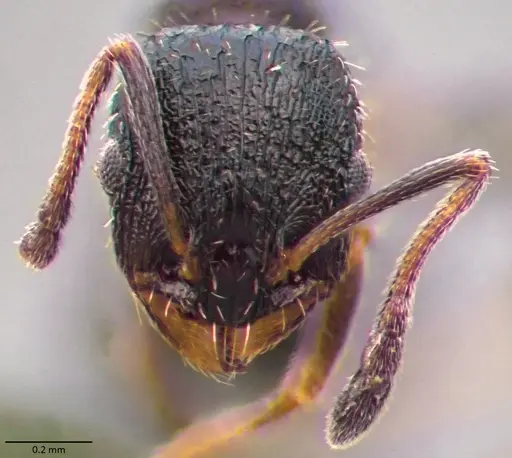
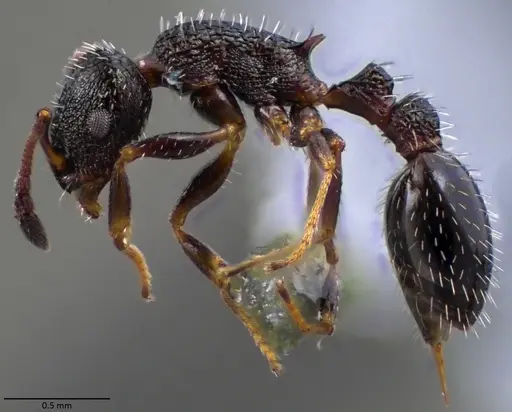
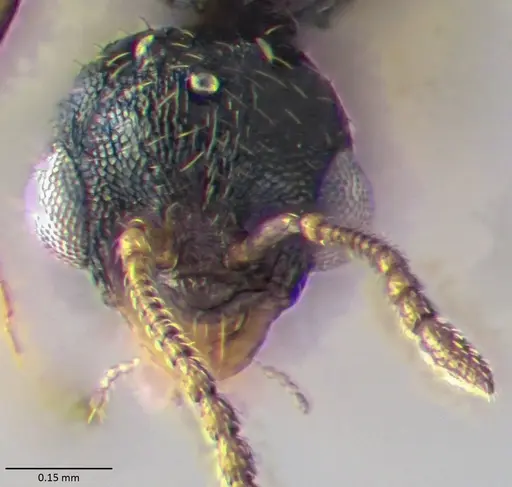
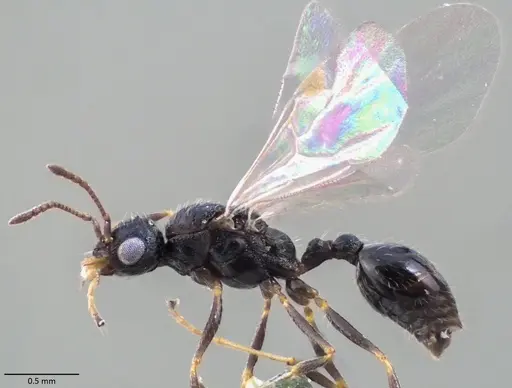
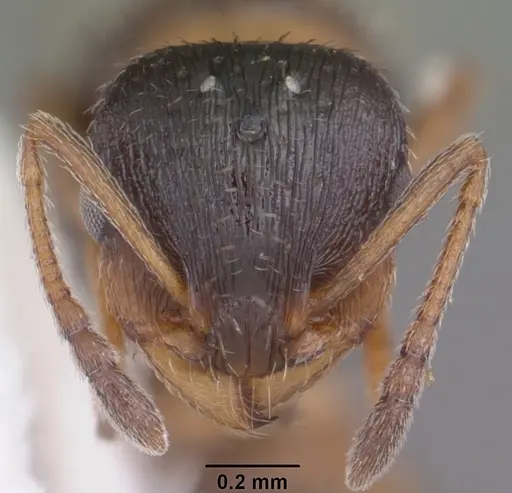
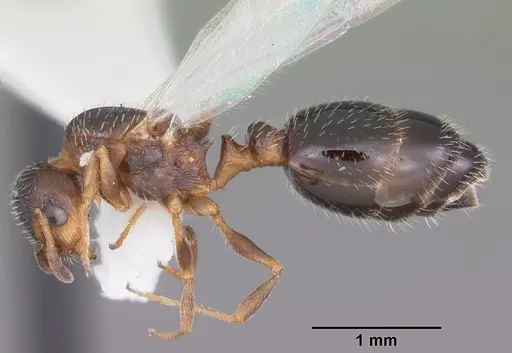
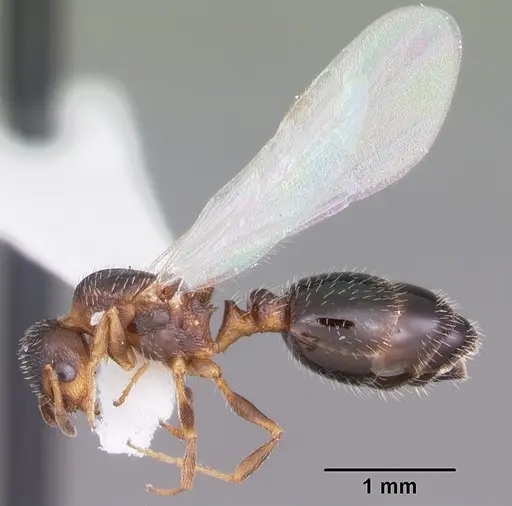
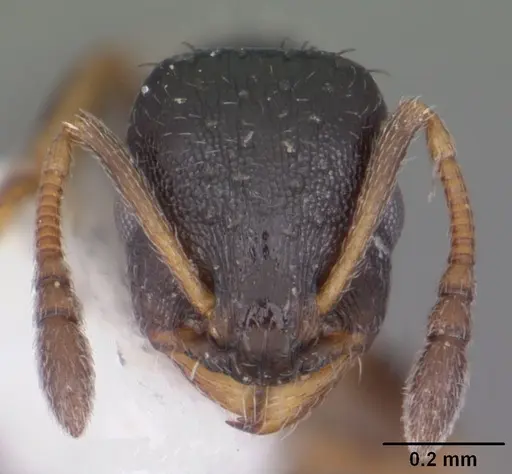
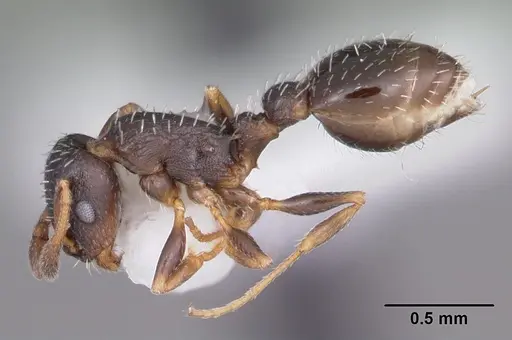
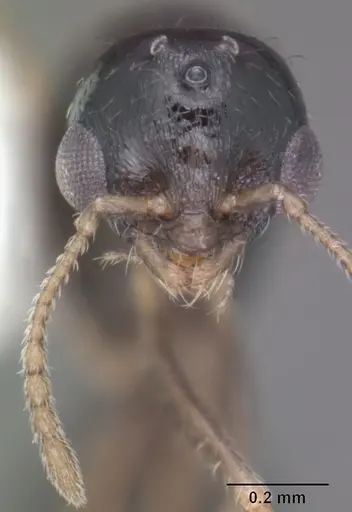
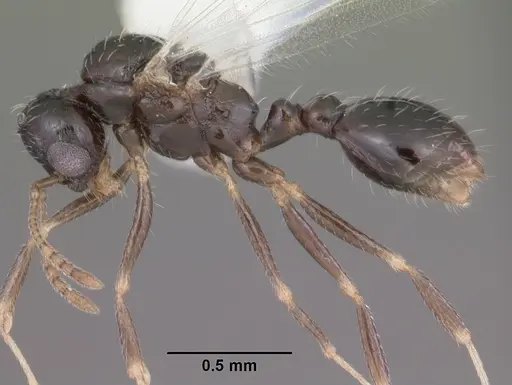
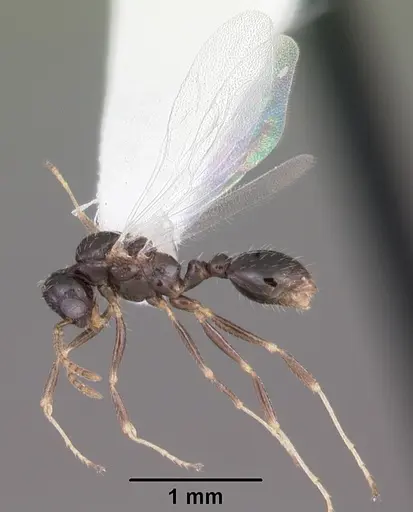
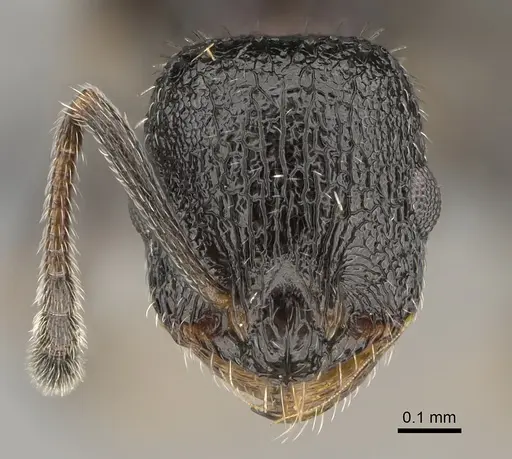
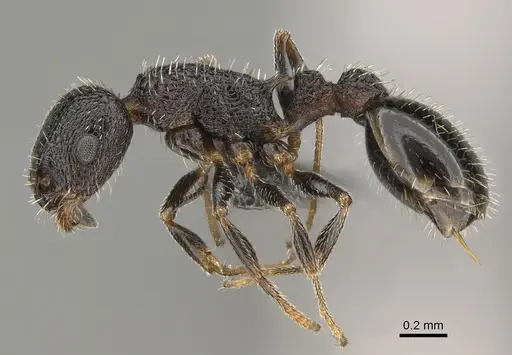
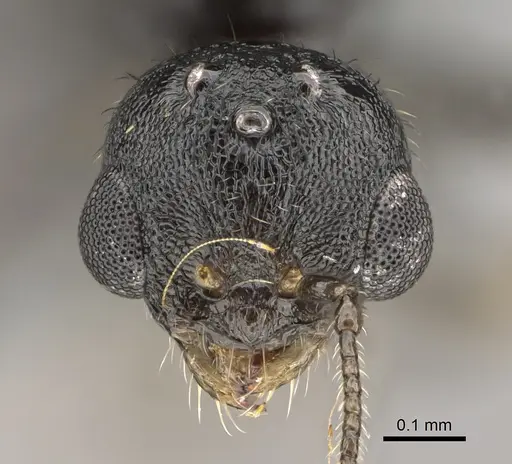
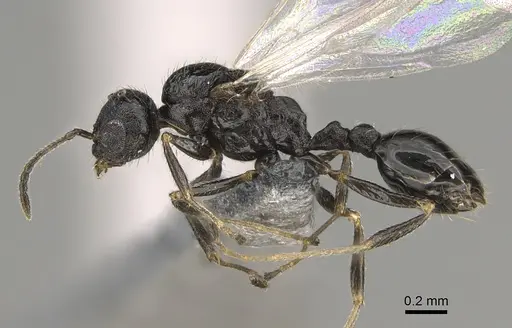
Temnothorax texanus is a tiny, dark brown ant measuring just 2.25-2.75mm for workers and 3.75-4mm for queens [1]. This species belongs to the sallei-clade of Temnothorax and is known for its coarse sculpturing, workers have rugae (ridges) on the head, mesosoma, petiole, and postpetiole, while the gaster remains smooth and glossy [1]. Queens display color variation: some are blackish while others are a striking brick red [1]. This ant is one of the few dark, shining Temnothorax species found foraging on the ground in open areas across the southeastern United States. Unlike many Temnothorax that nest in acorns or hollow twigs, T. texanus is a ground nester, creating small chambers just a few inches below the surface in sandy or clay soils [1]. Workers are fast-moving foragers that readily accept cookie crumbs, making them relatively easy to track to their nests in the field [2].
Quick Summary
- Difficulty: Easy
- Origin & Habitat: Eastern and southern United States, from New Jersey south to central Florida and west to Texas, also recorded in northeastern Mexico (Tamaulipas) [3][4]. Found in open or semi-open sites with sandy or clay soils, including sand dunes, oak-rosemary xeric hummocks, turkey oak scrub, and dry open woodlands [1][5].
- Colony Type: Monogyne, colonies have a single queen [1]. Small colony size typically reaching only dozens to low hundreds of workers [5].
- Colony: Monogyne
- Founding: Claustral
- Size & Growth:
- Queen: 3.75-4 mm [1]
- Worker: 2.25-2.75 mm [1]
- Colony: Small colonies, likely under 200 workers based on field observations [5]
- Growth: Moderate, typical for small Myrmicinae
- Development: 6-10 weeks (estimated based on typical Temnothorax development) (Development time inferred from related species in the genus, specific data for T. texanus not available)
- Antkeeping:
- Temperature: Room temperature (20-24°C) is suitable. This is a temperate-warm climate species found across the southern US, so moderate warmth supports year-round activity. Avoid temperatures below 15°C or above 30°C.
- Humidity: Moderate, they nest in soil that retains some moisture but is not waterlogged. Provide a moisture gradient in the nest with a damp section and a drier section so ants can self-regulate.
- Diapause: Likely required, given its range into northern areas (New Jersey, Ohio, Michigan), colonies probably benefit from a cool period (10-15°C) during winter months. Reduce feeding and keep in a cool location for 2-3 months.
- Nesting: Ground-nesting species. In captivity, they do well in naturalistic setups with a soil layer or in Y-tong/plaster nests. Provide 2-3 inches of sandy/loamy substrate that can hold some moisture. A small, inconspicuous entrance works best, they prefer tight, cozy chambers.
- Behavior: Workers are fast-moving foragers that actively search for small insects and other prey on the ground surface [2]. They readily accept bait like cookie crumbs, making them easy to observe and feed [2]. Not aggressive, these are tiny, docile ants that pose no threat to keepers. They may be shy and retreat when disturbed. Escape risk is moderate due to their small size, use standard barriers but no extreme measures needed like fine mesh.
- Common Issues: small colony size means slow population growth, don't expect rapid expansion, ground-nesting behavior requires proper substrate depth, too shallow and they'll be stressed, fast workers can be hard to contain during feeding, use a feeding arena, may be sensitive to disturbance, minimize nest vibrations, winter dormancy is important for northern-range species, don't skip the cool period
Housing and Nest Setup
Temnothorax texanus is a ground-nesting species, which means they need deeper substrate than their acorn-nesting cousins. A naturalistic setup with 2-3 inches of sandy-loamy soil works well, this mimics their natural nests which extend 3-6 inches below the surface [2]. The substrate should hold some moisture but drain well, avoid waterlogged conditions. You can use a mix of sandy soil and fine gravel, or a commercial ant soil mix. Y-tong (AAC) nests also work if you provide a soil-filled outworld for foraging. The nest chambers should be relatively small and cozy, these tiny ants prefer tight spaces. Include a water tube and a sugar tube, with protein offered in the outworld. A small entrance hole best matches their natural tiny nest openings [2].
Feeding and Diet
In the wild, workers forage on the ground surface collecting small insects and other food items they encounter [1]. They readily accept cookie crumbs in the field, which is unusual and makes them easy to bait [2]. For captive colonies, offer a varied diet: small live prey like fruit flies, pinhead crickets, or tiny mealworms (sized appropriately for their 2-3mm workers). They also accept sugar water, honey, or diluted honey. Based on related species, they likely feed on sugary exudates from plants and honeydew from hemipterans [6]. Feed protein 2-3 times per week and keep sugar water available at all times. Remove uneaten prey after 24 hours to prevent mold.
Temperature and Seasonal Care
Keep colonies at room temperature, ideally 20-24°C. This species ranges from New Jersey to Florida, so it adapts to a range of conditions but prefers moderate warmth. Avoid temperatures below 15°C or above 30°C. During winter months (roughly November-February in the northern parts of their range), consider providing a cool period around 10-15°C to simulate natural seasonal changes. This helps maintain colony health and may trigger spring breeding behavior. Reduce feeding during the cool period but don't stop entirely, they may still need occasional sustenance. In warmer climates or heated homes, they may remain active year-round, but a brief cool period is generally beneficial. [5][1]
Colony Founding
Queens are claustral, they seal themselves in a small chamber and raise the first brood alone using stored fat reserves. After mating (nuptial flights occur in summer, with winged reproductives found in nests from late June through August) [5], the mated queen digs a small chamber in soil and seals the entrance. She lays eggs and tends the larvae until the first workers (nanitics) emerge, typically smaller than normal workers. The first workers then take over foraging while the queen remains in the nest. Founding colonies should be kept in a quiet, dark location with minimal disturbance. Provide a damp cotton ball for moisture but no food until workers appear.
Behavior and Observation
These ants are active and fast-moving foragers. Workers run rapidly over the ground surface, sometimes singly and sometimes along invisible trails [2]. They are not aggressive and will flee rather than fight when threatened. Their small size and dark coloration make them somewhat challenging to spot, but their willingness to forage in the open and accept bait makes observation relatively easy. In the field, they can be tracked by following workers carrying cookie crumbs back to their nests [2]. In captivity, provide a foraging arena where you can watch them hunt small prey and collect sugar. They do not sting and pose no danger to keepers. Their colonies remain small, which makes them suitable for observation-focused keepers who want to watch individual ant behavior.
Frequently Asked Questions
How long does it take for Temnothorax texanus to have first workers?
Expect first workers (nanitics) to emerge 6-10 weeks after the queen lays eggs, depending on temperature. Warmer temperatures (around 22-24°C) speed development, while cooler temperatures slow it down. This timeline is based on typical Temnothorax development patterns since specific data for T. texanus is not available.
What do Temnothorax texanus ants eat?
They are generalist predators and scavengers. Offer small live prey like fruit flies, pinhead crickets, or tiny mealworms. They also readily accept sugar water, honey, or diluted honey. In the wild, they collect small insects and other food items from the ground surface. Feed protein 2-3 times per week with sugar always available.
Can I keep Temnothorax texanus in a test tube?
Test tubes work for founding colonies, but established colonies do better in naturalistic setups with soil substrate since this is a ground-nesting species. If using test tubes, provide a soil-filled outworld for foraging. A 2-3 inch layer of sandy-loamy soil in a naturalistic setup mimics their natural nesting conditions best.
Do Temnothorax texanus ants sting?
No. This species is completely harmless to humans. They are tiny, docile ants that flee from threats rather than engage. They have no functional stinger and pose no danger, making them safe for keepers of all experience levels.
How big do Temnothorax texanus colonies get?
Colonies remain relatively small, typically reaching only dozens to perhaps low hundreds of workers. Field studies show small colony sizes [5]. This makes them suitable for keepers who prefer species that don't require large enclosures or produce massive populations.
Do Temnothorax texanus need hibernation?
Likely yes, especially in northern parts of their range. Given their distribution from New Jersey to Michigan, a cool period (10-15°C) during winter months is probably beneficial. Reduce feeding and keep the colony in a cool location for 2-3 months during winter. In heated homes, they may remain active year-round, but a seasonal cool period helps maintain natural rhythms.
Are Temnothorax texanus good for beginners?
Yes, they are considered an easy species to keep. They are small, docile, and don't require extreme conditions. They accept a wide variety of foods and adapt well to captivity. The main challenges are their small size (can be harder to see) and slow colony growth, but they are otherwise forgiving of beginner mistakes.
References

This caresheet is licensed under CC BY-SA 4.0 .
ANTWEB1060063
View on AntWeb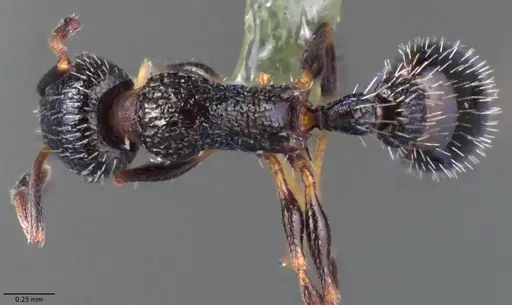
ANTWEB1060064
View on AntWeb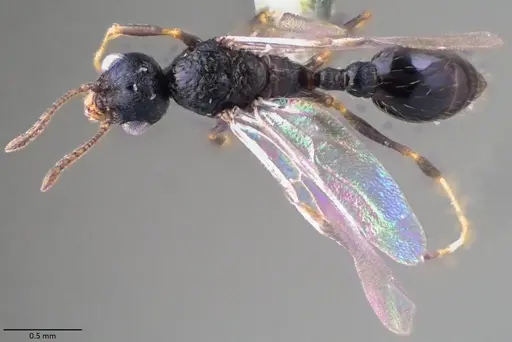
CASENT0104062
View on AntWeb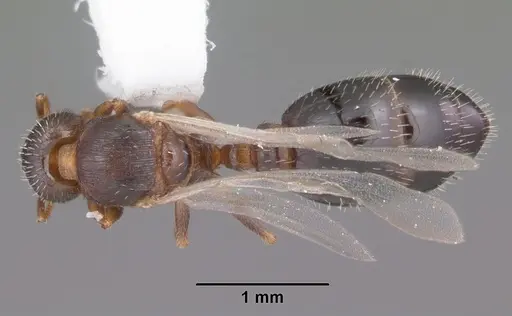
CASENT0104063
View on AntWeb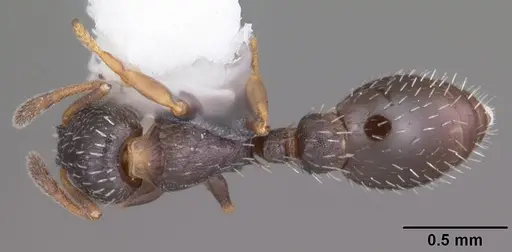
CASENT0104065
View on AntWeb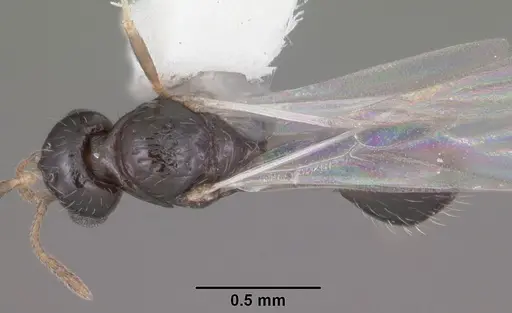
CASENT0923379
View on AntWeb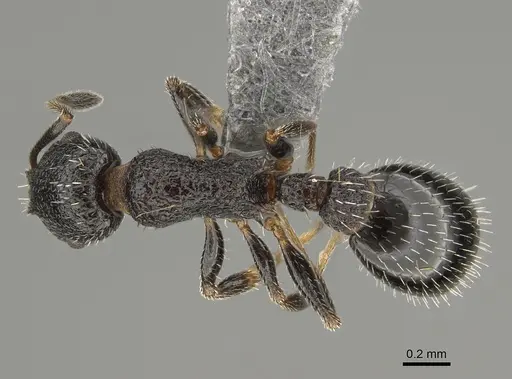
CASENT0923380
View on AntWeb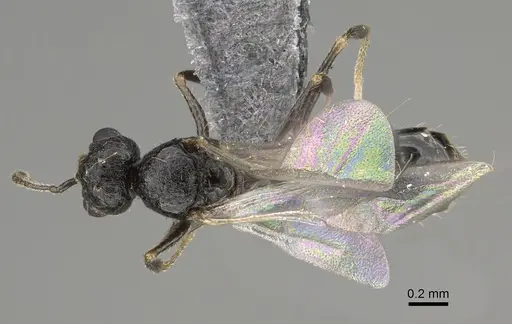
Literature
Loading...Loading products...