

Temnothorax schoedli
- Scientific Name
- Temnothorax schoedli
- Tribe
- Crematogastrini
- Subfamily
- Myrmicinae
- Author
- Seifert, 2006
- Distribution
- Found in 1 countries
Temnothorax schoedli Overview
Temnothorax schoedli is an ant species of the genus Temnothorax. It is primarily documented in 1 countries , including Türkiye. Detailed taxonomic data and occurrence records can be further explored via authoritative databases such as AntWeb or the Global Biodiversity Information Facility (GBIF).
Temnothorax schoedli
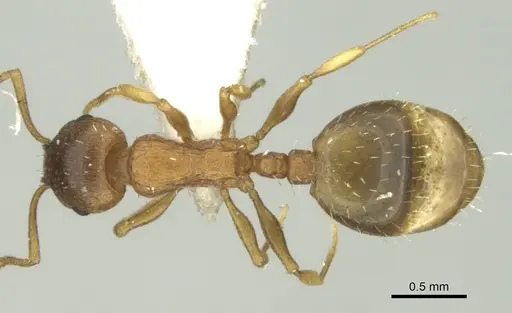
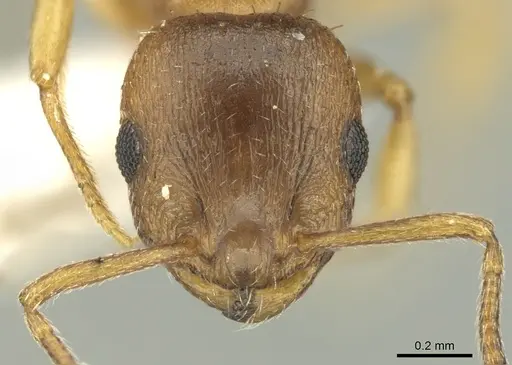
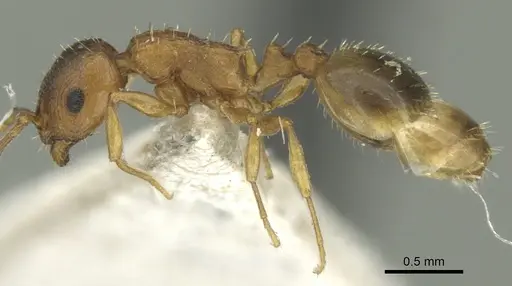
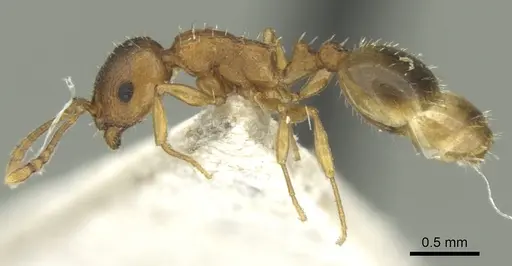
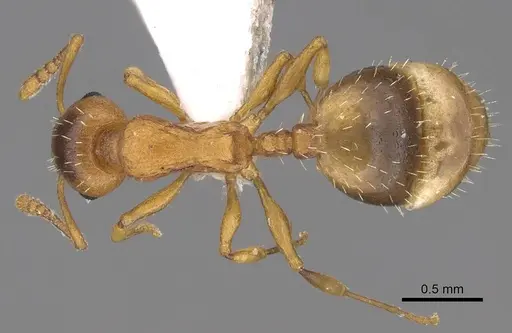
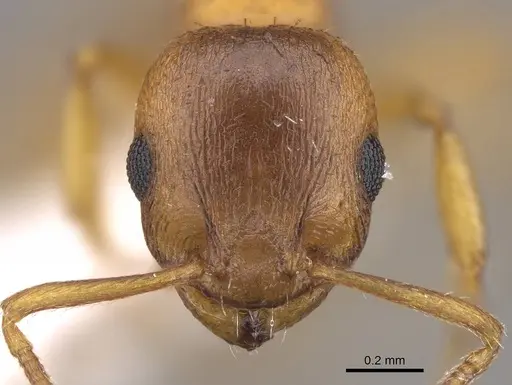
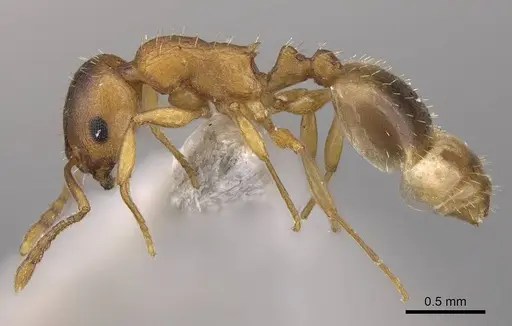
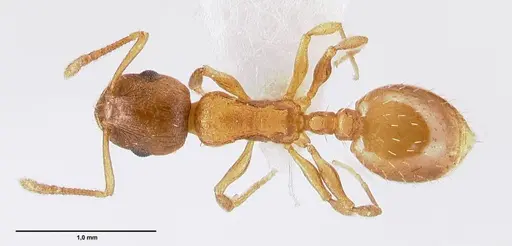
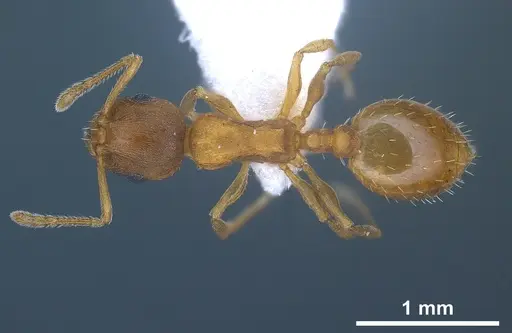
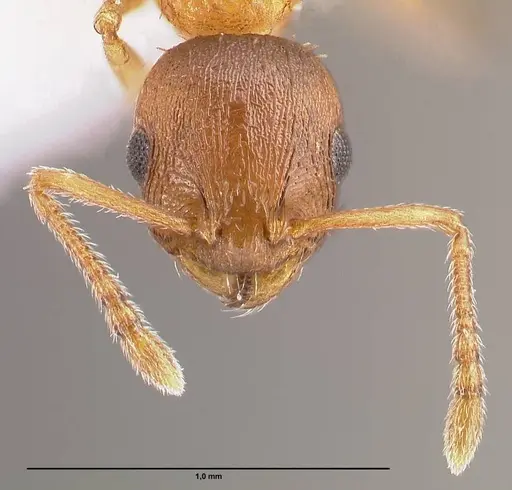
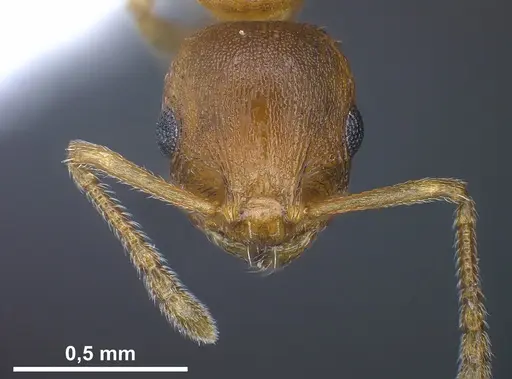
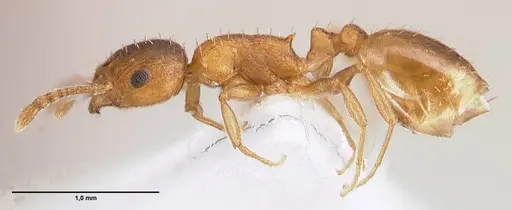
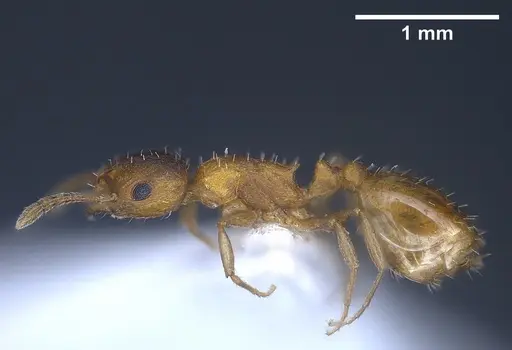
Temnothorax schoedli is a tiny ant species belonging to the nylanderi species-group, specifically the sordidulus species-complex. Workers are among the smallest ants you'll encounter, measuring just 2.5-3mm in total length with a cephalic size of 572-696 µm [1]. They have a distinctive brown body coloration with a lighter-colored mesosoma, antennae, legs, and the front portion of the gaster contrasting against the darker head and rear of the abdomen [1]. This species holds the distinction of being the lightest colored member of its species-complex, which helps distinguish it from related Turkish Temnothorax species [1][2].
This is a highly localized species endemic to the southern Taurus Mountains region of southeastern Turkey [1][3]. As with most Temnothorax species, they likely nest in small cavities under stones or in decaying wood, preferring sheltered microhabitats. Despite being described in 2006,the specific biology of T. schoedli remains poorly documented in scientific literature, though we can infer care requirements from what we know about related species in the genus.
Quick Summary
- Difficulty: Easy
- Origin & Habitat: Native to the southern Taurus Mountains in southeastern Turkey, specifically the South-Eastern Turkish Lowlands. Found at elevations around 1600m in the Nur Dağları range near Hassa [1][4]. They inhabit rocky, Mediterranean-style terrain with warm, dry summers and cooler, wetter winters.
- Colony Type: Likely monogyne (single-queen colonies) based on typical genus patterns for the nylanderi-group. Ergatoid (wingless replacement queen) presence is possible but not documented for this specific species.
- Size & Growth:
- Queen: Undocumented for this species, estimated 4-5mm based on related Temnothorax species in the same complex
- Worker: 2.5-3mm (cephalic size 572-696 µm) [1]
- Colony: Likely small colonies of 100-500 workers based on typical genus patterns
- Growth: Moderate, similar to other small Temnothorax species
- Development: Estimated 6-10 weeks at optimal temperature based on related species in the nylanderi-group (Temperature-dependent, warmer conditions accelerate development while cooler temperatures slow it significantly)
- Antkeeping:
- Temperature: Keep at 20-24°C. This species comes from a Mediterranean climate with warm summers, so they tolerate temperatures into the mid-20s°C well. A gentle thermal gradient is beneficial.
- Humidity: Moderate humidity around 50-60%. Provide a moist nest chamber but allow some drier areas for workers to regulate their own moisture needs. These are not high-humidity ants.
- Diapause: Yes, likely required. As a species from temperate Turkey, they probably need a winter rest period of 2-3 months at temperatures around 10-15°C. This mimics their natural seasonal cycle.
- Nesting: Small cavities work best. Y-tong (AAC) nests with narrow chambers, small test tube setups, or plaster nests with tight chambers all suit their tiny size. They prefer dark, enclosed spaces similar to their natural rock cavity nesting sites.
- Behavior: Generally peaceful and non-aggressive. Like most Temnothorax, they are not particularly defensive and will typically flee rather than engage threats. Workers are active foragers, likely collecting honeydew and small insects in nature. Their tiny size makes them excellent escape artists, fine mesh barriers and tight-fitting lids are essential. They are not known to sting and pose no danger to keepers.
- Common Issues: escape prevention is critical due to their very small size, they can squeeze through standard barrier gaps, colonies grow slowly which can frustrate beginners, patience is required, winter diapause is likely essential but often neglected by new keepers, test tube water reservoirs can flood tiny nests, use appropriate-sized setups, limited availability since this is a rarely kept species
Housing and Nest Setup
Temnothorax schoedli requires appropriately scaled housing due to their tiny worker size of just 2.5-3mm [1]. Standard test tubes work well for founding colonies and small groups, use a water reservoir that won't flood the small space. For established colonies, Y-tong (AAC) nests with narrow chambers or small plaster nests work excellently. The chambers should be tight-fitting, these ants feel secure in snug spaces rather than large open areas. A small outworld area allows for feeding. Because of their minute size, escape prevention must be excellent, use fine mesh on any ventilation and ensure all connections are sealed. A layer of substrate in the outworld helps with humidity regulation.
Feeding and Diet
Like other Temnothorax species, T. schoedli likely accepts a varied diet of small insects, honeydew, and sugar sources. For protein, offer small prey items like fruit flies, pinhead crickets, or small mealworms, appropriately sized to their tiny workers. Sugar water, honey diluted with water, or a small drop of honey can provide carbohydrates. In the wild, these ants likely tend aphids or scale insects for honeydew, so sugar sources are important for colony energy. Feed small amounts 2-3 times per week, removing uneaten prey after 24 hours to prevent mold.
Temperature and Seasonal Care
Maintain temperatures in the 20-24°C range for optimal colony activity and brood development [1]. This species comes from the warm Mediterranean climate of southern Turkey, so they handle warmer conditions well. A heating cable on one side of the nest can create a beneficial thermal gradient, allowing ants to self-regulate. Winter diapause appears essential, reduce temperatures to 10-15°C for 2-3 months during winter months to simulate their natural seasonal cycle. This rest period supports colony health and may trigger spring breeding behavior. Do not skip hibernation as it can weaken colonies over time.
Colony Growth and Development
Temnothorax schoedli colonies likely start slowly, as is typical for the genus. A founding queen will seal herself in a small chamber and raise her first nanitic workers on stored fat reserves, this claustral founding behavior is standard for the genus. Initial broods are small as the queen can only lay a limited number of eggs. Once the first workers (nanitics) emerge, they take over foraging and the colony enters a growth phase. Expect 6-10 weeks from egg to first worker at optimal temperatures, though this is estimated based on related species [1]. Colonies likely remain modest in size, potentially reaching 100-500 workers at maturity, typical for small Temnothorax species.
Behavior and Temperament
These are peaceful, non-aggressive ants that prefer to avoid confrontation rather than fight. Workers are active foragers but not particularly bold, they will retreat from threats rather than engage. Their tiny size means they are not equipped to defend against larger ants or predators. For antkeepers, this makes them easy to handle and observe. They do not possess a functional stinger and pose no danger to humans. The main behavioral concern is their excellent climbing ability and potential to escape, their small size allows them to navigate tiny gaps that would stop larger species. Always use fine mesh barriers and check enclosure seals regularly. [1]
Frequently Asked Questions
How long does it take for Temnothorax schoedli to produce first workers?
Expect approximately 6-10 weeks from egg to first worker at optimal temperatures around 20-24°C. This timeline is estimated based on related species in the nylanderi-group, as specific development data for T. schoedli is not documented. The first workers (nanitics) will be smaller than mature workers and the colony growth rate will initially be slow.
What size colony does Temnothorax schoedli reach?
Based on typical genus patterns, colonies likely reach 100-500 workers at maturity. This is a small Temnothorax species, so large colonies should not be expected. Growth is gradual over several months to years depending on feeding and conditions.
Do Temnothorax schoedli ants sting?
No, these ants do not pose any stinging threat to keepers. As Myrmicinae ants, they have a stinger but it is very small and not functional for defense against humans. They are completely safe to handle and observe without protective equipment.
What temperature do Temnothorax schoedli need?
Keep them at 20-24°C for optimal colony function. This species comes from warm Mediterranean Turkey and tolerates temperatures into the mid-20s°C well. A slight thermal gradient allowing them to choose their preferred temperature is ideal. Winter temperatures should drop to 10-15°C for a 2-3 month diapause period.
Can I keep multiple queens together?
Not recommended. While specific data for T. schoedli is lacking, Temnothorax species are typically monogyne (single-queen colonies). Combining unrelated foundress queens has not been documented for this species and would likely result in aggression. Start with one queen per colony.
Why are my Temnothorax schoedli escaping?
Their tiny 2.5-3mm size makes them excellent escape artists. You need excellent escape prevention including fine mesh barriers (standard mesh is too coarse), tight-fitting lids, and sealed connections. Check all gaps regularly. Even small gaps that larger ants cannot pass will allow these tiny ants to escape.
Do Temnothorax schoedli need hibernation?
Yes, a winter diapause of 2-3 months at 10-15°C is likely essential for this species. Coming from temperate Turkey with distinct seasons, they need this rest period to maintain healthy colony cycles. Skip hibernation at your colony's peril, it can lead to weakened colonies and reduced longevity.
What do Temnothorax schoedli eat?
Feed a varied diet including small protein sources (fruit flies, tiny crickets, small mealworms) and sugar sources (honey water, sugar water, honey). Remove uneaten prey after 24 hours. These are generalist feeders similar to other Temnothorax species, though prey items must be appropriately sized for their tiny workers.
Are Temnothorax schoedli good for beginners?
Yes, this species is suitable for beginners due to their easy temperature requirements, peaceful temperament, and simple feeding needs. The main challenges are escape prevention due to their tiny size and the slow growth rate requiring patience. They are not aggressive and do not require specialized equipment beyond proper escape barriers.
When should I move my colony to a formicarium?
Keep them in a test tube or small setup until the colony reaches at least 20-30 workers. Moving too early can stress the colony. When moving, use a gentle transition method, connect the test tube to the new nest and allow workers to explore and relocate on their own. The nest chambers should be appropriately sized for their tiny workers.
References

This caresheet is licensed under CC BY-SA 4.0 .
Literature
Loading...Loading products...