

Temnothorax schmittii
- Scientific Name
- Temnothorax schmittii
- Tribe
- Crematogastrini
- Subfamily
- Myrmicinae
- Author
- Wheeler, 1903
- Distribution
- Found in 1 countries
Temnothorax schmittii Overview
Temnothorax schmittii is an ant species of the genus Temnothorax. It is primarily documented in 1 countries , including United States of America. Detailed taxonomic data and occurrence records can be further explored via authoritative databases such as AntWeb or the Global Biodiversity Information Facility (GBIF).
Temnothorax schmittii
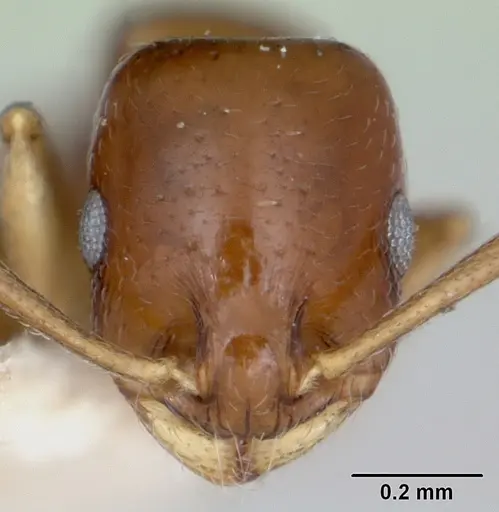
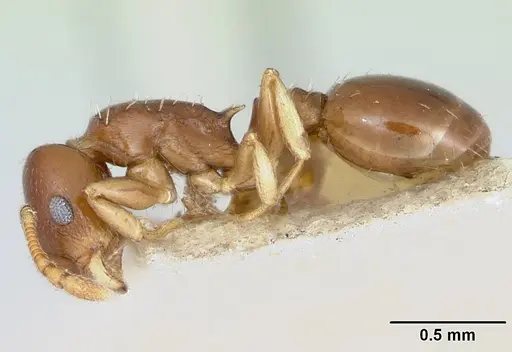
Temnothorax schmittii is a tiny ant species native to the southwestern United States and central Mexico. Workers measure just 2-2.25mm, making them one of the smaller North American ants [1]. They have a distinctive appearance with a very smooth and shining head and mesosoma, dark brown to black body coloration, and bright yellow legs, mandibles, and antennae [2]. The pronotum has sharp, prominent humeral angles giving them a square-shouldered look, and they possess well-developed propodeal spines [2].
This species belongs to the sallei-clade within Temnothorax and is considered extremely rare in the wild, known only from a handful of type specimens collected in Colorado and Mexico [1][3]. Despite being described in 1903,very little is known about its biology in the wild. Like other members of this genus, they likely nest in pre-existing cavities such as hollow stems, under stones, or in rotting wood [2].
Quick Summary
- Difficulty: Medium
- Origin & Habitat: Native to the Nearctic/Neotropical boundary, specifically found in Colorado (Canyon City/Fremont County) and Hidalgo, Mexico [1][3]. The species inhabits mountainous or high-elevation terrain in the American West, typically in semi-arid to temperate habitats with access to shaded microhabitats [4].
- Colony Type: Likely monogyne (single-queen colonies) based on typical Temnothorax patterns, though this is inferred rather than directly studied. No documented ergatoid replacement reproductives for this specific species.
- Colony: Monogyne
- Founding: Claustral
- Size & Growth:
- Queen: Unknown, estimated 4-5mm based on typical Temnothorax queen size range
- Worker: 2-2.25mm [1]
- Colony: Unknown, likely small colonies of under 100 workers based on typical genus patterns
- Growth: Moderate, estimated based on related species
- Development: Estimated 6-10 weeks at optimal temperature based on typical Temnothorax development [2] (Development time is estimated from related species in the genus, specific data for T. schmittii does not exist)
- Antkeeping:
- Temperature: Keep at room temperature around 20-24°C. This species comes from temperate regions with seasonal temperature variation, so they can tolerate cooler conditions (15-20°C) but prefer moderate warmth for active foraging and brood development [4].
- Humidity: Moderate humidity preferred, aim for 50-60% relative humidity. Provide a moisture gradient with a damp section (test tube water reservoir) and a drier area for the ants to self-regulate [2].
- Diapause: Yes, based on temperate origin, colonies should undergo a winter rest period. Reduce temperature to 10-15°C for 2-3 months during winter months (roughly November-February in the Northern Hemisphere) [4].
- Nesting: Temnothorax ants prefer tight, enclosed spaces. Test tubes with cotton water reservoirs work well for founding colonies. Once established, they do well in small acrylic nests (Y-tong style) or naturalistic setups with small chambers. Avoid large, open spaces, they feel safest in snug cavities scaled to their tiny size [2].
- Behavior: These are gentle, non-aggressive ants. Workers are small and docile, typically foraging individually for small prey and honeydew. They are not known to sting and pose no danger to keepers. Their tiny size (2mm) means escape prevention is critical, they can squeeze through standard mesh barriers. Use fine mesh (at least 0.5mm) or fluon barriers. Workers are active foragers but stay close to the nest. They likely form small, quiet colonies that don't produce major disturbance.
- Common Issues: very small size makes escape prevention critical, standard test tube cotton may need reinforcement, limited data means colony care is based on genus-level estimates rather than species-specific research, cold tolerance is uncertain, avoid temperatures below 10°C during active season, wild-caught colonies may be difficult to find as the species is extremely rare, slow colony growth may frustrate beginners expecting rapid development
Housing and Nest Setup
For founding colonies, a simple test tube setup works best. Use a small test tube with a cotton ball creating a water reservoir, this provides humidity and a drinking source. The tube should be dark-wrapped to simulate the dark cavities these ants naturally nest in. For established colonies, small acrylic nests like Y-tong (AAC) colonies work well, or you can create a naturalistic setup with small chambers. The key is providing tight, snug spaces, these ants feel secure in cavities that closely match their body size. A foraging area should be connected but not too large. Cover all connections with fine mesh (0.5mm or tighter) because workers are tiny and can escape through standard mesh [2].
Feeding and Diet
Like other Temnothorax species, T. schmittii is likely omnivorous with a preference for small protein sources and sugar. Offer small insects like fruit flies, pinhead crickets, or small mealworms. They will also accept sugar water, honey, or honeydew. Feed small amounts 2-3 times per week, removing uneaten prey after 24 hours to prevent mold. Since workers are only 2mm, prey items should be appropriately sized, very small arthropods are ideal. A constant sugar source (honey water on a tiny piece of cotton or sponge) is recommended for energy [2].
Temperature and Seasonal Care
Maintain temperatures around 20-24°C during the active season (spring through fall). This species originates from temperate Colorado/Mexico, so it can tolerate a range of conditions but performs best at moderate room temperature. A heating cable on one side of the nest can create a temperature gradient, allowing ants to self-regulate. During winter (roughly November-February), reduce temperature to 10-15°C to allow for diapause, this mimics natural seasonal cycles and supports colony health. Do not feed heavily during diapause and keep the nest slightly cooler but not cold. Resume normal feeding and temperatures in spring [4].
Colony Establishment and Growth
Starting with a founding queen (claustral) is the best approach. The queen will seal herself into a small chamber and raise the first brood alone on her stored fat reserves. Do not disturb her during this founding period, it typically takes 4-8 weeks for the first nanitic (first-generation) workers to emerge. Once workers appear, you can begin offering small food items. Colony growth is moderate, expect the first 10-20 workers to develop over several months. Full colony size is unknown but likely remains under 100 workers given the small worker size and typical genus patterns. Patience is key with this species, they are slow growers compared to larger ant species [2].
Handling and Observation
These ants are docile and easy to observe. Workers are small but can be seen with the naked eye, and their activity patterns are interesting to watch. They do not possess a functional stinger and pose no danger, the worst they can do is spray a tiny amount of formic acid if threatened. Observation is best done through the clear walls of an acrylic nest. Avoid frequent disturbances to the nest, especially during founding. When cleaning the outworld, use gentle movements and ensure no ants escape, their tiny size makes recapturing difficult. A shallow water moat or fluon barrier on the rim of the foraging area helps prevent escapes [2].
Frequently Asked Questions
How long does it take for Temnothorax schmittii to raise first workers?
From egg to first worker typically takes 6-10 weeks at optimal temperature (around 20-24°C). This is based on typical Temnothorax development patterns since specific data for this species does not exist. The queen is claustral, she seals herself in and raises the first brood alone without foraging [2].
What do Temnothorax schmittii ants eat?
They are omnivorous. Offer small protein sources like fruit flies, tiny crickets, or small mealworms. They also accept sugar water, honey, or honeydew. Since workers are only 2mm, keep prey items very small. Feed protein 2-3 times per week and provide a constant sugar source [2].
Do Temnothorax schmittii ants sting?
No, they do not sting. As Myrmicinae ants, they lack a functional stinger. If threatened, they might spray tiny amounts of formic acid, but this is not harmful to keepers. They are completely safe to handle gently [2].
What temperature do Temnothorax schmittii need?
Keep them at 20-24°C during the active season. They can tolerate 15-20°C but grow and forage best at moderate room temperature. In winter, provide a cool period (10-15°C) for diapause. Avoid temperatures below 10°C or above 30°C [4].
How big do Temnothorax schmittii colonies get?
Colony size is not documented in scientific literature, but based on typical Temnothorax patterns, colonies likely reach 50-100 workers at maximum. They are small colonies compared to many other ant species. Growth is slow, expect several months to reach 10-20 workers [2].
Can I keep Temnothorax schmittii in a test tube?
Yes, test tubes work excellently for founding colonies. Use a small test tube with a cotton water reservoir for humidity. Wrap the tube with dark material to simulate their natural dark cavity nests. Once the colony reaches 20+ workers, consider moving to a small acrylic nest (Y-tong style) for better observation [2].
Do Temnothorax schmittii need hibernation?
Yes, based on their temperate origin (Colorado/Mexico), they benefit from a winter rest period. Reduce temperature to 10-15°C for 2-3 months during winter. Reduce feeding during this period. This diapause helps maintain colony health and may trigger reproductive behavior in spring [4].
Are Temnothorax schmittii good for beginners?
They are moderate difficulty. The main challenges are their tiny size (escape prevention is critical), slow growth requiring patience, and limited species-specific information. They are docile, don't sting, and are fascinating to observe. However, their rarity makes finding a colony difficult, and their care is based on genus-level estimates rather than specific research [2].
Why is Temnothorax schmittii so rare in the wild?
This species is known only from a handful of type specimens collected in the early 1900s in Colorado and Mexico. It may be genuinely rare, have very localized distribution, or occupy microhabitats that are difficult to sample. It has not been extensively studied due to its scarcity [1][3].
How do I prevent Temnothorax schmittii from escaping?
Escape prevention is critical due to their tiny 2mm size. Use fine mesh (0.5mm or tighter) on all ventilation holes. Apply fluon (insect barrier) to the rim of the foraging area. Ensure all connections between nest and outworld are sealed. Check for gaps daily, especially after feeding when ants may be more active. A shallow water moat around the foraging area also helps [2].
References

This caresheet is licensed under CC BY-SA 4.0 .
CASENT0172996
View on AntWeb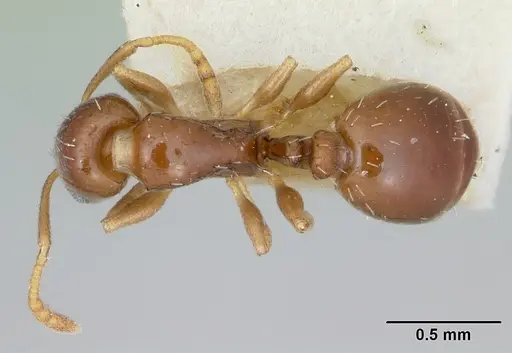
Literature
Loading...Loading products...