

Temnothorax rothneyi
- Scientific Name
- Temnothorax rothneyi
- Tribe
- Crematogastrini
- Subfamily
- Myrmicinae
- Author
- Forel, 1902
- Distribution
- Found in 1 countries
Temnothorax rothneyi Overview
Temnothorax rothneyi is an ant species of the genus Temnothorax. It is primarily documented in 1 countries , including India. Detailed taxonomic data and occurrence records can be further explored via authoritative databases such as AntWeb or the Global Biodiversity Information Facility (GBIF).
Temnothorax rothneyi
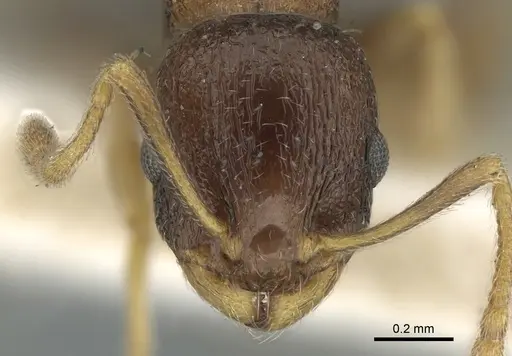
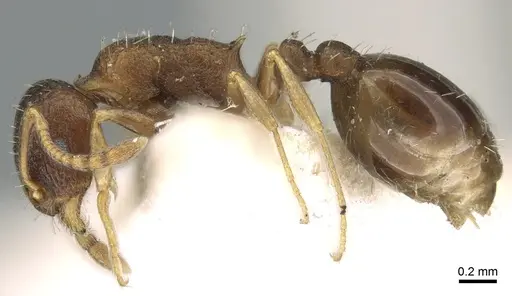
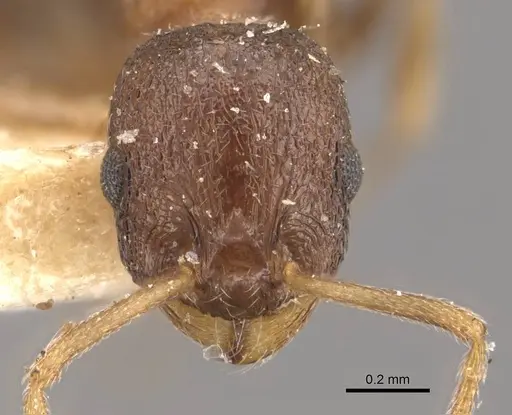
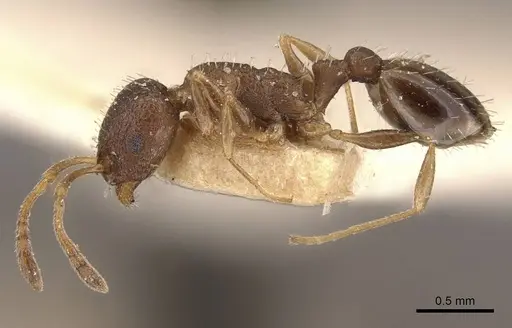
Temnothorax rothneyi is a small, colorful ant species native to the Himalayan region of India. Workers measure 2.5-3.9mm and have a distinctive appearance with a brown head, reddish-brown thorax and petiole, and a dark brown abdomen. Their legs and antennae are yellow, making them quite striking under magnification. These ants belong to the Rothneyi-group within the Palearctic-clade of acorn ants and are endemic to India, found across multiple Himalayan states including Himachal Pradesh, Sikkim, Uttarakhand, and parts of central India [1][2].
This species is a cold-climate specialist found at high elevations between 2000-3100 meters above sea level [3][4]. In the wild, they likely nest in small cavities under stones or in rotting wood, typical behavior for Temnothorax species. Queens are significantly larger at around 4.26mm and can be distinguished by their long propodeal spines [5]. Their small size and specific elevation requirements make them a challenging but rewarding species for experienced antkeepers interested in Himalayan fauna.
Quick Summary
- Difficulty: Medium
- Origin & Habitat: Himalayan region of India, specifically found in Himachal Pradesh, Jammu & Kashmir, Kerala, Madhya Pradesh, Meghalaya, Sikkim, and Uttarakhand at elevations of 2000-3100 meters [3][2]. They are a cold-climate specialist species native to high-altitude forests in the Himalayas [4].
- Colony Type: Monogyne, single queen colonies. Queens are larger (4.26mm) with long propodeal spines, while workers are small at 2.5-3.9mm [5][1].
- Colony: Monogyne
- Founding: Claustral
- Size & Growth:
- Queen: 4.26mm [5]
- Worker: 2.5-3.9mm [1][5]
- Colony: Unknown, likely small to moderate, typical for Temnothorax which typically reach dozens to a few hundred workers
- Growth: Moderate, inferred from genus patterns
- Development: 6-10 weeks, estimated based on typical Temnothorax development at cool temperatures (Development is likely slower than tropical species due to their cold-climate adaptation. High elevation origins suggest they prefer cooler temperatures than most ant species.)
- Antkeeping:
- Temperature: Keep cool, aim for 18-22°C. This is a cold-climate specialist adapted to high Himalayan elevations, so avoid warm conditions. Room temperature is likely ideal. Do not overheat.
- Humidity: Moderate humidity around 50-70%. They prefer drier conditions than many Myrmicinae. Provide a water tube but avoid overly damp setups.
- Diapause: Yes, as a Himalayan cold-climate species, they require a winter dormancy period. Reduce temperature to 10-15°C for 3-4 months during winter.
- Nesting: Temnothorax prefer tight chambers and narrow passages. A Y-tong (AAC) nest or test tube setup with small chambers works well. They often nest under stones in the wild, so provide dark, secure nesting sites.
- Behavior: Generally peaceful and non-aggressive. Workers are small but active foragers. They are not known to sting and pose no danger to keepers. Escape risk is moderate due to their small size, use fine mesh barriers. As typical for Temnothorax, they likely use tandem running to recruit nestmates to food sources.
- Common Issues: temperature stress, they are cold-adapted and can die from overheating, escape prevention, their small size means they can slip through standard barriers, colonies may grow slowly, requiring patience, high elevation origins mean they need proper winter dormancy to thrive
Temperature and Cooling Requirements
This is perhaps the most critical aspect of keeping Temnothorax rothneyi. As a cold-climate specialist from high Himalayan elevations (2000-3100m), they are adapted to cool temperatures and will struggle in warm conditions [3][4]. Keep the nest area at 18-22°C, this is cooler than most ant species prefer. Room temperature is often ideal for this species. Avoid placing their setup near heat sources or in direct sunlight. Overheating can be fatal. During summer months when room temperatures rise, consider using a small fan or cooling setup to maintain appropriate temperatures. The key is stability, avoid temperature fluctuations while maintaining cool conditions year-round. This species would rather be slightly too cool than too warm.
Housing and Nest Setup
Temnothorax rothneyi does best in setups that mimic their natural cavity-nesting preferences. A Y-tong (AAC) nest with small, tight chambers is ideal, these ants feel secure in compact spaces. Alternatively, a well-set-up test tube arrangement with a dark cover works well. The nest should be kept dry to moderately humid, they are not moisture-dependent like some tropical species. Provide a separate outworld for foraging with a small water tube. Because of their tiny size (workers are only 2.5-3.9mm), escape prevention is important. Use fine mesh on any ventilation holes and ensure all connections are sealed. A naturalistic setup with flat stones can also work if you can maintain proper humidity gradients. [1][5]
Feeding and Diet
Like other Temnothorax species, T. rothneyi is likely an omnivore that feeds on honeydew, small insects, and nectar in the wild. In captivity, offer a mix of sugar water or honey as an energy source, and protein-rich foods like small crickets, mealworms, or fruit flies. Feed small amounts 2-3 times per week, removing any uneaten food after 24 hours. These are small ants with modest appetites, overfeeding can lead to mold problems. They likely prefer small, soft-bodied prey items. A constant sugar source (honey water or a small honey droplet) is recommended. Observe your colony's preferences and adjust feeding accordingly.
Winter Dormancy and Hibernation
As a Himalayan cold-climate species, Temnothorax rothneyi requires a proper winter dormancy period to stay healthy. Reduce temperatures to 10-15°C for 3-4 months during winter, typically from late October through February in the Northern Hemisphere. This mimics the harsh Himalayan winter they experience in their natural habitat. During this period, reduce feeding significantly, the colony will be less active. Do not feed during deep hibernation. Make sure the nest does not dry out completely during this time, but reduce humidity slightly. After hibernation, gradually warm the colony back to their cool maintenance temperature. Skipping hibernation can lead to colony decline over time, as this species has evolved to expect this cold period. [3][4]
Colony Development and Growth
Temnothorax rothneyi colonies likely start slowly, as is typical for the genus. A newly mated queen will seal herself in a small chamber (claustral founding) and raise her first workers (nanitics) entirely on her stored energy reserves. The first workers will be smaller than normal workers. Expect 6-10 weeks from egg to first worker at optimal cool temperatures. Colony growth is moderate, these are not fast-growing ants. Maximum colony size is not documented but is likely in the range of dozens to a few hundred workers, typical for small Temnothorax species. Patience is key with this species. Do not disturb the queen during founding, stress can cause her to eat her brood. Once the first workers emerge, you can begin offering food. [5]
Behavior and Observation
Temnothorax rothneyi is a peaceful species that is fascinating to observe. Workers are active and will forage for food, likely using tandem running (one worker leads another to food) as a recruitment method, which is common in the genus. They are not aggressive and do not have a functional stinger, these ants pose no danger to keepers. Their small size makes them excellent subjects for observation, revealing behaviors that larger ants might not show. Watch for their characteristic antennal communication and the way they carefully tend their brood. They are diurnal and will be most active during daylight hours. The queens are notably larger than workers and can live for many years with proper care.
Frequently Asked Questions
How long does it take for Temnothorax rothneyi to produce first workers?
Expect 6-10 weeks from egg to first worker at optimal cool temperatures (18-22°C). This is slower than tropical species due to their cold-climate adaptation and the cool temperatures they require.
What temperature is best for Temnothorax rothneyi?
Keep them cool at 18-22°C. This is a cold-climate specialist from high Himalayan elevations, they do not tolerate warm conditions and can die from overheating. Room temperature is often ideal.
Do Temnothorax rothneyi ants sting?
No, this species does not have a functional stinger. They are completely harmless to keepers and pose no danger. They may bite if handled roughly, but this is rare and not painful.
How big do Temnothorax rothneyi colonies get?
Colony size is not well documented but is likely moderate, probably under 500 workers. They are small ants with smaller colony sizes typical of the genus.
Do Temnothorax rothneyi need hibernation?
Yes, absolutely. As a Himalayan cold-climate specialist, they require a winter dormancy period. Reduce temperatures to 10-15°C for 3-4 months during winter (typically October-February). Skipping hibernation can harm the colony long-term.
What do Temnothorax rothneyi eat?
They are omnivores. Offer sugar sources (honey water or honey) and protein (small insects like fruit flies, pinhead crickets, or mealworms). Feed 2-3 times per week with small amounts.
Is Temnothorax rothneyi good for beginners?
This species is best suited for intermediate to experienced antkeepers. Their specific temperature requirements (cool conditions) and need for proper hibernation make them more challenging than common species. Beginners should start with easier species first.
What size nest do Temnothorax rothneyi need?
They prefer tight, small chambers. A Y-tong (AAC) nest with narrow passages or a test tube setup works well. Avoid large, open spaces, these small ants feel more secure in compact quarters.
Where is Temnothorax rothneyi found in the wild?
This species is endemic to India, specifically the Himalayan region. It is found in Himachal Pradesh, Jammu & Kashmir, Sikkim, Uttarakhand, and parts of central India at elevations of 2000-3100 meters above sea level.
Can I keep multiple queens of Temnothorax rothneyi together?
No, this is a monogyne (single-queen) species. Only keep one queen per colony. Multiple unrelated queens will fight.
Why is my Temnothorax rothneyi colony dying?
The most common cause is overheating, they are cold-adapted and die quickly in warm conditions. Also ensure they receive proper winter dormancy. Check for escape issues and ensure they are not being fed moldy food.
When should I move Temnothorax rothneyi to a formicarium?
Wait until the colony has at least 20-30 workers before moving to a formicarium. They do well in test tubes for the first year or two. A Y-tong nest is a good choice when ready to upgrade.
References

This caresheet is licensed under CC BY-SA 4.0 .
CASENT0906179
View on AntWeb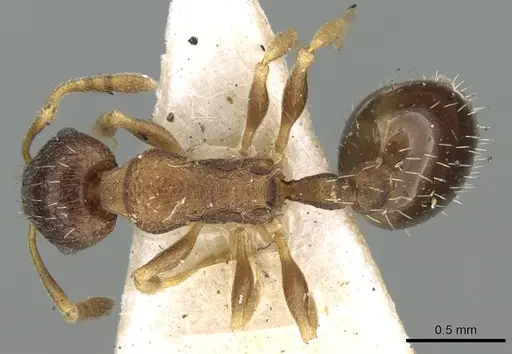
CASENT0909054
View on AntWeb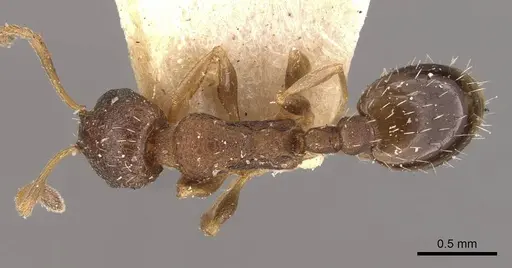
Literature
Loading...Loading products...