

Temnothorax politus
- Scientific Name
- Temnothorax politus
- Tribe
- Crematogastrini
- Subfamily
- Myrmicinae
- Author
- Smith, 1939
- Distribution
- Found in 2 countries
Temnothorax politus Overview
Temnothorax politus is an ant species of the genus Temnothorax. It is primarily documented in 2 countries , including Mexico, United States of America. Detailed taxonomic data and occurrence records can be further explored via authoritative databases such as AntWeb or the Global Biodiversity Information Facility (GBIF).
Temnothorax politus
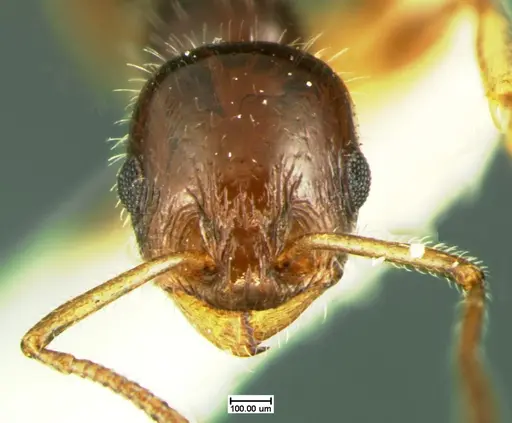
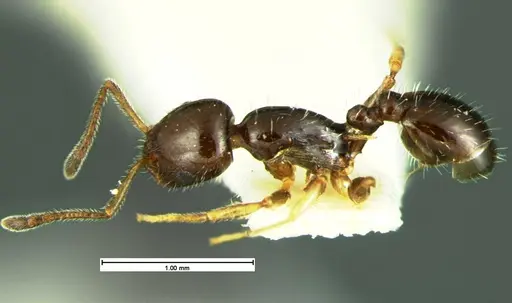
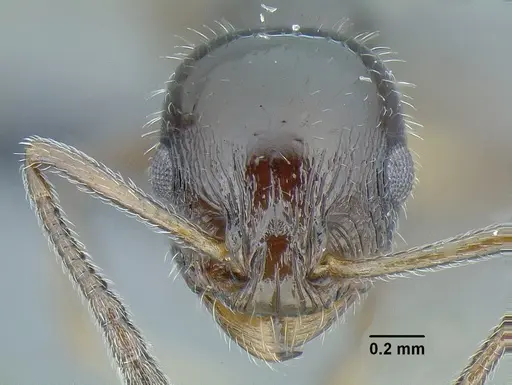
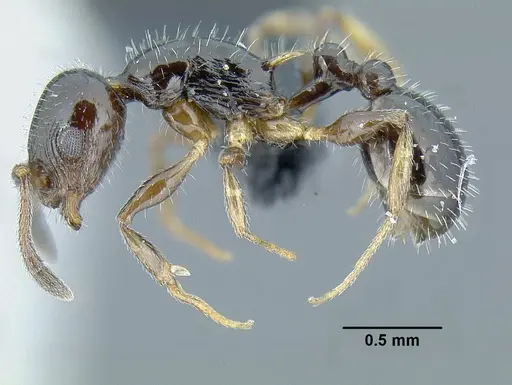
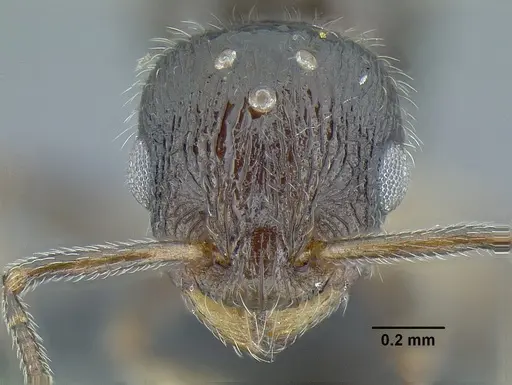
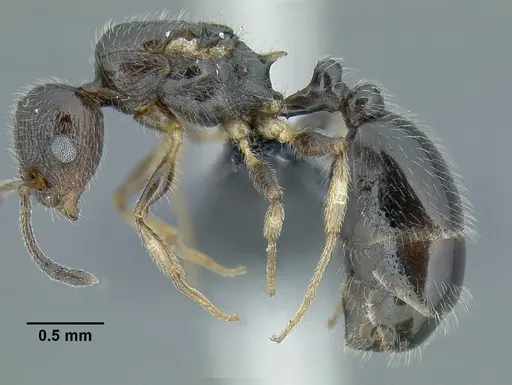
Temnothorax politus is a small, striking ant native to the hot deserts and sky islands of southern Arizona and Sonora, Mexico. Workers measure just 2-2.4mm and are nearly black with a smooth, polished appearance that gives them their scientific name ('politus' means polished in Latin). Their most distinctive features are the long, tapering setae covering their body and the strongly convex thorax that makes them look uniquely rounded. Queens are larger at around 8mm and share the same dark coloration and glossy surface. This species is restricted to riparian habitats in desert regions, washes, irrigation canals, and riverbanks, where it nests in small cavities like hollow twigs, under cottonwood bark, or in fallen branches near the ground [1]. They are nocturnal or crepuscular, avoiding the intense desert heat by foraging at night [1].
Quick Summary
- Difficulty: Medium
- Origin & Habitat: Southern Arizona, USA and Sonora, Mexico. In desert habitats, they are restricted to washes, irrigation canals, and riparian areas. They have been found up to 4,500 feet elevation in sky island mountain ranges [1][2][3].
- Colony Type: Monogyne (single-queen colonies). The colony structure is typical of most Temnothorax species, with one queen per colony.
- Colony: Monogyne
- Founding: Claustral
- Size & Growth:
- Queen: ~8mm (CS 1.142mm from Prebus 2021) [1]
- Worker: 2-2.4mm [1]
- Colony: Unknown for this specific species, but typical Temnothorax colonies reach 100-500 workers
- Growth: Moderate
- Development: Estimated 6-10 weeks based on typical Temnothorax genus patterns at optimal temperature (Development time is inferred from related species in the genus, no specific data available for T. politus)
- Antkeeping:
- Temperature: Keep at 20-24°C. This species is sensitive to heat and naturally avoids daytime foraging in hot desert habitats, never expose them to temperatures above 30°C [1].
- Humidity: Moderate humidity (50-70%). These ants naturally nest in riparian areas so they appreciate some moisture, but avoid waterlogging. Provide a gradient with slightly damp nest chambers and drier areas for the ants to choose.
- Diapause: Likely required. As a species from temperate North America with desert/sky island habitat, they likely need a winter rest period. Provide 2-3 months at 10-15°C during winter.
- Nesting: Provide small, tight nesting cavities. In captivity, they do well in Y-tong (AAC) nests, small acrylic setups, or test tube arrangements with narrow chambers. They naturally nest in hollow twigs, under bark, and in small cavities, avoid large, open spaces.
- Behavior: These ants are shy and not aggressive. Workers are sensitive to heat and will avoid foraging during hot periods. They are nocturnal or crepuscular, meaning they are most active at night or in dim light. They are small but not particularly prone to escaping, standard escape prevention works well. Workers likely use tandem-running to recruit nestmates to food sources, as is typical for the genus.
- Common Issues: heat sensitivity is critical, temperatures above 30°C can kill colonies, nocturnal activity means you may not see them foraging during the day, small colony size means slow growth that can frustrate beginners, wild-caught colonies may have parasites that cause problems in captivity, test tube setups need proper water reservoir management to avoid flooding
Housing and Nest Setup
Temnothorax politus does well in small, tight nesting spaces that mimic their natural cavities. A Y-tong (AAC) formicarium with narrow chambers works excellently, as does a small acrylic nest or a properly set up test tube arrangement. The key is providing chambers scaled to their tiny 2-4mm size, avoid tall, open spaces that make them feel exposed. They naturally nest in hollow twigs, under loose bark, and in small cavities in fallen cottonwood branches, so incorporating some natural elements like small twigs or wood pieces can help them feel at home. Keep the nest relatively dark and avoid disturbing them during daylight hours since they are nocturnal. A small outworld connected to the nest allows for feeding space without exposing the entire colony to light. [1]
Feeding and Diet
Like most Temnothorax species, T. politus is likely omnivorous with a preference for small protein sources. Offer small insects like fruit flies, pinhead crickets, or small mealworms. They probably also consume honeydew from aphids and may accept sugar water or honey as an energy source. In the wild, they forage at night for small arthropods and likely tend aphids for honeydew. Feed small prey items 2-3 times per week, adjusting based on colony size and consumption. Remove uneaten prey after 24-48 hours to prevent mold. A constant sugar source (honey water or a small honey drop) is recommended, especially for larger colonies with many workers to feed. [1]
Temperature and Seasonal Care
Temperature management is crucial for this species. Keep the nest area at 20-24°C, avoiding any temperatures above 30°C, they are documented as sensitive to heat and naturally avoid daytime foraging in their hot desert habitat [1]. A heating cable on one side of the nest can create a gentle gradient, but always ensure they can move to cooler areas. During winter, provide a diapause period of 2-3 months at 10-15°C to simulate their natural seasonal cycle. This species comes from a region with distinct seasons, so the winter rest is important for colony health and queen reproduction. Do not cool them suddenly, reduce temperature gradually over 1-2 weeks.
Behavior and Observation
Temnothorax politus is a shy, non-aggressive species that prefers to avoid confrontation. Workers are nocturnal or crepuscular, meaning they are most active at night or during twilight hours, this explains why keepers often don't see much daytime activity. They likely use tandem-running recruitment, where one worker leads another to food sources, which is common in the genus. Queens are fully claustral and seal themselves in during founding, raising the first workers alone without leaving the nest. Workers are small but can handle moderate disturbance once established. Observation is best done in the evening or with a red light, which most ants cannot see well. [1]
Colony Founding
Queens are claustral, meaning they seal themselves in a small chamber and raise the first generation of workers entirely on energy from their stored fat reserves. The founding chamber should be small and dark, mimicking the natural cavities they choose in twigs or under bark. After the queen seals herself in, do not disturb the founding setup for at least 4-6 weeks. The first workers (nanitics) will be smaller than mature workers but should quickly grow as the colony expands. Provide a small sugar source once workers emerge, but the queen will have managed the initial brood development without food. Once workers are foraging, begin regular feeding schedules. [1]
Frequently Asked Questions
How long does it take for Temnothorax politus to raise their first workers?
From egg to first worker typically takes 6-10 weeks at optimal temperature (20-24°C). This estimate is based on typical Temnothorax genus development, as no specific timing data exists for this species. The queen will seal herself in and raise the first brood alone, this is claustral founding.
Can I keep Temnothorax politus in a test tube?
Yes, test tubes work well for founding colonies and small colonies. Use a small test tube with a cotton barrier and water reservoir, but ensure the chamber is not too large, the queen should feel enclosed in a small space. As the colony grows, you can connect multiple test tubes or move to a small formicarium.
Do Temnothorax politus ants sting?
No, Temnothorax ants do not have functional stingers. They are not aggressive and rely on their small size and cryptic habits to avoid predators rather than defensive stinging.
Are Temnothorax politus good for beginners?
They are rated as medium difficulty. While smaller than some beginner species, they are not overly demanding. The main challenges are their sensitivity to heat, slow growth compared to faster species, and their nocturnal habits which mean less visible activity during the day.
What temperature do Temnothorax politus need?
Keep them at 20-24°C. This species is specifically noted as sensitive to heat and naturally avoids foraging during hot desert days. Never expose them to temperatures above 30°C.
Do Temnothorax politus need hibernation?
Yes, they likely require a winter diapause period. As a species from temperate North America with desert/sky island habitat, provide 2-3 months at 10-15°C during winter. Reduce temperature gradually over 1-2 weeks.
How big do Temnothorax politus colonies get?
Colony size is estimated at 100-500 workers based on typical Temnothorax species. No specific colony size data exists for T. politus, but they are not among the largest Temnothorax species.
When are Temnothorax politus most active?
They are nocturnal or crepuscular, meaning most active at night or during twilight. In captivity, you will see more activity in the evening hours or under dim lighting. This matches their natural behavior of avoiding daytime heat in their desert habitat.
What do Temnothorax politus eat?
They are omnivorous. Offer small protein sources like fruit flies, pinhead crickets, or small mealworms 2-3 times per week. They also likely accept honeydew and sugar sources, provide a small drop of honey water or sugar water as a constant energy source.
Can I keep multiple queens together?
No, Temnothorax politus is monogyne, single-queen colonies. Multiple unrelated queens will fight. Only keep one queen per colony unless you are attempting pleometrosis (founding with multiple queens), which has not been documented for this species and is not recommended.
Why aren't my Temnothorax politus active during the day?
This is normal, they are nocturnal or crepuscular. In the wild, they avoid foraging during the hot desert daytime. You will see more activity in the evening, at night, or under dim red lighting.
When should I move my colony to a formicarium?
Move from a test tube to a formicarium when the colony reaches 20-30 workers and the test tube setup becomes cramped. For T. politus, a small Y-tong or acrylic nest with appropriately sized chambers works well. Do not move too early, test tubes are fine for smaller colonies.
References

This caresheet is licensed under CC BY-SA 4.0 .
CASENT0104690
View on AntWeb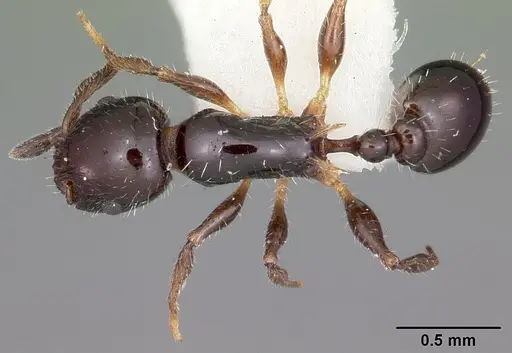
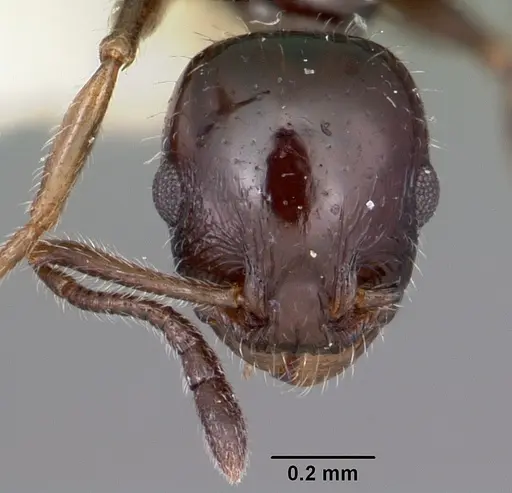
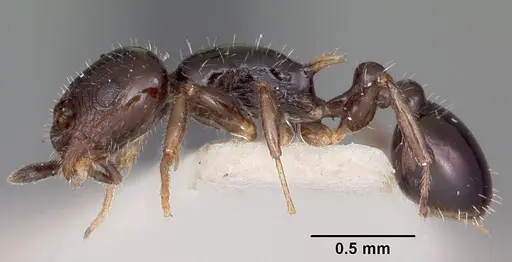
CASENT0105625
View on AntWeb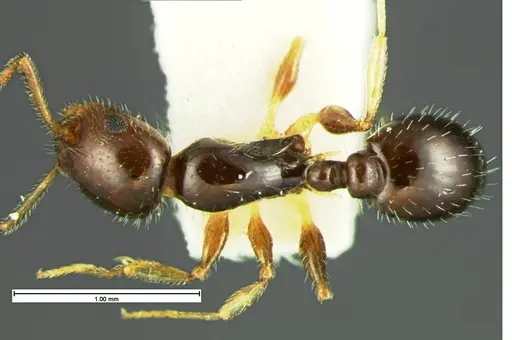
CASENT0756845
View on AntWeb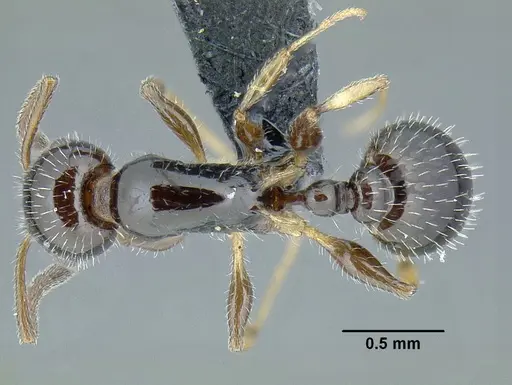
CASENT0758021
View on AntWeb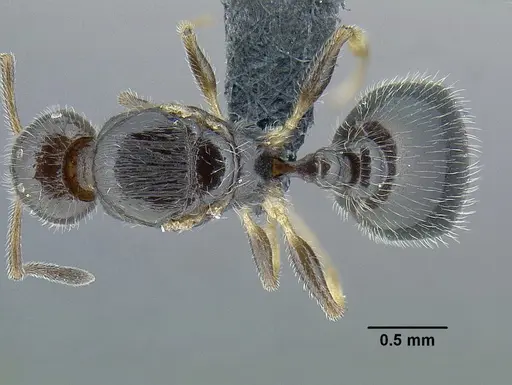
LACMENT323200
View on AntWeb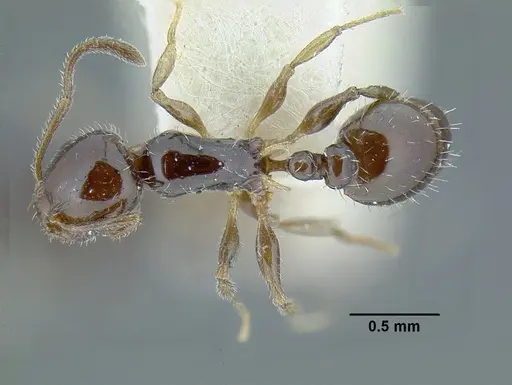
Literature
Loading...Loading products...