

Temnothorax obturator
- Scientific Name
- Temnothorax obturator
- Tribe
- Crematogastrini
- Subfamily
- Myrmicinae
- Author
- Wheeler, 1903
- Distribution
- Found in 1 countries
Temnothorax obturator Overview
Temnothorax obturator is an ant species of the genus Temnothorax. It is primarily documented in 1 countries , including United States of America. Detailed taxonomic data and occurrence records can be further explored via authoritative databases such as AntWeb or the Global Biodiversity Information Facility (GBIF).
Temnothorax obturator
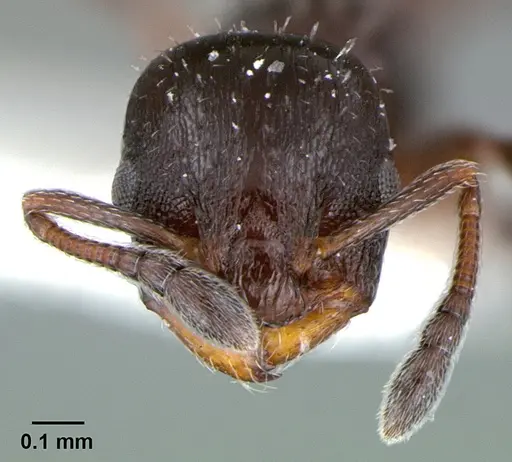
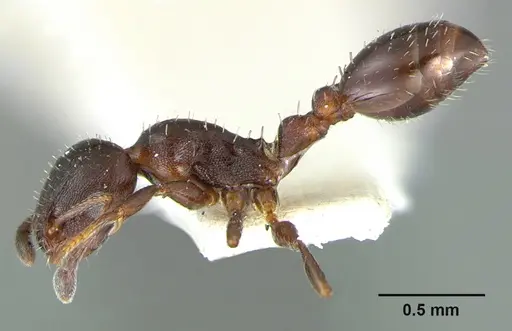
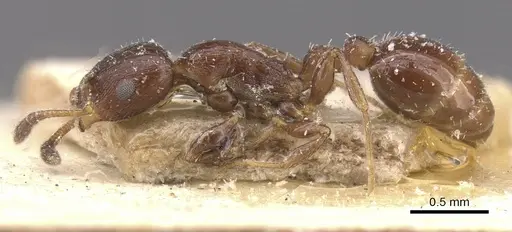
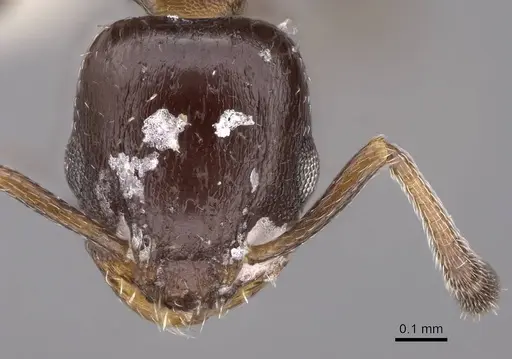
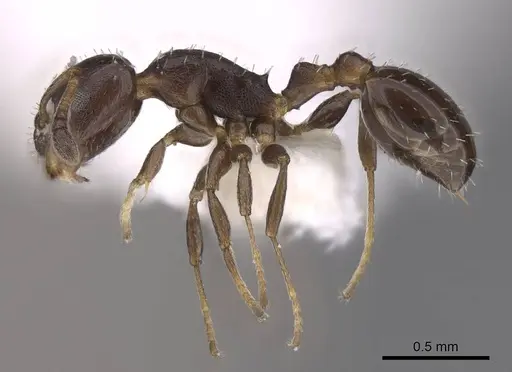
Temnothorax obturator is a tiny North American ant native to central Texas. Workers measure just 2.25-2.75mm, making them one of the smaller ant species you'll encounter. Queens are slightly larger at 3.5-3.75mm. These ants are nearly black with reddish-yellow legs and antennae, giving them a distinctive two-toned appearance. They get their scientific name from the Latin 'obturator' meaning 'stopper' or 'plug', a reference to their remarkable nesting behavior where the queen seals herself inside oak galls [1].
What makes these ants truly unique is their relationship with oak galls. The queen enters an abandoned gall (a growth on oak trees caused by insects), plugs the entrance with a mixture of plant material and her own secretions, then lays eggs inside. When workers emerge, they chew a tiny pin-prick-sized hole just large enough for them to come and go, but too small for the queen to escape. She remains trapped for life, laying eggs in the gall chamber where the colony spends its entire lifecycle [1].
Quick Summary
- Difficulty: Medium
- Origin & Habitat: Central Texas, United States. Found in woodlands where they nest in live oak galls (Quercus virginiana) or hollow twigs of wafer ash (Ptelea trifoliata) and ironwood (Bumelia lanuginosa) [1].
- Colony Type: Monogynous, single queen colonies. The queen seals herself inside the gall and cannot escape once workers open the pin-prick exit hole [1].
- Colony: Monogyne
- Founding: Claustral
- Size & Growth:
- Antkeeping:
- Temperature: Keep around 22-26°C. They naturally occur in central Texas which has hot summers and mild winters. A room-temperature setup around 24°C works well
- Humidity: Moderate humidity around 50-70%. Their galls provide relatively stable internal conditions. Allow some drying between waterings but don't let them dry out completely
- Diapause: Likely beneficial but not required. Texas has mild winters, so they may simply reduce activity during cooler months rather than enter true diapause. If your room temperature drops below 15°C for several weeks, expect slower colony activity
- Nesting: This is the critical part. They need a tiny nest chamber scaled to their size, think test tube with a very small cotton chamber, or a small acrylic/gytria nest with chambers no more than a few centimeters across. The key is making them feel enclosed and secure. They naturally live in cramped gall chambers, so avoid large open spaces.
- Behavior: These are peaceful but territorial ants. Workers are small and non-aggressive toward humans, they cannot sting effectively and pose no danger. However, they are extremely hostile to workers from other colonies. If you try to introduce workers from different colonies, they will fight to the death. This means you should never combine unrelated colonies. Escape prevention is critical, at 2-3mm, they can squeeze through surprisingly small gaps. Use fluon on edges and ensure your setup has no gaps larger than 1mm.
- Common Issues: tiny size means escapes are likely without fine mesh barriers and fluon, colonies stay very small (max ~40 workers), this is normal, not a problem, queen becomes trapped in founding chamber, don't try to free her, very aggressive toward foreign workers, never combine colonies, slow growth can frustrate beginners who expect rapid colony expansion
Housing and Nest Setup
Temnothorax obturator requires a nest scaled to their tiny size. In the wild, they live inside oak galls, cramped chambers just a few centimeters across. For captivity, a small test tube setup works well for founding colonies. Use a standard test tube with a water reservoir, but keep the cotton chamber small and snug. For established colonies, a small acrylic nest or y-tong with narrow chambers (2-3mm passageways) mimics their natural gall chambers better than large formicarium spaces.
The key principle is enclosure and scale. These ants feel secure in tight spaces. A chamber that would feel cramped for a Camponotus is perfect for Temnothorax. Avoid tall vertical spaces or large foraging areas, they prefer to stay close to their brood in a compact nest. A small outworld connected by a short tube works fine for feeding. [1]
Feeding and Diet
Like most Temnothorax, these ants are opportunistic feeders that accept both sugar and protein. Offer sugar water, honey, or diluted maple syrup as a constant carbohydrate source. For protein, small live prey works best, fruit flies, pinhead crickets, or small mealworms. Because workers are so tiny (2-3mm), prey items should be appropriately sized. A fruit fly is a substantial meal for these ants.
Feed small amounts 2-3 times per week. Remove uneaten prey after 24 hours to prevent mold. Since colonies stay small (max 40 workers), they need very little food. A drop of sugar water and one small prey item per week is often sufficient for a mature colony. Watch your colony, if they ignore food, you're offering too much.
Temperature and Seasonal Care
Keep your colony at room temperature, ideally 22-26°C. Central Texas experiences hot summers (often above 35°C) and mild winters. Your ants will be most active in the warmer months and slow down when temperatures drop. They don't require a formal hibernation period given Texas's mild climate, but if your room temperature falls below 15°C for extended periods, expect reduced activity.
If you use heating, a heating cable on one side of the nest creating a gentle gradient works well. Place it on top of the nest, not underneath, to avoid drying out the moisture chamber. Most indoor temperatures in the low-to-mid 20s°C are already ideal for this species.
Colony Structure and Queen Behavior
The queen enters a pre-existing gall or hollow twig, then seals herself inside by plugging the entrance with chewed plant material mixed with her secretions. She lays eggs in the gall's central chamber and raises the first workers alone, this is claustral founding, meaning she doesn't leave to forage [1].
Once workers emerge (nanitics, which are especially tiny), they chew a pin-prick-sized hole in the plug. This hole is just large enough for workers to exit and forage, but the queen cannot fit through and remains trapped for life. This is not a problem, it's normal behavior. Never try to free a trapped queen, as this would damage the colony.
Colonies remain small throughout their lives, typically maxing out at 36-40 workers. This is completely normal for the species. Don't expect rapid growth or large colony sizes, these are tiny colonies by design [1].
Frequently Asked Questions
How long does it take for Temnothorax obturator to get their first workers?
Expect 6-10 weeks from founding to first workers emerging. This is typical for Temnothorax species. The queen seals herself in and raises the first brood alone, living off her stored fat reserves. Be patient, founding colonies can seem inactive while the queen is caring for her first batch of eggs.
Are Temnothorax obturator ants good for beginners?
They are medium difficulty. The main challenges are their tiny size (escape prevention is critical) and slow colony growth. They stay very small, even mature colonies only reach about 40 workers. If you want large, impressive colonies, this isn't the species for you. But if you enjoy watching tiny ants in a naturalistic setup, they're rewarding.
Can I keep multiple Temnothorax obturator queens together?
No. This species is monogynous, colonies have only one queen. They are also extremely hostile to workers from other colonies. Never attempt to combine unrelated queens or workers. Each colony should be kept separately [1].
What do Temnothorax obturator ants eat?
They accept sugar sources (honey, sugar water, maple syrup) and small protein prey (fruit flies, tiny crickets, small mealworms). Because workers are only 2-3mm, prey should be appropriately sized. A single fruit fly is a substantial meal. Feed small amounts 2-3 times per week and remove uneaten food.
Do Temnothorax obturator ants sting?
No, they are not dangerous to humans. Workers are too small to effectively sting, and they are generally non-aggressive. They pose no danger to keepers. Their main defense is running away and hiding in their nest chambers.
Why is my Temnothorax obturator queen stuck in one place?
This is completely normal! The queen seals herself inside the gall or nest chamber and cannot escape once workers open the pin-prick exit hole. She is not stuck or trapped in a negative sense, this is their natural behavior. The workers come and go through the tiny hole while the queen stays to lay eggs. Never try to free her [1].
How big do Temnothorax obturator colonies get?
Very small, maximum around 36-40 workers. This is normal for the species, not a sign of poor care. Don't expect large, impressive colonies. These are tiny colonies by design, adapted to living in the cramped chambers of oak galls [1].
Do Temnothorax obturator ants need hibernation?
Not necessarily. They come from central Texas which has mild winters. If your room temperature stays above 15°C year-round, they may simply reduce activity rather than enter true diapause. A slight cooling period in winter (down to 15-18°C) is beneficial but not required.
Where is Temnothorax obturator found in the wild?
Central Texas, United States. They nest in abandoned oak galls on live oaks (Quercus virginiana), or in hollow twigs of wafer ash (Ptelea trifoliata) and ironwood (Bumelia lanuginosa). They are arboreal nesters, unlike many ants that nest in soil, they live in tree-based cavities [1].
References

This caresheet is licensed under CC BY-SA 4.0 .
CASENT0104756
View on AntWeb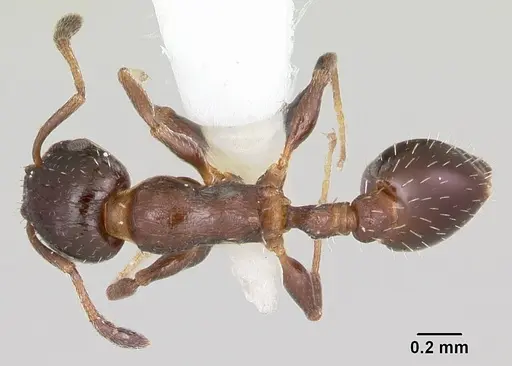
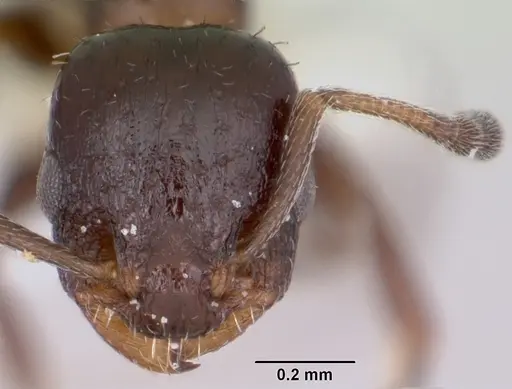
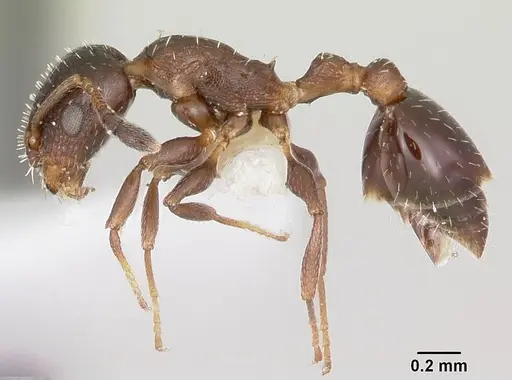
CASENT0105860
View on AntWeb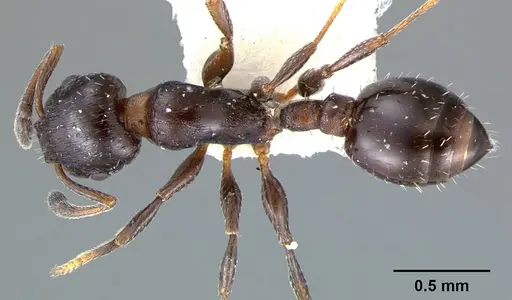
CASENT0912975
View on AntWeb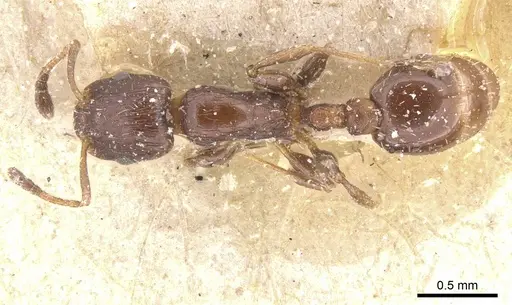
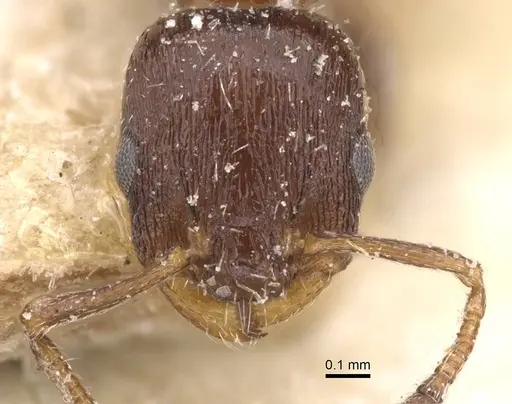
CASENT0922574
View on AntWeb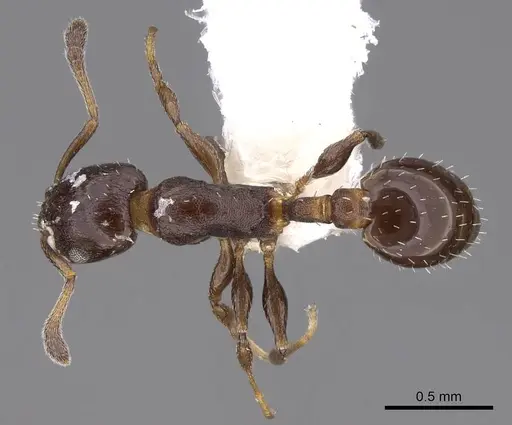
Literature
Loading...Loading products...