

Temnothorax nuwuvi
- Scientific Name
- Temnothorax nuwuvi
- Tribe
- Crematogastrini
- Subfamily
- Myrmicinae
- Author
- Snelling <i>et al.</i>, 2014
- Distribution
- Found in 1 countries
Temnothorax nuwuvi Overview
Temnothorax nuwuvi is an ant species of the genus Temnothorax. It is primarily documented in 1 countries , including United States of America. Detailed taxonomic data and occurrence records can be further explored via authoritative databases such as AntWeb or the Global Biodiversity Information Facility (GBIF).
Temnothorax nuwuvi
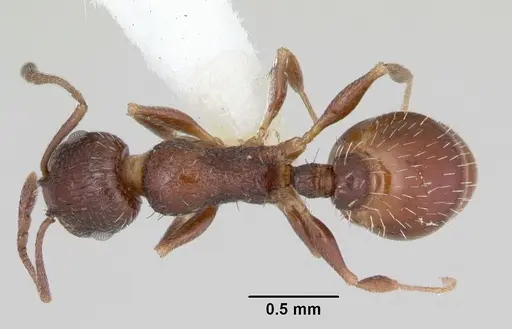
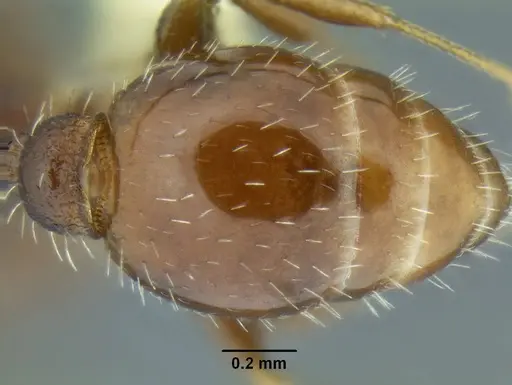
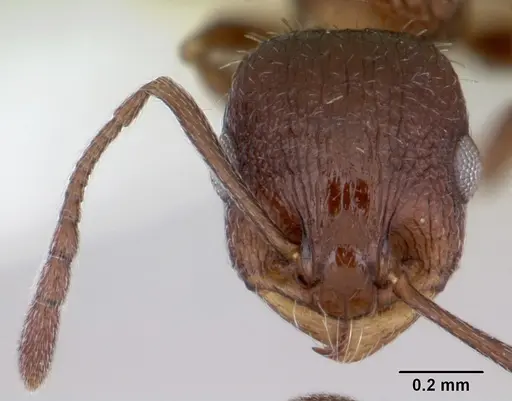
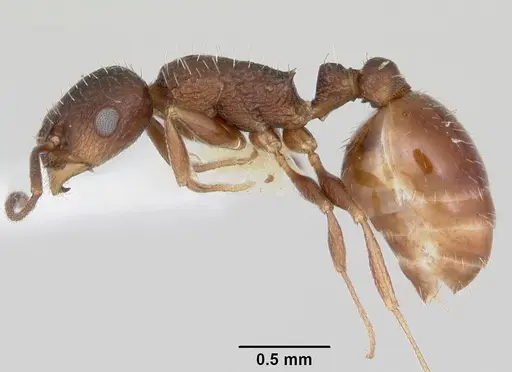
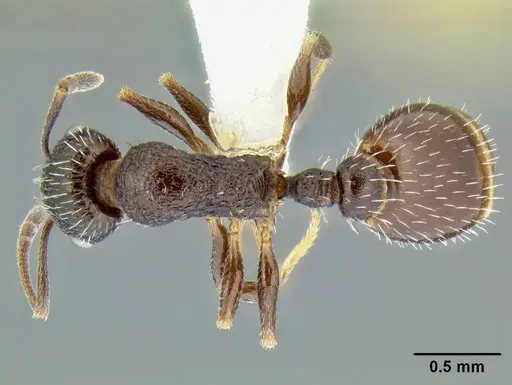
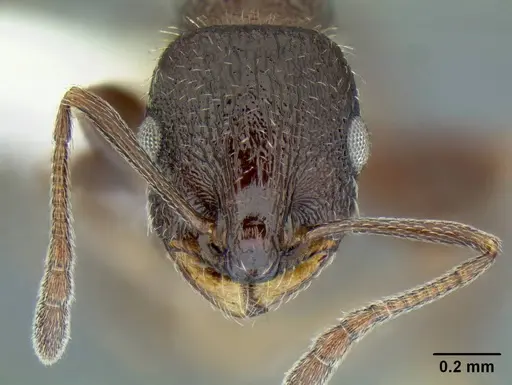
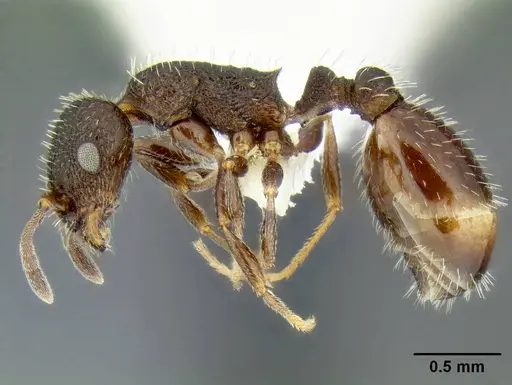
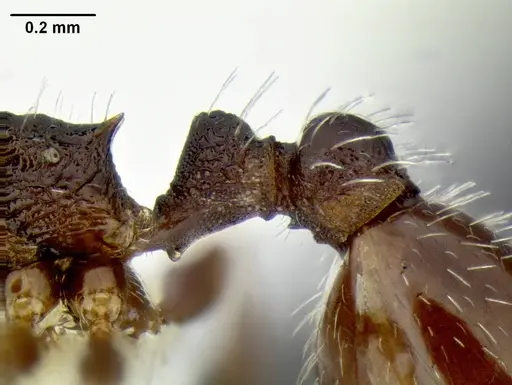
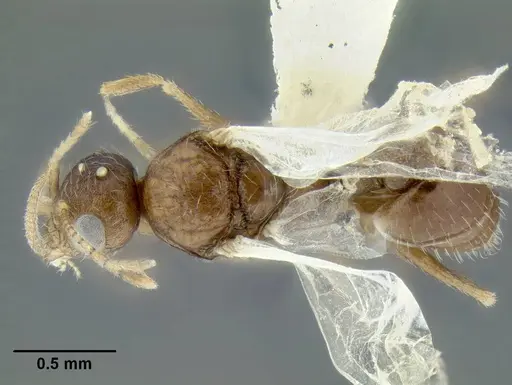
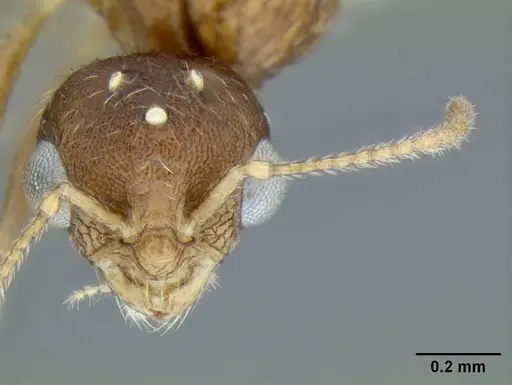
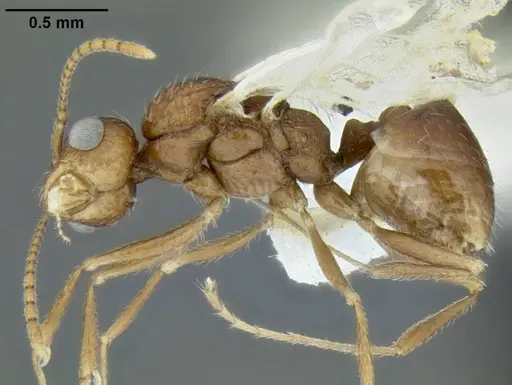
Temnothorax nuwuvi is a tiny ant species native to the high elevations of Nevada, named after the Southern Paiute word 'Nuwuvi' meaning 'the People' [1]. Workers measure just 3-4mm in total length, with a dark reddish-brown body color and distinctive coarse head sculpture featuring longitudinal ridges that form a net-like pattern on the sides [1][2]. The species belongs to the sallei-clade within Temnothorax and can be identified by its robust, rounded petiole node and relatively short propodeal spines [1][2].
This is a newly described species (2014) with no documented biology in captivity. Based on its high-elevation Nevada habitat (2255-3050m), it likely prefers cooler temperatures and may experience cold winters at altitude [2]. Related Temnothorax species are known for their flexible colony structures and sophisticated behaviors like tandem-running recruitment, but specific details for T. nuwuvi remain unconfirmed [3].
Quick Summary
- Difficulty: Unknown, likely Medium
- Origin & Habitat: Endemic to Nevada, United States, found at high elevations (2255-3050m) in the Mount Jefferson and Manhattan areas [2]. The species was collected from rocky mountain habitats at nearly 3000 meters elevation [1].
- Colony Type: Colony structure is unconfirmed. Most Temnothorax species are single-queen (monogyne) colonies, but this has not been documented for T. nuwuvi specifically [3].
- Size & Growth:
- Queen: Undescribed, estimated 5-6mm based on genus patterns
- Worker: 3-4mm total length (HL 0.646-0.771mm, HW 0.532-0.662mm) [1][2]
- Colony: Unknown, typical Temnothorax colonies reach 100-500 workers
- Growth: Unknown, likely moderate like related species
- Development: Estimated 6-10 weeks at optimal temperature based on genus patterns (Development time is unconfirmed for this species. Related Temnothorax species typically develop from egg to worker in 6-10 weeks depending on temperature.)
- Antkeeping:
- Temperature: Likely prefers cool to moderate temperatures (15-22°C). Based on high-elevation Nevada habitat, this species probably tolerates and may prefer cooler conditions than typical room temperature. Start around 18-21°C and observe colony activity [2].
- Humidity: Moderate humidity preferred. Provide a moisture gradient with a damp section and drier area available. Keep nest substrate lightly moist but not waterlogged.
- Diapause: Likely yes, high-elevation Nevada species almost certainly requires a winter dormancy period. Expect 2-3 months at 5-10°C during winter [2].
- Nesting: In nature, likely nests in small cavities under stones or in rotting wood at high elevations. In captivity, a small Y-tong (AAC) nest, plaster nest, or test tube setup with tight chambers works well. Avoid large, open spaces, these tiny ants do best in compact, appropriately-sized quarters.
- Behavior: Temperament is unconfirmed, but most Temnothorax are peaceful and not aggressive. They are small ants with no functional stinger (Myrmicinae but not in stinging tribes). Escape prevention is critical due to their tiny size, use fine mesh barriers and tight-fitting lids. Related species use tandem-running to recruit nestmates to food sources [3].
- Common Issues: tiny size means escapes are likely without fine mesh barriers, high-elevation species may fail without proper winter dormancy, no documented biology means care is largely inferential from genus patterns, wild-caught colonies may have collection-related stress, slow growth may cause keepers to overfeed or disturb the colony unnecessarily
Temperature and Care
Temnothorax nuwuvi comes from high elevations in Nevada where temperatures are cool year-round. Based on its habitat at 2255-3050m elevation, this species likely prefers cooler conditions than most antkeepers use [2]. Aim for a temperature range of 18-22°C in the nest area. Avoid overheating, these ants are adapted to mountain environments and may struggle in warm rooms. A heating cable on one side of the nest can create a gentle gradient if your room temperature runs cool, but monitor closely for signs of stress. During winter, expect to provide a dormancy period at 5-10°C for 2-3 months, mimicking the cold mountain winters they experience in the wild [2].
Housing and Nesting
In captivity, provide a small, appropriately-sized nest. Y-tong (AAC) nests work well for Temnothorax because they offer tight chambers scaled to the ants' tiny size. Plaster nests or test tube setups are also suitable. The key is matching chamber size to the colony, these small ants can feel exposed in large, open spaces. Keep the nest moderately humid with a moisture gradient so workers can choose their preferred zone. A small water reservoir connected to the nest helps maintain humidity without flooding. Ventilation is important to prevent mold, but avoid excessive airflow that dries the nest out.
Feeding and Diet
Like most Temnothorax, this species is likely omnivorous. Offer small protein sources like fruit flies, small crickets, and mealworm pieces. They also likely accept sugar sources, a small drop of honey water or sugar water can be offered occasionally. In the wild, they probably forage for small insects and tend aphids for honeydew. Feed small amounts 2-3 times per week and remove uneaten food within 24 hours to prevent mold. The tiny worker size means even small prey items are substantial meals.
Behavior and Observation
Temnothorax nuwuvi is a peaceful species that can be observed engaging in interesting behaviors. Related species are known for tandem-running, where one worker leads another to food sources [3]. Workers are tiny (3-4mm) and will navigate their environment with purpose. They do not have a functional stinger, Myrmicinae ants in the Crematogastrini tribe rely on other defense mechanisms. Watch for recruitment behavior when you add food, and observe how workers interact in their nest chambers. Their small size makes them fascinating to watch but requires careful escape prevention.
Seasonal Care and Winter Dormancy
Given this species' high-elevation Nevada habitat, a winter dormancy period is almost certainly required for long-term colony health [2]. During autumn, gradually reduce temperature over 2-3 weeks to around 5-10°C. Keep them in this range for 2-3 months, this mimics the harsh mountain winters they experience in the wild. You can use a refrigerator or cool basement for overwintering. Do not feed during dormancy. In spring, gradually warm them back to room temperature and resume feeding. Skipping dormancy can lead to colony decline over time.
Colony Establishment
Since this species was only described in 2014,captive breeding information is limited [1]. If you obtain a founding queen, she likely seals herself in a small chamber (claustral founding) and raises her first workers alone on stored fat reserves, as is typical for the genus. Provide a quiet, dark location and do not disturb the founding chamber. First workers (nanitics) will be smaller than mature workers. Be patient, colony growth is often slow initially. Once established, colonies may reach a few hundred workers over several years.
Frequently Asked Questions
How long does it take for Temnothorax nuwuvi to get their first workers?
The exact timeline is unconfirmed for this species. Based on related Temnothorax species, expect 6-10 weeks from egg to first worker at optimal temperature (around 20°C). Founding queens may take longer to lay their first eggs, so be patient with new colonies.
What temperature do Temnothorax nuwuvi ants need?
Based on their high-elevation Nevada habitat, they prefer cooler temperatures than most ant species. Keep the nest at 18-22°C. They likely tolerate temperatures down to 15°C and may struggle above 25°C. A cool room or gentle gradient heating works best.
Do Temnothorax nuwuvi ants need hibernation?
Yes, almost certainly. This species comes from elevations over 2000m in Nevada and experiences cold winters [2]. Provide 2-3 months of dormancy at 5-10°C during winter. Skipping this period will likely cause colony health problems over time.
Are Temnothorax nuwuvi good for beginners?
Difficulty is uncertain since this species has no documented captive history. However, related Temnothorax species are popular in the hobby and are generally considered good for intermediate keepers. The main challenges are escape prevention (tiny size), providing proper winter dormancy, and the general lack of species-specific information.
How big do Temnothorax nuwuvi colonies get?
Colony size is unconfirmed for this species. Based on related species, expect colonies to reach 100-500 workers over 2-4 years. They are not among the largest Temnothorax species but can form substantial colonies.
Can I keep multiple Temnothorax nuwuvi queens together?
Colony structure is unconfirmed for this species. Most Temnothorax are single-queen (monogyne) colonies, but some species can be polygynous. Until documented otherwise, it is not recommended to combine unrelated queens. If you obtain multiple foundresses, house them separately.
What do Temnothorax nuwuvi ants eat?
Based on genus patterns, they are omnivorous. Offer small protein sources like fruit flies, tiny crickets, or mealworm pieces. They will likely accept sugar water or honey as well. Feed small amounts 2-3 times per week and remove uneaten food promptly.
Do Temnothorax nuwuvi ants sting?
No, this species is in the Myrmicinae subfamily but not in a tribe known for functional stingers (they lack the Solenopsidini or Pogonomyrmecini tribes that have potent stingers). They may bite if threatened, but this is not a significant concern for keepers.
When should I move my Temnothorax nuwuvi to a formicarium?
Wait until the colony has at least 20-30 workers before moving from a test tube setup. Temnothorax do well in smaller nests, so a Y-tong or small plaster nest works well. Moving too early can stress the colony. Ensure the new nest has appropriately-sized chambers.
Why are my Temnothorax nuwuvi dying?
Common causes include: too high temperature (they prefer cool conditions), improper humidity (too dry or waterlogged), missing winter dormancy, stress from disturbance during founding, or escape-related mortality. Review each aspect of your care and make adjustments. This species has no documented captive history, so some experimentation may be needed.
How do I identify Temnothorax nuwuvi?
Workers have a dark reddish-brown body with coarse head sculpture featuring longitudinal ridges that form a net-like pattern on the sides. The petiole node is robust and rounded (not pointed), and the propodeal spines are relatively short. They are tiny ants around 3-4mm total length [1][2].
Where is Temnothorax nuwuvi found?
This species is endemic to Nevada, United States. It has been collected from Mount Jefferson and Manhattan at elevations between 2255-3050 meters [2]. It is named after the Southern Paiute word 'Nuwuvi' meaning 'the People' [1].
References

This caresheet is licensed under CC BY-SA 4.0 .
Literature
Loading...Loading products...