

Temnothorax nitidiceps
- Scientific Name
- Temnothorax nitidiceps
- Tribe
- Crematogastrini
- Subfamily
- Myrmicinae
- Author
- Emery, 1891
- Distribution
- Found in 1 countries
Temnothorax nitidiceps Overview
Temnothorax nitidiceps is an ant species of the genus Temnothorax. It is primarily documented in 1 countries , including Algeria. Detailed taxonomic data and occurrence records can be further explored via authoritative databases such as AntWeb or the Global Biodiversity Information Facility (GBIF).
Temnothorax nitidiceps
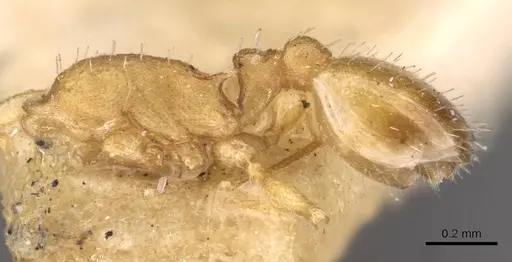
Temnothorax nitidiceps is a small, pale-colored ant species native to North Africa. Workers are tiny at just 2-4mm, with the characteristic features of the Temnothorax interruptus group: a short petiole peduncle, relatively long propodeal spines, and a lack of the mesopropodeal depression seen in related species [1]. The species was originally described from Algeria and is found across the Palaearctic region in Algeria, Morocco, and Tunisia [2]. Some unconfirmed records exist from the Greek Ionian Islands, but these require verification [2].
This species represents one of the more obscure members of the genus, with limited biological research available. Like other Temnothorax species, they likely nest in small cavities under stones or in rotting wood and form small colonies. Their small size and docile nature make them suitable for contained observation, though they require careful escape prevention due to their minute stature.
Quick Summary
- Difficulty: Medium
- Origin & Habitat: North Africa (Algeria, Morocco, Tunisia) with Mediterranean climate. Found in dry to moderately humid habitats, typically nesting under stones or in small cavities in the ground [2].
- Colony Type: Likely monogyne (single queen colonies) based on typical Temnothorax patterns. Ergatoid (wingless) replacement queens are common in the genus and may be present.
- Colony: Monogyne
- Founding: Claustral
- Size & Growth:
- Queen: Estimated 4-5mm based on genus patterns [1]
- Worker: Estimated 2-4mm based on genus patterns [1]
- Colony: Likely small colonies of 50-300 workers based on typical Temnothorax species
- Growth: Moderate, typical for small Myrmicinae
- Development: Estimated 6-10 weeks at optimal temperature based on related species (Development time inferred from genus-level data, specific timing unconfirmed for this species)
- Antkeeping:
- Temperature: Keep at 20-24°C. Mediterranean origin suggests they can tolerate warmer conditions, but avoid overheating. A gentle thermal gradient allows workers to self-regulate.
- Humidity: Moderate humidity around 50-70%. These are not moisture-dependent ants like some tropical species, but the nest substrate should not dry completely. Provide a small water tube as a moisture source.
- Diapause: Likely requires a winter rest period of 8-12 weeks at 10-15°C, consistent with Mediterranean temperate species. Reduce feeding and maintain cool temperatures during this period.
- Nesting: Small cavities suit them best. Y-tong (AAC) nests with narrow chambers, small test tube setups, or naturalistic setups with flat stones work well. Avoid large, open spaces.
- Behavior: Docile and non-aggressive. Workers are small but active foragers. They likely use tandem running (leading each other to food sources) as many Temnothorax species do. Escape prevention is critical due to their tiny size, they can squeeze through standard mesh. Use fine mesh barriers and tight-fitting lids.
- Common Issues: escape prevention is critical due to their very small size, standard mesh may not contain them, slow colony growth can frustrate beginners who expect rapid development, winter dormancy is necessary but colonies may weaken if conditions are unstable, limited natural history data means care is based on genus patterns rather than species-specific research, wild-caught colonies may carry parasites that can devastate captive colonies
Housing and Nest Setup
Temnothorax nitidiceps is a tiny ant that needs appropriately scaled housing. Y-tong (AAC) nests with narrow chambers work well, as do small test tube setups. The chambers should be tight enough that workers can easily touch all sides, these ants feel exposed in large, open spaces. A naturalistic setup with flat stones placed on moist substrate can also work, giving them the small cavities they naturally nest in. For the outworld, keep it simple and small, these ants don't need much space. Always use excellent escape prevention: their small size means they can squeeze through gaps that seem impossible. Fine mesh (at least 0.5mm) or fluon-coated barriers are essential [1].
Feeding and Diet
Like most Temnothorax species, these ants are omnivorous with a sweet tooth. Offer sugar water, honey, or diluted syrup as a constant carbohydrate source. For protein, provide small live prey like fruit flies, pinhead crickets, or mealworm pieces. They are not aggressive hunters, so prey should be small and easy to handle. Some keepers report that Temnothorax also accept honeydew fromaphids, though this is not required in captivity. Feed small amounts every 2-3 days and remove uneaten food to prevent mold. The colony size is small, so overfeeding is a common mistake that leads to mold problems.
Temperature and Seasonal Care
Keep the nest area at 20-24°C. This Mediterranean species can tolerate slightly warmer conditions but performs best in the moderate range. A heating cable on one side of the nest creates a thermal gradient that workers will use to regulate their temperature. During winter (October through March in the Northern Hemisphere), reduce temperatures to 10-15°C for a dormancy period. This mimics their natural cycle in North Africa where winters are cool but not freezing. Reduce feeding during this period, the colony will be less active. Do not skip the winter rest, as it is important for colony health and queen reproduction. [2]
Colony Dynamics and Growth
Colonies start with a single claustral queen who seals herself in a small chamber and raises the first workers (nanitics) on her own. Initial growth is slow, the first batch of workers may take 6-10 weeks to emerge. Once the colony reaches 10-20 workers, growth typically accelerates. Mature colonies likely reach 50-300 workers based on typical Temnothorax size. The colony will produce alates (reproductives) in summer months, winged males and new queens for nuptial flights. If you wish to propagate the colony, allow alates to develop and conduct their mating flights. These ants may have ergatoid (wingless) replacement queens that can take over if the primary queen dies, a common trait in the genus.
Behavior and Observation
Temnothorax nitidiceps is a docile species that is a pleasure to observe. Workers are active and will readily explore their environment. Many Temnothorax species use tandem running, where one worker leads another to food sources, and this species likely exhibits this behavior too. They are not aggressive and do not have a functional stinger (Myrmicinae have reduced stingers). Their main defense is fleeing or biting, which is ineffective against determined predators. The small size makes them fascinating to watch as they navigate their tiny world. They are not colony aggressive and can be kept in multi-queen setups if you want to attempt pleometrosis, though this is not recommended for beginners.
Frequently Asked Questions
How long does it take for Temnothorax nitidiceps to raise first workers?
Expect 6-10 weeks from egg to first worker at room temperature (around 20-24°C). This is typical for Temnothorax species, though specific timing for T. nitidiceps has not been documented.
What do Temnothorax nitidiceps ants eat?
They are omnivorous. Offer sugar water, honey, or diluted syrup as a constant carbohydrate source. For protein, provide small live prey like fruit flies, small crickets, or mealworm pieces. Remove uneaten food promptly.
Do Temnothorax nitidiceps ants sting?
They do not have a functional stinger. As Myrmicinae, they have a reduced stinger and rely on biting or chemical defenses instead. They are not dangerous to humans.
How big do Temnothorax nitidiceps colonies get?
Based on typical genus patterns, colonies likely reach 50-300 workers at maturity. This is a small colony size compared to many common ant species.
Can I keep multiple Temnothorax nitidiceps queens together?
This species is likely monogyne (single queen) in structure. Combining unrelated queens is not recommended as they may fight. Some Temnothorax can be pleometrotic (multiple queens founding together), but this requires experience.
Do Temnothorax nitidiceps need hibernation?
Yes, a winter rest period of 8-12 weeks at 10-15°C is recommended. This mimics their natural Mediterranean climate cycle and supports colony health.
What is the best nest type for Temnothorax nitidiceps?
Y-tong (AAC) nests with narrow chambers or small test tube setups work best. These ants prefer tight spaces and small cavities, not large open areas. A naturalistic setup with flat stones on moist substrate is also suitable.
Are Temnothorax nitidiceps good for beginners?
They are rated as medium difficulty. Their small size and escape risk make them challenging for complete beginners, but their docile nature and moderate care requirements make them manageable for those with some antkeeping experience.
Why are my Temnothorax nitidiceps escaping?
Their tiny size allows them to squeeze through standard mesh and gaps. Use fine mesh (0.5mm or smaller), tight-fitting lids, and consider fluon barriers on rim edges. Check all connection points between nest and outworld.
What temperature should I keep Temnothorax nitidiceps at?
Keep nest temperatures at 20-24°C. A gentle thermal gradient is ideal, allow workers to move between warmer and cooler areas. Avoid temperatures above 28°C or below 15°C for extended periods.
References

This caresheet is licensed under CC BY-SA 4.0 .
CASENT0909042
View on AntWeb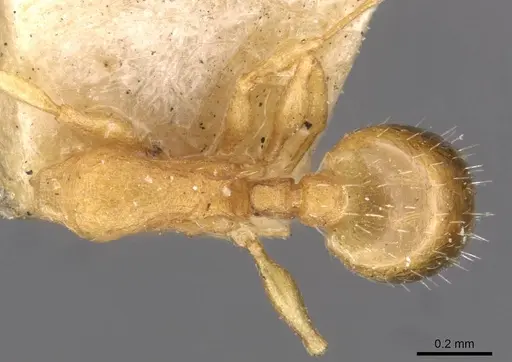
Literature
Loading...Loading products...