

Temnothorax myrmiciformis
- Scientific Name
- Temnothorax myrmiciformis
- Tribe
- Crematogastrini
- Subfamily
- Myrmicinae
- Author
- Snelling <i>et al.</i>, 2014
- Distribution
- Found in 2 countries
Temnothorax myrmiciformis Overview
Temnothorax myrmiciformis is an ant species of the genus Temnothorax. It is primarily documented in 2 countries , including Mexico, United States of America. Detailed taxonomic data and occurrence records can be further explored via authoritative databases such as AntWeb or the Global Biodiversity Information Facility (GBIF).
Temnothorax myrmiciformis
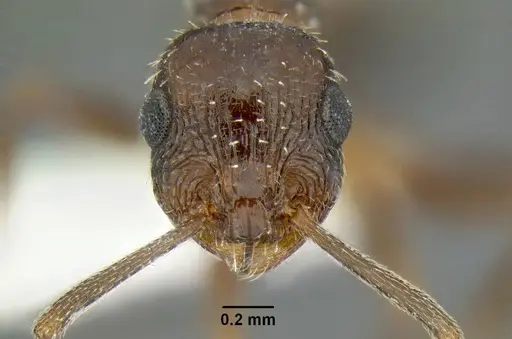
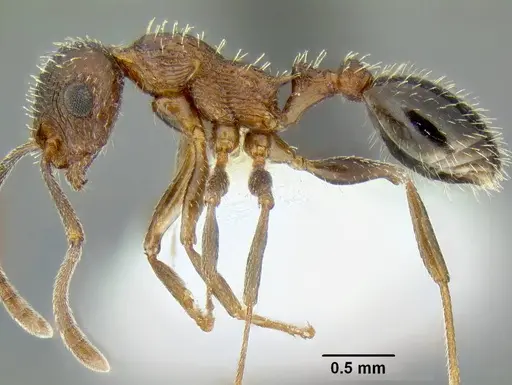
Temnothorax myrmiciformis is a large, slender ant species native to the southwestern United States and Baja California, Mexico. Workers are dark brown with a distinctly elongated body, they measure 0.77-0.90mm in head length and 1.01-1.18mm in mesosoma length, making them notably larger than many other Temnothorax species [1]. The species gets its name from its superficial resemblance to the unrelated genus Myrmica, but it can be identified by its large eyes, long antennae that extend well past the back of the head, and the evenly sloping profile of its mesosoma [1][2]. These ants live in dry to arid habitats including oak woodland, coastal sage scrub, chaparral, and Sonoran desert [1].
This species is known only from worker caste specimens, with no described queens or males in the scientific literature [1]. The andrei-clade to which this species belongs contains several California Temnothorax that are well-studied in the hobby, giving us reasonable expectations for care even though this specific species has limited documentation.
Quick Summary
- Difficulty: Medium
- Origin & Habitat: Native to California (Riverside, Orange, Ventura, San Diego counties) and Baja California, Mexico. Found in oak woodland, coastal sage scrub, chaparral, and Sonoran desert habitats [1][2].
- Colony Type: Unconfirmed colony structure, only worker caste has been described. Based on typical Temnothorax patterns, likely single-queen (monogyne) colonies.
- Size & Growth:
- Queen: Not described in scientific literature, estimated 5-7mm based on genus patterns
- Worker: Workers: 0.77-0.90mm head length,1.01-1.18mm mesosoma length [1]
- Colony: Unknown for this species, typical Temnothorax colonies reach 100-500 workers
- Growth: Moderate, based on related species in the andrei-clade
- Development: Estimated 6-10 weeks at optimal temperature based on genus-level data for related species (Development time inferred from typical Temnothorax patterns, actual timing unconfirmed for this species)
- Antkeeping:
- Temperature: Keep at 20-24°C. This species comes from Mediterranean climates with warm summers and mild winters, room temperature is typically suitable [1].
- Humidity: Low to moderate, they come from dry chaparral and desert habitats. Keep nest substrate slightly moist but allow drying periods between waterings. Avoid overly damp conditions.
- Diapause: Yes, these ants are native to temperate California and will benefit from a winter rest period of 8-12 weeks at 10-15°C. Reduce feeding and activity during this time.
- Nesting: Y-tong (AAC) nests work well for their size. They prefer tight chambers and narrow passages. Can also use plaster nests or naturalistic setups with flat stones. Provide some dry areas in the nest for their natural preference.
- Behavior: Generally peaceful and non-aggressive. Like other Temnothorax, they are active foragers that search for small prey and honeydew. Workers are relatively long-legged and fast-moving. They have functional stingers but rarely use them, their primary defense is escape. Escape prevention is important as they are small enough to fit through standard test tube openings if not properly sealed.
- Common Issues: limited documentation, this is a rarely kept species with no confirmed colony structure or founding behavior studies, escape risk due to small size, use fine mesh barriers and tight-fitting lids, dry habitat preference means overwatering is a common mistake that leads to mold, winter dormancy is required for long-term colony health, skipping diapause may weaken colonies, slow founding means new colonies need patience, queens may take months to raise first workers
Housing and Nest Setup
Temnothorax myrmiciformis does well in Y-tong (AAC) nests, which provide the tight chambers and narrow passages these small ants prefer. The workers are only about 1mm in body length, so they need appropriately scaled housing [1]. Plaster nests also work well, especially if you can create a humidity gradient with one side slightly moist and another drier. For founding colonies, a standard test tube setup with a cotton plug works fine, just ensure the tube opening is sealed with fine mesh or cotton to prevent escapes. These ants come from dry habitats, so avoid setups that stay constantly wet. A small water reservoir is sufficient, they get most of their moisture from food and occasional misting of the nest surface.
Feeding and Diet
Like other Temnothorax species, these ants are omnivorous with a preference for protein. Offer small live prey such as fruit flies, pinhead crickets, and small mealworms. They will also accept sugar sources, a drop of honey water or sugar water can be offered occasionally. In the wild, they forage for small insects and likely tend aphids for honeydew [3]. Feed founding colonies small amounts every few days, remove uneaten prey after 24 hours to prevent mold. Once established, feeding 2-3 times per week is typically sufficient. Make sure to always have a sugar source available, especially when brood is developing.
Temperature and Seasonal Care
Keep your colony at 20-24°C year-round, with slight variations acceptable. These ants are from Mediterranean California, where summers are warm but not extreme and winters are mild but clearly defined. During the active season (spring through fall), room temperature is usually appropriate. In winter, you should provide a diapause period, reduce temperature to 10-15°C for 8-12 weeks. This mimics their natural seasonal cycle and helps maintain colony health. During diapause, reduce feeding to once every 2-3 weeks and minimize disturbances. Do not feed during the deepest part of winter rest. Return to normal temperatures gradually in spring. [1][2]
Behavior and Colony Dynamics
Temnothorax myrmiciformis workers are active foragers that search individually for food. They are not aggressive and will typically flee from threats rather than engage. Their large eyes and long legs suggest they are visual foragers, they may rely on sight more than chemical trails when hunting small prey. Workers communicate using chemical signals like most ants, but they also use tandem running (one worker leads another to food sources), this is a common behavior in the genus. The colony will likely grow to a few hundred workers over several years. Unlike some ants, they do not form supercolonies and each nest maintains its own territory. [1][3]
Handling and Observation
These small ants are best observed through the walls of a formicarium or test tube. They are fast-moving and can be easily lost if transferred to the open. When you need to move them, use gentle tapping or brushing into a container, never grab them as this can injure them. They have a functional stinger but rarely use it, and the sting is mild for humans. Their primary defense is escaping into the nest or between substrate. For observation, a magnifying glass or macro lens on your phone camera works well since they are only about 1mm long. [3]
Frequently Asked Questions
How long does it take for Temnothorax myrmiciformis to raise first workers?
The exact timing is unconfirmed for this species, but based on typical Temnothorax development, expect 6-10 weeks from egg to worker at room temperature (20-24°C). Founding queens may take longer as they have no workers to help regulate temperature and feed larvae.
Can I keep multiple Temnothorax myrmiciformis queens together?
This has not been documented for this specific species. Most Temnothorax are monogyne (single queen), but some can form multi-queen colonies. Without specific data, it is not recommended to combine unrelated foundresses as they may fight.
Do Temnothorax myrmiciformis ants sting?
Yes, they have a functional stinger, but they rarely use it and the sting is very mild, comparable to a mosquito bite. Their primary defense is escaping into the nest.
How often should I feed my colony?
Feed small amounts of protein (small insects) 2-3 times per week during the active season. Remove uneaten prey after 24 hours. Keep a sugar source (honey water or sugar water) available at all times. During winter diapause, reduce feeding to once every 2-3 weeks.
Do Temnothorax myrmiciformis need hibernation?
Yes, these ants are native to temperate California and benefit from a winter rest period. Provide 8-12 weeks at 10-15°C in winter. Reduce feeding and avoid disturbing the colony during this time.
Why is my colony not growing?
Common causes include: temperatures too low (below 18°C slows development significantly), overwatering (causes mold and kills colonies), insufficient protein, or the queen may not be fertilized. Check these factors and ensure you are offering appropriate-sized prey.
Are Temnothorax myrmiciformis good for beginners?
This species is rated as medium difficulty. While not the easiest Temnothorax to find, they are relatively hardy once established. The main challenges are their small size (escape prevention is critical) and the need for winter diapause. Beginners should start with more common species to learn the basics.
How big do Temnothorax myrmiciformis colonies get?
The maximum colony size is unconfirmed for this species, but based on related Temnothorax, expect 100-500 workers over 2-4 years. They are not among the largest Temnothorax species.
What makes Temnothorax myrmiciformis different from other Temnothorax?
This species is notably larger than most other western Temnothorax, with workers reaching over 1mm in mesosoma length. It has a distinctly sloping mesosomal profile and very long antennae that extend well past the back of the head. The name 'myrmiciformis' refers to its resemblance to the unrelated genus Myrmica.
References

This caresheet is licensed under CC BY-SA 4.0 .
CASENT0339323
View on AntWeb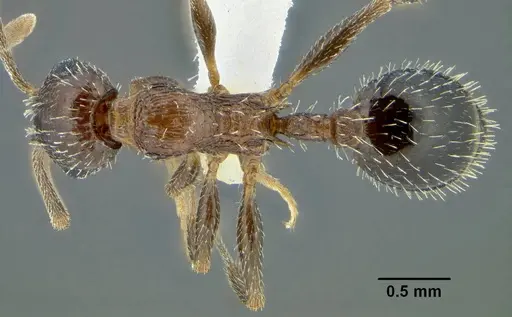
Literature
Loading...Loading products...