

Temnothorax mpala
- Scientific Name
- Temnothorax mpala
- Tribe
- Crematogastrini
- Subfamily
- Myrmicinae
- Author
- Prebus, 2015
- Distribution
- Found in 1 countries
Temnothorax mpala Overview
Temnothorax mpala is an ant species of the genus Temnothorax. It is primarily documented in 1 countries , including Kenya. Detailed taxonomic data and occurrence records can be further explored via authoritative databases such as AntWeb or the Global Biodiversity Information Facility (GBIF).
Temnothorax mpala
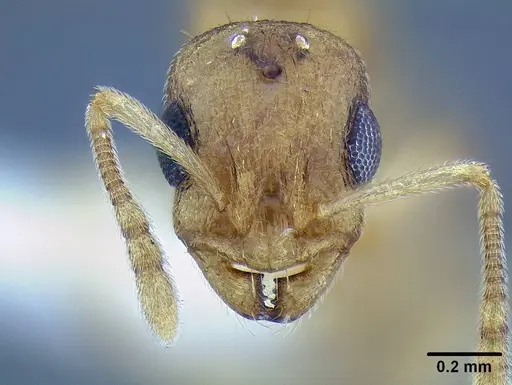
Temnothorax mpala is a tiny ant species native to the acacia woodlands of Kenya, East Africa. Workers measure just 2-3mm, making them one of the smaller Temnothorax species. They have a distinctive pale yellowish-brown coloration with darker head and gaster, and notably large compound eyes relative to their body size, an adaptation that suggests they may be more active during lower light conditions [1]. The species was only described in 2015 and is known exclusively from the Mpala Research Centre in Laikipia, Kenya, where specimens were collected from leaf litter in acacia woodland [2]. This is a recently discovered species with limited captive history, making it a choice for experienced antkeepers who enjoy documenting new behaviors.
Quick Summary
- Difficulty: Expert
- Origin & Habitat: Kenya, Laikipia District, acacia woodland at Mpala Research Centre (1700m elevation). Found in leaf litter [2].
- Colony Type: Likely single-queen (monogyne) based on typical Temnothorax patterns, but colony structure has not been documented for this species.
- Founding: Claustral
- Size & Growth:
- Queen: ~3mm (0.68-0.71mm HL) [2]
- Worker: 2-3mm (0.598-0.67mm HL) [2]
- Colony: Unknown, likely under 500 workers based on typical litter-dwelling Temnothorax [3]
- Growth: Moderate, estimated based on genus patterns
- Development: 6-10 weeks at optimal temperature (estimated from related Palearctic species) (Development timeline is unconfirmed for this species, estimates based on genus-level data)
- Antkeeping:
- Temperature: Keep at 22-26°C. As a Kenyan species from mid-elevation (1700m), they likely prefer warm but not hot conditions. A gentle temperature gradient allows ants to self-regulate.
- Humidity: Moderate, aim for 50-70% relative humidity. Their natural habitat (acacia woodland leaf litter) experiences seasonal dryness but retains moisture in the litter layer.
- Diapause: Likely minimal or none, Kenya experiences mild seasonal variation rather than cold winters. However, a brief cool period (2-3 months at 15-18°C) may benefit colony health.
- Nesting: Y-tong (AAC) nests or plaster nests work well for these tiny ants. Provide small chambers scaled to their size. A naturalistic setup with soil and leaf litter mimics their natural environment.
- Behavior: Generally peaceful and non-aggressive. Like other Temnothorax, they are shy and will flee rather than engage. Workers are active foragers but due to their tiny size, escape prevention is critical, they can squeeze through standard test tube barriers. Large eyes suggest potential crepuscular or low-light activity patterns [1].
- Common Issues: very small size means escapes are likely without fine mesh barriers, limited natural history data makes care recommendations uncertain, newly described species with no established captive breeding protocols, wild-caught colonies may have parasites specific to this unstudied species, slow colony growth may frustrate beginners
Origin and Discovery
Temnothorax mpala was only described in 2015 by Matthew Prebus, making it one of the more recently discovered ant species in the hobby. It is known only from the Mpala Research Centre in Laikipia, Kenya, at an elevation of around 1700 meters. The species name 'mpala' comes from a Bantu word for a type of antelope that was historically kept by chiefs in the Bunganda kingdom. Interestingly, the name was chosen somewhat ironically, Prebus noted that these ants are not particularly swift in their movements [2].
This species is part of the Palearctic clade of Temnothorax, which dispersed into Africa millions of years ago. Genetic evidence suggests this dispersal event closely coincides with Saharan aridification 7-11 million years ago, when the Sahara Desert expanded and created new ecological barriers that separated ant populations [3].
Appearance and Identification
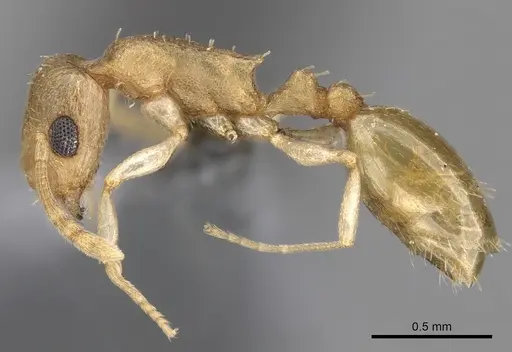
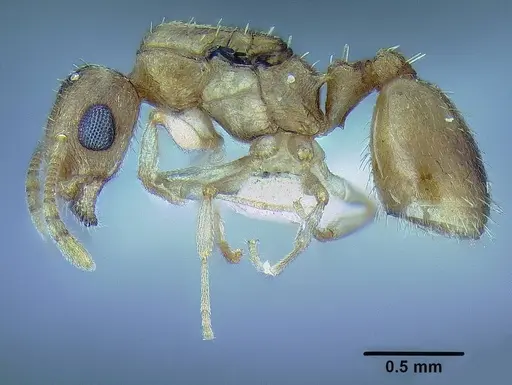
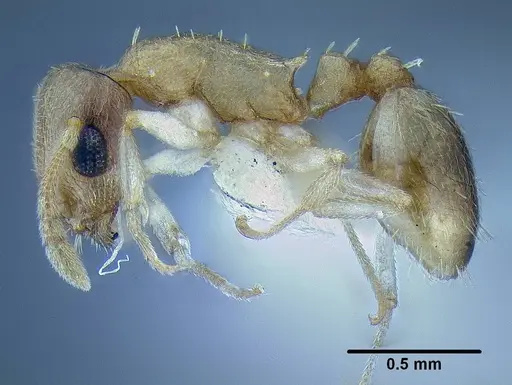
Workers of T. mpala are tiny, measuring only about 2-3mm in total length. They have a distinctive pale yellowish-brown coloration, with the head and gaster being slightly darker than the mesosoma, while the legs are lighter in color [2].
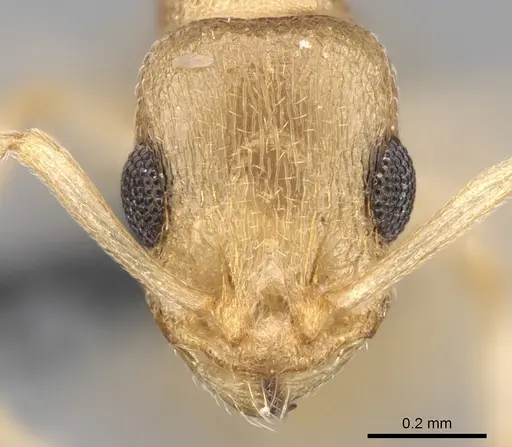
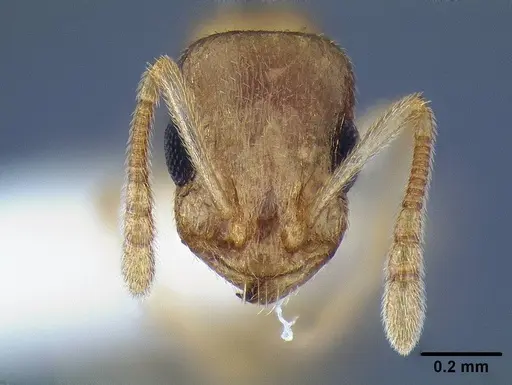
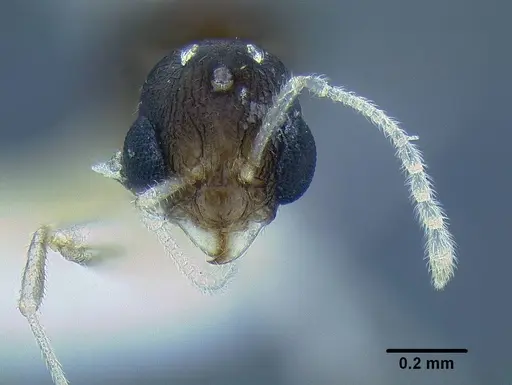
The most distinctive feature is their large compound eyes, they have about 11 ommatidia in the longest row, which is relatively large for their body size. This suggests they may be adapted to lower light conditions, potentially being more active during dawn, dusk, or even nocturnally [1]. Their antennae have 12 segments with short scapes that fail to reach the posterior margin of the head. The postpetiole (the segment behind the petiole) is trapezoidal when viewed from above, widest at the front [2].
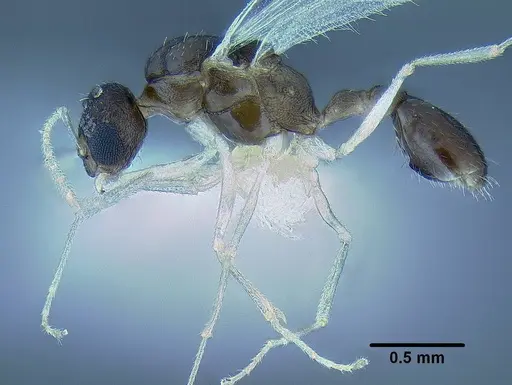
Queens are slightly larger at about 3mm and have the typical three ocelli (simple eyes) and larger mesosoma expected of reproductive females. Males are darker reddish-brown with cream-colored extremities.
Housing and Nest Setup
Due to their very small size, T. mpala requires careful attention to escape prevention. Use test tubes with cotton plugs or Y-tong (AAC) nests with tight-fitting connections. Standard mesh may need to be doubled or replaced with fine mesh to prevent escapes.
For nesting, these ants do well in Y-tong nests with small chambers scaled to their tiny size, or in plaster nests that can maintain humidity. A naturalistic setup with a layer of soil and leaf litter from their native habitat can help them feel at home. Since they're from acacia woodland, adding some dried acacia leaves or small twigs can provide enrichment.
Keep the nest area humid but not wet, these ants come from leaf litter where moisture is moderate but drainage is good. A water tube connected to the nest helps maintain stable humidity. [2]
Feeding and Diet
Like other Temnothorax species, T. mpala likely has a varied diet consisting of small insects, honeydew, and nectar. In captivity, offer small prey items like fruit flies, pinhead crickets, and other tiny insects. They can also accept sugar water or honey diluted with water.
Feed small amounts every 2-3 days, removing any uneaten prey after 24 hours to prevent mold. Since these ants are so small, even a single fruit fly is a substantial meal for the colony. Monitor feeding response, if they ignore certain foods, try alternatives. [2]
Temperature and Seasonal Care
As a Kenyan species from mid-elevation (1700m), T. mpala prefers warm but not extreme temperatures. Aim for 22-26°C in the nest area, with a slight gradient allowing workers to move between warmer and cooler areas.
Kenya experiences mild seasonal variation rather than cold winters, so a true hibernation is likely unnecessary. However, a brief cool period at 15-18°C for 2-3 months during the winter months may help synchronize their natural cycles and promote colony health. This cool period should be gradual, reduce temperature over 1-2 weeks rather than suddenly. [2]
Frequently Asked Questions
How long does it take for Temnothorax mpala to raise their first workers?
The exact timeline is unconfirmed, but based on related Temnothorax species, expect 6-10 weeks from egg to first worker at optimal temperature (around 24°C). The first workers (nanitics) will be smaller than fully grown workers.
Are Temnothorax mpala good for beginners?
No, this is not recommended for beginners. T. mpala is a recently described species (2015) with very limited captive history. Care recommendations are largely inferred from related species, and their tiny size makes them prone to escape and sensitive to improper conditions.
Do Temnothorax mpala ants sting?
Temnothorax ants have a stinger but are not aggressive and rarely use it. These ants are shy and will flee from threats rather than engage. Even if they do sting, the pain is minimal due to their tiny size.
How big do Temnothorax mpala colonies get?
Colony size is unconfirmed for this species, but based on typical litter-dwelling Temnothorax, colonies likely reach a few hundred workers at most. They are small ants with naturally smaller colonies compared to larger ant species.
Can I keep multiple queens together?
This has not been documented for this species. Temnothorax are typically single-queen colonies, and combining unrelated queens usually results in fighting. It is not recommended to attempt multi-queen setups with this species.
What do Temnothorax mpala eat?
They likely accept small insects (fruit flies, springtails), honeydew, and sugar sources. Feed small prey items 2-3 times per week and provide constant access to sugar water or diluted honey.
Do Temnothorax mpala need hibernation?
A true hibernation is likely unnecessary given their Kenyan origin, but a brief cool period (2-3 months at 15-18°C) may benefit colony health. This mimics their natural seasonal conditions better than maintaining constant warmth year-round.
Why are my Temnothorax mpala escaping?
Their tiny size allows them to squeeze through gaps that larger ants cannot. Use fine mesh for barriers, check all connections in test tubes and formicaria, and consider double-barrier systems. Even small gaps around cotton plugs can allow escape.
When should I move my colony to a formicarium?
Wait until the colony has at least 20-30 workers. These tiny ants do well in test tubes for extended periods, moving too early can stress the colony. A Y-tong nest with small chambers works well once they're established.
Is Temnothorax mpala invasive anywhere?
No, this species is only known from Kenya and has not been documented as invasive. However, never release ant colonies into non-native areas regardless of the species.
References

This caresheet is licensed under CC BY-SA 4.0 .
CASENT0280870
View on AntWeb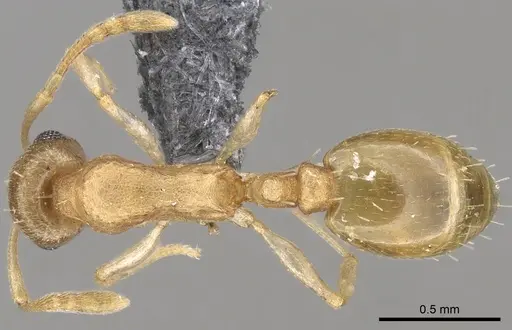
CASENT0733785
View on AntWeb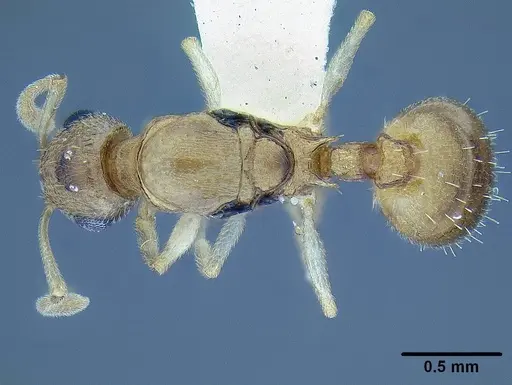
LACMENT323183
View on AntWeb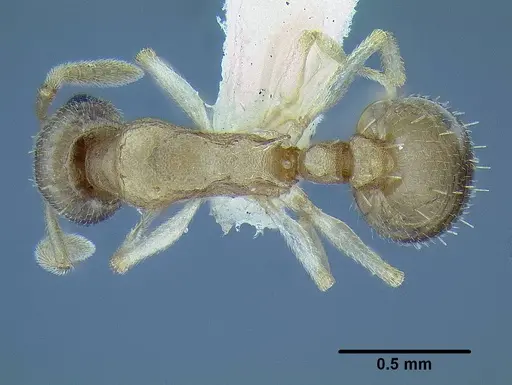
LACMENT323185
View on AntWeb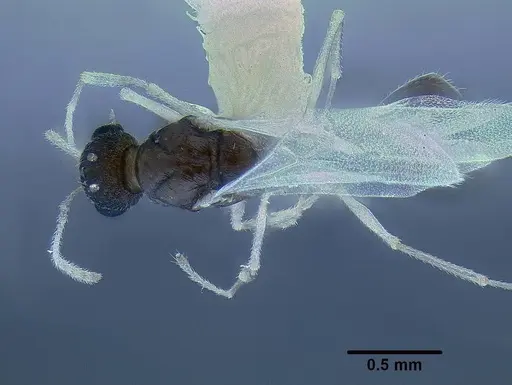
Literature
Loading...Loading products...