Tetramorium ultor - "No widely recognized common name"
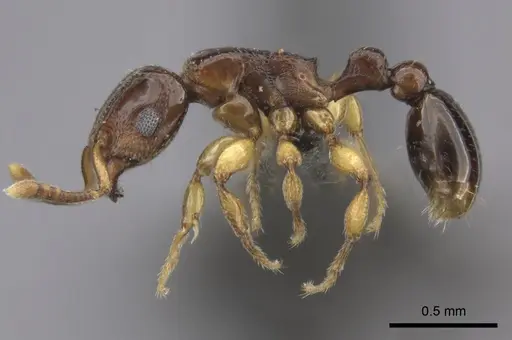
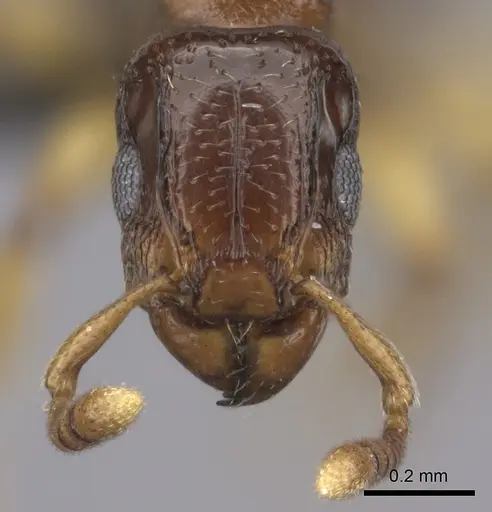
Tetramorium ultor is a relatively small ant species, known for its uniform light to chestnut brown body with often lighter appendages. Their heads are notably longer than wide, featuring prominent frontal carinae that form deep antennal scrobes, and they possess strikingly large eyes. A key identifying feature is their unsculptured, smooth, and very shiny promesonotum, which distinguishes them from similar species. These ground-dwelling ants are naturally found nesting in or under rotten logs and have a specialized diet, primarily being termitophagous (feeding on termites). They are also characterized by short, triangular, and blunt propodeal teeth. This species is more adapted to arid environments compared to some of its relatives.
- Difficulty: Medium
- Origin & Habitat: Eastern and Southern Africa (including Kenya, Mozambique, Zambia, and Zimbabwe) in Woodlands and dry forests; ground dwelling, nesting in or under rotten logs.
- Colony Type: Monogyne (single queen), though some Tetramorium species can exhibit temporary polygyny., claustral (queen seals herself in to raise first workers) founding.
- Size & Growth:
- Queen: 2-4mm
- Worker: 0.85-0.96mm
- Colony: Medium to Large (thousands to tens of thousands). Fast, with a rapid increase in worker numbers once established. growth.
- Antkeeping:
- Temperature: Maintain a warm environment, ideally between 25-30°C (77-86°F). This species is adapted to warmer, arid conditions..
- Humidity: Provide a humidity gradient, with the nest area around 40-60% and a slightly drier foraging area. Avoid overly dry conditions within the nest..
- Diapause: Not required. Not specified at Not specified.
- Nesting: In the wild, they nest in or under rotten logs. For captivity, setups that mimic these conditions are ideal, such as acrylic nests with tight tunnels, ytong, or naturalistic setups with decaying wood or soil. They thrive in environments with good hydration gradients..
- Behavior: Medium (aggressive towards prey and other ant species/colonies, but generally mild towards handlers) aggressiveness.
- Common Issues: Escapes due to small size and nest vulnerabilities, Food molding if overfed or humidity is too high in foraging area, Workers drowning in liquid foods if not provided on a cotton ball or shallow dish, Colony stalling if protein supply is insufficient.
One of the most fascinating aspects of Tetramorium ultor is their natural diet. These ants are known to be termitophagous in the wild, meaning their primary food source consists of termites. When keeping them in captivity, it's crucial to offer a consistent supply of high-protein insect feeders to replicate their natural diet as closely as possible. Diverse feeder insects such as small roaches, mealworms, crickets, or even flightless fruit flies are excellent choices to ensure the queen and her growing brood receive adequate nutrition for optimal development and colony expansion.
Despite their small stature, Tetramorium ultor workers are known to be quite active and voracious foragers. They are aggressive hunters of prey, showcasing impressive coordination when subduing insects larger than themselves. Keepers should provide an easily accessible outworld for foraging and ensure it's secure, as these ants are adept at finding even the smallest escape routes. Their robust foraging behavior makes them captivating to observe, adding a dynamic element to any antkeeping setup.
Originating from parts of Eastern and Southern Africa, Tetramorium ultor is accustomed to warmer climates. While they might tolerate typical room temperatures, providing a consistent heat source that keeps their nest within the ideal range of 25-30°C will significantly boost their brood development and overall colony growth. This optimal temperature helps accelerate their metabolism, leading to faster progress from egg to adult worker. Monitoring and maintaining this temperature diligently will be key to a thriving colony.
When selecting a formicarium for Tetramorium ultor, prioritize designs that offer excellent escape prevention. Given their small size, they can easily slip through tiny gaps. Acrylic nests with tightly fitted layers are often a superior choice, as their construction minimizes vulnerabilities. Additionally, providing a hydration gradient within the nest is essential. While they are adapted to more arid environments, their brood still requires a stable humidity, so a section of the nest that maintains around 40-60% humidity will be beneficial, coupled with a drier foraging area.
Frequently Asked Questions
What kind of enclosure is best for a Tetramorium ultor colony?
For Tetramorium ultor, a secure acrylic formicarium with tight seams is highly recommended due to their small size and ability to exploit tiny gaps. Designs that incorporate a hydration gradient, offering both moister nesting areas and drier outworlds, will best mimic their natural habitat and support a flourishing colony. Naturalistic setups using decaying wood or soil are also viable if proper escape prevention is implemented.
What should I feed my Tetramorium ultor ants?
Since Tetramorium ultor is naturally termitophagous, a diverse protein diet is crucial for captive colonies. Offer a variety of small feeder insects like flightless fruit flies, small mealworms, or roach nymphs. Supplement this with sugary liquids such as diluted honey or sugar water to provide energy for the workers. Ensure that liquid foods are presented on a cotton ball or in a very shallow dish to prevent drowning.
Do Tetramorium ultor queens require diapause?
Tetramorium ultor originates from warmer regions of Africa, so they typically do not require the deep, cold diapause periods seen in temperate European species. Instead, they may experience a period of slower growth during drier or cooler seasons in their natural range. Maintaining consistent warmth and humidity throughout the year is usually sufficient for continuous development, although a slight slowdown in egg-laying might occur naturally.
How fast do Tetramorium ultor colonies grow?
These ants are known for their fast colony growth. Once a queen successfully establishes her first workers, the colony population can increase quite rapidly, especially with consistent feeding and optimal temperature. You can expect a notable increase in worker count within a few months, with colonies potentially reaching thousands of individuals fairly quickly.
Are Tetramorium ultor ants aggressive?
Yes, Tetramorium ultor workers are quite aggressive towards their prey, often swarming and immobilizing insects efficiently. They can also be territorial towards rival ant colonies. However, they are generally not aggressive towards keepers unless provoked, and their sting is considered mild to humans, typically causing little more than a slight irritation.
What temperature is best for Tetramorium ultor brood development?
For optimal brood development and to encourage a rapid growth rate, aim for a temperature range between 25-30°C (77-86°F) within the nesting area. A heat mat or cable placed on a portion of the nest can help create this warmer zone, speeding up the metamorphosis from egg to adult worker.
What are common issues when keeping Tetramorium ultor?
Keepers commonly face challenges with Tetramorium ultor such as escapes due to their small size and ingenuity in finding nest vulnerabilities. Overfeeding can lead to mold growth in the nest or outworld, while insufficient protein supply might stall colony growth. Also, workers can sometimes drown in open sources of liquid food, so always use a cotton ball or a very shallow feeder.
How large do Tetramorium ultor workers and queens get?
Tetramorium ultor workers are quite tiny, measuring approximately 0.85 to 0.96 mm in Weber's Length. While specific queen size data is less common for this exact species, based on their worker size, queens are estimated to be quite small themselves, likely ranging from 2 to 4 mm in total length. They are generally much smaller than many commonly kept Tetramorium species.
Can Tetramorium ultor be kept in a test tube setup initially?
Yes, a test tube setup is ideal for founding a Tetramorium ultor colony. The queen is claustral, meaning she will seal herself in and use her stored energy to raise her first batch of nanitic workers. A test tube provides the necessary humidity and confined space for this crucial initial stage. Once the first workers arrive and the colony begins to expand, they can then be moved to a small formicarium.
Do Tetramorium ultor have different worker castes?
No, Tetramorium ultor workers are considered monomorphic. This means that within a colony, the workers are generally uniform in size and do not exhibit distinct physical differences like majors or minors, which are specialized castes found in some other ant species. All workers perform a variety of tasks for the colony.