

Temnothorax messiniaensis
- Scientific Name
- Temnothorax messiniaensis
- Tribe
- Crematogastrini
- Subfamily
- Myrmicinae
- Author
- Salata & Borowiec, 2019
- Distribution
- Found in 1 countries
Temnothorax messiniaensis Overview
Temnothorax messiniaensis is an ant species of the genus Temnothorax. It is primarily documented in 1 countries , including Greece. Detailed taxonomic data and occurrence records can be further explored via authoritative databases such as AntWeb or the Global Biodiversity Information Facility (GBIF).
Temnothorax messiniaensis
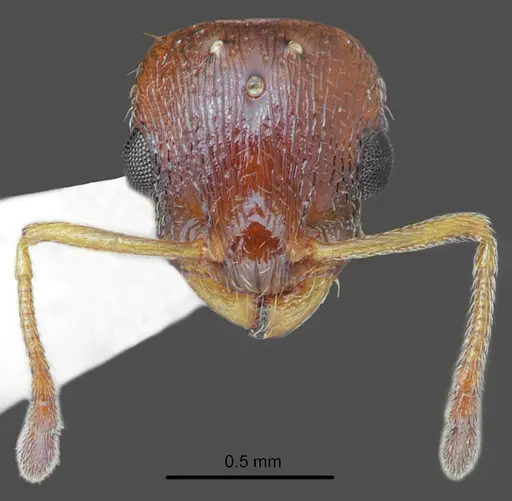
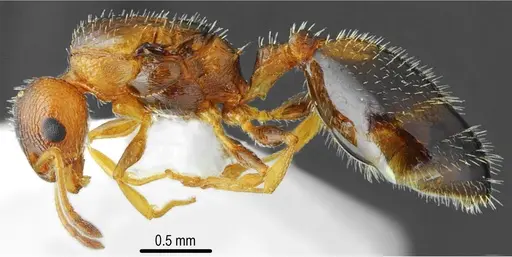
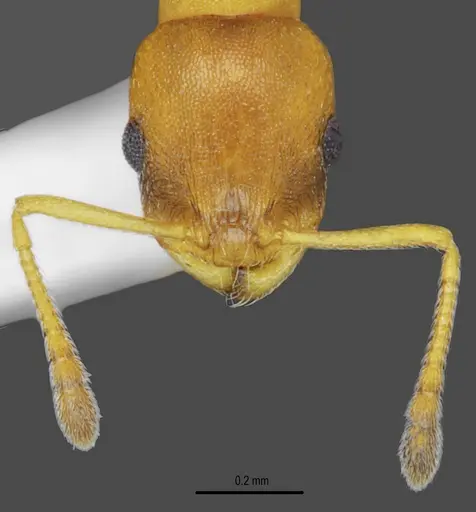
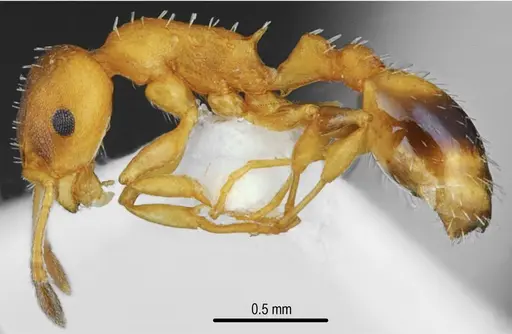
Temnothorax messiniaensis is a small, recently described ant species endemic to Greece, specifically found in the southern Ionian Islands and Peloponnese region [1]. Workers are distinctly colored with a yellow to ochre body and a wide dark band across the rear of their abdomen (first gastral tergite), while the head, antennae, and legs are similarly yellowish [1]. They are relatively large for the genus, with workers measuring around 3mm in total length based on their WL measurement of 0.723mm [1]. Queens are larger at 5-6mm with a yellowish-brown to brown coloration [1]. These ants belong to the aveli species group and are characterized by their long, thin propodeal spines that point upward [2].
This species is notably polygynous, meaning colonies contain multiple queens working together [1][3]. In the wild, they nest exclusively inside dry stems of various herbs and shrubs, a typical trait for Temnothorax species [1][3]. They prefer warm, sunny Mediterranean habitats including roadsides with shrubs, olive plantations, maquis, phrygana, and forest edges [1][3]. Being a recently described species (2019), there is limited captive breeding data, but they follow typical Temnothorax care patterns.
Quick Summary
- Difficulty: Medium
- Origin & Habitat: Endemic to Greece, southern Ionian Islands and Peloponnese. Found in sunny localities from lowlands to highlands (8-670m elevation). Inhabits roadsides with Mediterranean shrubs, olive plantations, maquis, phrygana, and forest edges. Also found in city parks and pine forests on rocky hills [1][3].
- Colony Type: Polygynous, colonies contain multiple queens working together [1][3]. This is unusual among Temnothorax, as many species are monogyne (single queen).
- Colony: Polygyne
- Founding: Claustral
- Size & Growth:
- Queen: 5-6 mm [1], estimated from related species and morphology measurements
- Worker: ~3 mm total length (WL: 0.723mm) [1]
- Colony: Unknown for this specific species, typical Temnothorax colonies reach dozens to a few hundred workers
- Growth: Moderate, typical for the genus
- Development: 6-10 weeks at optimal temperature, estimated based on typical Temnothorax development (Development time is estimated as this specific species has not been studied. Related Mediterranean Temnothorax species typically develop in 6-10 weeks at room temperature.)
- Antkeeping:
- Temperature: Keep at 20-26°C. They prefer warm Mediterranean conditions. A gentle gradient with a heating cable on one side of the nest works well
- Humidity: Low to moderate, they naturally nest in dry plant stems. Keep the nest area relatively dry, similar to their natural dry stem nesting habitat. A small water tube for drinking is sufficient [1][3]
- Diapause: Yes, as a temperate species from Greece, they likely require a winter rest period of 8-12 weeks at 10-15°C
- Nesting: Provide dry, narrow spaces that mimic their natural stem nests. Test tubes with cotton stoppers work well, or small acrylic nests with tight chambers. They prefer tight, enclosed spaces [1][3]
- Behavior: Generally peaceful and non-aggressive. Workers are small but active foragers. They are not known to sting and pose no danger to keepers. They may be shy and hide when the nest is disturbed. Escape prevention is important due to their small size, use fine mesh barriers [1]
- Common Issues: small size means escapes are likely without fine mesh barriers, polygynous colonies may be harder to establish than single-queen species, limited captive data means growth expectations are uncertain, dry nesting preference means overwatering can be fatal, winter diapause is required but timing may differ from standard schedules
Housing and Nest Preferences
Temnothorax messiniaensis nests in dry plant stems in the wild, so your setup should mimic this. Test tubes work excellently for founding colonies, use a small test tube with a cotton stopper at the water end and a dry area for the ants. The chamber should be tight and enclosed, as these ants feel safest in snug spaces [1][3]. For established colonies, small acrylic nests or ytong nests with narrow chambers work well. Avoid large, open spaces, these ants will feel exposed and may not thrive. Keep the nest relatively dry, they come from dry Mediterranean stems, not damp soil. A small water tube provides drinking water without creating humidity. Escape prevention is critical due to their tiny size, use fine mesh on any openings [1].
Feeding and Diet
Like most Temnothorax, these ants are omnivorous and will accept a variety of foods. Offer sugar water or honey regularly as an energy source, they need carbohydrates for their workers. For protein, provide small insects like fruit flies, small mealworms, or pinhead crickets. They are small, so prey items should be appropriately sized. You can also occasionally offer tiny pieces of seeds or dead insects. Feed small amounts a few times per week, removing any uneaten food after 24 hours to prevent mold. A constant sugar source (honey water or sucrose water) is recommended, with protein offered 2-3 times weekly.
Temperature and Seasonal Care
Keep your colony at 20-26°C, with a slight gradient if possible. They come from warm Mediterranean Greece and prefer temperatures in this range [1][3]. A heating cable on one side of the nest can create this gradient, place it on top of the nest, not underneath, to avoid drying out the nest too quickly. During winter, they will need a diapause period. Reduce temperature to 10-15°C for 8-12 weeks, typically from late autumn through winter. This rest period is important for colony health and may trigger reproductive behavior in spring. Do not feed during diapause, but keep a small water source available. Return to normal temperatures gradually in spring.
Colony Structure and Multi-Queen Care
Temnothorax messiniaensis is polygynous, meaning colonies naturally have multiple queens [1][3]. This is unusual among Temnothorax and affects how you should house them. Unlike monogyne species where extra queens are killed, multiple queens can coexist peacefully in this species. When establishing a colony, you may receive multiple queens, this is normal and they should be kept together. The presence of multiple egg-layers can speed up colony growth initially. However, this also means colonies may be more sensitive to disturbance during founding. If you are combining unrelated foundresses, do so carefully and monitor for aggression. Established polygynous colonies tend to be more resilient to queen loss since they have replacements [1].
Behavior and Handling
These ants are peaceful and not aggressive toward keepers. Workers are small but active, foraging for food both day and night. They are not known to sting and pose no danger to humans [1]. When their nest is disturbed, workers may hide or carry brood deeper into the nest rather than attacking. They are not escape artists in the aggressive sense, but their tiny size means they can squeeze through very small gaps. Always use fine mesh on any openings and check for gaps in your setup. Workers communicate through chemical signals and may use tandem-running (leading each other to food) like other Temnothorax species. They are generally shy and do best with minimal disturbance, observe them through the nest walls rather than opening frequently.
Frequently Asked Questions
Can I keep Temnothorax messiniaensis in a test tube?
Yes, test tubes work excellently for this species. They naturally nest in dry plant stems, so a snug test tube mimics their natural environment. Use a small test tube with cotton stoppers, keep the water end with wet cotton and provide a dry area for the nest. The tight fit makes them feel secure. For larger colonies, you can connect multiple test tubes with tubing to give them more space [1][3].
How long does it take for Temnothorax messiniaensis to produce first workers?
Based on typical Temnothorax development, expect 6-10 weeks from egg to first worker at room temperature (20-24°C). This is an estimate since this specific species has not been studied in captivity. The first workers (nanitics) will be smaller than normal workers. Be patient, founding colonies can take time, and the queen needs to raise her first brood alone without additional workers.
Do Temnothorax messiniaensis ants sting?
No, this species does not sting. Temnothorax ants are not known to have functional stingers and pose no danger to keepers. They may bite if handled roughly, but their small size makes this ineffective. You can handle them safely without worry about stings or painful bites [1].
Are Temnothorax messiniaensis good for beginners?
This species is rated as medium difficulty. While not the hardest ant to keep, there are some challenges: their small size requires excellent escape prevention, they need specific dry nesting conditions, and they require winter diapause. They are also a recently described species with limited captive breeding data, so expectations may be uncertain. Beginners might have better success with more common, well-documented species first [1][3].
Can I keep multiple queens together?
Yes, and you should! Temnothorax messiniaensis is naturally polygynous, meaning colonies have multiple queens [1][3]. Unlike many ant species where multiple queens fight, these queens coexist peacefully. If your colony arrives with several queens, keep them together. This can actually benefit the colony by speeding up initial growth. However, do not combine unrelated foundresses from different colonies without careful monitoring [1].
What temperature do Temnothorax messiniaensis need?
Keep them at 20-26°C. They come from warm Mediterranean Greece and prefer these temperatures [1][3]. A slight gradient is ideal, you can use a heating cable on one side of the nest to create warmth, but avoid overheating. Room temperature in most homes (20-24°C) is often suitable without additional heating. During winter diapause, reduce to 10-15°C for 8-12 weeks.
Do Temnothorax messiniaensis need hibernation?
Yes, they require a winter diapause period. As a temperate species from Greece, they need 8-12 weeks of cooler temperatures (10-15°C) during winter. This rest period is important for colony health and may trigger spring reproduction. Reduce temperature gradually in autumn, maintain through winter, and warm them up slowly in spring. Do not feed during diapause but provide a small water source.
What do Temnothorax messiniaensis eat?
They are omnivorous. Offer a constant sugar source like sugar water or honey for energy. For protein, provide small insects such as fruit flies, small mealworms, or pinhead crickets appropriately sized for their tiny workers. Feed protein 2-3 times weekly and remove uneaten food after 24 hours. They may also accept tiny seeds or dead insects.
How big do Temnothorax messiniaensis colonies get?
Exact colony size is unknown for this species since it was only described in 2019. Based on typical Temnothorax patterns, colonies likely reach dozens to a few hundred workers. Being polygynous may help them grow larger than single-queen species of similar size. Expect moderate growth over several years [1][3].
Why are my Temnothorax messiniaensis dying?
Common causes include: escape through tiny gaps (use fine mesh), overhumidity (they prefer dry nests), temperature stress (too hot or too cold), or improper diapause. Also check for mold in the nest, poor nutrition, or stress from too much disturbance. Their small size makes them vulnerable, ensure your setup is secure and conditions match their dry, Mediterranean preferences [1][3].
References

This caresheet is licensed under CC BY-SA 4.0 .
CASENT0846639
View on AntWeb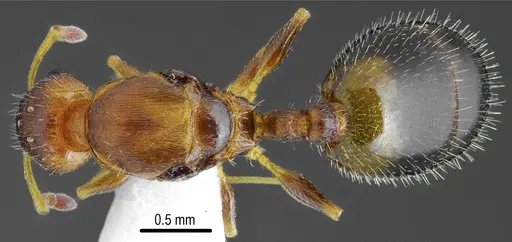
CASENT0846796
View on AntWeb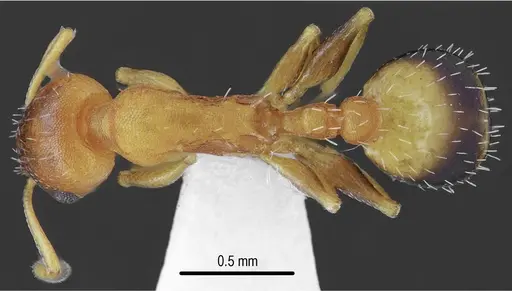
Literature
Loading...Loading products...