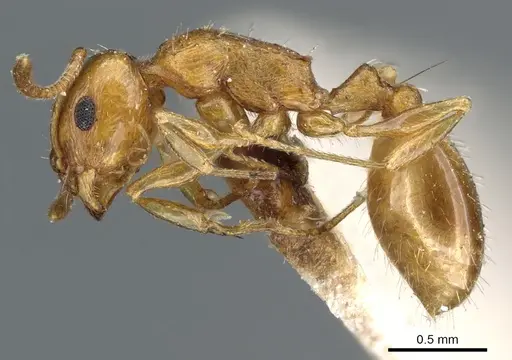
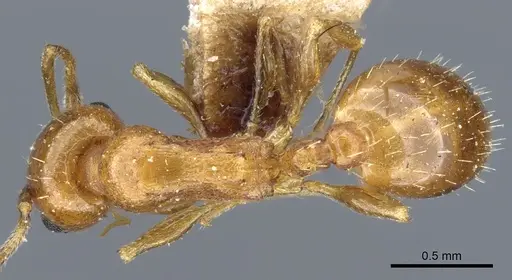
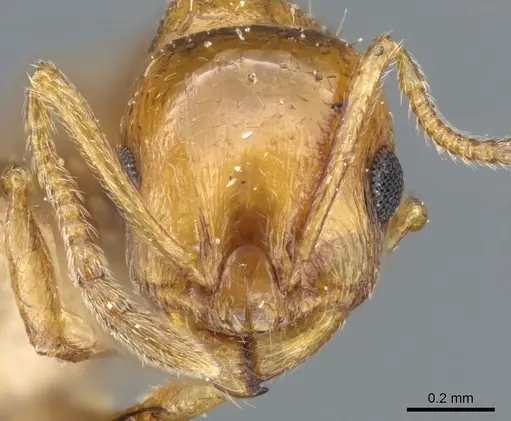
Temnothorax melleus - "Pale Acorn Ant"
Temnothorax melleus, often referred to as a type of 'Acorn Ant' due to the genus's common nesting habits, is a diminutive and fascinating ant species. Workers typically measure between 2 to 3 millimeters, while the queen is slightly larger, ranging from 3 to 5 millimeters. These ants generally exhibit a yellowish to yellowish-brown coloration, sometimes with a darker head. They are known for their non-aggressive nature and their unique preference for nesting in small, pre-existing cavities. Unlike many other ant species, Temnothorax melleus are not active predators but rather generalist scavengers, making them relatively easy to care for in a home setup.
- Difficulty: Easy
- Origin & Habitat: Palaearctic Region (Kazakhstan, Kyrgyzstan, Mongolia, Turkmenistan, Uzbekistan) in Woodlands, forests, and other areas with suitable small cavities. They often nest within hollow stems, dead twigs, old beetle galleries, galls, or even hollowed-out acorns and nuts..
- Colony Type: Monogyne (single queen), though facultative polygyny (multiple queens) can occur in the genus., claustral (queen seals herself in) founding.
- Size & Growth:
- Queen: 3-5mm
- Worker: 2-3mm
- Colony: Small (hundreds, rarely exceeding a thousand workers in mature colonies). Medium growth.
- Antkeeping:
- Temperature: Maintain a temperature range of 17-25°C. For optimal colony health and brood development, aim for a warmer range of 21-24°C..
- Humidity: Humidity levels for the nest should ideally be between 40-60%. These ants are quite adaptable but appreciate a consistent moisture source within their nesting area..
- Diapause: Required. 4-5 months at 5-10°C.
- Nesting: Temnothorax melleus thrive in small, compact nesting spaces. Ytong nests with shallow chambers (around 2cm depth) are highly recommended. Natural setups mimicking their arboreal or detritus-based nests, such as hollowed-out acorns, small pieces of wood, or test tubes, are also excellent choices..
- Behavior: Low aggressiveness.
- Common Issues: Escaping due to small size, Humidity fluctuations (if not properly managed).
One of the defining characteristics of Temnothorax melleus, and indeed the entire Temnothorax genus, is their remarkably small size. While this makes them incredibly charming to observe, it also presents a unique challenge for antkeepers: their propensity for escaping. Ensure your formicarium and outworld are meticulously sealed, paying close attention to any tiny gaps or cracks. A fluon barrier or a tightly sealed lid is absolutely crucial to prevent these little explorers from making an unexpected trek across your home.
These 'Acorn Ants' are generalist foragers, meaning they aren't particularly picky eaters. Their diet in captivity should mimic their natural scavenging habits. Offer them a variety of small insects, such as fruit flies, pre-killed small crickets, or chopped mealworms, to meet their protein needs. For carbohydrates, diluted honey, sugar water, or ant jelly are all excellent choices. Providing a diverse food source will contribute significantly to the health and growth of your Temnothorax melleus colony.
Despite their delicate appearance, Temnothorax melleus are surprisingly adaptable and relatively low-maintenance ants once their initial setup is secure. They are not aggressive towards handlers or other ants, making interactions quite safe and stress-free. In the wild, they are known to be opportunistic foragers, often retreating from competition with larger, more dominant ant species. This gentle disposition translates well to the antkeeping hobby, making them a peaceful addition to any collection.
A fascinating social behavior observed in Temnothorax species is their tendency to establish polydomous colonies, meaning they might spread their population across several interconnected satellite nests in the wild. While this might not be fully replicated in typical formicaria, it highlights their flexible nesting strategies. Additionally, their recruitment to new food sources or nest sites often involves 'tandem running,' where one ant leads another by touch, a unique and engaging behavior for antkeepers to witness.
Frequently Asked Questions
What kind of enclosure is best for a Temnothorax melleus colony?
For these tiny 'Acorn Ants,' a compact setup is ideal. Many antkeepers find Ytong nests with shallow chambers (around 2 cm deep) to be perfect, as they retain humidity well. Test tubes, particularly for founding queens or very small colonies, are also excellent. Consider natural wood setups or even miniature acrylic formicariums designed for small species to mimic their natural nesting cavities.
How do I feed my Temnothorax melleus ants?
Temnothorax melleus are generalist scavengers, so offer them a varied diet. For protein, small pre-killed insects like fruit flies, tiny crickets, or small pieces of mealworm work well. For carbohydrates, they'll happily take diluted honey, sugar water, or commercially available ant jellies. Place food in a small outworld or feeding dish to keep their nest clean.
Do Temnothorax melleus need hibernation (diapause)?
Yes, Temnothorax melleus require a period of hibernation, or diapause, to maintain colony health and ensure successful reproduction. This typically occurs from November to March at temperatures between 5-10°C.
What's the ideal temperature and humidity for a Temnothorax melleus colony?
Keep their nest between 17-25°C, with an optimal range of 21-24°C for best activity and brood development. Humidity should be maintained at 40-60%. A simple water source like a constantly refilled test tube or a humidified section in the nest can help achieve this.
Are Temnothorax melleus a good ant species for beginners?
Absolutely! Their small colony size, gentle nature, and relatively simple care requirements make them an excellent choice for new antkeepers. The main challenge is their tiny size, which requires a very secure setup to prevent escapes, but otherwise, they are quite forgiving.
Why are they called 'Acorn Ants'?
The common name 'Acorn Ant' for the Temnothorax genus comes from their natural nesting preferences. Many species, including Temnothorax melleus, frequently establish their colonies inside hollowed-out acorns, nuts, or small cavities found in dead wood and twigs in their natural habitats.
Do Temnothorax melleus sting?
No, Temnothorax melleus are not known to sting humans. While some species within the broader Temnothorax genus, particularly those from certain tropical regions, might possess a sting, Temnothorax melleus is a harmless species and poses no threat to antkeepers.
How fast do Temnothorax melleus colonies grow?
Temnothorax melleus colonies have a medium growth rate. They won't explode in numbers overnight like some larger species, but with consistent feeding and proper care, you'll see steady development of brood and an increase in worker count. Mature colonies typically reach hundreds of workers.
Can Temnothorax melleus be housed with other ant species?
No, it is never recommended to house different ant species together in the same setup. This will inevitably lead to conflict, stress, and the likely demise of one or both colonies. Always keep your Temnothorax melleus in a species-specific setup.
What should I do if my Temnothorax melleus queen isn't laying eggs?
Several factors can affect queen egg-laying. Ensure she's in a dark, undisturbed environment with proper temperature and humidity. A constant supply of protein (small insects) is crucial for egg production. If the colony recently exited diapause, it may take a little time for her to resume laying.