

Temnothorax lucidus
- Scientific Name
- Temnothorax lucidus
- Tribe
- Crematogastrini
- Subfamily
- Myrmicinae
- Author
- Csősz <i>et al.</i>, 2015
- Distribution
- Found in 2 countries
Temnothorax lucidus Overview
Temnothorax lucidus is an ant species of the genus Temnothorax. It is primarily documented in 2 countries , including Greece, Türkiye. Detailed taxonomic data and occurrence records can be further explored via authoritative databases such as AntWeb or the Global Biodiversity Information Facility (GBIF).
Temnothorax lucidus
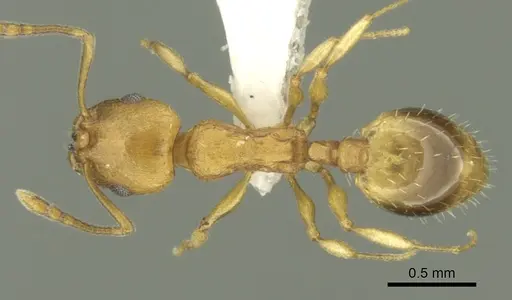
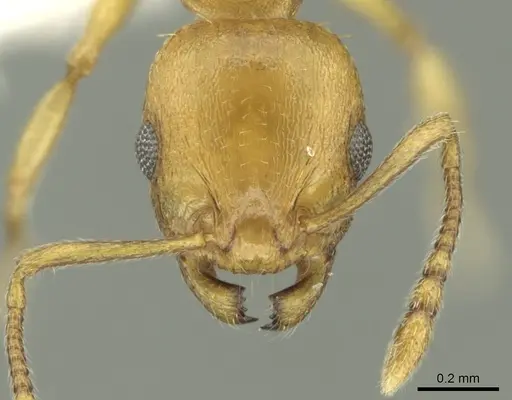
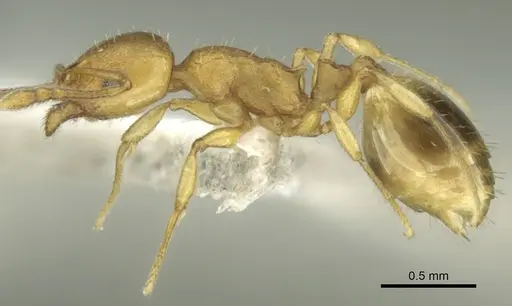
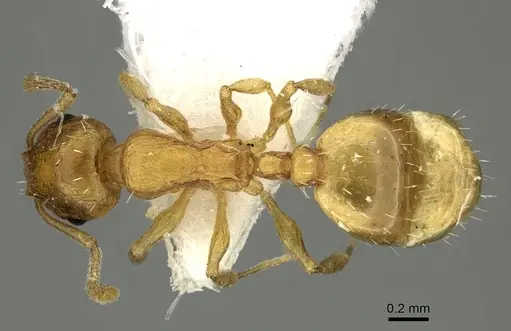
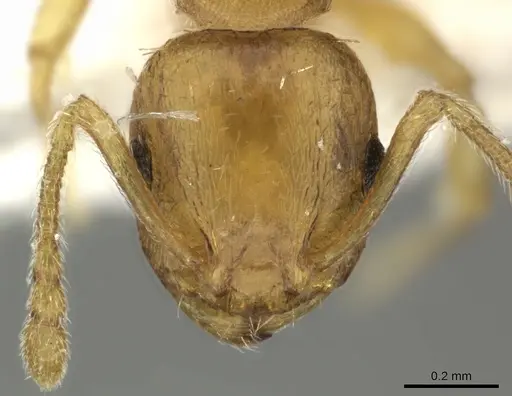
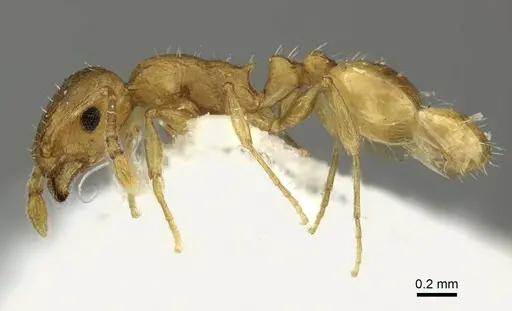
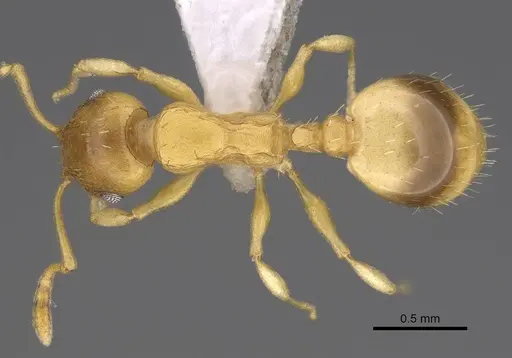
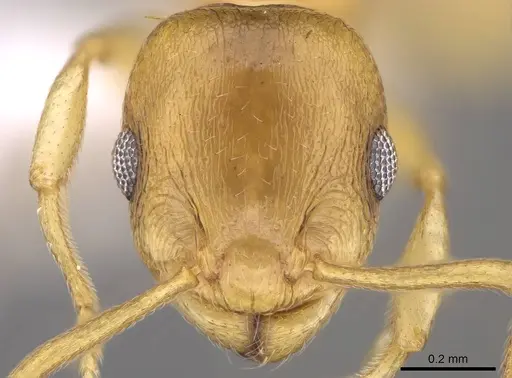
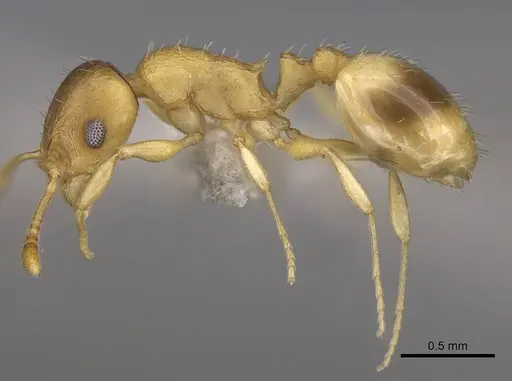
Temnothorax lucidus is a tiny yellow ant belonging to the Temnothorax nylanderi species group, specifically the angustifrons species complex [1]. Workers measure approximately 2-3mm in total body length, with a distinctive smooth and shiny head dorsum that sets them apart from related species [1]. Their body is primarily yellow, with the head and posterior gaster region darker than the lighter mesosoma, antennae, legs, and waist [1]. This species was formally described in 2015 and is native to the eastern Mediterranean region, specifically found in South and Central Anatolia (Turkey) and the island of Crete in Greece [1][2]. The most notable aspect of this species is its extreme rarity in captivity and the complete absence of published biological data, what we know about keeping them must be inferred from closely related species in the same group.
Quick Summary
- Difficulty: Hard
- Origin & Habitat: Native to high-elevation areas of Crete (Greece) and central to southern Turkey. In Crete, this species is found exclusively in mountainous habitats [2][3]. Related species in the nylanderi group typically inhabit shady, humid forest environments and nest in rock crevices, under stones, and in dry branches [4].
- Colony Type: Likely single-queen (monogyne) colonies based on typical Temnothorax nylanderi-group patterns. Colony size is unknown but likely small, related species typically have colonies of 50-500 workers. Replacement reproductives (ergatoid queens) may be present but have not been documented for this specific species.
- Size & Growth:
- Queen: Undescribed, estimated 4-5mm based on related species in the nylanderi group
- Worker: Approximately 2-3mm (absolute cephalic size 560-670µm) [1]
- Colony: Unknown, likely 50-500 workers based on typical nylanderi-group colony sizes
- Growth: Moderate, inferred from related species
- Development: 6-10 weeks at optimal temperature based on typical Temnothorax development (Development time estimated from related species in the nylanderi group, no specific data exists for T. lucidus)
- Antkeeping:
- Temperature: Keep at 20-24°C, these are Mediterranean mountain ants that prefer cooler conditions than tropical species. Avoid temperatures above 28°C. A slight temperature gradient allows workers to regulate their body temperature
- Humidity: Moderate to high humidity (60-80%). These mountain species from Crete and Turkey prefer shadier, more humid conditions than dry-adapted ants. Keep the nest substrate consistently moist but not waterlogged, with some drier areas available
- Diapause: Likely yes, as a Mediterranean mountain species from Crete, they probably require a winter rest period. Keep at 10-15°C for 2-3 months during winter. This is an educated estimate based on similar Mediterranean Temnothorax species
- Nesting: In nature, related species nest in rock crevices, under stones, and in dry branches within forests [4]. For captivity, a small Y-tong (AAC) nest with tight chambers or a small plaster nest works well. The key is providing small, tight chambers scaled to their tiny size. Avoid large, open spaces, these are micro-antibiotics that feel secure in snug quarters
- Behavior: These are peaceful, non-aggressive ants that rely on stealth and hiding rather than confrontation. Workers are small and typically timid, foraging individually or in small groups. They are not known to sting, Myrmicinae have stingers but Temnothorax rarely use them, preferring to flee or hide. Escape prevention is critical due to their tiny size, they can squeeze through remarkably small gaps. Use fine mesh barriers and ensure all openings are sealed. Workers are active foragers, searching for small insects, honeydew, and sugary liquids. They may exhibit tandem-running recruitment where one worker leads others to food sources, a common behavior in the genus Temnothorax.
- Common Issues: tiny size makes escape prevention challenging, they can slip through gaps that seem impossible, complete lack of species-specific biological data means care is based on inference from related species, slow colony growth can frustrate beginners, these are not fast-growing ants, high-elevation origin means they may be sensitive to overheating, keep them cool, wild-caught colonies may carry parasites that can devastate captive colonies, limited availability in the antkeeping hobby makes this a species for experienced keepers interested in rare species
Housing and Nest Setup
Temnothorax lucidus requires careful housing due to their tiny size. A Y-tong (AAC) formicarium with narrow chambers or a small plaster nest works best, the chambers should be sized appropriately for these small ants, roughly 1-2mm in passage width [4]. Test tubes can work for founding colonies but may need to be modified to prevent escapes. The key requirement is tight, snug chambers that make these small ants feel secure. Avoid large, open spaces where they may become stressed. Provide a water reservoir for humidity but ensure it doesn't flood the nest chambers. A small outworld area is sufficient for foraging, these ants don't need much space. Escape prevention is critical: use fluon on container rims, fine mesh on any ventilation, and check all seams regularly. Even the tiniest gap is a potential escape route for these micro-antibiotics.
Feeding and Diet
Like other Temnothorax species, T. lucidus likely accepts a varied diet of small insects (fruit flies, pinhead crickets, small mealworms), honeydew, and sugar water. Offer small prey items that match their worker size, these ants are tiny, so prey should be appropriately scaled. Sugar water or honey water should be offered regularly, especially for colonies without brood. Feed small amounts 2-3 times per week, removing uneaten prey after 24 hours to prevent mold. The exact food preferences of T. lucidus are unknown, so experimentation may be needed. Start with small live prey and sugar sources, then observe what workers prefer. Always ensure fresh water is available, these small ants can dehydrate quickly.
Temperature and Seasonal Care
Keep T. lucidus at 20-24°C, avoiding temperatures above 28°C. As a high-mountain species from Crete and Turkey, they are adapted to cooler conditions than many Mediterranean ants [2][3]. A temperature gradient is beneficial, allow workers to move between warmer and cooler areas of the nest. During winter, these ants likely require a diapause (winter rest) period of 2-3 months at 10-15°C. This mimics their natural high-elevation seasonal cycle and is important for colony health and reproduction. Reduce feeding during diapause and keep the nest slightly cooler but not cold. Do not skip hibernation, it is likely essential for this species. Resume normal temperatures and feeding gradually in spring.
Colony Establishment and Growth
Establishing a T. lucidus colony requires patience. If you obtain a founding queen, she will likely seal herself in a small chamber (claustral founding) and raise the first brood alone using her stored fat reserves. Do not disturb the founding chamber for several weeks, opening the nest too early can cause the queen to abandon or kill her brood. First workers (nanitics) will be smaller than mature workers and may take 6-10 weeks to emerge at optimal temperature. Colony growth is slow and steady, these are not fast-growing ants. A healthy established colony may eventually reach several hundred workers, but this will take years. Monitor for mold, parasites, and escape attempts. The biggest challenge is that this species is extremely rare in the hobby and almost no captive breeding has occurred, most available colonies would be wild-caught, which carries significant risks.
Behavior and Observation
Temnothorax lucidus workers are active, methodical foragers that search individually or in small groups for food. They may use tandem-running recruitment, where one worker leads others to discovered food sources, this is a common behavior in the genus and fascinating to observe. These ants are not aggressive and will flee rather than engage threats. They are not known to sting, though they technically possess a stinger as Myrmicinae. Their small size and yellow coloration make them relatively easy to observe, though they can be hard to spot against certain backgrounds. Provide enrichment in the outworld, small stones, twigs, and leaf litter create natural foraging environments. Watch for behavioral cues: workers clustering at food sources indicates acceptance, while ignoring food may signal stress or improper conditions. Their timid nature makes them sensitive to vibrations and light changes, observe from a distance when possible. [4]
Frequently Asked Questions
How long does it take for Temnothorax lucidus to produce first workers?
Based on typical Temnothorax development, expect 6-10 weeks from egg to first worker at optimal temperature (around 22°C). This is an estimate since no specific development data exists for T. lucidus. The first workers (nanitics) will be smaller than mature workers and the colony will grow slowly after that.
What do Temnothorax lucidus ants eat?
They likely accept small insects (fruit flies, tiny crickets, small mealworms), sugar water, and honey. Feed small prey items scaled to their tiny size 2-3 times per week, with sugar sources available constantly. This is inferred from related species in the nylanderi group.
Do Temnothorax lucidus ants sting?
Temnothorax ants possess stingers but rarely use them. These are timid, non-aggressive ants that prefer to flee rather than fight. They are not considered dangerous to humans.
What temperature do Temnothorax lucidus need?
Keep them at 20-24°C. As a high-mountain Mediterranean species, they prefer cooler conditions than tropical ants and should be kept below 28°C. A temperature gradient allows workers to regulate their own temperature.
Do Temnothorax lucidus need hibernation?
Yes, they likely require a winter diapause period. As a high-elevation species from Crete and Turkey, they are adapted to seasonal temperature changes. Keep them at 10-15°C for 2-3 months during winter, reducing feeding and activity.
Are Temnothorax lucidus good for beginners?
No. This is an expert-level species due to several challenges: complete lack of species-specific care data, tiny size requiring excellent escape prevention, slow growth, and extreme rarity in the hobby. Only experienced antkeepers should attempt this species.
How big do Temnothorax lucidus colonies get?
Colony size is unknown but likely reaches 50-500 workers based on typical nylanderi-group sizes. Growth is slow, expect several years to reach even 100 workers. This is an estimate since no colony size data exists for this species.
Can I keep multiple Temnothorax lucidus queens together?
Not recommended. While some Temnothorax can be polygynous, there is no data on T. lucidus colony structure. Combining unrelated queens carries significant risk of fighting and colony loss. Stick to single-queen colonies.
Why are my Temnothorax lucidus escaping?
Their tiny size allows them to squeeze through impossibly small gaps. Use fluon on all rims, fine mesh on ventilation, check all seams, and ensure container lids fit tightly. Even a millimeter-wide gap is an escape route for these micro-ants.
Where is Temnothorax lucidus found in the wild?
This species is known from high-elevation areas in central to southern Turkey and the island of Crete, Greece [1][2]. On Crete, it is exclusively a high-mountain species [2][3]. Related species inhabit shady forest habitats, nesting in rock crevices and under stones [4].
Is Temnothorax lucidus available in the antkeeping hobby?
Extremely rare. This species was only described in 2015 and has almost no presence in the antkeeping hobby. Most available colonies would be wild-caught, which carries significant risks including parasites and disease. This species is primarily for advanced keepers interested in rare Mediterranean ants.
References

This caresheet is licensed under CC BY-SA 4.0 .
Literature
Loading...Loading products...