

Temnothorax kemali
- Scientific Name
- Temnothorax kemali
- Tribe
- Crematogastrini
- Subfamily
- Myrmicinae
- Author
- Santschi, 1934
- Distribution
- Found in 1 countries
Temnothorax kemali Overview
Temnothorax kemali is an ant species of the genus Temnothorax. It is primarily documented in 1 countries , including Greece. Detailed taxonomic data and occurrence records can be further explored via authoritative databases such as AntWeb or the Global Biodiversity Information Facility (GBIF).
Temnothorax kemali
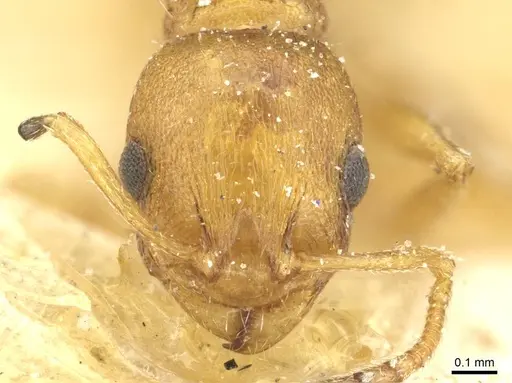
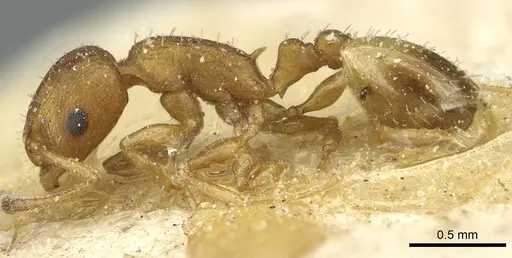
Temnothorax kemali is a tiny yellow to orange ant belonging to the Temnothorax kemali species-group. Workers measure just 0.5-0.7mm and have a distinctive appearance with a dark brown band covering roughly half of the first gastral segment, and long propodeal spines that often curve downward [1]. Queens are larger at 0.75-0.77mm head length and display an orange body with black-tinted frons and vertex, plus a dark orange gaster with a bright spot on the first tergite [2]. This eastern Mediterranean species is found across Greece and western Türkiye, including the Aegean Islands and mainland regions [1]. They are thermophilic ants associated with dry deciduous and coniferous forests, mountain pastures, and Mediterranean scrubland, typically nesting under moss on stones or inside dry herb stems [1]. The species was originally described from Izmir, Türkiye in 1934 and only recognized in Greece relatively recently [2].
Quick Summary
- Difficulty: Medium
- Origin & Habitat: Eastern Mediterranean species from Greece and western Türkiye (Anatolia). Found in dry deciduous and coniferous forests, mountain pastures, and Mediterranean scrubland with herbs and shrubs. Nests under moss on stones or inside dry herb stems at elevations from 3 to 1315 meters [1][3].
- Colony Type: Colony structure is unconfirmed. Based on typical Temnothorax patterns, likely single-queen (monogyne) colonies. No documented ergatoid replacement reproductives for this specific species.
- Size & Growth:
- Queen: Queens approximately 0.75-0.77mm head length,1.36-1.28mm mesosoma length [2]. Estimated total 5-6mm.
- Worker: Workers 0.57-0.71mm cephalics (approximately 0.52-0.65mm total length) [1]. These are very small ants.
- Colony: Colony size is unconfirmed. Based on typical Temnothorax, likely under 500 workers.
- Growth: Growth rate is unconfirmed. Based on related species and small colony size, likely moderate.
- Development: Estimated 6-10 weeks at optimal temperature. Direct development data unavailable for this species. (Timeline estimated from typical Temnothorax genus patterns. Small colony size suggests relatively slow colony development.)
- Antkeeping:
- Temperature: Keep at 22-26°C. This is a thermophilic Mediterranean species that prefers warm conditions. A gentle temperature gradient allows ants to self-regulate. Avoid temperatures below 18°C or above 30°C.
- Humidity: Keep nest substrate moderately moist. These ants naturally nest under moss on stones and inside dry herb stems, they need some moisture but not wet conditions. Provide a water tube as a moisture source and mist occasionally, allowing periods of drying between waterings.
- Diapause: Likely requires a winter rest period (diapause). As a Mediterranean species from temperate latitudes, expect 2-3 months at 10-15°C during winter. Reduce feeding and keep slightly cooler.
- Nesting: Best kept in small nests scaled to their tiny size. Y-tong (AAC) nests or small acrylic/formicarium setups work well. Provide narrow chambers and passages appropriate for 3mm ants. Naturalistic setups with stones and dry stems can mimic their natural nesting sites. Test tubes are suitable for founding colonies.
- Behavior: These are small, generally peaceful ants. Workers forage on herbs, leaves, and wooden surfaces, they are surface-active and likely forage individually or in small groups. Their tiny size makes them excellent escape artists, use fine mesh barriers and ensure any gaps in housing are sealed. They are not aggressive and pose no stinging threat to humans. Activity level is moderate, they will explore their outworld regularly.
- Common Issues: escape prevention is critical due to their very small size, they can squeeze through standard mesh, slow colony growth may frustrate beginners expecting rapid development, wild-caught colonies may carry parasites that can devastate captive colonies, overheating is a risk, keep away from direct sunlight and heat sources, too much humidity can kill them, they prefer drier conditions than many tropical ants
Housing and Nest Setup
Temnothorax kemali requires housing scaled to their tiny size. A Y-tong (AAC) nest with narrow chambers works well, or a small acrylic/formicarium with appropriately sized tunnels. The chambers should be tight enough that workers can touch the ceiling while walking. For founding colonies, a standard test tube setup is suitable, these tiny ants don't need much space initially. Add a shallow water tube for humidity and a small outworld area for foraging. Use fine mesh (at least 0.5mm) for any ventilation holes, these ants are experts at squeezing through small gaps. A naturalistic setup can include flat stones or pieces of dry herb stem as nest decoration, reflecting their natural habitat under moss on stones or inside dry stems [1][3].
Feeding and Diet
Like most Temnothorax species, these ants are likely omnivorous with a preference for small protein sources. Offer small live prey such as fruit flies, springtails, or tiny crickets. They will also accept sugar sources, a small drop of honey water or sugar water can be offered occasionally. In the wild, workers forage on herbs and leaves, likely collecting honeydew from aphids and small insects [2]. Feed small protein items 2-3 times per week, and remove any uneaten prey after 24 hours to prevent mold. Remove sugar sources after a few hours as well.
Temperature and Seasonal Care
As a thermophilic Mediterranean species, T. kemali prefers warm conditions. Maintain temperatures between 22-26°C during the active season. A heating cable on one side of the nest can create a gentle gradient, but avoid direct heat. During winter (roughly November-February in the Northern Hemisphere), reduce temperatures to 10-15°C for 2-3 months to simulate their natural seasonal cycle. Reduce feeding during this period and keep the nest slightly drier. This winter rest period is important for colony health and may trigger reproductive behavior in spring [1].
Behavior and Colony Dynamics
Temnothorax kemali workers are surface-active and have been observed foraging on herbs, leaf surfaces, and wooden barriers in the wild [2]. They are not aggressive and lack a functional stinger, making them completely safe to handle. Colonies are likely small, probably under a few hundred workers based on typical Temnothorax colony sizes. Workers likely forage individually or use tandem running (leading nestmates to food sources) rather than forming large foraging trails. The queen lays eggs and the colony develops slowly, patience is required as these are not fast-growing species. Replace the water tube regularly to prevent bacterial growth.
Frequently Asked Questions
How long does it take for Temnothorax kemali to produce first workers?
The exact timeline is unconfirmed, but based on typical Temnothorax development, expect 6-10 weeks from egg to first worker at optimal temperature (around 24°C). Small colony size means growth will feel slow, be patient.
Can I keep Temnothorax kemali in a test tube?
Yes, test tubes work well for founding colonies. Use a small test tube with a water reservoir and cotton plug. As the colony grows, you may need to move them to a small formicarium or Y-tong nest with appropriately sized chambers.
Do Temnothorax kemali ants sting?
No, Temnothorax ants do not have a functional stinger. They are completely harmless to humans and can be handled safely.
What do Temnothorax kemali eat?
They accept small live prey like fruit flies, springtails, and tiny crickets. They will also take sugar water or honey occasionally. Feed small protein items 2-3 times per week and remove uneaten food promptly.
Do Temnothorax kemali need hibernation?
Yes, as a Mediterranean species from temperate latitudes, they likely require a winter rest period. Keep them at 10-15°C for 2-3 months during winter, reducing feeding and keeping the nest slightly drier.
How big do Temnothorax kemali colonies get?
Colony size is unconfirmed but likely remains relatively small, probably under 500 workers based on typical Temnothorax patterns. They are not large colony formers.
Are Temnothorax kemali good for beginners?
They are rated as medium difficulty. While not aggressive and relatively easy to house, their tiny size requires attention to escape prevention, and their slow growth requires patience. They are better suited for keepers with some experience.
Why are my Temnothorax kemali escaping?
Their tiny size makes them excellent escape artists. Use fine mesh (0.5mm or smaller), ensure all lids fit tightly, and check for any gaps. Apply fluon or similar barrier to the edges of the outworld.
When should I move my colony to a formicarium?
Move them when the test tube becomes crowded or the colony reaches around 50-100 workers. Ensure the new nest has appropriately sized chambers for these tiny ants, too-large chambers can stress them.
Can I keep multiple queens together?
Colony structure is unconfirmed for this species. Based on typical Temnothorax behavior, it is not recommended to keep multiple unrelated queens together as they may fight. If you capture a queen, house her alone for founding.
References

This caresheet is licensed under CC BY-SA 4.0 .
CASENT0912952
View on AntWeb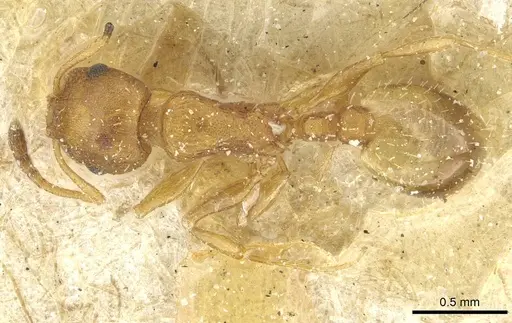
Literature
Loading...Loading products...