

Temnothorax italicus
- Scientific Name
- Temnothorax italicus
- Tribe
- Crematogastrini
- Subfamily
- Myrmicinae
- Author
- Consani, 1952
- Distribution
- Found in 1 countries
Temnothorax italicus Overview
Temnothorax italicus is an ant species of the genus Temnothorax. It is primarily documented in 1 countries , including Italy. Detailed taxonomic data and occurrence records can be further explored via authoritative databases such as AntWeb or the Global Biodiversity Information Facility (GBIF).
Temnothorax italicus
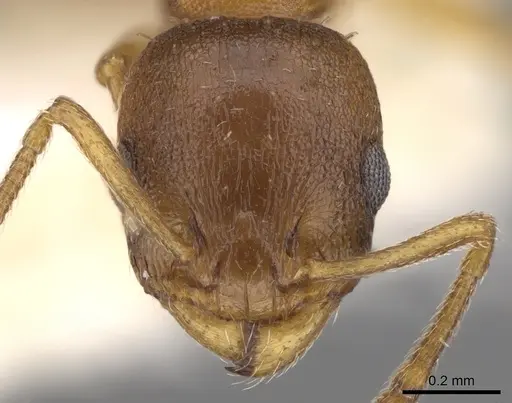
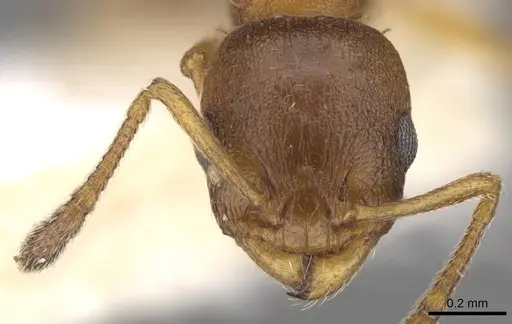
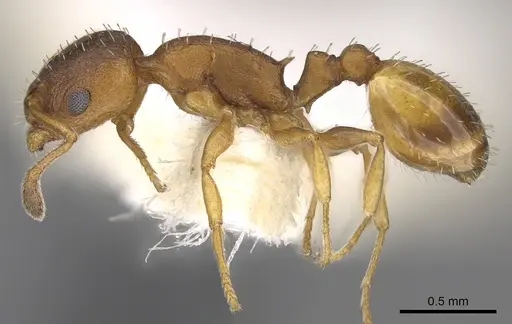
Temnothorax italicus is a tiny, yellow to orange-yellow ant species native to the Mediterranean region of southern Europe. Workers are small and slender, measuring around 3-4mm, with a distinctive darkened antennal club and femora that contrast with their otherwise pale body [1]. This species belongs to the aveli species group and is closely related to other arboreal Temnothorax species like T. alienus, sharing similar body proportions and nesting habits [2]. The species was originally described as a subspecies of T. affinis in 1952 before being elevated to full species status in 1971 [3].
What makes T. italicus particularly interesting is its arboreal lifestyle, unlike many ground-nesting ants, this species nests in pre-existing cavities in trees, particularly in oak galls and hollow twigs [2][4]. It has been documented visiting plants in Italian vineyards, though it appears in very low numbers, making it one of the less common ants in its range [5]. The species is found across the submediterranean zone of Italy, Croatia, and Slovenia, preferring warm, wooded habitats where suitable arboreal nesting sites are available [6][7].
Quick Summary
- Difficulty: Easy
- Origin & Habitat: Mediterranean region of southern Europe, Italy, Croatia, and Slovenia. Found in submediterranean woodland habitats, particularly in areas with oak trees and suitable arboreal nesting cavities [6][7].
- Colony Type: Single-queen colonies (monogyne). Colonies are small, typically containing fewer than 100 workers based on similar arboreal Temnothorax species [2].
- Colony: Monogyne
- Founding: Claustral
- Size & Growth:
- Queen: Approximately 5-6mm total length. Head size (HS) around 0.67mm based on gyne measurements [2].
- Worker: Approximately 3-4mm. Worker measurements show HW/HL ratio of 0.82±0.02 [2].
- Colony: Small colonies, likely under 100 workers based on typical arboreal Temnothorax patterns [2].
- Growth: Moderate, typical for small Myrmicinae ants
- Development: Estimated 6-8 weeks at optimal temperature based on genus-level data for similar Temnothorax species. (Development time inferred from related species in the genus. Exact timeline for T. italicus specifically has not been documented.)
- Antkeeping:
- Temperature: Keep at room temperature, around 20-24°C. This species originates from the Mediterranean so it tolerates warmth well. A slight temperature gradient is beneficial.
- Humidity: Moderate humidity around 50-60%. Arboreal species prefer drier conditions compared to ground-nesting ants. Allow the nest to dry out partially between water additions.
- Diapause: Yes, a winter rest period of 2-3 months at 10-15°C is recommended, mimicking Mediterranean winter conditions.
- Nesting: Arboreal species that naturally nest in hollow twigs, oak galls, and pre-existing cavities in wood. In captivity, they do well in small Y-tong (AAC) nests, cork nests, or test tube setups with narrow chambers. They prefer tight-fitting cavities rather than open spaces.
- Behavior: Generally peaceful and non-aggressive. Workers are small and active, foraging individually rather than in trails. They are not known to sting and pose no danger to keepers. Their small size means they can escape through very small gaps, excellent escape prevention is essential. They are arboreal and will readily climb, so provide climbing surfaces in the outworld.
- Common Issues: escape prevention is critical due to their tiny size, use fine mesh and tight-fitting lids, small colony size means fluctuations in conditions affect them more heavily, arboreal nature means they need climbing structures and may not use ground-level foraging areas, low abundance in the wild means wild-caught colonies are rare and may have been stressed during collection, overheating can be a problem, avoid direct sunlight and excessive heat sources
Housing and Nest Setup
Temnothorax italicus is an arboreal species that naturally nests in pre-existing cavities like hollow twigs, beetle burrows in wood, and oak galls [2]. In captivity, they do best in small, tight-fitting nests that mimic these natural cavities. A Y-tong (AAC) nest with narrow chambers works well, as does a cork nest or a small test tube setup with a cotton plug. The key is providing chambers that are appropriately sized for their tiny workers, too large and they may feel exposed and stressed. They prefer dark interiors, so cover the nest with an opaque sleeve or keep it in a shaded area. Provide a small outworld for foraging with a shallow water station and feeding area.
Feeding and Diet
Like most Temnothorax species, T. italicus is omnivorous with a preference for protein sources. Offer small protein foods like fruit flies, small mealworms, and other tiny insects. They will also accept sugar sources like honey water or sugar water, though they are not as strongly attracted to sweets as some other ants. Feed them small prey items 2-3 times per week, adjusting based on colony size and consumption. Remove any uneaten prey after 24 hours to prevent mold. A constant sugar water or honey droplet is appreciated but not required. Their small size means even tiny prey items are appropriate, avoid offering anything larger than their workers.
Temperature and Seasonal Care
Keep T. italicus at room temperature, ideally around 20-24°C. They originate from the Mediterranean so they tolerate warmer conditions well, but avoid overheating. A gentle temperature gradient in the outworld allows workers to choose their preferred zone. During winter, provide a diapause period of 2-3 months at 10-15°C to mimic natural seasonal cycles. This winter rest is important for colony health and may trigger reproductive behavior in mature colonies. Reduce feeding during diapause and keep the nest slightly cooler. Do not freeze the colony, a cool basement or refrigerator (not freezer) compartment works well for winter storage. [6]
Behavior and Observation
This species is active and engaging to watch, though workers are tiny. They forage individually rather than in organized trails, exploring their surroundings systematically. Workers are peaceful and will not bite or sting, making them safe to handle. Their small size makes them excellent escape artists, even tiny gaps in their enclosure will result in escapes. Use fluon or similar barriers on the rim of the nest and ensure all connections are sealed. Provide some climbing structures in the outworld like twigs or mesh, as they naturally prefer to climb rather than walk on flat surfaces. They are arboreal by nature and will often explore upward. [5]
Colony Growth and Development
Temnothorax italicus colonies remain relatively small, typically reaching perhaps 50-100 workers at maturity. The queen lays eggs which develop through larval stages over several weeks before emerging as nanitic (first) workers. These initial workers are smaller than mature workers but help the colony expand. Growth is moderate, a well-fed colony might produce a dozen or more workers per month once established. Unlike some fast-growing species, T. italicus builds steadily rather than explosively. Patience is key with this species. A mature colony is rewarding to observe with its organized castes and behaviors. [2]
Acquiring Your Colony
This species is not commonly available in the antkeeping hobby due to its limited distribution and low abundance in the wild. If available, purchase from a reputable breeder rather than collecting from the wild, wild populations in Italy, Croatia, and Slovenia are small and vulnerable [5]. When establishing a colony, provide a small, appropriate nest and minimal disturbance during the founding stage. Queens that are claustral will seal themselves in and require no food until their first workers emerge. Once workers arrive, begin offering small prey items. The small colony size means they are sensitive to disturbance, avoid moving or disturbing the nest unnecessarily.
Frequently Asked Questions
How long does it take for Temnothorax italicus to raise their first workers?
Expect 6-8 weeks from egg to first worker at room temperature (20-24°C). This estimate is based on similar Temnothorax species, as specific development data for T. italicus is not documented. The queen will remain sealed in her chamber until her first nanitic workers emerge.
Can I keep Temnothorax italicus in a test tube?
Yes, a test tube setup works well for this species. Use a small test tube with a cotton plug creating a water reservoir. The narrow chamber mimics their natural arboreal nesting cavities. Cover the tube with an opaque sleeve to provide darkness. For a growing colony, you may need to connect multiple tubes or move to a small Y-tong nest.
Do Temnothorax italicus ants sting?
No, this species does not sting. They are completely harmless to humans. Their small size and peaceful temperament make them safe to handle, though their tiny workers are delicate and easily crushed.
What do Temnothorax italicus eat?
They are omnivorous but prefer small protein sources. Offer tiny insects like fruit flies, small mealworms, oraphids. They will also accept sugar water or honey as an occasional treat. Feed small prey items 2-3 times per week and remove uneaten food promptly.
Do Temnothorax italicus need hibernation?
Yes, a winter diapause of 2-3 months at 10-15°C is recommended. This mimics their natural Mediterranean seasonal cycle and helps maintain colony health. Reduce feeding during this period and avoid disturbing the colony. Do not freeze them, a cool basement or refrigerator works well.
Are Temnothorax italicus good for beginners?
Yes, this species is beginner-friendly due to its small size, peaceful nature, and simple care requirements. They are forgiving of minor temperature fluctuations and do not require elaborate setups. The main challenge is their escape prevention, their tiny size means they can squeeze through very small gaps.
How big do Temnothorax italicus colonies get?
Colonies remain relatively small, typically reaching 50-100 workers at maturity. This is typical for arboreal Temnothorax species. The small colony size means they are manageable and do not require large enclosures.
When should I move my colony to a formicarium?
You can keep them in a test tube or small Y-tong nest indefinitely given their small colony size. If the colony grows large or you want to observe them more closely, a small formicarium with appropriately sized chambers works well. They prefer tight spaces, so avoid large, open chambers.
Why are my Temnothorax italicus escaping?
Their tiny size means they can escape through the smallest gaps. Use fluon or petroleum jelly on nest rims, ensure all connections are sealed, and use fine mesh for ventilation. Check for gaps as small as 1mm, even these can allow escape.
Can I keep multiple queens together?
No, T. italicus is monogyne (single-queen). Multiple queens will fight. Only keep one queen per colony. If you acquire a colony, it should have only one functional queen.
References

This caresheet is licensed under CC BY-SA 4.0 .
CASENT0906178
View on AntWeb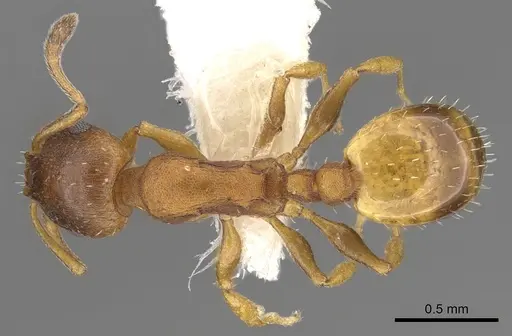
Literature
Loading...Loading products...