

Temnothorax incompletus
- Scientific Name
- Temnothorax incompletus
- Tribe
- Crematogastrini
- Subfamily
- Myrmicinae
- Author
- Salata <i>et al.</i>, 2018
- Distribution
- Found in 1 countries
Temnothorax incompletus Overview
Temnothorax incompletus is an ant species of the genus Temnothorax. It is primarily documented in 1 countries , including Greece. Detailed taxonomic data and occurrence records can be further explored via authoritative databases such as AntWeb or the Global Biodiversity Information Facility (GBIF).
Temnothorax incompletus
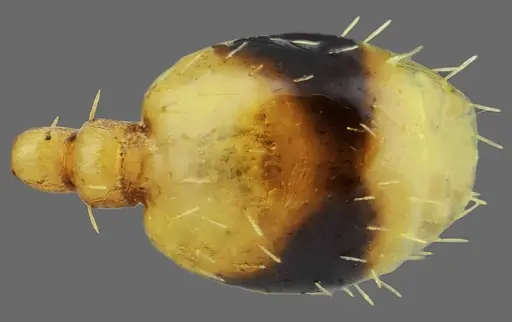
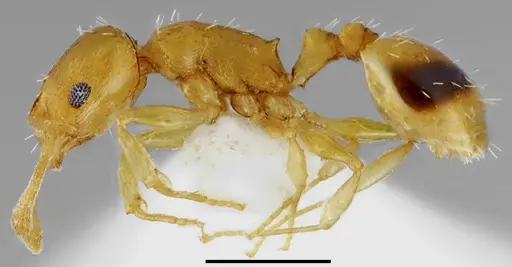
Temnothorax incompletus is an extremely rare ant species endemic to the island of Crete, Greece. Workers are tiny at just 0.58-0.62mm in head length, with a distinctive bright yellow body coloration and a dark interrupted transverse band on the first gastral tergite (the rear segment) [1]. This species was only recently described in 2018 and is known from just two worker specimens collected in macchia (Mediterranean shrubland) habitat [1][2]. The species gets its name from the incomplete band on its abdomen, the dark marking is interrupted in the center [1]. As a Cretan endemic, this ant represents a unique piece of island biodiversity found nowhere else on Earth.
Quick Summary
- Difficulty: Hard
- Origin & Habitat: Endemic to Crete, Greece, where it was collected from leaf litter in macchia (Mediterranean shrubland) habitat at elevations of 350-563m [1][2].
- Colony Type: Colony structure is unconfirmed, no data exists on queen number or colony size for this species. Based on typical Temnothorax patterns, likely single-queen colonies.
- Size & Growth:
- Queen: Unknown, no queens have been described [1]
- Worker: 0.58-0.62mm head length, approximately 2.5-3mm total length [1]
- Colony: Unknown, only two workers have ever been collected [1]
- Growth: Unknown
- Development: Unknown for this species. Based on typical Temnothorax genus patterns, likely 6-10 weeks at optimal temperature. (No direct development data exists, estimates based on related species.)
- Antkeeping:
- Temperature: No species-specific data exists. Based on Crete's Mediterranean climate and typical Temnothorax preferences, likely tolerates 18-26°C with preference around 20-24°C. Provide a temperature gradient.
- Humidity: No data exists. Based on macchia habitat (Mediterranean shrubland), likely prefers moderate humidity with some dry periods. Keep nest substrate slightly moist but not wet.
- Diapause: Unknown for this species. Most temperate Temnothorax require a winter rest period of 2-3 months at 5-10°C.
- Nesting: No direct data. Based on collection from leaf litter, likely nests in small cavities under stones or in decaying wood. In captivity, a small Y-tong (AAC) nest or test tube setup with tight chambers works well for their tiny size.
- Behavior: No specific behavior data exists. Based on genus patterns, these are small, generally peaceful ants that likely nest in pre-existing cavities. Workers are tiny meaning escape prevention must be excellent, they can squeeze through standard mesh. Foraging style likely involves ground-level searching for small prey and honeydew.
- Common Issues: extremely limited availability, this species is rarely kept and may not be available in the antkeeping hobby, no captive husbandry data exists, keepers will be pioneers in establishing care protocols, tiny size makes escape prevention critical, use fine mesh and tight-fitting barriers, unknown specific requirements mean keepers must experiment with temperature and humidity, as an endemic species, ethical considerations apply regarding collection and trade
Species Discovery and Rarity
Temnothorax incompletus represents one of the rarest ant species in the antkeeping hobby, known from only two worker specimens collected on Crete [1]. The species was formally described in 2018 by Salata, Borowiec, and Trichas, making it a relatively recent addition to scientific knowledge [1]. Its distinct bright yellow coloration and the incomplete dark band on the gaster differentiate it from other Cretan Temnothorax species [1]. This ant exemplifies the unique endemic fauna of Crete, an island that has produced several distinctive ant species through evolutionary isolation.
Natural Habitat and Distribution
This species is endemic to Crete, meaning it is found nowhere else on Earth [2]. The only known specimens were collected in macchia, the Mediterranean shrubland that covers much of the island's hillsides [1]. One specimen came from Vistagi in the Rethymno region at 563m elevation, while the paratype was collected near Prina in the Lasithi region at 350m elevation [1]. This suggests the species prefers elevated, shrub-covered areas with leaf litter where it can nest in small cavities. Crete's Mediterranean climate features hot, dry summers and mild, wet winters, conditions that likely shape this species' biology.
Identification and Appearance
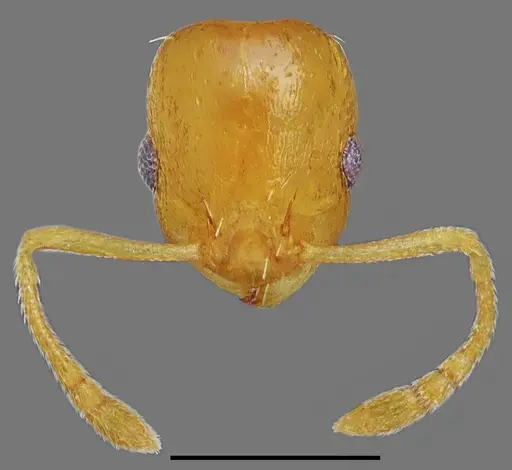
Workers are among the smallest ants in the genus, with head lengths of just 0.58-0.62mm [1]. The entire body is uniformly bright yellow, making this species quite distinctive in appearance [1]. The key identifying feature is the dark brown band on the first gastral tergite, this band is widest on the sides of the abdomen but narrows toward the center and is actually interrupted (broken) in the middle by pale brown color [1]. This incomplete band is what gives the species its name (incompletus) [1]. The head is roughly square-shaped, and the antennae have a three-segmented club at the end [1].
Housing and Nesting
No captive husbandry data exists for this species. Based on its tiny size and collection from leaf litter, it likely nests in pre-existing cavities such as under stones, in rotting wood, or in soil cracks, typical of many small Temnothorax species. For captivity, a small Y-tong (AAC) nest with tight chambers or a modified test tube setup would be appropriate. The chambers should be scaled to their tiny size, avoid large, open spaces. Provide a moisture source (test tube water reservoir) and maintain slight substrate moisture. Escape prevention is critical due to their minute size, standard mesh may be insufficient.
Temperature and Seasonal Care
No species-specific temperature data exists. Crete experiences Mediterranean temperatures ranging from occasional winter lows around 5°C to summer highs exceeding 30°C. Based on typical Temnothorax genus behavior from related species, provide a temperature gradient around 20-24°C with a cooler end around 18°C. Most temperate Temnothorax benefit from a winter rest period, so consider providing 2-3 months at 5-10°C during winter months. Monitor colony activity to adjust, if workers become sluggish, slightly increase temperature, if they avoid the heated area, reduce it.
Feeding and Diet
No specific dietary data exists for this species. Based on typical Temnothorax ecology, they likely forage for small arthropods (micro-prey like springtails, booklice, and tiny insects) and also consume honeydew from aphids and scale insects. In captivity, offer small live prey items appropriate to their size, fruit flies, pinhead crickets, and small mealworms are suitable. They will likely accept sugar sources (honey water, sugar water) but protein prey should form the primary diet. Feed small amounts 2-3 times per week, removing uneaten prey to prevent mold.
Frequently Asked Questions
How do I keep Temnothorax incompletus ants?
This is extremely challenging as the species is rarely available and no captive husbandry protocol exists. You would need a small nest (Y-tong or test tube setup), maintain slight humidity, provide a temperature gradient around 20-24°C, and feed small live prey. This is a species for experienced keepers willing to experiment.
What do Temnothorax incompletus eat?
Based on typical Temnothorax diet, they likely eat small insects and honeydew. Offer tiny live prey like fruit flies, springtails, and small mealworms. They will probably accept sugar water or honey water as well.
How big do Temnothorax incompletus colonies get?
Unknown, only two workers have ever been documented. Based on related species, colonies likely remain small with under 500 workers.
Do Temnothorax incompletus ants sting?
Temnothorax are in the subfamily Myrmicinae, which includes many species with stingers. However, these ants are so small that any sting would be negligible to humans. They are not considered dangerous.
Where is Temnothorax incompletus found?
This species is endemic to Crete, Greece, it is found nowhere else on Earth. Only two specimens have ever been collected, both from macchia (Mediterranean shrubland) habitat at elevations of 350-563m.
Is Temnothorax incompletus a good beginner ant?
No, this is not a species for beginners. It is extremely rare, has no established care protocols, and is essentially unknown in the antkeeping hobby. The difficulty level is considered expert-level due to the lack of any captive husbandry information.
Do Temnothorax incompletus need hibernation?
Unknown for this specific species, but most temperate Temnothorax require a winter rest period. Based on Crete's climate, a shorter or milder diapause may be appropriate, consider 1-2 months at 10-15°C.
How long does it take for Temnothorax incompletus to develop from egg to worker?
No species-specific data exists. Based on typical Temnothorax development, estimate 6-10 weeks from egg to first worker at optimal temperature (around 20-24°C).
Can I keep multiple Temnothorax incompletus queens together?
No data exists on colony structure for this species. Based on typical Temnothorax patterns, they likely form single-queen colonies. Combining unrelated queens is not recommended without species-specific research.
Why is Temnothorax incompletus so rare?
This species is endemic to Crete and was only described in 2018. Only two worker specimens have ever been collected, suggesting the species is either very scarce, has highly localized distribution, or is difficult to find. Its small size and potential for being overlooked contribute to its rarity.
References

This caresheet is licensed under CC BY-SA 4.0 .
CASENT0845913
View on AntWeb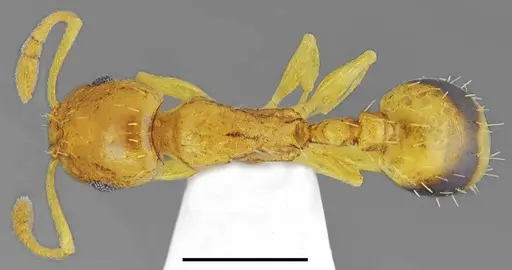
Literature
Loading...Loading products...