

Temnothorax ikarosi
- Scientific Name
- Temnothorax ikarosi
- Tribe
- Crematogastrini
- Subfamily
- Myrmicinae
- Author
- Salata <i>et al.</i>, 2018
- Distribution
- Found in 1 countries
Temnothorax ikarosi Overview
Temnothorax ikarosi is an ant species of the genus Temnothorax. It is primarily documented in 1 countries , including Greece. Detailed taxonomic data and occurrence records can be further explored via authoritative databases such as AntWeb or the Global Biodiversity Information Facility (GBIF).
Temnothorax ikarosi
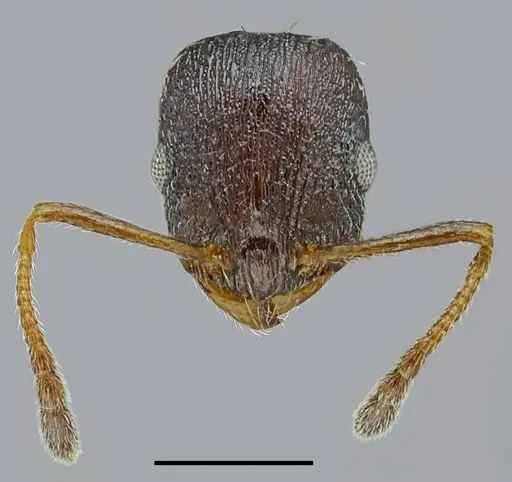
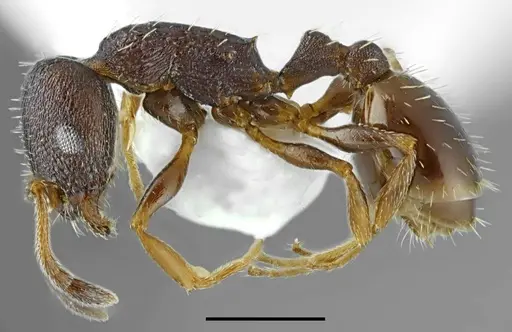
Temnothorax ikarosi is a tiny, dark-colored ant endemic to the island of Crete, Greece. Workers measure just under 1mm in head length, making them one of the smaller Temnothorax species you'll encounter. They have a distinctive uniformly dark brown body with thick longitudinal striation covering their entire head surface, a feature that helps distinguish them from similar Cretan species like T. daidalosi and T. anodontoides [1][2]. The species was only described in 2018,making it one of the newer additions to the ant-keeping hobby, and remarkably, only a single worker has ever been collected in the wild [3]. This species belongs to the anodontoides species group and can be identified by its short, triangular propodeal spines and the heavy striation on its head that lacks smooth patches between the ridges [2].
What makes T. ikarosi particularly interesting is its extreme rarity and the unusual habitat where it was found, a shelter wall at 1750m elevation on the Limnakarou Plateau, overgrown with blackberry bushes at the edge of an orchard [1][3]. This high-altitude Mediterranean setting suggests they may prefer cooler conditions than many other Mediterranean Temnothorax species. Since biology is poorly known, care recommendations are based on typical genus patterns and the clues from their natural habitat [3].
Quick Summary
- Difficulty: Medium
- Origin & Habitat: Endemic to Crete, Greece, specifically found on the Limnakarou Plateau at 1750m elevation. The single known specimen was collected from a shelter wall overgrown by blackberry bush at the edge of an orchard [1][3]. This high-altitude Mediterranean habitat suggests cooler, more stable conditions than coastal areas.
- Colony Type: Colony structure is unconfirmed, only a single worker has ever been documented. Based on typical Temnothorax patterns, likely single-queen colonies (monogyne) with small colony sizes.
- Size & Growth:
- Queen: Unknown, no queen has been described. Workers are approximately 0.9mm head length [1]. Estimated queen size would be around 4-5mm based on genus patterns.
- Worker: 0.89mm head length (HL),0.72mm width (HW),0.63mm scape length (SL) [1]. These are tiny ants.
- Colony: Unknown, only a single worker has been collected. Based on related species, colonies likely reach 50-200 workers.
- Growth: Moderate, based on typical Temnothorax development patterns.
- Development: Estimated 6-10 weeks at optimal temperature, based on typical genus development [1]. (Development timeline is unconfirmed for this specific species, estimates based on genus-level data for similar small Temnothorax.)
- Antkeeping:
- Temperature: Keep at 18-22°C. The high-altitude origin (1750m) suggests they prefer cooler conditions than typical Mediterranean ants. A gentle gradient allowing workers to self-regulate is ideal [1][3].
- Humidity: Moderate humidity around 50-60%. These are not moisture-dependent ants, the mountain plateau habitat is likely drier than coastal Crete. Provide a water tube and allow the colony to choose humidity levels.
- Diapause: Likely yes, high-elevation Mediterranean species typically require a winter rest period. Provide 2-3 months at 10-15°C during winter [1].
- Nesting: Use small, tight-fitting nests, test tubes or Y-tong (AAC) nests work well for their tiny size. The shelter wall collection suggests they tolerate human structures. Narrow chambers scaled to their small size prevent escape and help them feel secure [1].
- Behavior: These are peaceful, non-aggressive ants. Workers are tiny and slow-moving, typically foraging individually or in small groups. They are not known to sting and pose no danger to keepers. Their small size means excellent escape prevention is critical, they can squeeze through remarkably small gaps. Foraging style is typical for the genus, they search for small insects, honeydew, and sugar sources. They are not aggressive and will flee rather than engage [1][3].
- Common Issues: escape prevention is critical due to their tiny size, use fine mesh and tight-fitting lids, only one wild specimen has ever been collected, so colony establishment may be challenging, high-altitude origin means they likely need cooler temperatures than most Mediterranean species, slow colony growth is typical for the genus, don't overfeed or disturb frequently, winter diapause appears necessary, colonies failing to hibernate may decline
Housing and Nest Setup
Temnothorax ikarosi requires small, carefully scaled housing. Test tubes work excellently for founding colonies, use a small diameter tube (around 10-12mm) with a water reservoir that doesn't flood. The queen will need a dark, quiet space to establish her colony. Once the colony reaches 15-20 workers, you can consider moving to a Y-tong (AAC) nest with very small chambers. The key is tight fit, these tiny ants can escape through gaps that seem impossibly small. Apply fluon or use nests with fine mesh barriers. Avoid large, open spaces that can make small colonies feel insecure. A simple setup with a test tube connected to a small outworld gives them the security they need while allowing you to observe and feed them [1][3].
Temperature Management
Keep these ants cooler than you might expect. Their origin at 1750m elevation on Crete suggests they prefer temperate conditions, aim for 18-22°C with room temperature often being ideal. Avoid overheating, which can stress colonies and accelerate brood death. A heating cable on one side of the nest can create a gentle gradient, but ensure there's always a cool area available. If you notice workers clustering away from heat sources, the nest is too warm. During summer, typical room temperature is usually sufficient. The key is stability, sudden temperature swings stress these high-altitude ants more than gradual seasonal changes [1][3].
Feeding and Diet
Like other Temnothorax, these ants are omnivorous and will accept a variety of foods. Offer small protein sources like fruit flies, small mealworms, or cricket pieces twice weekly. They also need sugar, a small drop of honey water or sugar water every few days works well. In the wild, they likely tended aphids for honeydew and hunted small prey. Remove uneaten food after 24-48 hours to prevent mold. A varied diet helps, but don't overfeed, small colonies can be overwhelmed by large prey items. A constant water source (like a water tube) is essential [1].
Winter Care and Diapause
Based on their high-altitude Mediterranean origin, these ants almost certainly require a winter rest period. Reduce temperatures to 10-15°C for 2-3 months, typically from late autumn through winter. During this time, reduce feeding significantly, the colony will be less active and consume less. Do not freeze them, but a cool basement, garage, or refrigerator works well. The diapause period is important for colony health and triggers proper reproductive cycles. Colonies that don't receive adequate winter rest may become stressed or fail to produce new reproductives. Resume normal temperatures gradually in spring [1][3].
Colony Establishment
Establishing a colony of this species may be challenging since only a single wild specimen has ever been collected. If you obtain a founding queen, provide her with a quiet, dark test tube setup and minimal disturbance. She will likely seal herself in and lay eggs without foraging, this is typical claustral founding. Do not check on her frequently during the founding period, as disturbance can cause her to abandon or eat her brood. Wait 4-6 weeks before checking for the first workers (nanitics). Once workers emerge, introduce small food items and allow the colony to grow naturally. Patience is essential, small Temnothorax colonies grow slowly, and rushing the process often leads to failure [1][3].
Frequently Asked Questions
How long does it take for Temnothorax ikarosi to produce first workers?
Based on typical genus development, expect 6-10 weeks from egg to first worker at optimal temperature (around 20°C). The exact timeline is unconfirmed for this species since biology is poorly known, but related small Temnothorax species follow this pattern [1].
What temperature is best for keeping Temnothorax ikarosi?
Keep them at 18-22°C. The high-altitude origin (1750m on Crete) suggests they prefer cooler conditions than typical Mediterranean ants. Room temperature is often ideal, avoid overheating with heating cables unless your room is cold [1][3].
Do Temnothorax ikarosi ants sting?
No, these ants are not known to sting and pose no danger to keepers. They are tiny, peaceful ants that will flee rather than engage. Their small size means they cannot penetrate human skin even if they tried [1].
How big do Temnothorax ikarosi colonies get?
Colony size is unknown since only a single worker has ever been documented. Based on related species, colonies likely reach 50-200 workers at maturity. They are small colonies compared to many common ant species [1][2].
Can I keep multiple queens together?
This has not been documented for this species. Based on typical Temnothorax behavior, single-queen colonies are most likely. Combining unrelated queens is not recommended since aggression is common. If you obtain multiple foundresses, house them separately [1].
Do Temnothorax ikarosi need hibernation?
Yes, a winter diapause is likely necessary. Provide 2-3 months at 10-15°C during winter. The high-altitude Mediterranean origin strongly suggests they require this seasonal rest period for colony health [1][3].
What do Temnothorax ikarosi eat?
They are omnivorous. Offer small protein sources (fruit flies, small mealworms) twice weekly and sugar (honey water or sugar water) regularly. Remove uneaten food after 24-48 hours to prevent mold [1].
Are Temnothorax ikarosi good for beginners?
This species is rated as medium difficulty. While not aggressive and relatively small, the extremely limited wild data and likely specific temperature requirements make it challenging for complete beginners. The need for cooler temperatures and winter diapause requires more attention than some common species [1][3].
How do I prevent Temnothorax ikarosi from escaping?
Excellent escape prevention is critical due to their tiny size. Use test tubes with tight-fitting cotton plugs, or switch to nests with fine mesh barriers. Apply fluon to any potential escape routes. Check for gaps that seem impossibly small, these ants can squeeze through cracks you wouldn't believe [1].
When should I move Temnothorax ikarosi to a formicarium?
Wait until the colony has at least 20-30 workers before considering a move. Test tubes work well for smaller colonies. When moving, use gentle methods, connect the test tube to the new nest and let them relocate on their own. Forced transfers often cause stress and colony loss [1].
References

This caresheet is licensed under CC BY-SA 4.0 .
CASENT0845912
View on AntWeb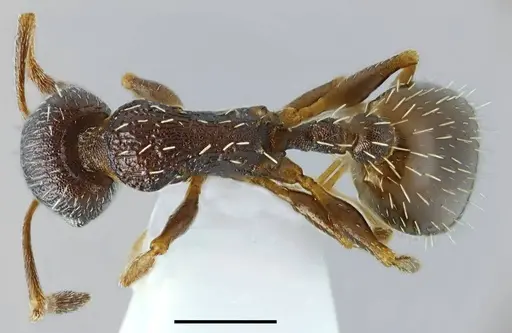
Literature
Loading...Loading products...