

Temnothorax harlequina
- Scientific Name
- Temnothorax harlequina
- Tribe
- Crematogastrini
- Subfamily
- Myrmicinae
- Author
- Prebus, 2021
- Distribution
- Found in 1 countries
Temnothorax harlequina Overview
Temnothorax harlequina is an ant species of the genus Temnothorax. It is primarily documented in 1 countries , including Dominican Republic. Detailed taxonomic data and occurrence records can be further explored via authoritative databases such as AntWeb or the Global Biodiversity Information Facility (GBIF).
Temnothorax harlequina
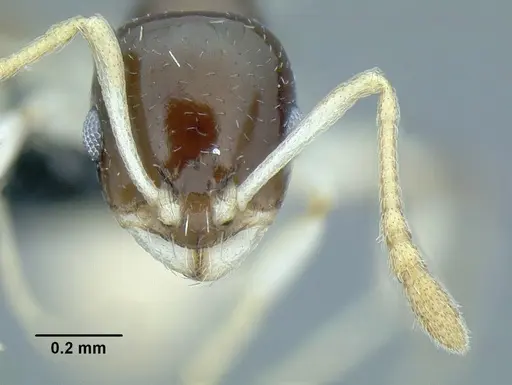
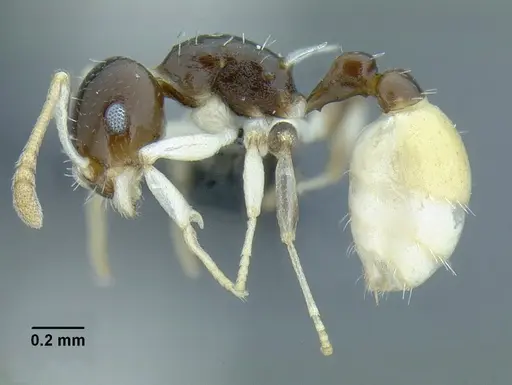
Temnothorax harlequina is a tiny, strikingly bicolored ant species endemic to the Dominican Republic. Workers measure just 2-3mm and feature a distinctive color pattern: medium brown head, mesosoma, waist segments, and most of the legs, contrasting with a very light yellow gaster (abdomen). This bold two-tone appearance is unique among the pulchellus group and even mirrors a similarly colored jumping spider found in the same area, a common color scheme among arthropods in Hispaniola [1].
The species was only discovered in 2021 and remains poorly studied. Based on its placement in the T. salvini clade and pulchellus group, it likely nests in dead sticks, twigs, or leaf litter on the forest floor, typical behavior for ground-dwelling Caribbean Temnothorax species. As a newly described species, captive breeding information is limited, but keeping practices will follow other small, litter-nesting Temnothorax from similar habitats [2].
Quick Summary
- Difficulty: Medium
- Origin & Habitat: Low elevation dry forest in La Altagracia Province, Dominican Republic (Parque Nacional del Este). Nests found in dead, dry sticks on leaf litter surface at about 10m elevation in evergreen coastal forest on coralline rock [1].
- Colony Type: Likely single-queen (monogyne) colonies based on typical pulchellus group behavior. Colony size is unknown but likely small (under 100 workers) given the tiny worker size and typical litter-nesting habits of related species.
- Colony: Monogyne
- Founding: Claustral
- Size & Growth:
- Queen: Undescribed, likely 4-5mm based on genus patterns
- Worker: 2-3mm total length (SL 0.438-0.504mm) [1]
- Colony: Unknown, likely under 100 workers based on similar litter-nesting Temnothorax
- Growth: Moderate, typical for small tropical Temnothorax
- Development: Estimated 6-8 weeks at warm room temperature based on related species in the genus (Development speed likely similar to other Caribbean/Tropical Temnothorax species, warm temperatures will accelerate development)
- Antkeeping:
- Temperature: Keep at 22-26°C (room temperature or slightly warm). Found in low elevation tropical habitat, so they prefer warm conditions. Avoid temperatures below 20°C for extended periods.
- Humidity: Moderate humidity (50-70%). Their natural habitat is dry forest, but they nest in dead wood which provides some moisture stability. Allow the nest substrate to dry slightly between waterings but never let it fully desiccate.
- Diapause: Unlikely, as a tropical Caribbean species, they probably do not require a true hibernation. However, a slight cool-down period (18-20°C) during winter months may be beneficial if mimicking natural seasonal cycles.
- Nesting: Provide a small, compact nest, test tubes work well for founding colonies. They naturally nest in dead sticks and twigs, so a small piece of cork bark or a tiny acrylic/plaster nest with narrow chambers mimics their natural setup. Keep the nest relatively dry compared to cloud-forest species.
- Behavior: Generally peaceful and non-aggressive. Like other Temnothorax, they are timid and will flee rather than fight. Workers are small but active foragers, likely hunting micro-prey in the leaf litter layer. Escape prevention is critical due to their tiny size, standard barrier methods may need reinforcement with fine mesh. They do not have a functional stinger but may use mild chemical defense like other Myrmicinae.
- Common Issues: tiny size makes escape prevention challenging, use fine mesh barriers, limited availability as a newly described species, wild colonies are the primary source, colony size will likely remain small, don't expect large colonies, dry forest habitat means they can tolerate drier conditions than many Temnothorax, limited captive breeding data means care is based on related species rather than direct observation
Housing and Nest Setup
Temnothorax harlequina is a tiny ant that needs appropriately scaled housing. For founding colonies, a standard test tube setup works well, the small chamber size matches their natural nesting in dead twigs and sticks. As the colony grows, you can transition to a small acrylic nest or Y-tong style formicarium with narrow tunnels and chambers. Avoid large, open spaces that can stress such small ants.
Their natural habitat is dry forest in the Dominican Republic, so they prefer relatively dry conditions compared to cloud-forest Temnothorax. A small water reservoir in the test tube is sufficient, you don't need high humidity setups. If using an acrylic or plaster nest, keep one side slightly moist and the other dry so ants can choose their preferred microclimate. Provide a small outworld for foraging with a sugar source and protein prey [1].
Feeding and Diet
Like other small Temnothorax, these ants are likely omnivorous with a preference for small protein sources. In captivity, offer tiny insects like fruit fly larvae, pinhead crickets, or small mealworms. They will also likely accept sugar water or honey as an energy source, though their small size means even a droplet of honey can be overwhelming.
Feed small amounts of protein 2-3 times per week, removing any uneaten prey after 24 hours to prevent mold. Sugar water should be provided constantly but in very small quantities, a tiny droplet on a piece of cotton or in a shallow container works well. Their tiny size means portions should be scaled accordingly, a fruit fly is a substantial meal for an ant that measures only 2-3mm [1].
Temperature and Seasonal Care
As a low-elevation tropical species from the Dominican Republic, T. harlequina prefers warm conditions. Keep the nest at 22-26°C year-round. Room temperature (around 22-24°C) is typically ideal. Avoid placing the nest near air conditioning vents or in cool rooms.
Unlike temperate species, this ant likely does not require a true hibernation period. However, slight seasonal variation may be beneficial, you might allow temperatures to drop to 18-20°C during winter months to simulate natural cycles, but this is not required for colony health. Consistent warmth will support faster growth and brood development. A heating cable or mat on one side of the nest can create a temperature gradient if your room runs cool [1].
Colony Founding and Growth
Queens likely seal themselves in a small chamber (claustral founding) and raise their first workers alone, as is typical for Temnothorax. The founding queen will use stored fat reserves to survive until her first workers emerge. Expect 6-8 weeks from founding to first workers (nanitics), though this timeline varies with temperature.
Colony growth will likely be moderate and colony size will remain relatively small, probably under 100 workers at maturity. This is typical for small, litter-nesting Temnothorax species. Don't expect the massive colonies seen in species like Camponotus or Formica. The focus should be on long-term colony health rather than rapid growth. Multiple claustral queenfounds are unlikely, combine only one queen per setup [1].
Behavior and Temperament
Temnothorax harlequina is a peaceful, non-aggressive species. Workers are small and timid, more likely to flee than to engage in conflict. They are active foragers in the leaf litter layer, hunting small prey. Unlike some larger ants, they do not defend territory aggressively and can be kept in proximity to other colonies if space permits.
The most important behavioral consideration is their tiny size. Workers are only 2-3mm, making them excellent escape artists. Standard barrier methods like fluon may need to be supplemented with fine mesh coverings. Check for gaps around lid seals and any openings in the outworld. Despite their small size, they are relatively robust for their size and can adapt to captive conditions when provided with appropriate care [1].
Frequently Asked Questions
How long does it take for Temnothorax harlequina to produce first workers?
Expect first workers (nanitics) to emerge 6-8 weeks after the queen lays eggs, assuming temperatures around 24°C. Warmer temperatures can slightly accelerate development, while cooler conditions will slow it down. The founding queen seals herself in and raises her first brood alone using stored fat reserves.
What do Temnothorax harlequina ants eat?
They are omnivorous like most Temnothorax. Offer small protein sources like fruit fly larvae, tiny crickets, or small mealworms 2-3 times per week. They will also accept sugar water or honey for energy. Scale portions to their tiny 2-3mm size, a fruit fly is a substantial meal.
Can I keep multiple Temnothorax harlequina queens together?
This is not recommended. Based on typical pulchellus group behavior, they likely form single-queen colonies. Combining unrelated queens typically leads to fighting and colony failure. Start with one claustral queen per setup.
Do Temnothorax harlequina ants sting?
No, they do not have a functional stinger. As Myrmicinae, they lack the stinger found in some other ant subfamilies. They are completely harmless to humans and cannot bite or sting effectively.
What temperature do Temnothorax harlequina need?
Keep them warm at 22-26°C. Room temperature (22-24°C) is typically ideal. They come from low-elevation tropical Dominican Republic, so they prefer warm conditions year-round. Avoid temperatures below 20°C for extended periods.
How big do Temnothorax harlequina colonies get?
Colony size will likely remain small, probably under 100 workers at maturity. This is typical for small, litter-nesting Temnothorax species. They are not large colony builders like some other ant genera.
Are Temnothorax harlequina good for beginners?
They are rated as medium difficulty. While their small size and escape risk present challenges, they are generally hardy once established. The main difficulty is their limited availability as a newly described species (2021) and the lack of captive breeding data.
Do Temnothorax harlequina need hibernation?
No, they likely do not require a true hibernation. As a tropical Caribbean species from low elevation Dominican Republic, they experience warm conditions year-round. A slight cool-down to 18-20°C in winter is optional but not necessary.
What type of nest is best for Temnothorax harlequina?
A small test tube works well for founding colonies. As they grow, use a small acrylic or Y-tong nest with narrow tunnels scaled to their tiny 2-3mm size. They naturally nest in dead sticks and twigs, so a compact nest with small chambers mimics their natural setup.
Why are my Temnothorax harlequina escaping?
Their tiny 2-3mm size makes them excellent escape artists. Use fine mesh barriers in addition to standard escape prevention like fluon. Check all lid seals and any potential gaps. Small size equals high escape risk by default.
Where is Temnothorax harlequina found in the wild?
They are endemic to the Dominican Republic, specifically Parque Nacional del Este in La Altagracia Province. Their natural habitat is low-elevation dry forest where they nest in dead, dry sticks on the leaf litter surface.
Is Temnothorax harlequina invasive or dangerous?
No, they are completely harmless. They are a tiny, non-aggressive ant species endemic to a small region of the Dominican Republic. They pose no ecological threat and are safe to keep in captivity.
References

This caresheet is licensed under CC BY-SA 4.0 .
CASENT0756091
View on AntWeb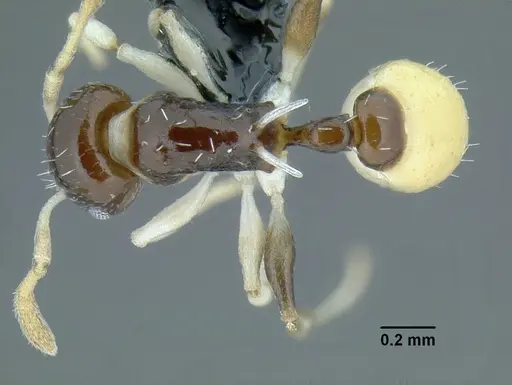
Literature
Loading...Loading products...