

Temnothorax gordiagini
- Scientific Name
- Temnothorax gordiagini
- Tribe
- Crematogastrini
- Subfamily
- Myrmicinae
- Author
- Ruzsky, 1902
- Distribution
- Found in 1 countries
Temnothorax gordiagini Overview
Temnothorax gordiagini is an ant species of the genus Temnothorax. It is primarily documented in 1 countries , including Türkiye. Detailed taxonomic data and occurrence records can be further explored via authoritative databases such as AntWeb or the Global Biodiversity Information Facility (GBIF).
Temnothorax gordiagini
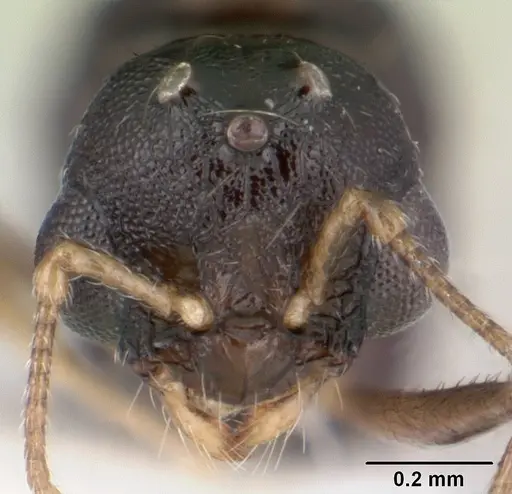
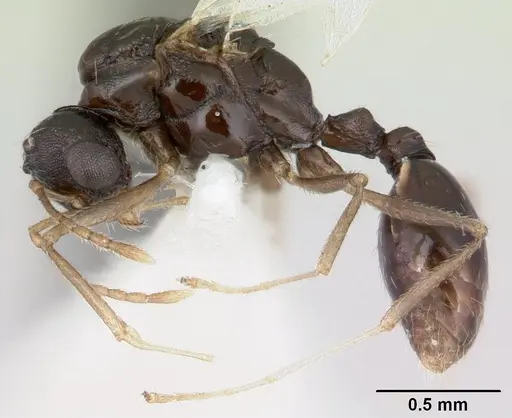
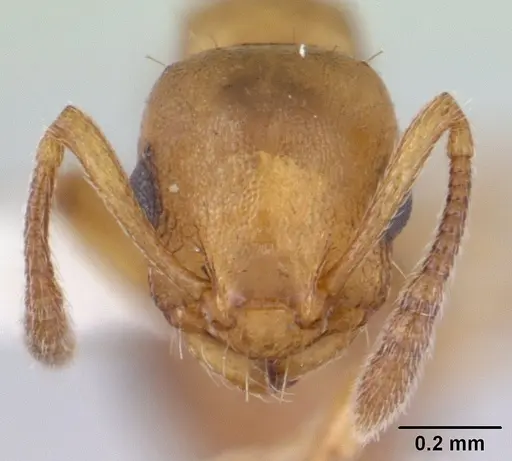
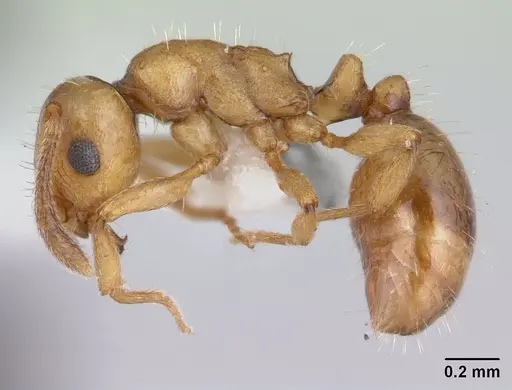
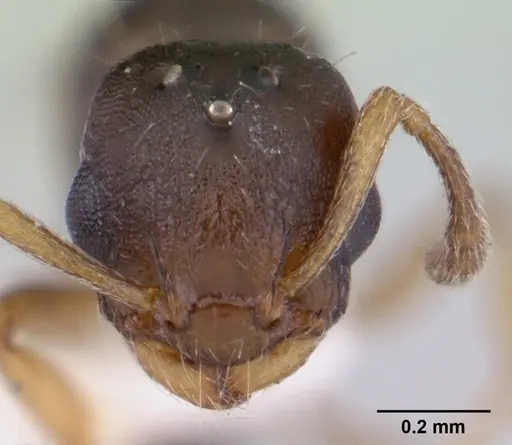
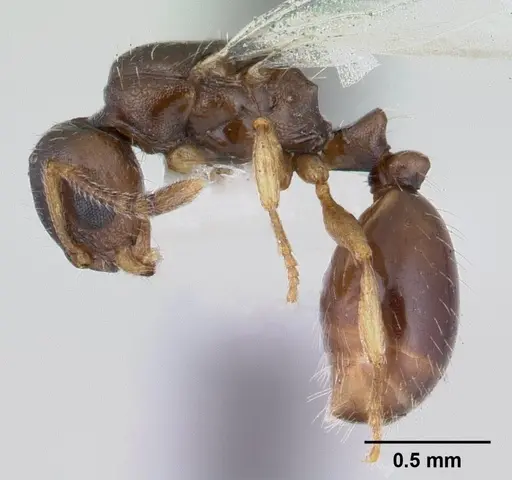
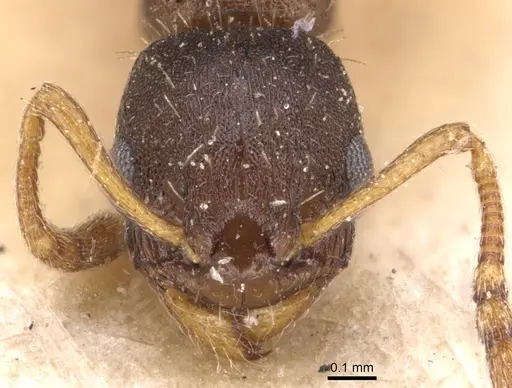
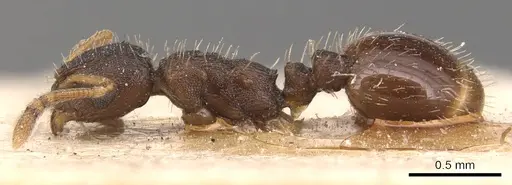
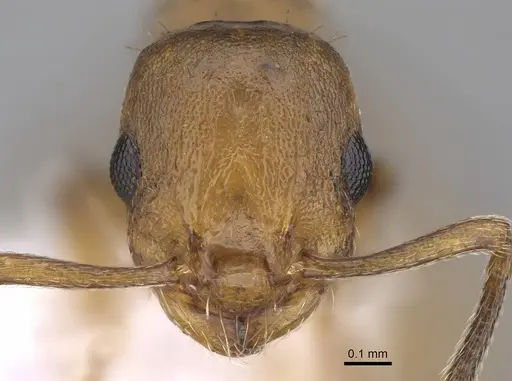
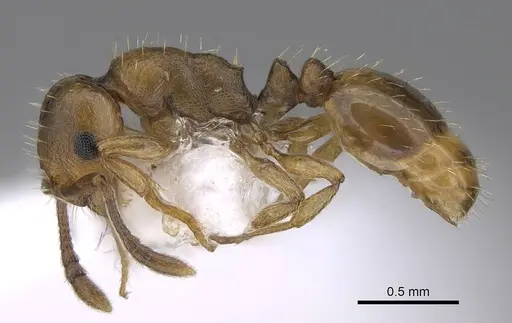
Temnothorax gordiagini is a small, active slave-making ant species native to the Palearctic region, originally described from Kazakhstan. Workers measure 2-3mm and are dark brown with brown-yellow mandibles, antennae, and legs. The species is distinguished from other Myrmoxenus species by having 12-segmented antennae in females (other species have 11). This ant is an obligate social parasite, it cannot establish its own colonies and must invade host Temnothorax colonies to survive [1][2].
What makes this species particularly interesting is its unique combination of traits: it's one of only two Myrmoxenus species that have nuptial flights, and it represents the oldest splitting-off lineage in the Myrmoxenus phylogeny. The queen enters a host colony, kills the host queen by throttling, and then uses the host workers to raise her own brood. Workers conduct raids on neighboring Temnothorax colonies to enslave their brood [2][3].
Quick Summary
- Difficulty: Expert
- Origin & Habitat: Originally described from Kazakhstan near Kokshetau, with records across the Palearctic including Croatia, Slovenia, Bulgaria, Greece, Turkey, Russia (Western Siberia), Sweden, and Estonia [4]. Found in thermophilous deciduous forests with Quercus pubescens and Fraxinus ornus, nesting under flat stones and in stone crevices at elevations from 325m to 1500m [2][5].
- Colony Type: Monogyne, single queen colonies. The queen invades a host Temnothorax colony, kills the host queen, and becomes the sole reproductive. Colonies can reach up to 40 workers [2][6].
- Colony: Monogyne
- Queen: Socially parasitic
- Special: Slave-making
- Size & Growth:
- Queen: 3.1-3.6mm [1]
- Worker: 2-3mm [1]
- Colony: Up to 40 workers in mature colonies [2][5]
- Growth: Slow, dependent on host colony resources
- Development: Unknown, development occurs within host colony using host worker resources (Development is tied to host colony productivity. First workers typically emerge in the first year after queen invasion.)
- Antkeeping:
- Temperature: Keep at room temperature (18-24°C). This species has been found in habitats ranging from Mediterranean thermophilous forests to montane zones up to 1500m in Turkey [2][7].
- Humidity: Moderate, typical for deciduous forest floor habitats. Keep substrate slightly moist but not waterlogged, with some dry areas available.
- Diapause: Likely requires winter dormancy given northern distribution range. Based on similar temperate Temnothorax species, expect 2-3 months at 5-10°C during winter.
- Nesting: This species cannot found colonies independently, it requires a host colony. In captivity, you must keep the parasite with a host Temnothorax colony (such as T. lichtensteini, T. korbi, or T. bulgaricus). Natural nests are under stones and in stone crevices, a naturalistic setup with flat stones works well [2][5].
- Behavior: This is an active slave-maker with distinctive behaviors. The queen infiltrates host colonies and kills the host queen through throttling. Workers conduct organized raids on neighboring Temnothorax colonies using group recruitment and sting fighting, then carry back brood to enslave. They are not aggressive toward humans and cannot sting effectively. Escape risk is moderate, small but not as tiny as some other Temnothorax species [2][5].
- Common Issues: host colony failure will kill the parasite colony, if the host dies, T. gordiagini cannot survive, obtaining a host colony is challenging, you need both the parasite and a compatible Temnothorax host species, colonies remain small (max 40 workers) which makes them vulnerable to stress, this species is rare in the antkeeping hobby and difficult to acquire legally, ensuring ethical sourcing is critical, do not collect from protected areas
Housing and Host Requirements
Temnothorax gordiagini is an obligate social parasite that cannot survive without a host colony. This makes keeping it fundamentally different from most ant species. You must maintain both the parasite and a compatible host Temnothorax species (such as T. lichtensteini, T. korbi, T. bulgaricus, or T. graecus) together in the same enclosure [2][5]. The host colony provides all worker labor, foraging, nursing brood, maintaining the nest, while the parasite queen simply lays eggs. In nature, colonies have been found under flat stones and in stone crevices, so a naturalistic setup with suitable hiding spots works best. The two species should be housed in a way that allows interaction but prevents the host from completely rejecting the parasites [2].
Feeding and Nutrition
The host workers do all the foraging, so T. gordiagini relies entirely on the host colony to provide food. The host Temnothorax workers will collect honeydew, sugar water, and small insects just as they would for their own colony. You should feed the host colony a standard Temnothorax diet: occasional sugar sources (honey water, sugar water) and small protein items (fruit flies, small crickets, mealworms). The parasite workers will eat whatever the host workers bring back to the colony. Do not expect to directly feed the parasite ants, they will consume food brought by their host workers [8].
Slave-Making Behavior
This species exhibits classic dulosis (slave-making) behavior. A young, inseminated T. gordiagini queen enters a host Temnothorax colony and locates the host queen. She kills the host queen by throttling (strangulation), a direct physical attack rather than chemical warfare. Once the host queen is dead, the parasite queen takes over as the sole reproductive. Her workers (when they eventually hatch) conduct organized raids on neighboring uninfested Temnothorax colonies. These raids involve group recruitment and what researchers describe as 'sting fighting', combat using their stinger. The raiders steal brood (eggs, larvae, pupae) and bring them back to their nest. The stolen brood emerge as adult workers that become enslaved, working for the parasite colony as if it were their own [2][5]. This is one of only two Myrmoxenus species known to have nuptial flights, the queens and males fly to find mates and new host colonies [3].
Temperature and Seasonal Care
Based on collection records from Mediterranean to temperate zones (Croatia, Slovenia, Bulgaria, Greece, Turkey, and Kazakhstan), this species tolerates a range of conditions. In Slovenia, colonies were found at 325m elevation in thermophilous deciduous forest. In Turkey, colonies were discovered from 1200-1500m in montane to subalpine zones. Keep the colony at room temperature (18-24°C) with moderate humidity. Given its northern distribution (Kazakhstan, Sweden, Estonia), winter dormancy is likely necessary. Provide 2-3 months of cooler temperatures (5-10°C) during winter, similar to other temperate Palearctic Temnothorax species [2][7][4].
Legal and Ethical Considerations
This is a specialized species with limited distribution. In some countries, it may be protected or considered vulnerable. The IUCN lists it as Vulnerable D2 in Bulgaria due to its restricted distribution and small number of known populations [9][10]. Before acquiring this species, verify that it is legal to keep in your jurisdiction and that any specimens were ethically sourced from permitted locations. Do not release this species or its host colonies into the wild outside their natural range, they could become invasive or spread parasites. If you can no longer keep the colony, consult with experienced antkeepers or institutions about proper disposition [9][10].
Frequently Asked Questions
Can I keep Temnothorax gordiagini in a standard ant formicarium?
No, this is a parasitic species that requires a host colony. You cannot keep T. gordiagini alone, it must be housed with a compatible Temnothorax host species (like T. lichtensteini or T. korbi). The host workers do all the work, so your setup needs to accommodate both species. A naturalistic setup with multiple colonies connected by tubing works better than a single formicarium [2][5].
What do Temnothorax gordiagini eat?
They eat whatever their host workers bring back to the colony. You feed the host colony, standard Temnothorax food like sugar water/honey and small insects. The parasite workers then consume the food the host workers share with them. They do not forage independently [8].
How big do Temnothorax gordiagini colonies get?
Mature colonies reach a maximum of about 40 workers. This is relatively small compared to many ant species. The small colony size is typical for socially parasitic ants that rely on host workers for most tasks [2][5].
Do Temnothorax gordiagini ants sting?
They have a stinger but are not considered dangerous to humans. Their primary defense is the slave-making behavior, they use their stinger during raids against other ants. They are not aggressive toward humans and would rather flee than sting [2].
Are Temnothorax gordiagini good for beginners?
No, this is an expert-level species. Keeping a parasitic ant that requires a host colony is significantly more challenging than keeping independent ant species. You need to maintain two colonies in balance, which requires advanced knowledge. This species is also rare in the hobby and may be legally protected in some areas [2].
Do Temnothorax gordiagini need hibernation?
Probably yes, given their distribution from Kazakhstan to northern Europe, they likely require a winter dormancy period. Based on similar temperate species, provide 2-3 months at 5-10°C during winter months. However, specific diapause requirements for this species have not been directly studied [4].
How do Temnothorax gordiagini colonies form?
A newly mated queen enters an existing host Temnothorax colony, finds the host queen, and kills her by throttling (strangling). The parasite queen then becomes the colony's sole egg-layer. She does not found a colony alone, she is obligately parasitic from the start. This is fundamentally different from claustral species that found colonies independently [2][5].
Why are my Temnothorax gordiagini dying?
The most likely cause is host colony failure. If the host colony dies or rejects the parasites, T. gordiagini cannot survive, they depend entirely on host workers for food and nest maintenance. Other possibilities include stress from improper humidity, temperature extremes, or insufficient food for the host colony. Small colonies (max 40 workers) are also vulnerable to minor environmental changes [2][5].
What is the difference between T. gordiagini and T. menozzii?
Báthori et al. (2024) recently removed T. gordiagini from synonymy with T. menozzii. The two are now considered separate species. Most biological notes previously attributed to T. gordiagini actually refer to T. menozzii. T. gordiagini is known from Kazakhstan (type locality) and uses T. serviculus as its host there. In Europe, the species formerly called T. gordiagini is now T. menozzii, which uses different host species [4].
References

This caresheet is licensed under CC BY-SA 4.0 .
CASENT0178548
View on AntWeb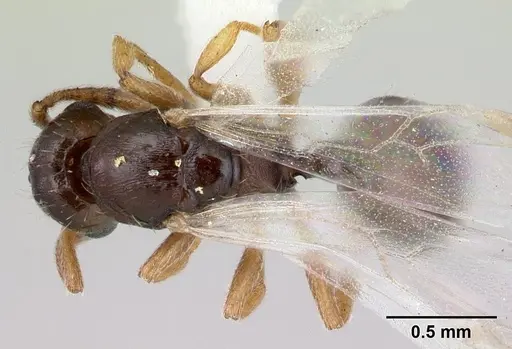
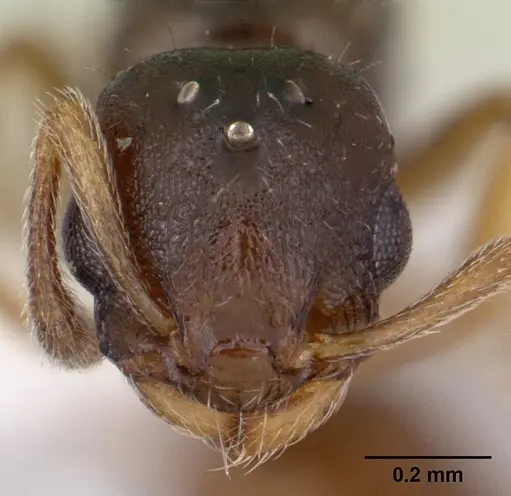
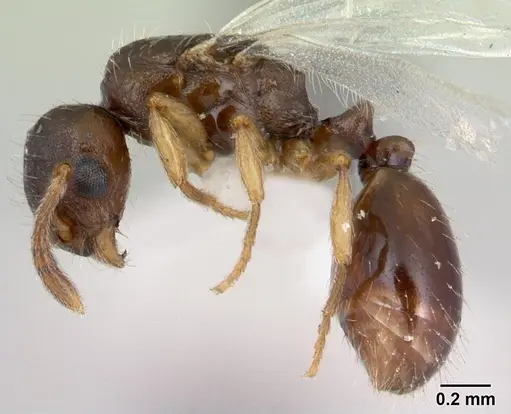
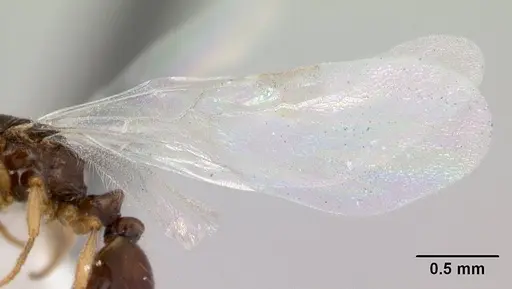
CASENT0178549
View on AntWeb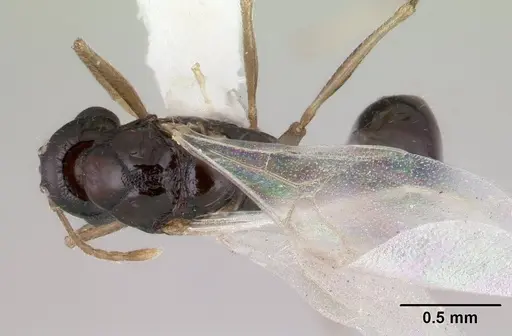
CASENT0178550
View on AntWeb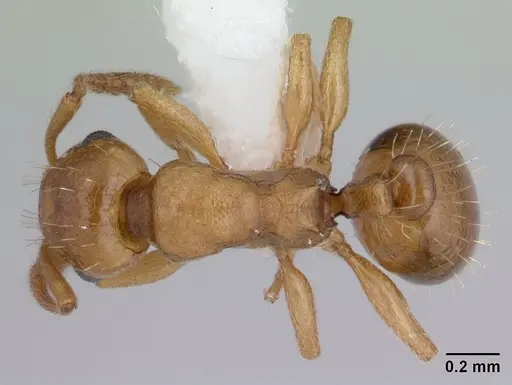
CASENT0178551
View on AntWeb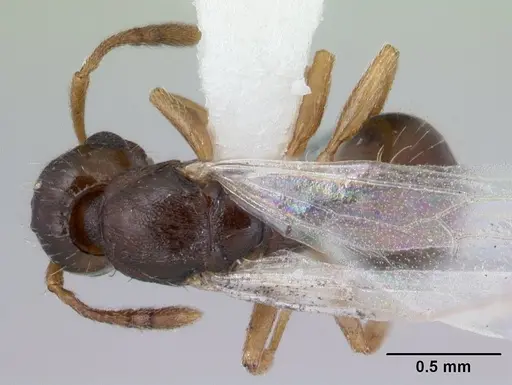
CASENT0904773
View on AntWeb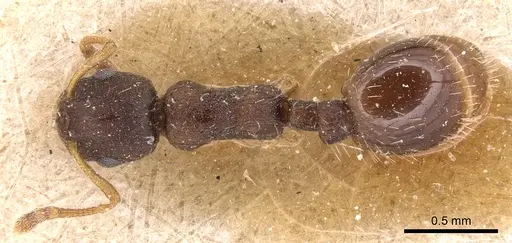
CASENT0922702
View on AntWeb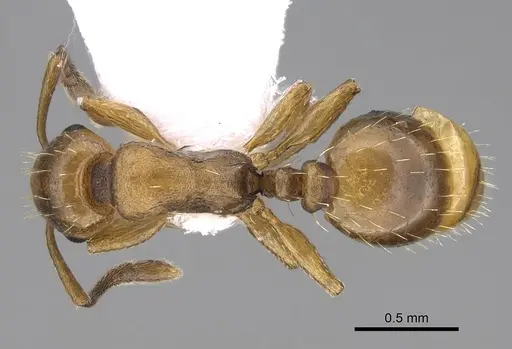
Literature
Loading...Loading products...