

Temnothorax daidalosi
- Scientific Name
- Temnothorax daidalosi
- Tribe
- Crematogastrini
- Subfamily
- Myrmicinae
- Author
- Salata <i>et al.</i>, 2018
- Distribution
- Found in 1 countries
Temnothorax daidalosi Overview
Temnothorax daidalosi is an ant species of the genus Temnothorax. It is primarily documented in 1 countries , including Greece. Detailed taxonomic data and occurrence records can be further explored via authoritative databases such as AntWeb or the Global Biodiversity Information Facility (GBIF).
Temnothorax daidalosi
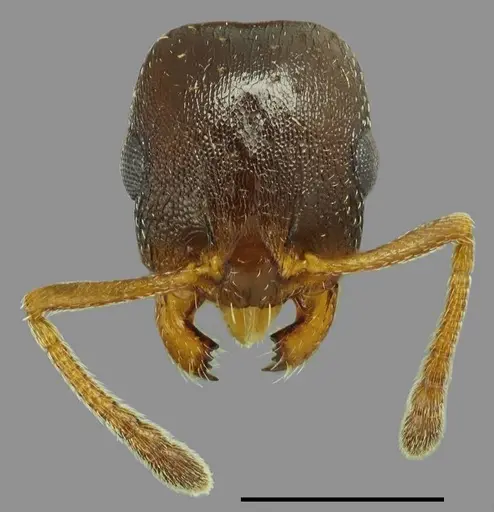
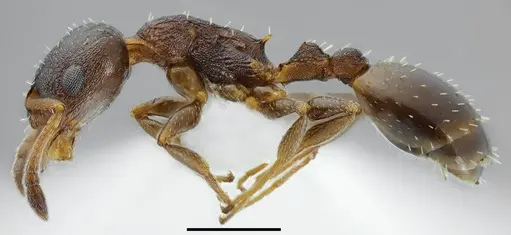
Temnothorax daidalosi is a tiny ant species endemic to the island of Crete, Greece. Workers measure just 4-5mm in total length, making them one of the smaller ant species you'll encounter in the hobby [1]. They have a uniformly dark brown body with brown-to-bright-brown legs and antennae, and are characterized by their dense fine reticulation on the head and long, thin propodeal spines [1]. This species was only formally described in 2018,making it a relatively newly discovered ant for the hobby [1].
What makes T. daidalosi special is its island endemism, it's found nowhere else on Earth except Crete [2]. In the wild, they inhabit flat rocks partly overgrown by phrygana (Mediterranean shrubland), preferring humid areas in both lowland forests and mountain zones [2]. This tells us they need moisture in captivity but also appreciate some vertical space to forage on rock surfaces.
Quick Summary
- Difficulty: Medium
- Origin & Habitat: Endemic to Crete, Greece, found in lowland forests and humid phrygana, and in mountain zones prefers open humid habitats. Most commonly found on flat rocks partly overgrown by phrygana [1][2].
- Colony Type: Likely single-queen colonies based on typical Temnothorax patterns. Ergatoid (wingless) replacement reproductives may be present as documented in related species.
- Colony: Monogyne
- Founding: Claustral
- Size & Growth:
- Queen: Approximately 5-6mm, estimated from genus patterns as the original description only measured workers [1]
- Worker: Workers 0.592-0.771mm head length, totaling approximately 4-5mm [1]
- Colony: Likely small colonies of 50-300 workers based on typical Temnothorax colony sizes
- Growth: Moderate, based on genus patterns
- Development: Estimated 6-10 weeks at optimal temperature based on related Temnothorax species (Development time is inferred from genus-level data since species-specific timing is unconfirmed)
- Antkeeping:
- Temperature: Keep at 20-24°C. Crete has a Mediterranean climate with mild winters, so they prefer warmer conditions but not extreme heat. A gentle gradient allowing workers to self-regulate is ideal.
- Humidity: Moderate to high, they naturally inhabit humid phrygana and rocky areas. Keep the nest substrate consistently moist but not waterlogged, with some drier areas available.
- Diapause: Likely required, Crete has mild but distinct winters. Provide a cool period around 10-15°C for 2-3 months during winter.
- Nesting: Y-tong (AAC) nests work well for these small ants. They naturally nest under flat rocks, so a naturalistic setup with slate or stone sections also works. Tight chambers and narrow passages scaled to their tiny size are essential.
- Behavior: Generally peaceful and non-aggressive. Workers are small and slow-moving, foraging individually rather than in raiding parties. They feed on small insects, honeydew, and nectar in the wild. Escape prevention is critical, their tiny size means they can squeeze through standard mesh. They are not known to sting and pose no danger to keepers.
- Common Issues: escape prevention is critical, their tiny size means they squeeze through standard mesh barriers, slow colony growth can frustrate beginners who overfeed or disturb the nest, wild-caught colonies may have parasites since this species hasn't been captive-bred extensively, they need very small prey items, fruit flies, pinhead crickets, or springtails, humidity fluctuations can cause colony decline, avoid both drying out and condensation buildup
Housing and Nest Setup
Temnothorax daidalosi is a tiny ant that needs appropriately scaled housing. Y-tong (AAC) nests with narrow chambers work exceptionally well, as these nests maintain humidity well while providing the tight spaces these small ants prefer [1]. The original specimens were collected from under flat rocks on Crete, so a naturalistic setup with slate tiles or stone sections also mimics their natural environment [1]. Avoid large, open spaces in the outworld, these ants are small and can feel exposed. A test tube setup works well for founding colonies, but be prepared to move them to a proper nest once the colony reaches 15-20 workers. Escape prevention is critical: use fine mesh (at least 0.5mm) and check all lid seals regularly. These ants can squeeze through gaps you wouldn't believe possible given their size.
Feeding and Diet
Like most Temnothorax species, T. daidalosi is omnivorous with a preference for protein. In the wild, they forage for small insects and arthropods, and likely tend aphids for honeydew [1]. In captivity, offer small live prey such as fruit flies, springtails, or tiny crickets. You can also provide sugar water, honey, or diluted maple syrup, place a small drop on a piece of foil or cotton to prevent drowning. Feed protein 2-3 times per week, and keep a sugar source available at all times. Remove uneaten prey after 24 hours to prevent mold. Because of their small size, even a single fruit fly is a substantial meal for a small colony, don't overfeed.
Temperature and Seasonal Care
Keep your colony at 20-24°C year-round, with a slight drop during winter months. Crete has a Mediterranean climate with mild winters (average temperatures around 10-15°C), so a winter diapause is beneficial [1]. Reduce temperature to 10-15°C for 2-3 months during winter, mimicking their natural seasonal cycle. During this period, reduce feeding to once every two weeks. Avoid temperatures above 28°C or below 5°C. A small heating cable on one side of the nest can create a temperature gradient, allowing ants to self-regulate. Monitor colony activity, if workers cluster near the heated area, the temperature is ideal, if they avoid it, reduce heat slightly.
Colony Development and Growth
Temnothorax daidalosi is a newly described species (2018), so specific development data is limited [1]. Based on typical genus patterns, expect founding to take 4-6 weeks, with the queen sealing herself in a small chamber and raising nanitic (first) workers entirely on her own body reserves. The first workers will be smaller than normal workers, this is normal. After the first workers emerge, the colony typically grows slowly at first, then accelerates as the colony reaches 30-50 workers. Maximum colony size is estimated at 50-300 workers based on typical Temnothorax patterns. Patience is key, these are not fast-growing species, and a healthy founding colony may take 6-12 months to reach 50 workers.
Behavior and Temperament
Temnothorax daidalosi is a peaceful, non-aggressive species that poses no threat to keepers. Workers forage individually rather than in groups, searching for small prey and honeydew [1]. They are not known to sting, their small size means even if they tried, the sting would be negligible. The species is not territorial or particularly defensive, making them easy to observe. However, their small size and slow movement can make them appear boring compared to more active species. They are best observed during feeding times when workers become more active. They do not form supercolonies and are not invasive, this species is only found on Crete [2].
Frequently Asked Questions
How long does it take for Temnothorax daidalosi to produce first workers?
Based on typical Temnothorax patterns, expect first workers (nanitics) to emerge 4-6 weeks after the queen seals herself in. This is an estimate since species-specific development data is not available [1].
Can I keep Temnothorax daidalosi in a test tube?
Yes, test tubes work well for founding colonies. Use a small test tube with a cotton-wick water reservoir. However, be prepared to move them to a Y-tong or naturalistic nest once the colony reaches 15-20 workers, as they need more space and better humidity control.
Do Temnothorax daidalosi ants sting?
No, they do not sting and pose no danger to keepers. Their small size and non-aggressive nature make them a safe species to keep, even for families with children.
What do Temnothorax daidalosi eat?
They eat small insects (fruit flies, springtails, tiny crickets) and sugar sources (honey water, maple syrup). Feed protein 2-3 times per week and keep sugar water available at all times [1].
Are Temnothorax daidalosi good for beginners?
They are moderate difficulty, their small size requires attention to escape prevention, but they are peaceful and not demanding. The main challenge is their slow growth and the need for very small prey items.
Do Temnothorax daidalosi need hibernation?
Yes, a winter diapause is recommended. Reduce temperature to 10-15°C for 2-3 months during winter, mimicking their natural seasonal cycle in Crete [1][2].
How big do Temnothorax daidalosi colonies get?
Based on typical Temnothorax patterns, colonies likely reach 50-300 workers at maturity. This is an estimate since maximum colony size has not been specifically documented for this species [1].
Why are my Temnothorax daidalosi escaping?
Their tiny size allows them to squeeze through standard mesh. Use fine mesh (0.5mm or smaller), check lid seals regularly, and consider applying fluon to the rim of the outworld. Even tiny gaps that seem impossible for them to fit through often aren't.
Can I keep multiple queens together?
Not recommended. While some Temnothorax can be pleometrotic (multiple queens founding together), combining unrelated queens of this species has not been documented. It's best to start with a single queen colony.
Where is Temnothorax daidalosi found in the wild?
This species is endemic to Crete, Greece, it's found nowhere else on Earth. They inhabit flat rocks partly overgrown by phrygana in both lowland forests and mountain zones [1][2].
References

This caresheet is licensed under CC BY-SA 4.0 .
CASENT0845904
View on AntWeb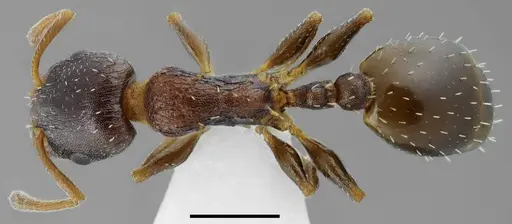
Literature
Loading...Loading products...