

Temnothorax curtulus
- Scientific Name
- Temnothorax curtulus
- Tribe
- Crematogastrini
- Subfamily
- Myrmicinae
- Author
- Santschi, 1929
- Distribution
- Found in 3 countries
Temnothorax curtulus Overview
Temnothorax curtulus is an ant species of the genus Temnothorax. It is primarily documented in 3 countries , including Algeria, Spain, Morocco. Detailed taxonomic data and occurrence records can be further explored via authoritative databases such as AntWeb or the Global Biodiversity Information Facility (GBIF).
Temnothorax curtulus
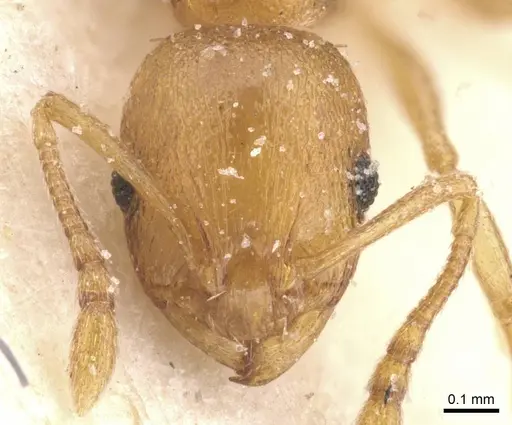
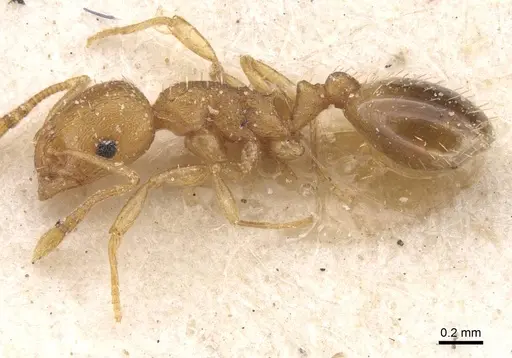
Temnothorax curtulus is a tiny, reddish-brown ant measuring around 3-4mm for workers. The species has a distinctive protruding clypeus that forms a visor-like structure, with relatively rough (rugose) sculpturing on the head and mesosoma giving it a matte appearance. Originally described from Morocco, this species was long considered endemic to North Africa (Morocco and Algeria) until workers were discovered in southern Spain in 2007, the first record for the Iberian Peninsula and continental Europe [1]. It belongs to the tebessae complex group and is closely related to T. bejaraniensis, from which it can be distinguished by its more protruding clypeus and greater rugosity [2]. These ants inhabit forest environments, particularly oak and deciduous oak forests, and prefer areas with greater vegetation cover and humidity compared to related species [2][3].
Quick Summary
- Difficulty: Medium
- Origin & Habitat: Northwest Africa (Morocco, Algeria) and recently discovered in southern Spain. This species lives in forest habitats including oak-quejigal (deciduous oak) forests and reforested pine areas, typically at elevations between 260m and 1900m [1][2][3]. They prefer enclaves with greater vegetation coverage and humidity [3].
- Colony Type: Single-queen colonies (monogyne), typical for the genus. Colony size is likely small, probably under a few hundred workers given the species' small size and typical Temnothorax patterns.
- Colony: Monogyne
- Founding: Claustral
- Size & Growth:
- Queen: Approximately 4-5mm (estimated from related species in the tebessae complex)
- Worker: Approximately 3-4mm (LMAX around 577μm from morphometric studies) [2]
- Colony: Likely under 500 workers (estimated based on typical genus patterns)
- Growth: Moderate, typical for small Myrmicinae
- Development: 6-10 weeks (estimated based on typical Temnothorax development at room temperature) (Development time is estimated from related species in the genus, specific data for T. curtulus is not available)
- Antkeeping:
- Temperature: Keep at room temperature, around 18-22°C. Based on their forest habitat in cooler mountain regions of North Africa and Spain, they prefer cooler conditions than many tropical ants. Avoid temperatures above 25°C [2][3].
- Humidity: Moderate to high, these forest-dwelling ants prefer humid environments. Keep the nest substrate consistently moist but not waterlogged, with some drier areas available. Think damp forest floor conditions [3].
- Diapause: Yes, as a species from temperate North Africa and southern Europe, they likely require a cool period during winter. Keep at 10-15°C for 2-3 months during winter.
- Nesting: In captivity, they do well in small nests with tight chambers. Y-tong (AAC) nests or small acrylic/formicarium setups work well given their tiny size. They prefer narrow passages scaled to their small body size. Natural nesting sites include under stones and in small cavities in rotting wood in forest habitats.
- Behavior: Generally peaceful and non-aggressive. Like most Temnothorax, they are not major escape artists but their tiny size means escape prevention should still be taken seriously, use fine mesh barriers. They are foragers that likely scavenge and collect honeydew and small insects. Activity level is moderate. They may use tandem-running recruitment to guide nestmates to food sources, as is common in the genus.
- Common Issues: tiny size means escapes are possible without fine mesh barriers, humidity control is important, too dry causes colony decline, may be sensitive to high temperatures, keep below 25°C, slow founding phase can lead to beginner impatience and overfeeding, wild-caught colonies may carry parasites that can cause colony loss
Housing and Nest Setup
Temnothorax curtulus is a tiny ant, so your nest setup needs to be scaled appropriately. These ants do well in Y-tong (AAC) nests or small acrylic formicaria with narrow chambers and passages. The chambers should be tight enough that workers can easily touch the walls on both sides. Test tube setups can work for founding colonies, but you may need to use small-diameter tubes. Because of their very small size, escape prevention is important, use fine mesh on any openings and check regularly. They prefer darker nests (Temnothorax generally prefer confined, dark spaces) so cover any clear sides with a dark material. The nest should have a water section for humidity but keep it modest to avoid flooding small chambers [2][3].
Feeding and Diet
Like most Temnothorax species, T. curtulus is a generalist that accepts a variety of foods. Offer sugar water or honey as an energy source, they will readily take sweet liquids. For protein, provide small insects like fruit flies, small mealworms, or other tiny arthropods. In the wild, they likely forage for small insects and collect honeydew from aphids or scale insects. Feed them a few times per week, removing any uneaten prey after 24 hours. A constant sugar source (like a cotton ball soaked in honey water) is recommended. Because they are small, portion sizes should be tiny, a drop of honey water or a piece of insect no larger than their head is plenty [2].
Temperature and Seasonal Care
Keep these ants in the cooler range compared to many ant species. Room temperature of 18-22°C is ideal, they come from mountain forest habitats in North Africa and Spain where conditions are cooler [2][3]. Avoid placing their nest in direct sunlight or near heat sources. During winter, they benefit from a diapause (winter rest) period. Reduce temperature to around 10-15°C for 2-3 months, mimicking natural seasonal cycles. This helps maintain colony health and may trigger reproductive behavior in spring. Do not feed during diapause but ensure some moisture is available. If your room temperature naturally drops in winter, this may be sufficient, monitor for activity levels [1][4].
Humidity Requirements
As forest-dwelling ants, T. curtulus prefers moderate to high humidity. Keep the nest substrate consistently moist but never waterlogged. The substrate should feel damp to the touch. You can achieve this by connecting a water reservoir to the nest or misting occasionally. However, because of their tiny size, be careful not to flood the nest, small chambers fill easily. Provide a humidity gradient by having one area slightly drier so the ants can choose their preferred spot. If you see workers clustering near the water source, increase moisture. If they avoid certain areas or seem sluggish, the nest may be too dry [3].
Colony Founding
If you obtain a founding queen, she will likely seal herself in a small chamber (claustral founding). The queen uses stored fat reserves to survive and raise the first brood alone. Do not disturb her during this phase, opening the nest can cause stress and abandonment. After 2-4 weeks, you should see eggs appear, followed by larvae and eventually nanitic (first) workers. The first workers will be smaller than mature workers. Once workers emerge, you can begin offering tiny amounts of food. Colony growth is typically slow initially, be patient. The founding chamber should be small and dark. Do not attempt to combine multiple unrelated queens as pleometrosis has not been documented for this species [2].
Behavior and Observation
Temnothorax curtulus is a relatively peaceful species that is enjoyable to observe. Workers are active foragers that will explore their outworld in search of food. Like other Temnothorax, they may use tandem running, where one worker leads another to a food source, as a recruitment method. They are not aggressive and do not have a powerful sting (Myrmicinae have stingers but Temnothorax are not known for painful stings). Their small size makes them less intimidating than larger ants. You may notice them establishing clear foraging trails once they discover a food source. They are primarily diurnal, foraging during daylight hours. Their tiny size also means they can squeeze through surprisingly small gaps, double-check your escape prevention [2].
Frequently Asked Questions
How long does it take for Temnothorax curtulus to raise first workers?
Expect 6-10 weeks from egg to first worker at room temperature. This is typical for the genus, though specific development data for T. curtulus is not available. The first workers (nanitics) will be smaller than mature workers. Patience is key during founding, do not disturb the queen or overfeed during this phase.
What temperature do Temnothorax curtulus ants need?
Keep them at 18-22°C, cooler than many common ant species. They come from mountain forest habitats in North Africa and Spain where conditions are relatively cool. Avoid temperatures above 25°C. Room temperature is usually ideal. A slight temperature gradient allows workers to choose their preferred spot.
Are Temnothorax curtulus good for beginners?
They are moderate difficulty. Their small size requires attention to escape prevention, and they prefer cooler, more humid conditions than some beginner species. However, they are generally peaceful and not aggressive. If you have kept other small Myrmicinae like Temnothorax or Tetramorium successfully, this species is a good next step.
How big do Temnothorax curtulus colonies get?
Based on typical genus patterns, colonies likely reach a few hundred workers at most. They are not among the largest Temnothorax species. A mature colony might have 200-400 workers. Growth is moderate and depends on proper feeding and temperature.
Do Temnothorax curtulus ants sting?
They are in the subfamily Myrmicinae, which does have functional stingers. However, Temnothorax are not known for painful stings and are generally considered non-aggressive. They are more likely to flee than to sting when threatened.
What do Temnothorax curtulus eat?
They are generalist feeders. Offer sugar water or honey as a constant energy source. For protein, provide small insects like fruit flies, small mealworms, or other tiny arthropods. They will also likely collect honeydew if you keep aphids. Feed a few times per week with portions sized appropriately for their tiny bodies.
Do Temnothorax curtulus need hibernation?
Yes, they benefit from a winter rest period. Reduce temperatures to 10-15°C for 2-3 months during winter. This mimics their natural seasonal cycle in the temperate regions of North Africa and southern Spain. Do not feed during diapause but maintain some moisture.
Can I keep multiple Temnothorax curtulus queens together?
Not recommended. This species is monogyne (single-queen) in structure. Combining unrelated queens has not been documented and would likely result in fighting. Only keep one queen per colony.
When should I move my colony to a formicarium?
Wait until the colony has at least 20-30 workers before moving from a test tube setup. Temnothorax prefer stable, dark nests, so choose a formicarium with appropriately sized chambers. Make sure the formicarium has good humidity control and escape prevention before transferring.
Why is my Temnothorax curtulus colony declining?
Common causes include: too high temperature (keep below 25°C), too dry conditions (they need humid environments), overfeeding leading to mold, or stress from too much disturbance. Check your temperature and humidity levels first. Also ensure you are using excellent escape prevention, even tiny ants can escape through surprisingly small gaps.
References

This caresheet is licensed under CC BY-SA 4.0 .
CASENT0912922
View on AntWeb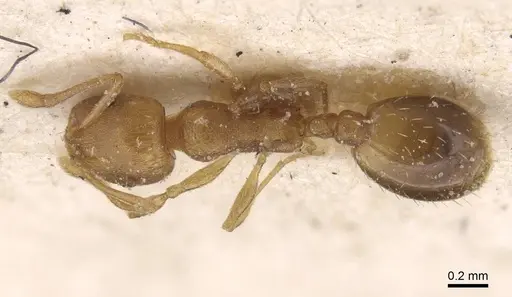
Literature
Loading...Loading products...