

Temnothorax conatensis
- Scientific Name
- Temnothorax conatensis
- Tribe
- Crematogastrini
- Subfamily
- Myrmicinae
- Author
- Galkowski & Lebas, 2016
- Distribution
- Found in 1 countries
Temnothorax conatensis Overview
Temnothorax conatensis is an ant species of the genus Temnothorax. It is primarily documented in 1 countries , including France. Detailed taxonomic data and occurrence records can be further explored via authoritative databases such as AntWeb or the Global Biodiversity Information Facility (GBIF).
Temnothorax conatensis
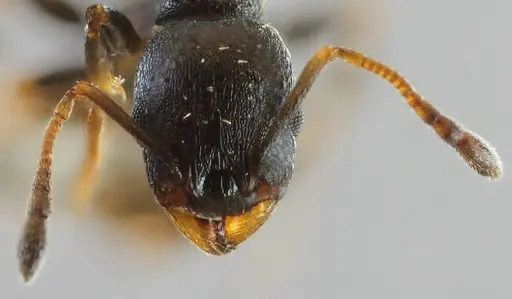
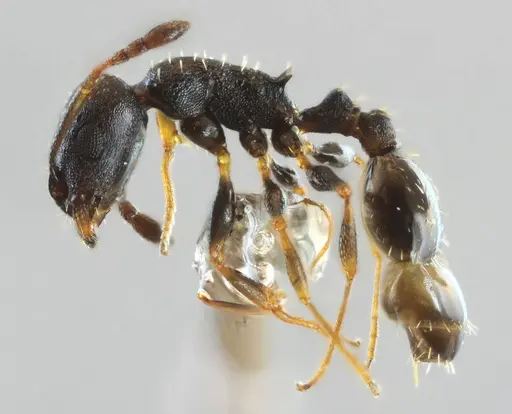
Temnothorax conatensis is a tiny, recently described ant species from the Eastern Pyrenees in France. Workers are entirely black with brownish extremities on their legs and antennae, measuring just 2-3mm in total length. They have a distinctive reticulated (net-like) sculpture on their head and body that sets them apart from similar dark Temnothorax species. This is a monogyne species, each colony has just one queen. Colonies are small, typically containing 40-50 workers at most, making them one of the smaller Temnothorax species in captivity [1][2].
These ants inhabit rocky limestone areas in mountainous garrigue habitat. They nest in crevices within rock faces or under moss cover on sloped surfaces. Workers are active foragers that hunt micro-arthropods and larvae on rock walls, particularly during the hottest hours of the day. The species has since been found in the Spanish Pyrenees at higher altitudes (1300-2000m), suggesting adaptability to cooler mountain conditions [1][3][4].
Quick Summary
- Difficulty: Medium
- Origin & Habitat: Eastern Pyrenees, France (Conat Nature Reserve) at 600-700m altitude. Also found in Spanish Pyrenees (Catalonia, Aragon) at 1300-2000m elevation. Inhabits semi-open limestone garrigue with Quercus ilex, Thymus vulgaris, and Euphorbia nicaeensis. Nests in rock crevices or under moss on dolomitic limestone slopes [1][2][3].
- Colony Type: Monogyne, single queen colonies. Only one queen has been found per colony in all documented nests. Colony sizes are small, typically 40-50 workers maximum [1][2].
- Colony: Monogyne
- Founding: Claustral
- Size & Growth:
- Queen: ~3mm (total length approximately 3.1mm based on measurements) [1]
- Worker: 2-3mm (total length approximately 2.2-2.5mm based on measurements) [1][2]
- Colony: Up to 50 workers, small colonies typical for this species [1][2]
- Growth: Moderate, inferred from typical Temnothorax development patterns
- Development: 6-10 weeks at optimal temperature (estimated based on genus-level data for the nylanderi group) (Development time is estimated, no specific studies on this species. Related Temnothorax species in the nylanderi group typically develop from egg to worker in 6-10 weeks at room temperature.)
- Antkeeping:
- Temperature: Keep at 18-22°C. Based on their mountain habitat (600-2000m altitude), they prefer cooler conditions than many common ant species. Avoid temperatures above 25°C [1][3].
- Humidity: Moderate, they naturally inhabit rocky areas with some moisture from moss. Keep the nest slightly moist but allow drying periods. Provide a water source [1][2].
- Diapause: Yes, as a Pyrenean mountain species, they require a winter dormancy period. Keep at 5-10°C for 2-3 months during winter [1][4].
- Nesting: Best kept in small nests with tight chambers. Y-tong (AAC) nests or small acrylic/formicarium setups work well. They prefer narrow passages and small chambers scaled to their tiny size. Provide some moss or Dekovit for natural feel if using naturalistic setup [1][2].
- Behavior: Generally peaceful and non-aggressive. Workers are active foragers, hunting small prey on surfaces. They are not known to sting and pose no danger to keepers. Due to their tiny size, escape prevention is critical, they can squeeze through very small gaps. Workers are active during warmer parts of the day in the wild, suggesting diurnal activity patterns [1][2].
- Common Issues: small colony size means slower population growth, don't expect rapid expansion, escape prevention is critical due to tiny 2mm worker size, may be sensitive to high temperatures, keep below 25°C, limited distribution in captivity, may be difficult to acquire, winter dormancy is required, must provide proper hibernation conditions
Housing and Nest Setup
Temnothorax conatensis is a tiny ant that needs appropriately scaled housing. A Y-tong (AAC) nest with narrow chambers works well, or a small acrylic/formicarium with tight passages. These ants naturally nest in rock crevices 5-10cm deep, so they appreciate having small, snug chambers rather than large open spaces. A naturalistic setup with flat stones or Dekovit can mimic their natural rock crevice habitat. Because of their very small size (workers around 2mm), escape prevention must be excellent, use fine mesh and check for any gaps in your setup [1][2].
Feeding and Diet
In the wild, workers forage on rock walls hunting micro-arthropods and larvae during the hottest hours of the day. In captivity, offer small live prey such as fruit flies, springtails, or tiny crickets. They are predatory and will accept small insects. Sugar water or honey can be offered occasionally, but protein-rich live prey should be their primary food. Feed small amounts 2-3 times per week, adjusting based on colony size and consumption. Remove uneaten prey to prevent mold [1][2].
Temperature and Seasonal Care
As a mountain species from the Pyrenees (600-2000m altitude), T. conatensis prefers cooler temperatures than many common ant species. Keep the nest at 18-22°C, avoid temperatures above 25°C. During summer, room temperature is usually appropriate. In winter, they require a proper dormancy period at 5-10°C for 2-3 months. This simulates the cold mountain winters they experience in their natural habitat. The species has been found at progressively higher altitudes in Spain (up to 2000m), confirming their preference for cooler conditions [1][3][4].
Colony Development
This species forms small colonies, the largest documented colonies had only 40-50 workers. This is typical for the species and should not be seen as a problem. Growth rate is moderate, with first workers (nanitics) emerging several weeks after founding. Queens areclaustral, they seal themselves in a chamber and raise the first brood using stored fat reserves. No winged sexuals were observed in the wild colonies, suggesting swarming occurs from late summer or spring from overwintering brood. Be patient with this species, small colony size is normal, not a sign of poor care [1][2].
Behavior and Observation
Workers are active foragers that hunt prey on vertical surfaces like rock walls. They are diurnal, being most active during warmer parts of the day. The species is peaceful and not aggressive toward keepers. They do not sting and pose no danger. Their small size and dark coloration make them somewhat challenging to observe, but their active foraging behavior makes them interesting to watch. They use tandem-running to recruit nestmates to food sources, a common behavior in Temnothorax species [1][2].
Frequently Asked Questions
How long does it take for Temnothorax conatensis to raise first workers?
Based on typical Temnothorax development, expect 6-10 weeks from egg to first worker at optimal temperature (around 20°C). This is an estimate based on related species in the nylanderi group, as specific development data for T. conatensis is not available [1].
How big do Temnothorax conatensis colonies get?
Colonies remain small, the largest documented colonies had only 40-50 workers. This is normal for the species, not a sign of poor care. Do not expect large colonies like some other Temnothorax species [1][2].
Do Temnothorax conatensis ants sting?
No, this species does not sting. They are completely harmless to keepers. As tiny ants with no functional stinger, there is no pain or danger from them [1].
What temperature do Temnothorax conatensis need?
Keep them at 18-22°C. As a mountain species from the Pyrenees, they prefer cooler conditions than most ant species. Avoid temperatures above 25°C. Room temperature is usually appropriate for this species [1][3].
Do Temnothorax conatensis need hibernation?
Yes, they require a winter dormancy period. Keep the colony at 5-10°C for 2-3 months during winter. This mimics their natural mountain habitat conditions in the Pyrenees where winters are cold [1][4].
Can I keep multiple queens together?
No, this is a monogyne species, each colony has only one queen. Multiple queens would likely fight. Only one queen per colony should be kept [1][2].
What do Temnothorax conatensis eat?
They are predatory and need small live prey like fruit flies, springtails, or tiny crickets. Offer small insects 2-3 times per week. Sugar water or honey can be offered occasionally but protein-rich live prey should be their primary food source [1][2].
Are Temnothorax conatensis good for beginners?
This species is rated as medium difficulty. While not the easiest species, they are manageable for intermediate antkeepers. Their small colony size and specific temperature needs (cooler is better) require some attention. Escape prevention is critical due to their tiny 2mm size [1].
When do Temnothorax conatensis have nuptial flights?
Likely late summer (August) or spring from overwintering brood, based on observations of no winged sexuals in colonies and weak brood presence during certain seasons. Exact timing is not well documented [1].
Why are my Temnothorax conatensis dying?
Common causes include: temperatures too high (above 25°C), poor escape prevention allowing escapes, inadequate humidity, or lack of proper winter dormancy. Also ensure they have small, appropriately-sized prey. Their small size makes them vulnerable [1][2].
References

This caresheet is licensed under CC BY-SA 4.0 .
ANTWEB1032081
View on AntWeb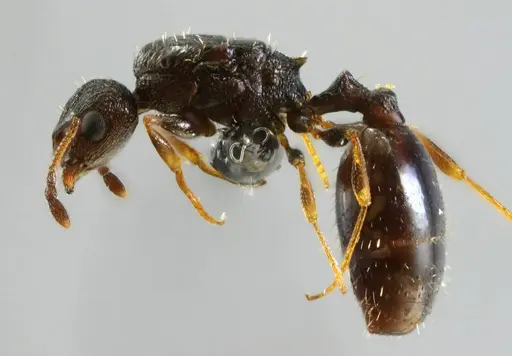
ANTWEB1032082
View on AntWeb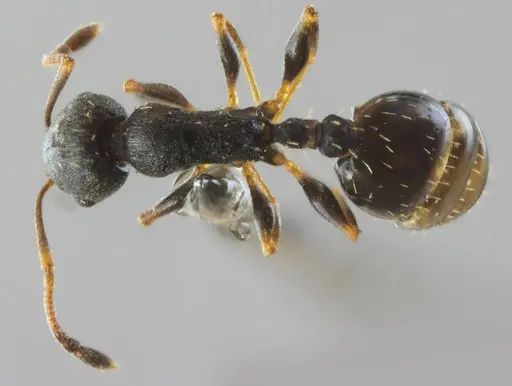
Literature
Loading...Loading products...