

Temnothorax chandleri
- Scientific Name
- Temnothorax chandleri
- Tribe
- Crematogastrini
- Subfamily
- Myrmicinae
- Author
- Mackay, 2000
- Distribution
- Found in 1 countries
Temnothorax chandleri Overview
Temnothorax chandleri is an ant species of the genus Temnothorax. It is primarily documented in 1 countries , including United States of America. Detailed taxonomic data and occurrence records can be further explored via authoritative databases such as AntWeb or the Global Biodiversity Information Facility (GBIF).
Temnothorax chandleri
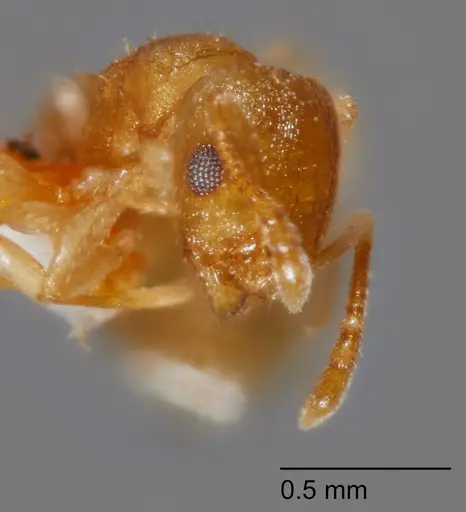
Temnothorax chandleri is a tiny, light yellow-brown ant belonging to the Myrmicinae subfamily. Workers measure just 0.53-0.62mm in head width, making them one of the smaller North American Temnothorax species. The species is characterized by a heavily sculptured head with punctures and longitudinal striae, though a central strip remains smooth and shining. The petiolar node has a very sharp apex, which serves as a key diagnostic feature. This species is closely related to T. nitens (formerly T. mariposa) and may eventually be considered the same species. It is known only from a few collections in California, making it one of the rarer ants in the United States [1].
This ant appears to be a riparian habitat specialist, found in damp woodland areas bordering water bodies like lakes and sloughs. The limited collection data suggests it nests in rotting wood or leaf litter in these moist environments. Because the species is known from so few specimens, captive breeding may be challenging as there is limited information on its specific requirements. However, keeping this species offers an opportunity to work with an uncommon California endemic.
Quick Summary
- Difficulty: Hard
- Origin & Habitat: Endemic to California, USA. Found in riparian woodland bordering lakes and sloughs, as well as oak leaf litter in damp areas. The type series was collected from oak leaf litter on the margin of a Samson Slough in Tehama County. A second collection came from a rotten log in riparian woodland [1][2].
- Colony Type: Unknown colony structure. No queens have been documented for this species, and colony organization has not been studied. Based on related Temnothorax species, likely forms small colonies with single queens.
- Size & Growth:
- Queen: Unknown, no queens have been described for this species [3]
- Worker: 0.53-0.62mm head width,0.67-0.70mm head length [3]
- Colony: Unknown, only a few workers have been collected. Related species typically form colonies of 50-500 workers.
- Growth: Unknown, likely moderate like other small Temnothorax
- Development: Unknown, estimated 6-10 weeks based on related Temnothorax species at optimal temperature (No direct development data exists. Estimates based on genus-level patterns for small Myrmicinae.)
- Antkeeping:
- Temperature: Keep around 20-24°C. This species comes from temperate California with mild winters, so room temperature is likely suitable. Avoid overheating.
- Humidity: High humidity required, this is a riparian species collected from damp leaf litter and rotting wood near water. Keep nest substrate consistently moist but not waterlogged. Provide a humidity gradient so ants can choose their preferred zone.
- Diapause: Likely yes, related California Temnothorax species typically require a winter rest period. A 2-3 month diapause at 10-15°C is recommended.
- Nesting: In captivity, provide a small nest with moist substrate. Y-tong (AAC) nests or small test tube setups work well for these tiny ants. The nest should have tight chambers scaled to their small size. Avoid dry conditions.
- Behavior: This is a docile, non-aggressive species typical of the genus. Workers are small and forage quietly in the nest area. They are unlikely to sting. Escape prevention is critical, their tiny size means they can squeeze through standard barriers. Use fine mesh and ensure all connections are sealed. They likely forage for small insects and honeydew in the wild.
- Common Issues: escape prevention is critical due to their very small size, they can slip through tiny gaps that larger ants cannot, no documented captive breeding success means you are essentially pioneering husbandry for this species, high humidity requirements can lead to mold if ventilation is poor, limited genetic diversity if only wild-caught colonies are available, difficulty obtaining this species at all since it is only known from a few collections
Housing and Nest Setup
Temnothorax chandleri requires a small, humid nest setup. A Y-tong (AAC) nest with narrow chambers works well, or you can use a small test tube setup with a water reservoir. The key requirement is maintaining high humidity while allowing some ventilation to prevent mold. These tiny ants need chambers scaled to their small size, avoid large, open spaces. A naturalistic setup with moist soil and rotting wood pieces can also work, but watch for mold. The nest should be kept in a dark area as these ants prefer dim conditions [1].
Feeding and Diet
Like other Temnothorax species, T. chandleri likely feeds on small insects and honeydew. In captivity, offer small live prey such as fruit flies, springtails, or tiny crickets. They will also accept sugar sources, a small drop of honey water or sugar water can be offered occasionally. Feed small amounts every few days and remove uneaten prey to prevent mold. Because workers are so tiny, prey items should be appropriately sized, no larger than the ants themselves. [3]
Temperature and Seasonal Care
Keep the nest at room temperature, ideally 20-24°C. This species comes from California's temperate climate where temperatures are mild year-round. Avoid temperatures above 28°C as this can stress the colony. During winter, provide a diapause period of 2-3 months at 10-15°C to simulate natural seasonal cycles. This helps maintain colony health and may trigger reproductive behavior in spring. Place the nest in an area away from direct sunlight and heating vents. [1]
Obtaining Colonies
This is one of the most challenging aspects of keeping T. chandleri, the species is only known from a few collections in California and is rarely available in the antkeeping hobby. You would need to locate a supplier who has obtained wild colonies, or potentially collect your own if you are in the appropriate range in California. Wild-caught colonies may have parasites or stress from collection. Because this species is so poorly known in captivity, be prepared for a learning process and document your observations carefully to contribute to knowledge of this rare ant. [1][2]
Frequently Asked Questions
How do I obtain Temnothorax chandleri ants?
This is one of the rarest North American ants in captivity. The species is only known from a few collections in California and is rarely available in the antkeeping hobby. You would need to find a specialized supplier or potentially collect them yourself if you are in the appropriate California range.
What do Temnothorax chandleri ants eat?
Like other small Temnothorax, they likely accept small live insects (fruit flies, springtails) and sugar sources (honey water, sugar water). Feed appropriately sized prey every few days.
What size colony do Temnothorax chandleri form?
Unknown for this specific species, but related Temnothorax typically form colonies of 50-500 workers. Given their tiny size and limited known collections, expect smaller colonies than many other Temnothorax.
Do Temnothorax chandleri ants sting?
These ants are too small to deliver a meaningful sting to humans. They are docile and non-aggressive, typical of the genus.
What temperature do Temnothorax chandleri need?
Keep them at 20-24°C. Room temperature is typically suitable. Avoid temperatures above 28°C. They benefit from a winter diapause at 10-15°C for 2-3 months.
Are Temnothorax chandleri good for beginners?
No. This is an expert-level species due to several factors: they are extremely rare to obtain, require high humidity, have unknown colony structure, and there is no established captive breeding information. This species is best suited for experienced antkeepers interested in working with rare species.
How long do Temnothorax chandleri live?
Queen lifespan is unknown. In related Temnothorax species, queens typically live several years, while workers live several months to a year.
Do Temnothorax chandleri need hibernation?
Likely yes. Related California Temnothorax species require a winter rest period. Provide a 2-3 month diapause at 10-15°C during winter months.
Why is Temnothorax chandleri so rare?
The species is only known from a few collections in California. It may be a riparian habitat specialist with a very limited range, or it may simply be overlooked due to its tiny size and cryptic nesting habits. It was described relatively recently in 2000.
Can I keep multiple Temnothorax chandleri queens together?
Unknown. No queens have been documented for this species, so colony structure is unconfirmed. Do not attempt to combine unrelated queens without specific information about this species' behavior.
References

This caresheet is licensed under CC BY-SA 4.0 .
CASENT0005688
View on AntWeb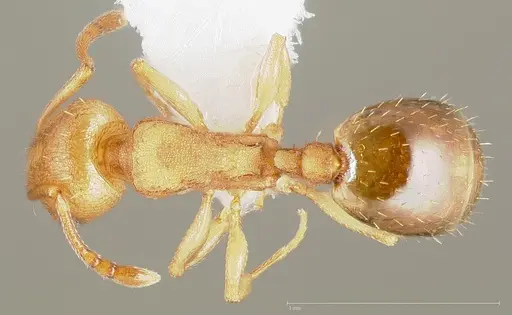
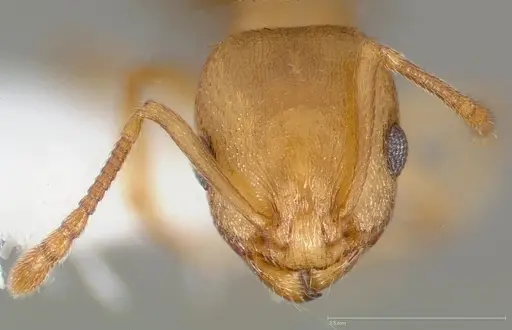
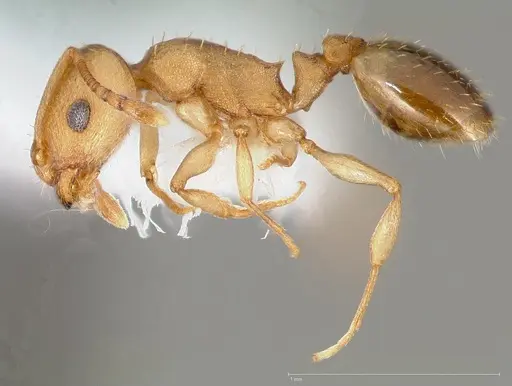
UTEPENTO60002
View on AntWeb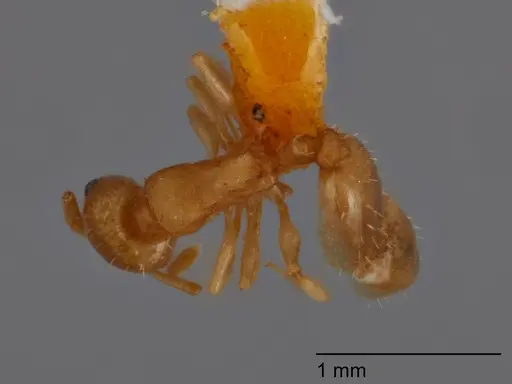
Literature
Loading...Loading products...