

Temnothorax caguatan
- Scientific Name
- Temnothorax caguatan
- Tribe
- Crematogastrini
- Subfamily
- Myrmicinae
- Author
- Snelling <i>et al.</i>, 2014
- Distribution
- Found in 2 countries
Temnothorax caguatan Overview
Temnothorax caguatan is an ant species of the genus Temnothorax. It is primarily documented in 2 countries , including Mexico, United States of America. Detailed taxonomic data and occurrence records can be further explored via authoritative databases such as AntWeb or the Global Biodiversity Information Facility (GBIF).
Temnothorax caguatan
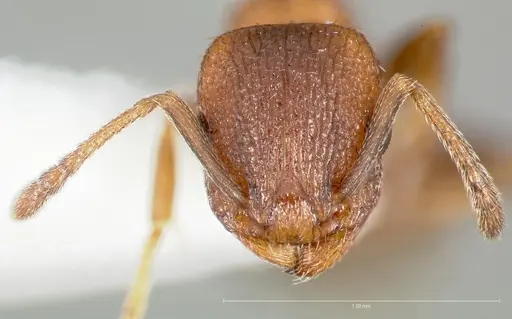
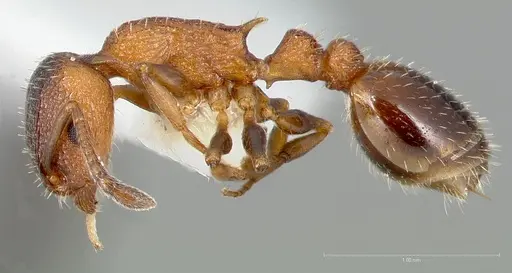
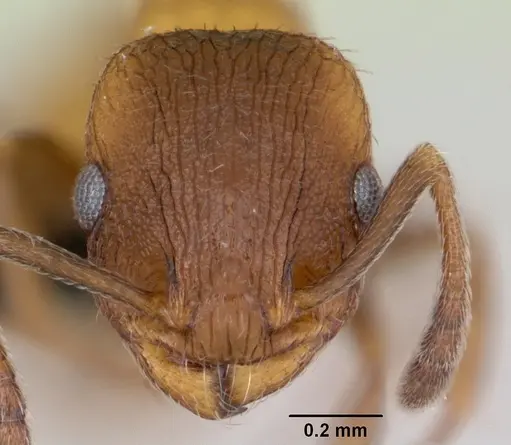
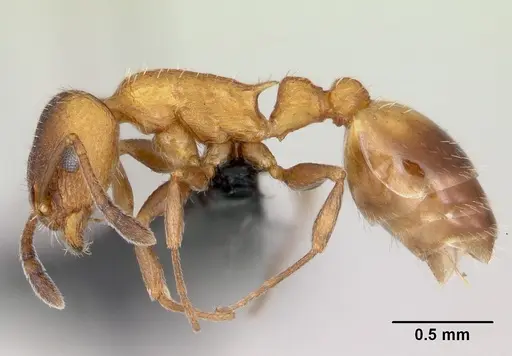
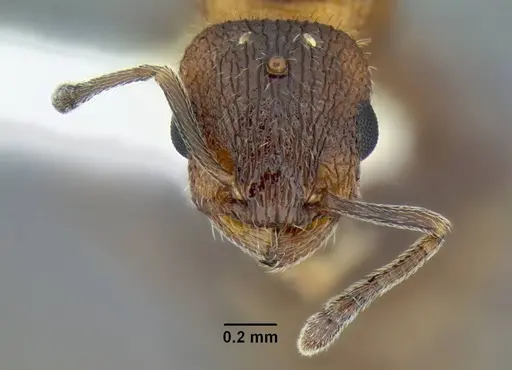
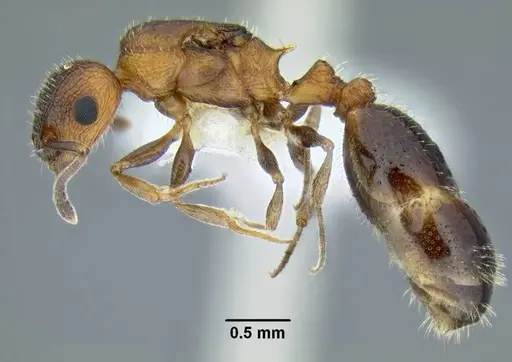
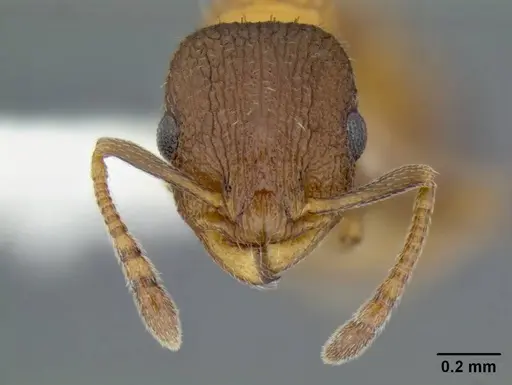
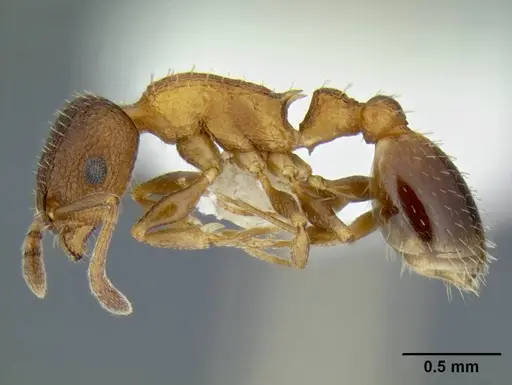
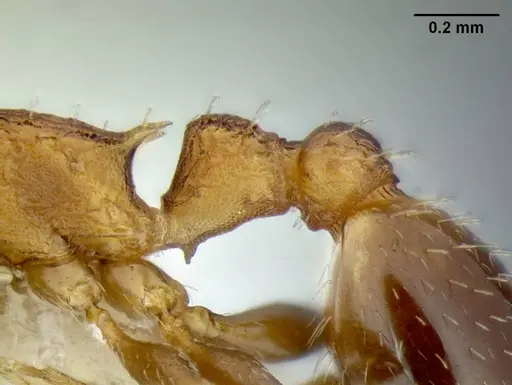
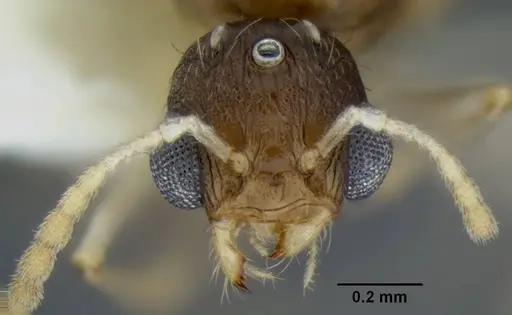
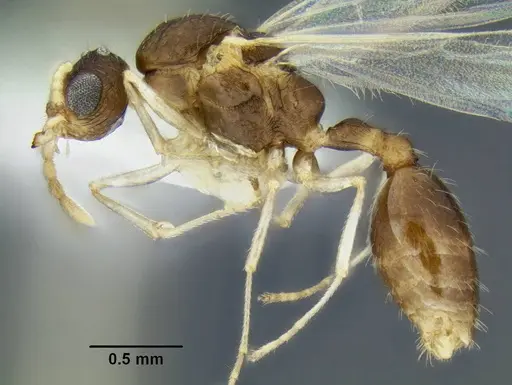
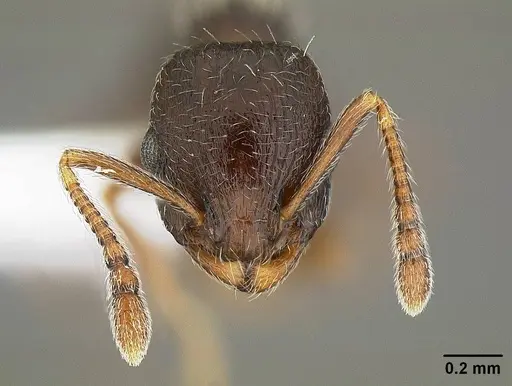
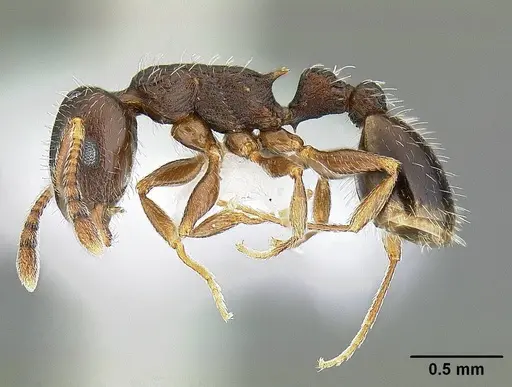
Temnothorax caguatan is a small arboreal ant species native to the western United States and Baja California. Workers measure just 2.5-3mm in total body length, with a distinctive reddish-brown coloration, the head and gaster are darker than the lighter mesosoma [1]. These ants belong to the rugatulus species group and are identified by their 11-segmented antennae and relatively long propodeal spines that are more than half as long as the distance between their bases [1]. In the wild, they nest exclusively in dead branches of trees and shrubs, particularly oak species (Quercus agrifolia, Q. chrysolepis, Q. kelloggii) and Jeffrey pine (Pinus jeffreyi) [1][2]. This arboreal nesting habit means they prefer cavities much smaller than typical ground-nesting ants, think hollow twigs, small dead branches, or the cavities inside acorns. The species was only formally described in 2014,making it one of the more recently identified North American ants [1].
Quick Summary
- Difficulty: Easy
- Origin & Habitat: Native to the western United States and northern Mexico, ranging from Oregon through California to Baja California. Found in diverse habitats including oak woodland, Jeffrey pine forest, chaparral, mixed coniferous forest, Sequoia forest, and riparian woodland [2]. This species is strongly associated with woody plants, virtually all nest samples have come from dead branches of trees and shrubs [1].
- Colony Type: Likely single-queen colonies (monogyne) based on typical Temnothorax patterns, though colony structure has not been specifically documented for this species. Like most Temnothorax, founding queens seal themselves inside a small cavity and raise their first workers alone (claustral founding) [3].
- Colony: Monogyne
- Founding: Claustral
- Size & Growth:
- Queen: ~4-5mm (queen WL 1.446mm) [1]
- Worker: 2.5-3mm (worker mesosoma length 0.757-0.927mm) [1]
- Colony: Likely several hundred workers at maturity based on typical Temnothorax colony sizes
- Growth: Moderate, typical for small Myrmicinae ants
- Development: Estimated 6-10 weeks at room temperature based on related Temnothorax species (Development time is temperature-dependent, warmer conditions (around 20-24°C) accelerate growth while cooler temperatures slow it down)
- Antkeeping:
- Temperature: Keep at room temperature, ideally 20-24°C. These ants are native to temperate California and don't require heating. Avoid temperatures above 28°C as this can stress colonies.
- Humidity: Moderate humidity around 50-60% is suitable. As arboreal nesters in dead wood, they prefer somewhat drier conditions than ground-nesting ants. Provide a water tube but avoid overly damp nesting setups.
- Diapause: Yes, these ants are native to temperate regions with distinct seasons. A winter rest period at 10-15°C for 2-3 months is recommended to simulate natural conditions and promote healthy colony cycling.
- Nesting: Provide small cavities that mimic their natural dead-branch habitat. Y-tong (AAC) nests with narrow chambers work exceptionally well for these tiny ants. Alternatively, small cork nests or even test tube setups with tight-fitting cavities can work. The key is providing appropriately scaled chambers, these ants are small and will feel exposed in large, open spaces.
- Behavior: Generally peaceful and non-aggressive. Workers are small and relatively slow-moving compared to faster ant species. They are not known to sting and pose no danger to keepers. As arboreal ants, they are comfortable climbing on vertical surfaces and can be quite active in the outworld once established. Escape risk is moderate, while small, they are not as tiny as some Myrmicinae and standard escape prevention (fluon barriers on smooth surfaces) is usually sufficient. They are not particularly defensive and can be observed foraging openly.
- Common Issues: arboreal nesting means they need appropriately sized cavities, too-large chambers cause stress and workers may abandon the nest, small size makes escape prevention important, use fine mesh and smooth barriers, winter diapause is important for long-term colony health, skipping hibernation can lead to colony decline over time, wild-caught colonies may carry parasites that can devastate captive colonies, they are slow to establish compared to faster-growing ants, patience is required during the founding phase
Housing and Nest Setup
Temnothorax caguatan is an arboreal species that naturally nests in small cavities inside dead branches and twigs. In captivity, this translates to needing appropriately sized nesting chambers, think small, tight spaces rather than the large open chambers preferred by many ground-nesting ants. Y-tong (acrylic) nests with narrow chambers work exceptionally well for these tiny ants. The chambers should be sized so that workers can easily touch both walls when standing inside, for a 2.5-3mm ant, this means chambers roughly 3-5mm wide. Cork nests are another excellent option as they naturally provide the small cavities these ants prefer. Test tubes can work for founding colonies, but consider moving established colonies to a more naturalistic setup that better reflects their arboreal lifestyle. The outworld should include climbing structures like twigs or cork bark pieces since these ants naturally forage in vertical spaces. Escape prevention is important, while not the smallest ants, they can still squeeze through small gaps, so use tight-fitting lids and apply fluon to any smooth surfaces near the nest entrance [1][2].
Feeding and Diet
Like most Temnothorax species, T. caguatan likely has a varied diet consisting of small insects, honeydew from aphids, and nectar. In captivity, offer small protein sources like fruit flies, pinhead crickets, or small mealworm pieces. These ants are small, so prey items should be appropriately sized, a fruit fly is a substantial meal for a worker of this species. Sugar water, honey, or diluted jam can be offered as carbohydrate sources, though some keepers report that Temnothorax prefer more natural sugar sources like honeydew. Feed small amounts every 2-3 days and remove any uneaten prey to prevent mold issues. During the founding phase, the queen will not eat, she relies entirely on her stored fat reserves. Once workers emerge, they will begin foraging and can be offered food in the outworld. These ants are not aggressive foragers, so place food where workers can easily find it [3].
Temperature and Seasonal Care
Temnothorax caguatan originates from temperate California, where seasonal temperature fluctuations are moderate. Room temperature in the low-to-mid 20s Celsius is ideal for keeping these ants active and healthy. They can tolerate temperatures as low as 15°C without issue and may even benefit from cooler periods during winter. However, avoid sustained temperatures above 28°C as this can stress colonies and potentially cause brood death. Unlike tropical species, these ants do not require heated setups, a room-temperature ant farm kept at normal household temperatures works well. The most important seasonal consideration is providing a winter diapause period. During late autumn and winter (roughly November through February in the Northern Hemisphere), gradually reduce the temperature to around 10-15°C. This simulates the natural seasonal cycle these ants experience in the wild and is important for long-term colony health. Reduce feeding during this period and minimize disturbance. In spring, gradually warm the colony back to room temperature to trigger renewed activity and brood production [1][2].
Colony Development and Growth
Starting a colony of Temnothorax caguatan requires patience, as these are not fast-growing ants. A newly mated queen will seal herself inside a small cavity and lay eggs without leaving to forage, this is called claustral founding. She relies entirely on her stored fat reserves to survive and feed her first brood. The time from egg to first worker (nanitic) typically takes 6-10 weeks depending on temperature, with warmer conditions speeding development. The first workers, called nanitics, are often smaller than subsequent workers and may appear somewhat pale. Once nanitics emerge, the queen stops caring for the brood directly and becomes primarily an egg-layer. Workers will then take over all foraging and brood care duties. Colony growth is gradual, expect several months to reach 20-30 workers, and potentially a year or more to reach 100+ workers. The key to successful colony development is providing stable conditions, appropriate food, and avoiding disturbance during the sensitive founding phase. Once established, colonies are quite resilient, but their slow growth means they require keeper patience [3].
Behavior and Observation
Temnothorax caguatan is a peaceful species that makes an excellent subject for observation. Workers are relatively slow-moving compared to many ants, which actually makes them easier to watch. They are arboreal by nature, so they spend considerable time climbing on vertical surfaces and exploring three-dimensional spaces. In the wild, foragers navigate through the canopy and along branches, so providing climbing structures in the outworld helps them exhibit natural behaviors. These ants are not defensive, they will retreat rather than attack when threatened. They do not have a functional stinger and pose no danger to keepers. One interesting behavior to observe is how workers interact with the queen, Temnothorax queens are not aggressive toward workers and often remain visible in the nest, unlike some species where the queen is hidden away. Workers communicate through chemical signals and may be observed touching antennae in what appears to be information exchange. Colonies establish well-defined foraging routes once they find reliable food sources [3].
Frequently Asked Questions
How long does it take for Temnothorax caguatan to produce first workers?
From egg to first worker typically takes 6-10 weeks at room temperature (around 20-24°C). The exact time depends on temperature, warmer conditions speed development while cooler temperatures slow it down. The founding queen seals herself inside a cavity and raises the first brood alone, so patience is essential during this founding phase.
What size colony does Temnothorax caguatan reach?
Based on typical Temnothorax colony sizes, expect a mature colony of several hundred workers. This species is not one of the larger Temnothorax, so colonies typically max out in the 300-500 worker range. Growth is slow, it may take 1-2 years to reach 100 workers and several years to reach maximum size.
Do Temnothorax caguatan ants sting?
No, these ants do not sting. They are small, peaceful ants that pose no danger to keepers. If threatened, they will simply retreat rather than engage in defensive behavior. This makes them an excellent choice for keepers who want to observe ant behavior without worrying about stings.
What do I feed Temnothorax caguatan?
Offer small protein sources like fruit flies, tiny mealworm pieces, or small crickets. These ants are small, so prey should be appropriately sized. They also accept sugar sources like honey water or sugar water. Feed small amounts every 2-3 days and remove uneaten food to prevent mold.
Do Temnothorax caguatan ants need hibernation?
Yes, a winter diapause period is recommended. These ants are native to temperate California with distinct seasons. During winter (roughly November-February), reduce temperature to 10-15°C and minimize feeding. This rest period is important for long-term colony health and helps trigger renewed breeding activity in spring.
What nest type is best for Temnothorax caguatan?
Y-tong (AAC) nests with narrow chambers or small cork nests work best. These ants naturally nest in small cavities inside dead branches, so they prefer tight, appropriately scaled chambers rather than large open spaces. The chambers should be just large enough for several workers to move through comfortably.
Are Temnothorax caguatan ants good for beginners?
Yes, this is an excellent species for beginners. They are small, peaceful, do not sting, and have relatively simple care requirements. The main challenges are providing appropriate-sized nesting cavities and being patient with their slow growth. They are more forgiving of minor temperature fluctuations than tropical species.
Can I keep multiple queens together in a Temnothorax caguatan colony?
This species is likely single-queen (monogyne) based on typical Temnothorax patterns. Combining unrelated queens is not recommended as they would likely fight. If you capture a mated queen, house her alone in a founding setup until her first workers emerge.
When should I move my Temnothorax caguatan to a formicarium?
Wait until the colony has at least 20-30 workers before moving to a larger setup. For founding colonies, a simple test tube setup works well for the first several months. Once the colony is established and growing, you can provide a more elaborate setup with both nesting areas and foraging space.
Why is my Temnothorax caguatan colony declining?
Common causes include: improper diapause (skipping winter rest), too-large nesting chambers, excessive disturbance during founding, parasites from wild-caught colonies, or poor nutrition. Review your care conditions and ensure the colony has appropriate temperature, humidity, and food. Wild-caught colonies often carry parasites that can cause decline, purchasing from reputable sellers reduces this risk.
References

This caresheet is licensed under CC BY-SA 4.0 .
CASENT0005692
View on AntWeb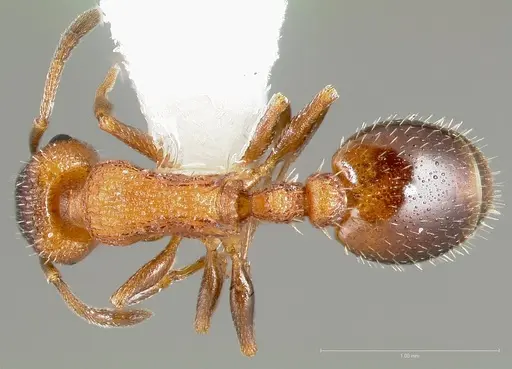
CASENT0118155
View on AntWeb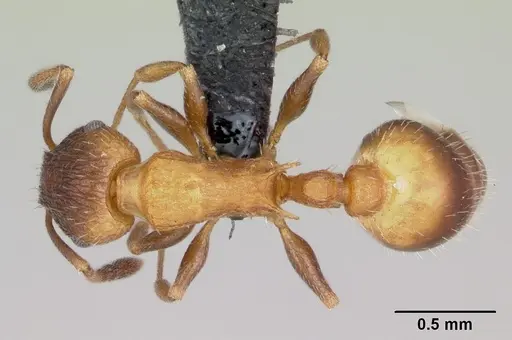
CASENT0218887
View on AntWeb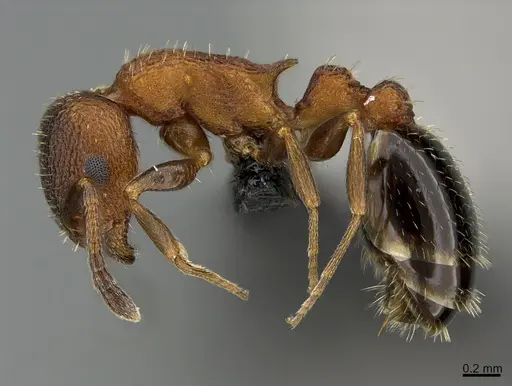
CASENT0339250
View on AntWeb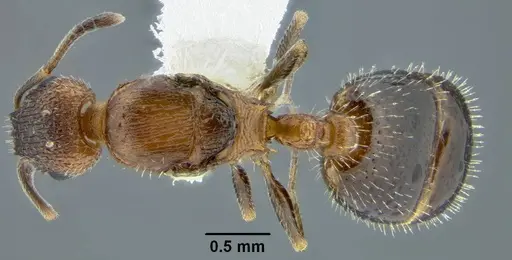
CASENT0339286
View on AntWeb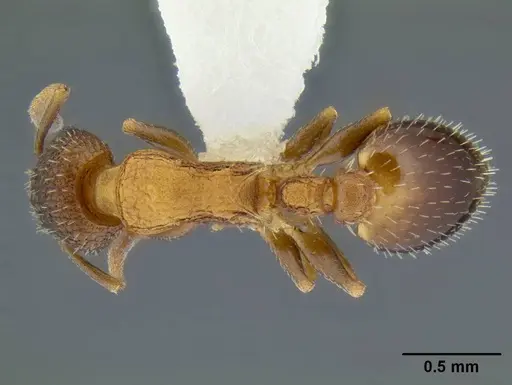
CASENT0339304
View on AntWeb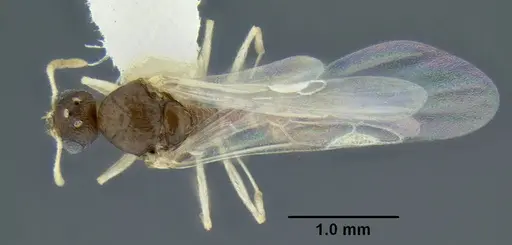
CASENT0844364
View on AntWeb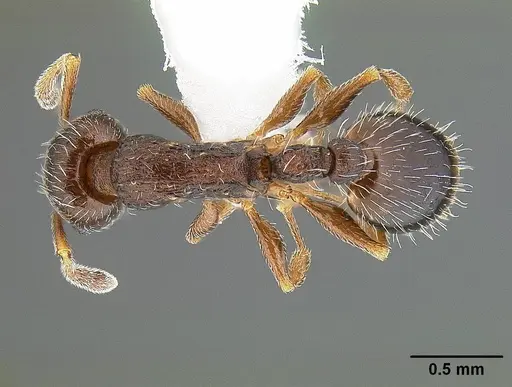
Literature
Loading...Loading products...