

Temnothorax brackoi
- Scientific Name
- Temnothorax brackoi
- Tribe
- Crematogastrini
- Subfamily
- Myrmicinae
- Author
- Salata & Borowiec, 2019
- Distribution
- Found in 1 countries
Temnothorax brackoi Overview
Temnothorax brackoi is an ant species of the genus Temnothorax. It is primarily documented in 1 countries , including Greece. Detailed taxonomic data and occurrence records can be further explored via authoritative databases such as AntWeb or the Global Biodiversity Information Facility (GBIF).
Temnothorax brackoi
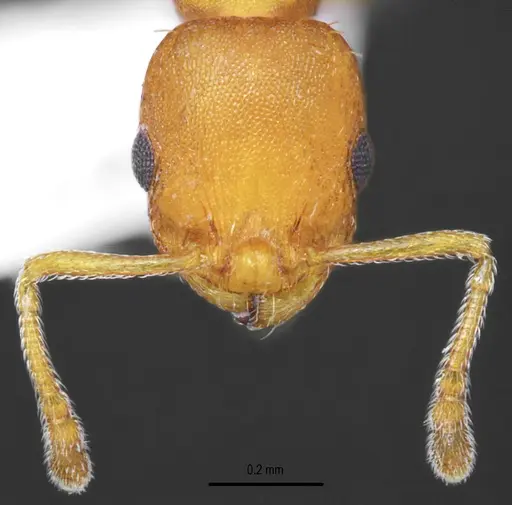
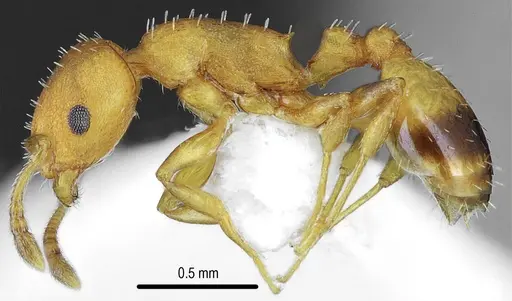
Temnothorax brackoi is a small, recently described ant species native to the eastern Mediterranean region. Workers are uniformly yellow to dark yellow with a distinctive dark band across the first segment of their abdomen (gaster). They measure around 0.67-0.82mm in body length, making them typical small Temnothorax ants. This species belongs to the aveli species group and was only formally described in 2019,having been split from the broader Temnothorax unifasciatus complex [1][2]. In western Greece, this species is very common, particularly in warm lowland areas with Mediterranean shrubland, though its occurrence decreases towards the east [3]. They are typically found on shrubs and trees along roadsides, olive plantations, and in various forest types, likely nesting inside dry stems of herbs and bushes [1][3].
Quick Summary
- Difficulty: Easy
- Origin & Habitat: Eastern Mediterranean, found throughout Greece (Epirus, Ionian Islands, Peloponnese, Thessaly, Sterea Ella) and into Dalmatia, Croatia. They inhabit warm lowland areas with Mediterranean shrubs, including maquis, phrygana, and deciduous/coniferous forests at elevations from 9-990m [1][3].
- Colony Type: Likely single-queen colonies (monogyne), which is typical for the genus. Colony size is estimated at several hundred workers at maturity based on related species.
- Colony: Monogyne
- Founding: Claustral
- Size & Growth:
- Queen: Undescribed in research, estimated 5-7mm based on genus typical size
- Worker: 0.67-0.82mm WL (Weber's length) [1]
- Colony: Estimated several hundred workers based on related species
- Growth: Moderate
- Development: Estimated 6-10 weeks at optimal temperature based on genus patterns (Development time inferred from related Temnothorax species, not directly studied for this specific species)
- Antkeeping:
- Temperature: Keep at 20-26°C, they are a Mediterranean species adapted to warm conditions. A slight temperature gradient allows ants to regulate their body temperature [3].
- Humidity: Moderate, they naturally inhabit dry to semi-dry Mediterranean shrubland. Keep nest substrate lightly moist but allow some drying between waterings. Avoid overly damp conditions.
- Diapause: Yes, as a temperate/Mediterranean species, they require a winter rest period of 8-12 weeks at 5-10°C. This mimics their natural seasonal cycle in Greece [3].
- Nesting: In nature they likely nest inside dry stems of herbs and bushes. In captivity, a Y-tong (AAC) nest or test tube setup with narrow chambers works well. They prefer tight, enclosed spaces scaled to their small size.
- Behavior: These are peaceful, non-aggressive ants typical of the genus. Workers are small and relatively slow-moving. They forage individually and likely scavenge for small insects and tend aphids for honeydew. Escape prevention is important due to their tiny size, use fine mesh and tight-fitting barriers. They are not known to sting and pose no danger to keepers.
- Common Issues: escape prevention is critical due to their very small size, they can squeeze through tiny gaps, colonies may fail if kept too wet, they prefer drier conditions than many ants, slow growth can frustrate beginners, patience is needed through the founding phase, winter diapause is required for long-term colony health, skipping hibernation can weaken colonies, test tube setups must have properly sized water reservoirs to avoid flooding small chambers
Housing and Nest Setup
Temnothorax brackoi is a small ant that thrives in compact nest setups. A Y-tong (AAC) formicarium with narrow chambers or a well-organized test tube setup works best. These ants naturally nest inside dry plant stems in the wild, so they prefer tight, enclosed spaces rather than open areas. The nest should have chambers sized appropriately for their small workers, avoid large, open spaces where they may feel exposed. A small outworld connected to the nest allows for foraging. Because of their tiny size, use fluon on the rim of the outworld and ensure all connections are tight. A thin layer of substrate in the outworld helps them navigate and forage comfortably [1][3].
Feeding and Diet
In the wild, Temnothorax species typically feed on honeydew from aphids and scale insects, along with small insects and other protein sources. Offer a mix of sugar water or honey diluted with water (changed every 2-3 days) and small protein sources like fruit flies, pinhead crickets, or other tiny arthropods. Feed protein once or twice weekly, removing any uneaten prey after 24 hours. These ants are small, so portion sizes should be tiny, a drop of sugar water and a prey item smaller than their head is sufficient. Observe your colony's consumption patterns and adjust feeding frequency accordingly. A well-fed colony will show active workers and the queen producing brood consistently.
Temperature and Seasonal Care
As a Mediterranean species from Greece, Temnothorax brackoi prefers warm conditions. Keep the nest area at 20-26°C, with a gentle gradient if possible so workers can choose their preferred temperature. Room temperature within this range works well for most of the year. During the active summer months, they do well at the warmer end of this range, which supports brood development. In winter, they require a diapause (hibernation) period of 8-12 weeks at 5-10°C. This can be provided by moving the colony to a cool basement, garage, or refrigerator during winter. The hibernation period is essential for their natural cycle and helps maintain colony health long-term. Do not feed during diapause, keep them cold and dark with just slight substrate moisture to prevent complete drying out [3].
Colony Founding and Growth
A newly mated queen will seal herself in a small chamber and lay eggs without foraging, this is claustral founding, typical for Temnothorax. She uses stored fat reserves to survive and feed her first brood. The first workers (nanitics) are typically smaller than regular workers but will begin foraging once they emerge. After the nanitics arrive, the colony enters a growth phase where the queen resumes egg-laying and workers take over all foraging and brood care. Growth rate is moderate, expect 6-10 weeks from egg to first worker based on genus patterns. Colonies grow steadily but not rapidly, reaching several hundred workers at maturity over 1-2 years under good conditions. Patience is key during the founding phase, as disturbing the queen or moving the nest can cause abandonment.
Behavior and Temperament
Temnothorax brackoi is a peaceful species with no significant defensive behaviors. Workers are small, relatively slow-moving, and non-aggressive. They go about their foraging activities methodically, searching for small prey and honeydew. These ants do not have a functional stinger and pose no threat to keepers. Their small size means they can be overlooked, but they are active and interesting to watch once established. They use chemical communication like most ants, leaving pheromone trails to food sources. Workers may engage in tandem-running recruitment, where one experienced forager leads others to food discoveries. This species is best suited for observation-focused keepers who enjoy watching small, peaceful ants go about their daily activities.
Frequently Asked Questions
How long does it take for Temnothorax brackoi to raise their first workers?
From egg to first worker, expect approximately 6-10 weeks at optimal temperature (around 24°C). This is based on typical development times for related Temnothorax species, as specific development data for T. brackoi is not available. The queen will seal herself in during founding and emerge once nanitics (first workers) have hatched.
What temperature do Temnothorax brackoi ants need?
Keep them at 20-26°C, with 22-24°C being ideal for most activity and brood development. As a Mediterranean species from Greece, they prefer warm conditions but can tolerate room temperature within this range. A slight temperature gradient allows workers to self-regulate.
Do Temnothorax brackoi ants need hibernation?
Yes, they require a winter diapause period of 8-12 weeks at 5-10°C. This mimics their natural seasonal cycle in Greece and is essential for long-term colony health. Skip hibernation only if you plan to keep the colony short-term, as it can weaken the queen and reduce colony longevity.
What do Temnothorax brackoi ants eat?
Feed them a mix of sugar sources (honey water or sugar water changed every few days) and small protein prey like fruit flies, pinhead crickets, or other tiny arthropods. Offer protein once or twice weekly. Remove uneaten prey after 24 hours to prevent mold.
Are Temnothorax brackoi ants good for beginners?
Yes, they are considered easy to keep. They are peaceful, don't require elaborate setups, and tolerate typical room temperatures. The main challenges are their small size (requiring good escape prevention) and the need for winter diapause. Patience is needed during the slow founding phase.
How big do Temnothorax brackoi colonies get?
Based on related species, colonies likely reach several hundred workers at maturity. They are not among the largest Temnothorax species but can still produce impressive worker numbers over 1-2 years of growth under good conditions.
Can I keep multiple Temnothorax brackoi queens together?
Not recommended. Like most Temnothorax, they are likely single-queen species (monogyne). Combining unrelated queens has not been documented and would likely result in fighting. A single established queen per colony is the standard approach.
Do Temnothorax brackoi ants sting?
No, they do not pose any stinging threat. These are small, peaceful ants with no functional stinger. They are completely safe to handle and present no danger to keepers.
What is the best nest type for Temnothorax brackoi?
A Y-tong (AAC) formicarium with narrow chambers or a test tube setup works well. They prefer tight, enclosed spaces scaled to their tiny size. Avoid large open areas. The nest should provide dark, secure chambers for the queen and brood.
Where is Temnothorax brackoi found in the wild?
This species is native to the eastern Mediterranean, specifically Greece (where it is very common in western regions) and coastal Croatia. They live in warm lowland habitats with Mediterranean shrubs, including maquis, phrygana, and forest edges at elevations from 9-990m [1][3].
Why are my Temnothorax brackoi dying?
Common causes include: too much moisture (they prefer drier conditions), poor escape prevention allowing them to escape, disturbing the queen during founding, or skipping winter diapause. Check that the nest isn't too wet, that all openings are sealed, and that you are providing the required hibernation period.
When should I move my colony to a formicarium?
Wait until the colony has at least 20-30 workers before moving from a test tube to a formicarium. Moving too early can stress the colony. Make sure the new nest is properly set up with appropriate chamber sizes and escape prevention before the move.
References

This caresheet is licensed under CC BY-SA 4.0 .
CASENT0846669
View on AntWeb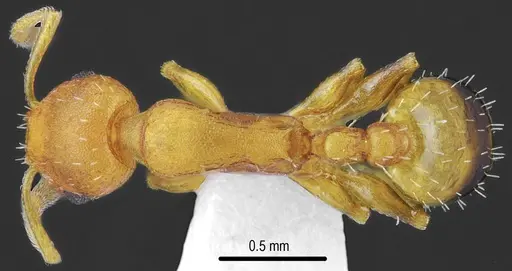
Literature
Loading...Loading products...