

Temnothorax arboreus
- Scientific Name
- Temnothorax arboreus
- Tribe
- Crematogastrini
- Subfamily
- Myrmicinae
- Author
- Snelling <i>et al.</i>, 2014
- Distribution
- Found in 1 countries
Temnothorax arboreus Overview
Temnothorax arboreus is an ant species of the genus Temnothorax. It is primarily documented in 1 countries , including United States of America. Detailed taxonomic data and occurrence records can be further explored via authoritative databases such as AntWeb or the Global Biodiversity Information Facility (GBIF).
Temnothorax arboreus
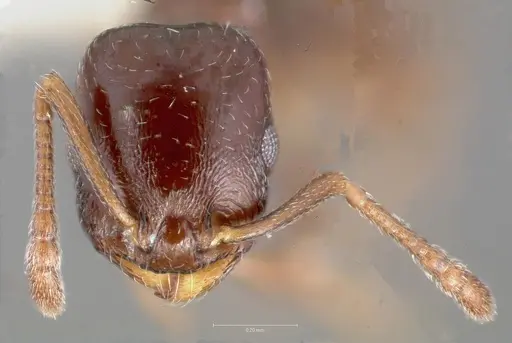
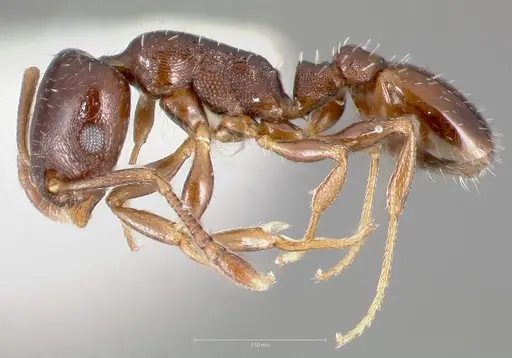
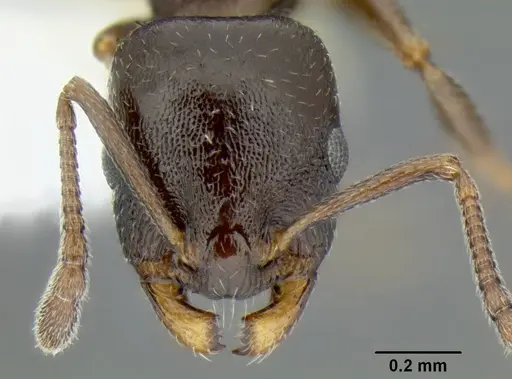
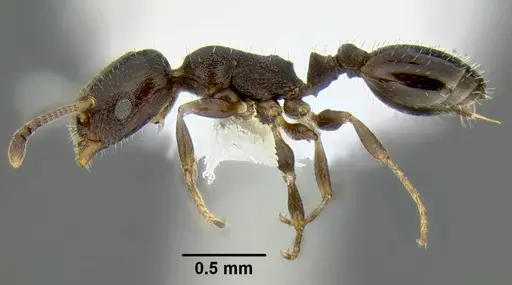
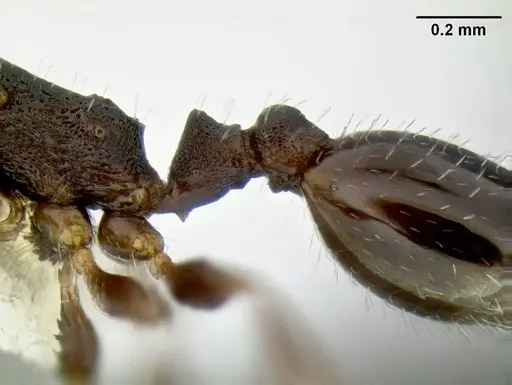
Temnothorax arboreus is a tiny, dark brown ant species native to southern California. Workers measure just 2.5-3mm, making them one of the smaller North American Temnothorax species [1]. Their most distinctive feature is their arboreal lifestyle, unlike most Temnothorax which nest in soil or under stones, this species forages on tree trunks and foliage, particularly Jeffrey pine (Pinus jeffreyi) [1][2]. The head is shiny with weakly sculptured to smooth surfaces, and the petiole node is robust and triangular in profile [1]. This species belongs to the sallei-clade, a group of closely related North American acorn ants [1].
Quick Summary
- Difficulty: Medium
- Origin & Habitat: Southern California, USA, specifically San Diego and Riverside counties. Found in pine forest habitats at elevations around 1800m [1][2].
- Colony Type: Single-queen colonies (monogyne). Colony structure is typical for the genus, though detailed colony observations are limited [1].
- Colony: Monogyne
- Founding: Claustral
- Size & Growth:
- Queen: Estimated 4-5mm based on genus patterns
- Worker: 2.5-3mm (HL 0.584-0.652mm, HW 0.475-0.534mm) [1]
- Colony: Likely several hundred workers based on typical Temnothorax colony sizes
- Growth: Moderate
- Development: Estimated 6-10 weeks based on typical Temnothorax development at room temperature (Development time inferred from genus patterns, specific data for T. arboreus not available)
- Antkeeping:
- Temperature: Keep at room temperature (20-24°C). Being from California's mountains, they can tolerate cooler conditions than tropical species but prefer warmth [1].
- Humidity: Moderate humidity preferred. As an arboreal species, they likely tolerate slightly drier conditions than ground-nesting Temnothorax. Aim for 50-60% ambient humidity with a moist nest chamber.
- Diapause: Likely requires winter dormancy given their California mountain origin. A 2-3 month period at 10-15°C is recommended [1].
- Nesting: Y-tong (AAC) nests work well for their small size. The arboreal nature suggests they prefer tight, enclosed chambers rather than open spaces. Plaster nests also suitable.
- Behavior: Generally peaceful and non-aggressive. Workers are small and active, foraging primarily on vertical surfaces (tree trunks in the wild). They are not known to sting and pose no danger to keepers. Their tiny size means escape prevention is critical, they can squeeze through standard test tube cotton if gaps exist [1].
- Common Issues: tiny size makes escape likely without fine mesh barriers, arboreal nature means they may have different humidity needs than typical ground-nesting ants, limited availability in the antkeeping hobby, rarely sold, winter dormancy is likely required but specifics unconfirmed, slow colony growth may frustrate beginners
Housing and Nest Setup
Temnothorax arboreus is well-suited to Y-tong (AAC) nests due to its tiny worker size and arboreal nature. The chambers should be appropriately scaled, these ants are only 2.5-3mm, so tight-fitting passages work better than open spaces [1]. Plaster nests also work well, as they allow you to maintain consistent humidity. Test tube setups can work for founding colonies but monitor closely for escape, their small size means they can squeeze through gaps that larger ants cannot. Avoid naturalistic setups with large open spaces, these ants prefer the security of enclosed chambers. Place the nest in a low-traffic area away from direct sunlight.
Feeding and Diet
Like other Temnothorax, this species likely accepts standard ant foods: sugar water, honey, and small protein sources. In the wild, they forage on tree trunks for honeydew and small insects. Offer a drop of sugar water or honey regularly, supplemented with tiny insects like fruit flies, pinhead crickets, or mealworm pieces. Feed protein 2-3 times per week for growing colonies. Remove uneaten food promptly to prevent mold. Being arboreal foragers, they may be more active on vertical surfaces, consider placing food on the test tube cotton or a vertical foraging area. [1]
Temperature and Seasonal Care
Keep your colony at room temperature (20-24°C). This species comes from California's mountain pine forests, so they can tolerate cooler temperatures than tropical species but prefer warmth for optimal brood development [1]. During winter, provide a dormancy period of 2-3 months at 10-15°C to simulate their natural seasonal cycle. This helps synchronize their biology with natural rhythms and promotes colony health. Reduce feeding during dormancy and keep the nest slightly cooler. Do not feed during the deepest part of winter rest.
Behavior and Observation
These are peaceful, active little ants. Workers forage individually rather than in large trails, which is typical for the genus. Their arboreal lifestyle in the wild means they're adapted to climbing on vertical surfaces, you may see them exploring test tube walls or climbing between nest chambers more than ground-nesting species. They are not aggressive and won't defend territory vigorously. Observation is rewarding because their small size reveals interesting behaviors like tending to brood and carrying food. The dark brown coloration is distinctive among North American Temnothorax [1].
Frequently Asked Questions
How long does it take for Temnothorax arboreus to have first workers?
Expect first workers (nanitics) in 6-10 weeks after the queen lays eggs, assuming room temperature around 22°C. This is typical for Temnothorax species, though specific development data for T. arboreus is not available.
Can I keep multiple Temnothorax arboreus queens together?
This species is monogyne, single queen colonies. Combining unrelated queens is not recommended and likely results in fighting. Wild colonies have one founding queen that establishes the colony alone.
Do Temnothorax arboreus ants sting?
No, this species poses no danger to keepers. They are tiny, non-aggressive ants with no functional stinger. They are completely safe to handle gently if needed.
What do Temnothorax arboreus eat?
They accept sugar sources (honey, sugar water) and protein (tiny insects like fruit flies, small mealworm pieces). Feed sugar continuously and protein 2-3 times weekly. Remove uneaten food to prevent mold.
Are Temnothorax arboreus good for beginners?
They are moderate difficulty, not the easiest but not challenging. Their small size requires attention to escape prevention, and they likely need winter dormancy. The main challenge is finding them for sale since they're rarely available in the hobby.
Do Temnothorax arboreus need hibernation?
Yes, a winter dormancy period of 2-3 months at 10-15°C is recommended. This species comes from California's mountain pine forests where winters are cold. Without this rest period, colony health may decline over time.
What size colony do Temnothorax arboreus reach?
Likely several hundred workers at maturity, based on typical Temnothorax colony sizes. They are not among the largest Temnothorax but can form modest colonies.
When should I move my colony to a formicarium?
Wait until the colony has 20-30 workers before moving from a test tube to a proper nest. For this tiny species, a Y-tong nest with appropriately scaled chambers works best. Make sure the colony is actively foraging before the move.
Why is my Temnothorax arboreus colony dying?
Common causes include: escape (their tiny size allows them through small gaps), improper humidity (too dry or too wet), lack of protein food, or stress from disturbance. Check escape barriers first, they can squeeze through standard cotton plugs.
References

This caresheet is licensed under CC BY-SA 4.0 .
CASENT0005933
View on AntWeb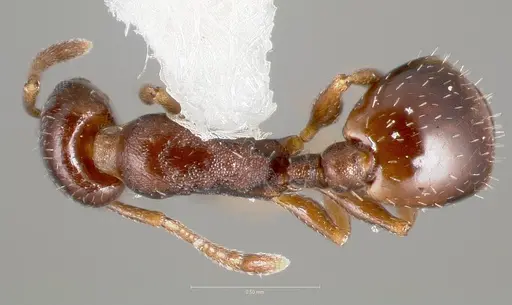
CASENT0339243
View on AntWeb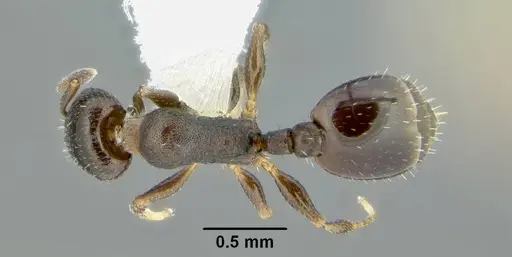
Literature
Loading...Loading products...