

Temnothorax aeolius
- Scientific Name
- Temnothorax aeolius
- Tribe
- Crematogastrini
- Subfamily
- Myrmicinae
- Author
- Forel, 1911
- Distribution
- Found in 1 countries
Temnothorax aeolius Overview
Temnothorax aeolius is an ant species of the genus Temnothorax. It is primarily documented in 1 countries , including Greece. Detailed taxonomic data and occurrence records can be further explored via authoritative databases such as AntWeb or the Global Biodiversity Information Facility (GBIF).
Temnothorax aeolius
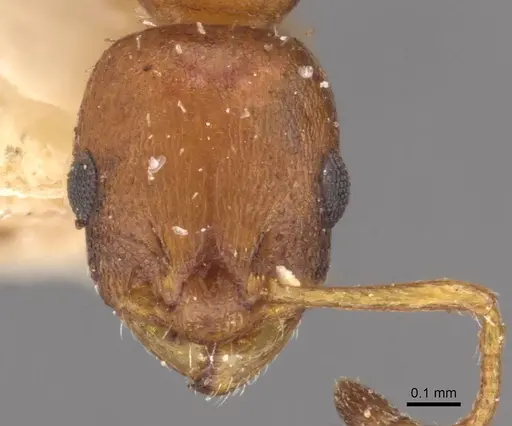
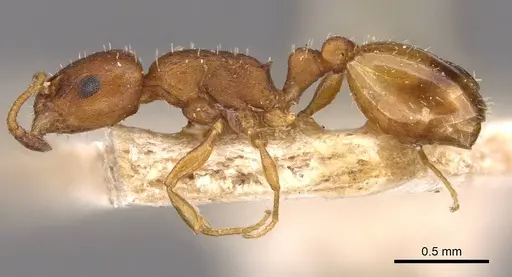
Temnothorax aeolius is a tiny yellow to orange ant belonging to the Temnothorax graecus species group. Workers measure just 0.52-0.69mm in head length, making them among the smaller ant species you'll encounter [1]. They have a distinctive appearance with a darkened antennal club (brown to black), a very low and rounded petiolar node, and short propodeal spines that appear as small triangular denticles [2]. The first gastral segment has a narrow brown band at the tip [1]. This species is native to the eastern Mediterranean, found in Greece, Turkey, Bulgaria, and Cyprus, where it inhabits lowland areas from sea level to about 140 meters altitude [2]. They are typically found in moderately humid to arid deciduous forests and Mediterranean maquis habitats, often collected by shaking bushes or sweeping vegetation [3][1].
Quick Summary
- Difficulty: Medium
- Origin & Habitat: Eastern Mediterranean, Greece (Aegean islands, Halkidiki), Turkey (Izmir province), Bulgaria, and Cyprus. Inhabits lowland Mediterranean maquis, deciduous forests, and rocky areas near coastlines at altitudes from sea level to 140m [3][1][2].
- Colony Type: Likely single-queen colonies based on typical Temnothorax genus patterns. Colony structure has not been directly studied for this species.
- Colony: Monogyne
- Founding: Claustral
- Size & Growth:
- Queen: Unconfirmed, no documented queen measurements for this species. Based on related graecus-group members, likely 4-5mm.
- Worker: 0.52-0.69mm head length (approximately 2-3mm total length) [1].
- Colony: Likely small colonies of several dozen to a few hundred workers based on typical Temnothorax patterns.
- Growth: Moderate, based on similar small Temnothorax species.
- Development: Estimated 6-10 weeks at optimal temperature based on related Temnothorax species. (Development time inferred from genus-level data, specific timing for T. aeolius has not been documented.)
- Antkeeping:
- Temperature: Keep at 20-26°C, this Mediterranean species prefers warm conditions. A gentle temperature gradient allows workers to regulate their exposure [1].
- Humidity: Moderate humidity around 50-70%. These ants naturally occur in Mediterranean climates with moderately humid to arid conditions. Keep the nest substrate lightly moist but allow some drying between waterings [3].
- Diapause: Likely requires a mild winter rest period of 2-3 months at 10-15°C, consistent with other Mediterranean Temnothorax species. This has not been directly documented for T. aeolius.
- Nesting: In nature they likely nest under stones, in rock crevices, or in small cavities in decaying wood. For captivity, a small Y-tong (AAC) nest or plaster nest with tight chambers works well. Their tiny size requires narrow passages and small chambers scaled to their minute dimensions [3].
- Behavior: These are small, relatively docile ants that are not aggressive. Workers are active foragers, often found climbing on vegetation in search of honeydew and small prey. They have functional stingers but rarely use them due to their tiny size. Escape prevention is critical, their minute size allows them to squeeze through standard barrier setups. Use fine mesh and tight-fitting lids [2].
- Common Issues: escape prevention is critical due to their extremely small size, they can squeeze through gaps that larger ants cannot, slow colony growth can frustrate beginners, these are slow-growing ants that take time to establish, overfeeding leads to mold problems in small nests, offer small amounts of food and remove uneaten portions, dry conditions can cause colony decline, monitor substrate moisture carefully in small nest setups, wild-caught colonies may carry parasites that can devastate captive colonies
Housing and Nest Setup
Temnothorax aeolius requires careful housing due to their extremely small size. A Y-tong (AAC) nest or small plaster formicarium with chambers sized appropriately for tiny ants works best. The passages and chambers should be narrow, these ants feel secure in tight spaces. Avoid large, open areas that can cause stress. A test tube setup can work for founding colonies, but you may need to use a smaller diameter tube than standard. Provide a water tube for humidity and a small outworld for feeding. Escape prevention is absolutely critical, use fluon on container edges and fine mesh (at least 0.5mm or smaller) on any ventilation holes. These ants are so small that even standard ant-keeping barriers may not contain them [2][3].
Feeding and Diet
In the wild, T. aeolius forages on vegetation for honeydew and small insects. In captivity, offer sugar water or honey diluted with water as a constant energy source. For protein, provide tiny prey items like fruit flies, pinhead crickets, or small mealworm pieces. Because of their minute size, standard prey items may be too large, consider cutting prey into smaller pieces or culturing very small feeder insects. Feed small amounts every 2-3 days and remove any uneaten food promptly to prevent mold, which can quickly become a problem in small nest setups. These ants are likely to accept honeydew substitutes and small arthropods [3].
Temperature and Seasonal Care
As a Mediterranean species from Greece, Turkey, and Cyprus, T. aeolius prefers temperatures in the 20-26°C range. A slight temperature gradient allows workers to choose their optimal conditions. During summer months, room temperature is often suitable. In winter, consider providing a mild dormancy period of 2-3 months at 10-15°C, mimicking Mediterranean winter conditions. This species is found at low elevations (4-50m in Greece, -1 to 140m in Cyprus), indicating it does not tolerate cold conditions [1][2]. If your room temperature drops below 18°C in winter, a small heat mat on one side of the nest can maintain appropriate temperatures.
Humidity and Water
Temnothorax aeolius comes from habitats with moderately humid to arid conditions in the Mediterranean. Keep the nest substrate lightly moist but not waterlogged. Allow the surface to dry slightly between waterings to prevent mold. A water tube connected to the nest provides a humidity gradient, ants will cluster near the moist end when they need water. Monitor condensation levels, excessive moisture can be as harmful as dry conditions. The natural habitat includes coastal areas with saline plants, suggesting some tolerance for varied moisture levels [3][1].
Colony Establishment and Growth
Starting a colony requires patience. If you obtain a founding queen, she will likely seal herself into a small chamber (claustral founding) and raise her first workers alone on stored fat reserves. The initial brood development takes several months. First workers (nanitics) will be very small. Colony growth is typically slow, expect 6-10 weeks from egg to worker at optimal temperatures, but this is estimated from related species rather than documented for T. aeolius specifically. Once established, colonies may reach several dozen to a few hundred workers over time. Do not disturb founding colonies unnecessarily, stress can cause queens to abandon brood [1].
Behavior and Observation
These are fascinating ants to observe due to their small size and active foraging behavior. Workers can be seen climbing and exploring their environment, often more actively than larger ant species. They are not aggressive and rarely sting, though their small size makes any sting negligible. The species shows interesting behaviors related to their graecus group classification, including specific antennal club coloration and petiole shape. In the wild, they are often collected by sweeping vegetation, indicating they are active foragers on plants. Their tiny size makes them excellent escape artists, always verify your barrier setups are secure [2][3].
Frequently Asked Questions
How long does it take for Temnothorax aeolius to develop from egg to worker?
The exact development time has not been documented for T. aeolius, but based on related small Temnothorax species, expect approximately 6-10 weeks from egg to first worker at optimal temperatures around 24°C. This is an estimate based on genus-level data rather than species-specific research.
What size colony does Temnothorax aeolius reach?
Colony size has not been directly documented, but based on typical Temnothorax patterns, colonies likely reach several dozen to a few hundred workers. They are not large colony formers.
Do Temnothorax aeolius ants sting?
Yes, they have functional stingers, but due to their extremely tiny size (workers are only 0.52-0.69mm), the sting is negligible and rarely felt by humans. They are not considered dangerous.
Can I keep multiple Temnothorax aeolius queens together?
Colony structure has not been studied for this species. Most Temnothorax are single-queen (monogyne) colonies. Combining unrelated queens is not recommended without evidence that they can form multi-queen colonies.
What temperature do Temnothorax aeolius need?
Keep them at 20-26°C, with 24°C being ideal. This Mediterranean species prefers warm conditions. A small heat gradient allows workers to regulate their temperature preference.
Do Temnothorax aeolius need hibernation?
Likely yes, as a Mediterranean species, they probably benefit from a mild winter rest period of 2-3 months at 10-15°C. This has not been directly documented but is consistent with other Mediterranean Temnothorax species.
Are Temnothorax aeolius good for beginners?
This species is rated as medium difficulty. While not aggressive, their extremely small size makes escape prevention challenging and requires attention to detail. Their slow growth and small colony sizes may test beginner patience. They are best suited for antkeepers who already have some experience with small Myrmicinae species.
What do Temnothorax aeolius eat?
They likely forage for honeydew and small insects in the wild. In captivity, offer sugar water or honey as a constant carbohydrate source, plus small protein sources like fruit flies, pinhead crickets, or small mealworm pieces. Cut prey to appropriate sizes for their tiny workers.
When should I move Temnothorax aeolius to a formicarium?
Wait until the colony reaches at least 20-30 workers before moving from a test tube setup. These tiny ants do better in setups with appropriately scaled chambers, standard formicarium passages may be too large. A small Y-tong or plaster nest with tight chambers works well.
Why are my Temnothorax aeolius escaping?
Their extremely small size allows them to squeeze through gaps that larger ants cannot. Use fluon on all edges, fine mesh (0.5mm or smaller) on ventilation, and check for any tiny gaps. Even standard ant barriers may not contain them, double-check all connections and lid seals.
Where is Temnothorax aeolius found in the wild?
This species is native to the eastern Mediterranean: Greece (Aegean islands including Kos, Rhodes, Samos, and Halkidiki), Turkey (Izmir province), Bulgaria, and Cyprus. They live in lowland Mediterranean habitats at altitudes from sea level to about 140 meters, typically in maquis bushes, deciduous forests, and rocky areas near coastlines.
Is Temnothorax aeolius invasive anywhere?
No, this species is native to the eastern Mediterranean and has not been documented as invasive in any region. It is naturally found only in Greece, Turkey, Bulgaria, and Cyprus.
References

This caresheet is licensed under CC BY-SA 4.0 .
CASENT0763862
View on AntWeb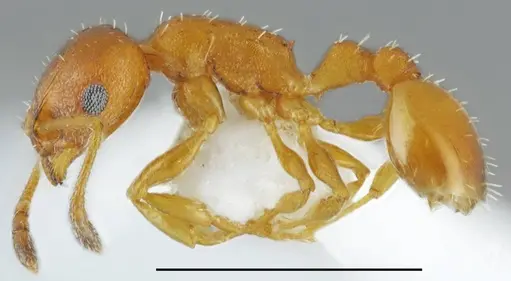
CASENT0909016
View on AntWeb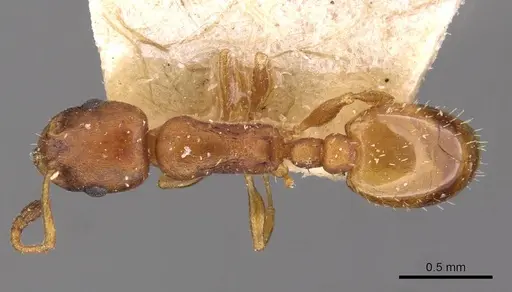
Literature
Loading...Loading products...