

Technomyrmex rector
- Scientific Name
- Technomyrmex rector
- Tribe
- Tapinomini
- Subfamily
- Dolichoderinae
- Author
- Bolton, 2007
- Distribution
- Found in 1 countries
Technomyrmex rector Overview
Technomyrmex rector is an ant species of the genus Technomyrmex. It is primarily documented in 1 countries , including India. Detailed taxonomic data and occurrence records can be further explored via authoritative databases such as AntWeb or the Global Biodiversity Information Facility (GBIF).
Technomyrmex rector
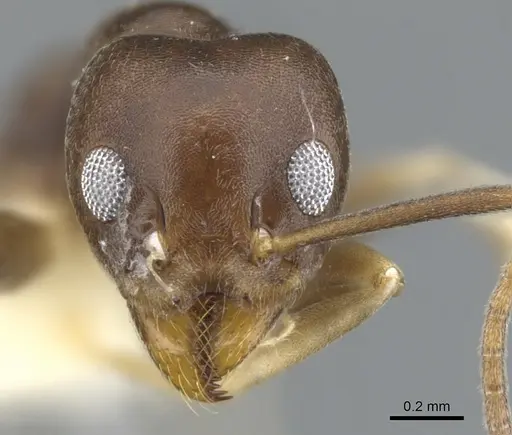
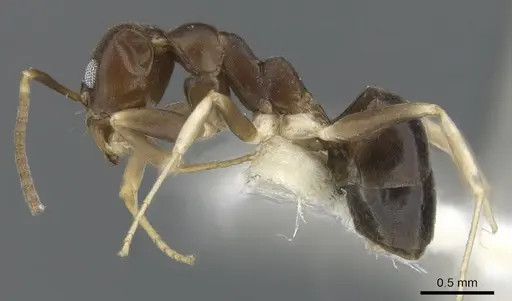
Technomyrmex rector is a small dolichoderine ant species native to India, described by Bolton in 2007. Workers measure approximately 3.5mm in total length and belong to the Technomyrmex bicolor group, characterized by their nearly hairless bodies and distinctive coloration pattern, the head, mesosoma, petiole and gaster are uniformly brown, while the middle and hind coxae are yellow and strongly contrasting [1]. The anterior clypeal margin has a broad, shallow median notch, and the eyes are positioned such that their outer margins do not touch the sides of the head in full-face view [1]. This species is endemic to India, with documented records from Arunachal Pradesh, Assam, Sikkim, Tamil Nadu, Uttarakhand, and West Bengal [2].
As a member of the Dolichoderinae subfamily, T. rector lacks a functional stinger and instead uses chemical defense through formic acid spraying, similar to other ants in this group. The biology of this specific species remains unstudied, but related Technomyrmex species are known as generalist foragers that readily exploit sugar sources and honeydew from aphids. This species was collected from Coimbatore in southern India, suggesting it prefers warm, potentially humid conditions typical of that region.
Quick Summary
- Difficulty: Medium
- Origin & Habitat: Endemic to India, found across multiple states including Arunachal Pradesh, Assam, Sikkim, Tamil Nadu, Uttarakhand, and West Bengal [2]. The type specimen was collected from Coimbatore in Tamil Nadu [1]. Based on collection location and related species, likely inhabits tropical to subtropical environments, potentially in forest edges or human-modified areas.
- Colony Type: Colony structure is unconfirmed for this specific species. Many Technomyrmex species are polygyne (multiple queens per colony), but this has not been documented for T. rector.
- Size & Growth:
- Queen: Undescribed, queen morphology has not been documented in the original species description [1].
- Worker: 3.5mm total length (holotype worker) [1].
- Colony: Unknown, no colony size data exists for this species.
- Growth: Unknown, development timeline has not been studied. Based on related Technomyrmex species, growth is likely moderate.
- Development: Unconfirmed, no direct development data exists. Related Technomyrmex species typically develop from egg to worker in 6-8 weeks at tropical temperatures. Estimates based on genus-level patterns suggest 6-10 weeks at optimal temperature. (Development timeline is unconfirmed for this species. The estimate is based on typical Dolichoderinae development patterns.)
- Antkeeping:
- Temperature: Based on the species' Indian origin (tropical to subtropical regions), aim for warm conditions around 24-28°C. The Coimbatore location (southern India) experiences temperatures frequently in the 25-32°C range. Provide a temperature gradient allowing workers to self-regulate.
- Humidity: Likely prefers moderate to high humidity, similar to other Indian Technomyrmex species. Aim for 60-80% relative humidity with a moisture gradient in the nest. Provide a water tube for drinking access.
- Diapause: Unlikely, being a tropical Indian species, T. rector probably does not require a true diapause. However, slight temperature reduction during winter months (reducing to around 20-22°C) may be beneficial to simulate seasonal slowdown.
- Nesting: No specific nesting data exists. Based on related species, they likely nest in soil, under stones, or in rotting wood. In captivity, standard formicarium setups with soil or plaster nests work well. Ensure the nest maintains adequate moisture.
- Behavior: Technomyrmex ants are known for being generalist foragers that readily accept sugar sources and protein. They are typically not aggressive but will defend their colony vigorously if threatened. As Dolichoderines, they lack stingers but can spray formic acid as defense. Workers are medium-sized at 3.5mm, so escape prevention should be good but not as critical as for tiny species. Based on related species, they are active foragers that will exploit a variety of food sources.
- Common Issues: Limited biological data makes precise care recommendations challenging, much of what we know is inferred from related species, Temperature management is critical since this is a tropical species that may struggle in cool conditions, Humidity levels must be monitored, too dry can cause brood death, too wet can cause mold issues, As a lesser-studied species, wild-caught colonies may have unknown parasites or health issues, Colony growth may be slow initially since founding dynamics are unconfirmed
Housing and Nest Setup
Since specific nesting data does not exist for T. rector, use standard ant-keeping setups that work well for related dolichoderine species. A Y-tong (AAC) nest, plaster nest, or naturalistic setup with soil substrate all work well. The nest should maintain consistent moisture, aim for substrate that feels damp but not waterlogged. Provide a water tube or cotton ball with fresh water as a drinking source. Since workers are 3.5mm, standard escape prevention measures are adequate, though fine mesh is still recommended to prevent escapes through small gaps. Place the nest in a quiet area away from direct sunlight and vibrations.
Feeding and Diet
Based on typical Technomyrmex behavior, this species is likely a generalist feeder. Offer sugar water, honey, or diluted maple syrup as a constant carbohydrate source. For protein, provide small insects like fruit flies, small crickets, or mealworm pieces. Related species readily accept honeydew, so if you keep aphids, the ants will likely tend them. Feed protein 2-3 times per week, and keep sugar water available at all times. Remove uneaten food after 24-48 hours to prevent mold. Start with small amounts and adjust based on colony consumption.
Temperature and Seasonal Care
As a tropical Indian species, T. rector requires warm conditions. Maintain temperatures between 24-28°C for optimal activity and brood development. A heating cable on one side of the nest can create a temperature gradient, allowing workers to regulate their own temperature. During winter, a slight reduction to around 20-22°C is acceptable, but avoid temperatures below 18°C. Unlike temperate species, this ant likely does not require a true hibernation period. Monitor colony activity, if workers become sluggish, slightly increase temperature. Avoid sudden temperature fluctuations.
Behavior and Colony Dynamics
Technomyrmex rector is a dolichoderine ant, meaning it lacks a functional stinger. Instead, like other ants in this subfamily, it defends itself by spraying formic acid. Workers are active foragers that will explore their outworld searching for food. The species is likely polygyne (multiple queens) based on patterns seen in related Technomyrmex species, but this is unconfirmed for T. rector specifically. Colonies probably grow gradually, with the first workers (nanitics) being smaller than mature workers. Handle gently, while not aggressive, they may spray formic acid if threatened. Their small size (3.5mm) means they can squeeze through small gaps, so check enclosure seals regularly.
Growth and Development
No specific development data exists for T. rector. The egg-to-worker timeline is estimated at 6-10 weeks based on typical Dolichoderinae development at warm temperatures (around 25-27°C). Brood development will be faster at higher temperatures within the acceptable range and slower at cooler temperatures. The first workers (nanitics) will likely be smaller than the 3.5mm measured in the holotype worker. Colony growth is expected to be gradual initially, then accelerate once the first several workers have emerged. Be patient, this species is not a fast grower compared to some tropical ants.
Frequently Asked Questions
How long does it take for Technomyrmex rector to have first workers?
The exact timeline is unconfirmed, but based on related Technomyrmex species and typical Dolichoderinae development, expect first workers (nanitics) in approximately 6-10 weeks at optimal temperatures of 25-27°C. Growth rate depends heavily on temperature and feeding.
What do Technomyrmex rector ants eat?
Like other Technomyrmex species, they are generalist feeders. Offer sugar water, honey, or maple syrup as a constant carbohydrate source. For protein, provide small insects like fruit flies, crickets, or mealworms. They will likely accept honeydew if you keep aphids.
Can I keep Technomyrmex rector in a test tube?
Yes, a test tube setup works well for founding colonies. Use a test tube with a water reservoir sealed with cotton, providing humidity. Once the colony reaches 20-30 workers, consider moving to a proper formicarium with more space.
What temperature do Technomyrmex rector ants need?
Keep them warm at 24-28°C. Being from tropical India, they require consistent warmth. A heating cable on one side of the nest can create a beneficial temperature gradient.
Are Technomyrmex rector ants good for beginners?
This species is rated as Medium difficulty. While not the easiest species, it is manageable for intermediate ant keepers. The main challenge is the limited species-specific biological data available, so some care aspects require inference from related species.
Do Technomyrmex rector ants need hibernation?
No. As a tropical Indian species, they do not require true hibernation. During winter, you can slightly reduce temperatures to around 20-22°C, but a full diapause is not necessary or recommended.
How big do Technomyrmex rector colonies get?
Colony size is unconfirmed for this specific species. Based on related Technomyrmex species, colonies likely reach several hundred to over a thousand workers. Growth is expected to be gradual.
Why are my Technomyrmex rector dying?
Common causes include: temperatures below 20°C (tropical species are cold-sensitive), too dry conditions, mold from overwatering, or poor nutrition. Review temperature, humidity, and food offerings. Wild-caught colonies may also have parasites.
When should I move Technomyrmex rector to a formicarium?
Move from a test tube setup to a formicarium once the colony reaches approximately 20-30 workers and the test tube humidity can no longer be maintained adequately. Ensure the formicarium has appropriate moisture and escape prevention.
Can I keep multiple Technomyrmex rector queens together?
Colony structure is unconfirmed for this species. Many Technomyrmex species are polygyne (multiple queens), but this has not been documented for T. rector. It is not recommended to combine unrelated foundresses without documented evidence that they can coexist.
Is Technomyrmex rector invasive?
No. This species is endemic to India and has not been documented as invasive elsewhere. However, never release non-native ants into the wild as they can cause ecological damage.
References

This caresheet is licensed under CC BY-SA 4.0 .
CASENT0903045
View on AntWeb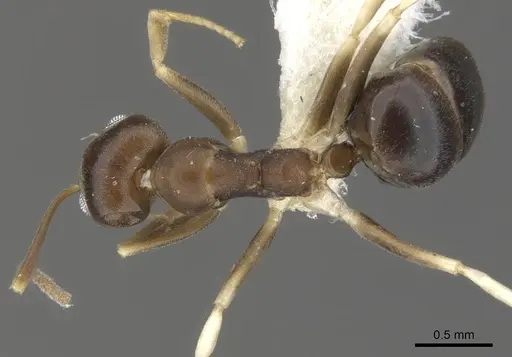
Literature
Loading...Loading products...