

Technomyrmex fulvus
- Scientific Name
- Technomyrmex fulvus
- Tribe
- Tapinomini
- Subfamily
- Dolichoderinae
- Author
- Wheeler, 1934
- Distribution
- Found in 3 countries
Technomyrmex fulvus Overview
Technomyrmex fulvus is an ant species of the genus Technomyrmex. It is primarily documented in 3 countries , including Colombia, Costa Rica, Panama. Detailed taxonomic data and occurrence records can be further explored via authoritative databases such as AntWeb or the Global Biodiversity Information Facility (GBIF).
Technomyrmex fulvus
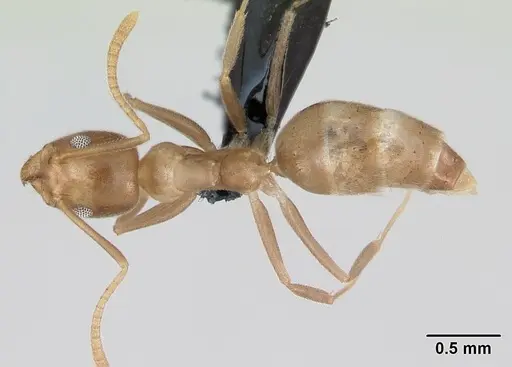
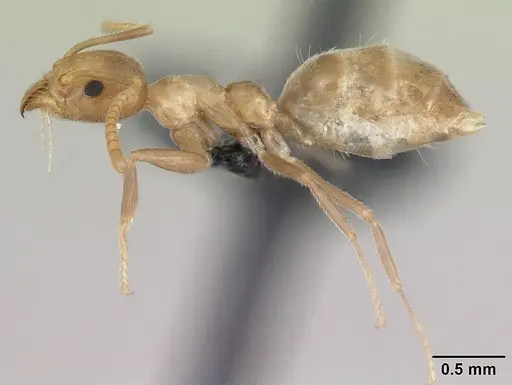
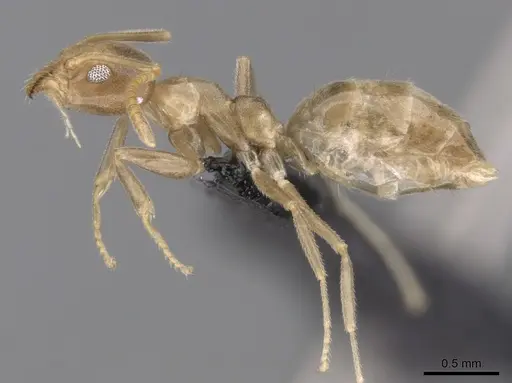
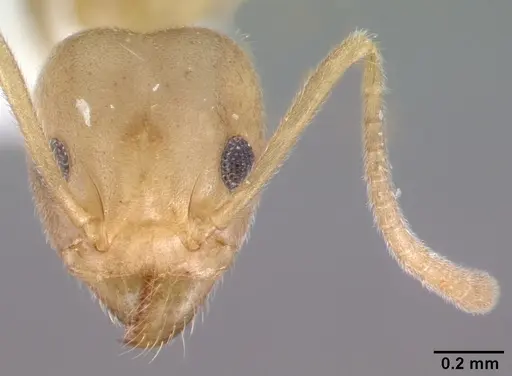
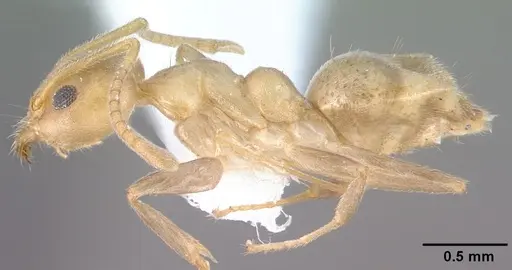
Technomyrmex fulvus is a small, striking ant native to the Neotropical region, found in Panama, Costa Rica, and Colombia. Workers measure 3-3.3mm and feature a distinctive uniform yellow to light brownish-yellow coloration that immediately sets them apart from other native and tramp ant species in the region [1]. Their body is opaque with fine, dense punctuation, and they have relatively long antennae and legs. This species is remarkably rare in the wild and was initially considered a biogeographic anomaly when first described by Wheeler in 1934. They build conspicuous carton nests, papery, flattened structures, in the low arboreal zone, typically under flat carton sheds on tree trunks or on low vegetation [2].
What makes T. fulvus particularly interesting is its association with coccids (scale insects) and its arboreal lifestyle. These ants tend small colonies in the canopy and are known to farm coccids for honeydew, similar to many other Dolichoderine ants. Their rarity in collections is not due to being cryptic, their nests are quite visible, but rather because they occur at very low densities and in specific microhabitats. They represent one of the few native Technomyrmex species in the New World, as most other members of this genus are Old World tramps [1][3].
Quick Summary
- Difficulty: Expert
- Origin & Habitat: Native to the Neotropical region, Panama, Costa Rica, and Colombia (Chocó). Found in lowland tropical forests, typically in the low arboreal zone (0.5-2m above ground) on low vegetation and tree trunks. Builds carton nests under flat sheds on living trees, often in association with coccids [2][3].
- Colony Type: Colony structure is unconfirmed. Based on typical Technomyrmex patterns, likely single-queen colonies, but this has not been directly studied for this species.
- Size & Growth:
- Queen: Undescribed, queen caste has not been documented in scientific literature
- Worker: 3.0-3.3mm [2], TL 3.2-3.8mm [1]
- Colony: Unknown, likely small colonies based on their rarity and arboreal lifestyle
- Growth: Unknown, no development data available for this species
- Development: Unconfirmed, no development studies exist for this species (Based on related Dolichoderines, estimate 6-10 weeks at tropical temperatures, but this is speculative)
- Antkeeping:
- Temperature: Keep at 24-28°C, these are lowland tropical ants requiring warm, stable conditions. Room temperature within this range is acceptable, avoid temperatures below 22°C
- Humidity: Moderate to high humidity (60-80%). As arboreal nesters, they prefer some moisture but avoid waterlogging. Provide a water tube and maintain damp (not wet) test tube setup
- Diapause: No, as a tropical species, they do not require hibernation. Keep at stable tropical temperatures year-round
- Nesting: Test tube setup works for founding colonies. For established colonies, provide arboreal-style setups, horizontal or elevated nests with multiple chambers. They naturally nest in carton material, so they may accept Y-tong or similar setups with smooth surfaces
- Behavior: This species is poorly documented in captivity. Based on related Technomyrmex species, they are likely relatively docile and not aggressive. They are arboreal foragers that tend coccids for honeydew and likely hunt small insects. Workers are active in the canopy and may not venture far from their carton nests. Escape risk is moderate due to their small size, use standard barrier methods
- Common Issues: very rare in the wild, finding colonies is extremely difficult, no captive breeding data exists, this species is essentially never kept in captivity, tropical temperature requirements mean any cooling can stress colonies, arboreal lifestyle may make standard test tube setups less ideal than for ground-nesting species, potential parasite associations, Microdon fly larvae can live in their nests [3]
Natural History and Distribution
Technomyrmex fulvus is one of the rarest ant species in the Neotropics, with a distribution spanning Panama, Costa Rica, and Colombia's Chocó region [4][3]. Originally described by Wheeler in 1934 from Panama's Barro Colorado Island, it was initially considered a biogeographic anomaly because Technomyrmex species are predominantly Old World, and its discovery raised questions about how this species arrived in the Americas. Later fossil discoveries in Dominican amber and the description of additional species confirmed that Technomyrmex is indeed native to the New World [1].
This species occupies a unique niche in the ant community, it is a conspicuous canopy component in Panama forest records, meaning it lives high in the trees rather than on the forest floor [3]. Workers have been collected from low vegetation 0.5-2m above ground and from carton nests under flat sheds on tree trunks. The most unusual nesting record comes from a carton nest found under a live leaf of Cardulovica (a tropical plant), wrapped around the base of the leaf blade and sheathing the petiole [2]. This arboreal lifestyle is quite different from most commonly kept ant species.
The association with coccids (scale insects) is significant, the original type series was collected 'in company with coccids' from under a flat carton shed on a tree trunk [2]. These ants, like many Dolichoderines, likely farm coccids for their honeydew secretions, a common mutualism in the ant world. This dietary specialization may explain why they are rarely encountered, they are tied to specific host plants and insects [1].
Identification and Distinguishing Features
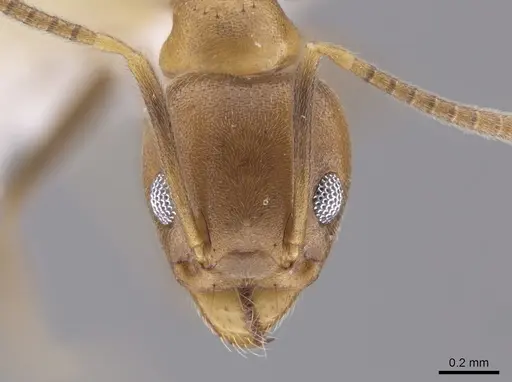
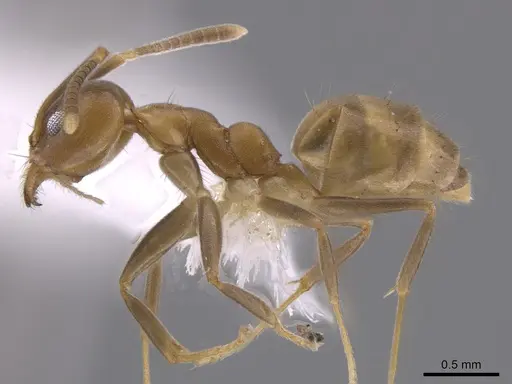
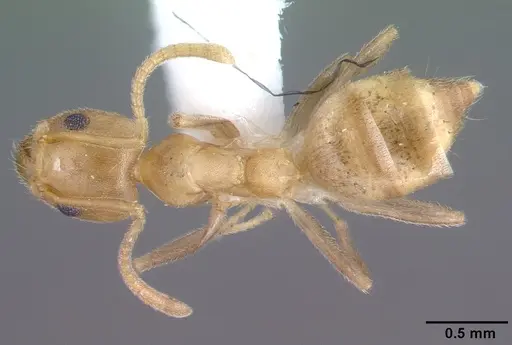
Technomyrmex fulvus can be identified by its distinctive uniform yellow to light brownish-yellow coloration, which alone sets it apart from any other ant species likely to be encountered in the Nearctic and Neotropical regions [1]. Workers measure 3.0-3.3mm, making them a small but not tiny species.
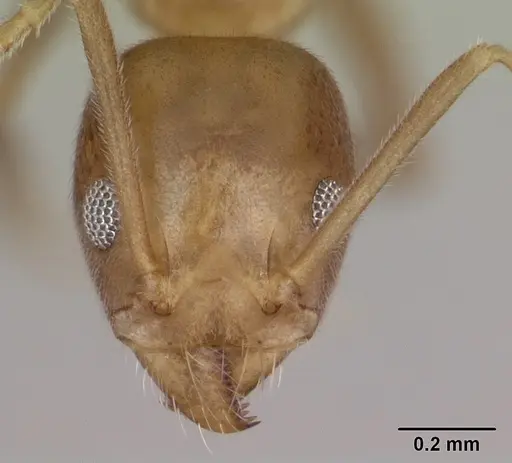
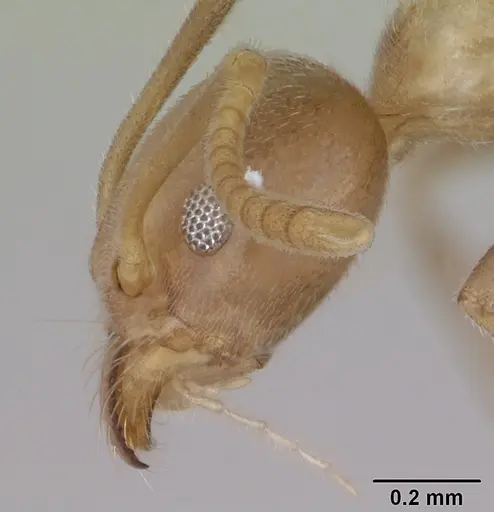
Key morphological features include: the head is nearly as broad as long, broader behind than in front, with a distinctly and broadly concave posterior border. The eyes are moderately large and convex. The antennae are long and rather slender, with the scapes reaching nearly one-fourth their length beyond the posterior border of the head. The thorax is stout but much narrower than the head, and the petiole is regularly elliptical and flat above [2].
When examining specimens, note that the dorsum of the head entirely lacks setae behind the level of the posterior margin of the eye. The gastral tergites (abdominal segments) each have numerous setae, with the longest being slightly shorter than the maximum diameter of the eye. The body is opaque throughout, very finely and densely punctulate, giving it a distinctive matte appearance rather than the shiny look of many related species [1].
This combination of features, the yellow color, the concave head margin, and the specific setae patterns, separates T. fulvus from both native ants and the introduced 'tramp' species that commonly colonize human-disturbed areas.
Housing and Nesting
Based on this species' natural history, housing presents significant challenges. In the wild, T. fulvus builds carton nests, papery, flattened structures made from a mixture of ant secretions and plant fibers, in the low arboreal zone. They have been found under flat carton sheds on tree trunks and wrapped around leaves [2].
For captivity, a test tube setup can work for founding colonies, but you may need to adapt it to their arboreal preferences. Consider horizontal or slightly elevated setups rather than vertical tubes. Some keepers of related arboreal Dolichoderines have success with Y-tong (AAC) nests or smooth-walled acrylic setups. The key is providing a clean, smooth interior that mimics the interior of their carton nests.
Because this species is so rarely kept, there is no established captive husbandry protocol. Start with a standard test tube founding setup, but be prepared to experiment. The humidity should be moderate, damp but not waterlogged, reflecting their canopy habitat where they experience humidity but also good air circulation. A small water reservoir in the test tube setup maintains appropriate moisture levels.
Escape prevention is important, though not as critical as for tiny species. Standard barriers work well, but ensure any connections between outworld and nest are secure.
Feeding and Diet
In the wild, Technomyrmex fulvus associates with coccids (scale insects) and likely farms them for honeydew, a sugary secretion that coccids produce when feeding on plant sap [2]. This makes them similar to many other Dolichoderine ants that have mutualistic relationships with sap-feeding insects.
For captive feeding, you should provide: 1) Sugar sources, a drop of sugar water, honey, or diluted honeydew substitute should be available at all times. This mimics the honeydew they would normally collect from their coccid partners. 2) Protein, small live or dead insects, such as fruit flies, small crickets, or mealworm pieces. Offer these 2-3 times per week.
Because this species has never been documented in captivity, acceptance of various foods is uncertain. Start with sugar water and small insects, and observe what the colony accepts. The key insight is that they are likely dependent on honeydew or similar sugar sources in the wild, so sugar should not be neglected in their diet.
Feed small amounts initially and remove uneaten food after 24-48 hours to prevent mold in the nest area. As arboreal foragers, they may prefer feeding in elevated positions, consider placing food on a small platform rather than directly on the substrate.
Temperature and Seasonal Care
As a lowland tropical species from Panama and Costa Rica, Technomyrmex fulvus requires warm, stable temperatures year-round. Keep the nest area at 24-28°C (75-82°F), this matches their natural habitat in lowland Neotropical forests where temperatures remain consistently warm.
Unlike temperate species, this ant does not require hibernation or diapause. Attempting to cool them for winter would likely stress or kill the colony. Maintain tropical temperatures throughout the year. If your room temperature falls below 22°C, use a small heating cable or mat on one side of the nest to create a warm zone. Place heating on top of the nest, not underneath, to avoid evaporating the water reservoir too quickly.
Temperature stability matters more than exact numbers. Avoid placing the nest near air conditioning vents, windows with direct sunlight that causes temperature swings, or drafty areas. Sudden temperature drops are more harmful than consistently warm conditions.
Humidity should be moderate to high (60-80%), reflecting their arboreal forest habitat. The test tube water reservoir provides humidity, but you may need to mist occasionally if the nest appears dry. However, avoid excessive moisture, their natural carton nests likely had some air circulation that prevented waterlogging.
Rarity and Conservation Status
Technomyrmex fulvus is one of the rarest ant species in the Neotropics, with very few records in scientific collections despite extensive sampling in well-studied areas like Panama's Barro Colorado Island and Costa Rica [2]. This rarity has puzzled researchers, it cannot be attributed to being cryptic because their carton nests are quite visible in the low vegetation.
The leading hypotheses are that either T. fulvus exists as small, isolated populations in specific habitats, or it is more widely distributed but at extremely low densities that make detection difficult [2]. Either way, finding wild colonies for study or collection is exceptionally difficult.
This rarity has practical implications for antkeepers: this species is essentially never available in the antkeeping hobby, and finding a wild colony would require significant effort in its native range. There are no documented captive breeding programs or established husbandry protocols. For these reasons, T. fulvus is not recommended for beginners or even most experienced antkeepers, not because it is difficult to keep, but because it is essentially unavailable and we know almost nothing about captive care.
If you encounter this species in the wild, observe and document rather than collect, they are too rare to remove from their already limited populations.
Frequently Asked Questions
Can I keep Technomyrmex fulvus as a pet ant?
This species is essentially never available in the antkeeping hobby. It is remarkably rare in the wild, with only a handful of records from Panama, Costa Rica, and Colombia despite extensive scientific collecting. There are no established captive breeding protocols, and no one has documented keeping this species successfully in captivity. Unless you find a wild colony in its native range, you will not be able to keep this ant [2][3].
How big do Technomyrmex fulvus colonies get?
The maximum colony size is unknown. Based on their rarity and arboreal lifestyle, colonies are likely small, possibly under 100 workers. This is typical for canopy-dwelling ants that live in discrete carton nests rather than large underground colonies
What do Technomyrmex fulvus eat?
Based on their association with coccids in the wild, they likely farm these scale insects for honeydew (a sugary secretion). In captivity, offer sugar water or honey as a constant energy source, plus small insects like fruit flies or cricket pieces for protein. Sugar sources are likely essential given their honeydew-feeding habits [2]
What temperature do Technomyrmex fulvus need?
As a lowland tropical species from Panama and Costa Rica, keep them at 24-28°C (75-82°F). They do not tolerate cool temperatures and have no diapause requirement. Room temperature within this range is acceptable, use heating only if your space falls below 22°C
Are Technomyrmex fulvus good for beginners?
No. This species is not recommended for any level of antkeeper because it is essentially unavailable in the hobby. Even if you could obtain a colony, there is no captive care information or established protocols. Additionally, wild populations are too rare to sustainably collect from [2]
How do I identify Technomyrmex fulvus?
Look for workers 3-3.3mm with a distinctive uniform yellow to light brownish-yellow color throughout the body. The head has a concave posterior margin when viewed from above. The eyes are relatively large. The body is opaque (not shiny) with fine punctuation. No other Neotropical ant has this uniform yellow coloration combined with these features [1]
References

This caresheet is licensed under CC BY-SA 4.0 .
Literature
Loading...Loading products...