

Technomyrmex antennus
- Scientific Name
- Technomyrmex antennus
- Tribe
- Tapinomini
- Subfamily
- Dolichoderinae
- Author
- Zhou, 2001
- Distribution
- Found in 4 countries
Technomyrmex antennus Overview
Technomyrmex antennus is an ant species of the genus Technomyrmex. It is primarily documented in 4 countries , including Australia, China, Hong Kong. Detailed taxonomic data and occurrence records can be further explored via authoritative databases such as AntWeb or the Global Biodiversity Information Facility (GBIF).
Technomyrmex antennus
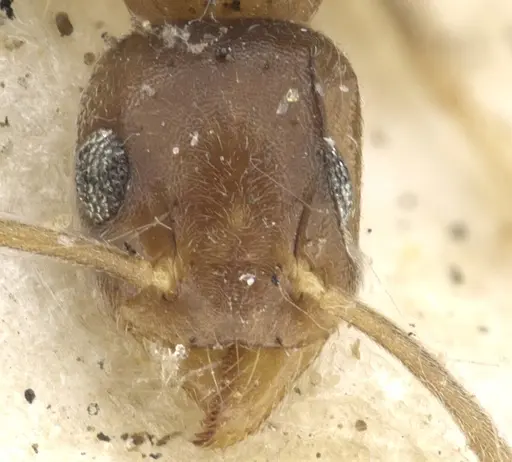
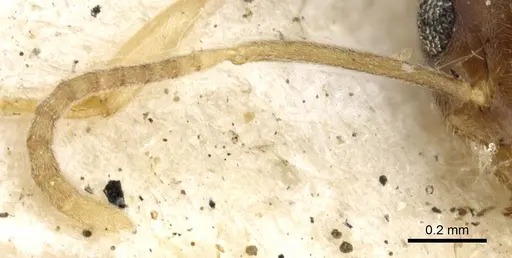
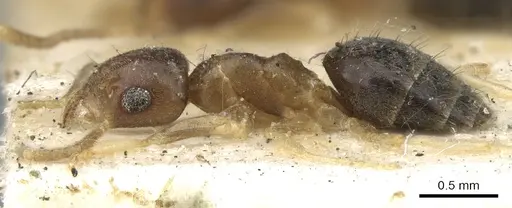
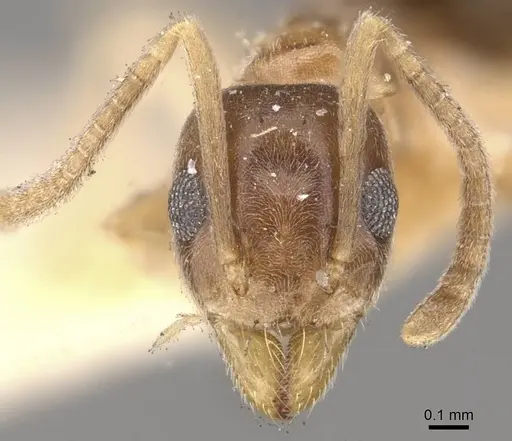
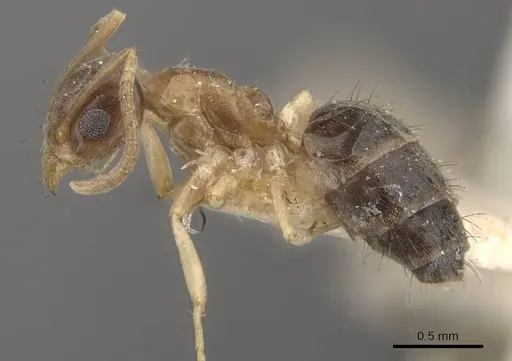
Technomyrmex antennus is a small, slender ant native to southern China. Workers measure 3.0-4.2mm and have a distinctive appearance with a heart-shaped head that narrows toward the mandibles, long antennae that extend well beyond the back of the head, and a convex gaster that hangs over the petiole. The body is uniformly brown with yellowish legs and antennae, and the surface has a finely reticulated (net-like) texture that gives it a slightly matte appearance. This species belongs to the Dolichoderinae subfamily, meaning they defend themselves by spraying formic acid rather than stinging.
This ant inhabits forested areas across southern China, including Guangxi Province and Hainan Island. It has been collected from various elevations ranging from 574-780m in conifer-broadleaf forests and Masson pine forests [1]. Unlike some Technomyrmex species that thrive in disturbed areas, T. antennus appears to prefer primary forest habitats and rubber plantations but is absent from secondary forest [2]. The species forages primarily on the ground surface and occasionally within soil, nesting in leaf litter and ground-level microhabitats.
Quick Summary
- Difficulty: Medium
- Origin & Habitat: Southern China including Guangxi Province and Hainan Island. Found in primary forest and rubber plantations at elevations of 574-780m, in conifer-broadleaf forest and Masson pine forest habitats [1][2].
- Colony Type: Colony structure is unconfirmed. Based on typical Technomyrmex patterns, likely single-queen colonies, though this requires verification.
- Size & Growth:
- Queen: Undescribed in available literature, estimated 5-7mm based on genus patterns
- Worker: 3.0-4.2mm
- Colony: Unknown, likely several hundred workers based on related species
- Growth: Moderate
- Development: Estimated 6-8 weeks at optimal temperature based on typical Dolichoderinae development (Direct development data unavailable for this species, estimates based on genus-level patterns)
- Antkeeping:
- Temperature: Keep at 22-26°C. This range reflects their subtropical forest origin in southern China. Provide a gentle temperature gradient so ants can self-regulate.
- Humidity: Moderate humidity of 60-80%. These forest-floor ants prefer consistently moist substrate but not waterlogged conditions. Mist occasionally and allow drying between waterings.
- Diapause: Likely required. Given their range in southern China where winters are mild but distinct, a 2-3 month diapause at 15-18°C is recommended.
- Nesting: Y-tong (AAC) nests or plaster nests work well. They naturally nest in leaf litter and soil, so provide a nest with moist substrate. Acrylic nests are also suitable if humidity is maintained.
- Behavior: Generally peaceful and non-aggressive. Like most Technomyrmex, they are active foragers that search for honeydew and small prey. Workers are medium-sized at 3-4mm, so escape prevention should be good but not as critical as for tiny species. They are primarily ground-dwelling and may not climb smooth surfaces aggressively. Colonies are moderately active and establish relatively quickly once founded.
- Common Issues: limited availability, this species is rarely available in the antkeeping hobby, colony structure unconfirmed, careful observation needed to determine if single or multi-queen, diapause requirements unclear, start with a mild winter rest and adjust based on colony behavior, primary forest habitat preference means they may be sensitive to disturbance and dry conditions, limited dietary data, acceptance of sugar and protein foods may vary
Housing and Nest Setup
Technomyrmex antennus does well in Y-tong (AAC) nests or plaster formicariums that maintain stable humidity. These ants naturally nest in leaf litter and upper soil layers in forest habitats, so they appreciate a nest chamber with some moisture-retaining substrate or a water reservoir. Acrylic nests can work if you maintain humidity through occasional misting or a water tube. Since they forager primarily on the ground surface, a standard outworld setup with a foraging area is appropriate. Use a test tube setup for founding colonies, a small test tube with a cotton water reservoir works well for claustral founding. Once the colony reaches 15-20 workers, you can consider moving them to a larger nest. Escape prevention should be moderate, these ants are 3-4mm and can squeeze through small gaps, so standard barrier methods like fluon on test tube rims are sufficient [1].
Feeding and Diet
Technomyrmex ants are typically generalists that feed on honeydew from aphids and scale insects, plus small insects and nectar. For captive colonies, offer sugar water (1:3 ratio) or honey water as a constant carbohydrate source. For protein, provide small insects like fruit flies, small mealworms, or cricket pieces. Based on their foraging behavior in leaf litter and on ground surfaces, they likely scavenge and hunt small arthropods. Feed protein 2-3 times per week, and keep sugar water available at all times. Remove uneaten prey after 24-48 hours to prevent mold. Start with small offerings and observe what the colony accepts, some Technomyrmex species show strong preferences while others are more flexible. [1]
Temperature and Seasonal Care
Maintain temperatures between 22-26°C for optimal colony activity and brood development. This reflects their subtropical origin in southern China. A slight temperature gradient allows workers to regulate their own conditions. During summer months, room temperature is often suitable, but you may need a heating cable in cooler environments. For winter, provide a 2-3 month diapause period at 15-18°C. This species has been found at elevations of 574-780m in mountainous areas of Sichuan Province, indicating they experience cooler seasonal conditions [1]. The diapause helps synchronize colony cycles and promotes healthy long-term colony development. Reduce feeding during diapause and keep the nest slightly cooler but not cold.
Behavior and Colony Dynamics
Workers of T. antennus are active foragers that search the ground surface and upper soil layers for food [1]. They are not particularly aggressive and lack a functional stinger, instead relying on formic acid spray for defense like other Dolichoderinae ants. Colonies appear to grow at a moderate pace, with workers living several months to a year. The species shows preference for primary forest and rubber plantation habitats, suggesting they may be sensitive to environmental disturbances and prefer more stable conditions than some hardy species [2]. This means providing a quiet location away from vibrations and direct sunlight is beneficial. Workers are medium-sized and should not pose significant escape challenges once proper barriers are in place.
Frequently Asked Questions
How long does it take for Technomyrmex antennus to produce first workers?
The exact timeline is unconfirmed for this species, but based on typical Dolichoderinae development, expect 6-8 weeks from egg to worker at optimal temperatures (22-26°C). Claustral founding means the queen seals herself in and raises the first brood alone without foraging, so be patient and avoid disturbing the founding chamber during this time.
Can I keep multiple Technomyrmex antennus queens together?
This is not recommended and has not been documented. While colony structure is unconfirmed for this species, combining unrelated queens carries significant risk of aggression. If your colony develops multiple queens naturally, monitor closely for fighting. Most Technomyrmex species establish single-queen colonies.
What temperature range is best for Technomyrmex antennus?
Keep colonies at 22-26°C. This subtropical species from southern China thrives at moderate temperatures. Provide a slight gradient if possible so workers can self-regulate. During winter, a 2-3 month diapause at 15-18°C is recommended based on their elevational range in mountainous regions [1].
Are Technomyrmex antennus good for beginners?
This species is rated as medium difficulty and may not be ideal for complete beginners due to limited availability and some uncertain care requirements. However, if you have experience with other forest-dwelling ants, their care is straightforward. The main challenges are finding them for sale and confirming their exact colony structure.
Do Technomyrmex antennus need hibernation?
Yes, a mild diapause is recommended. Based on their range in southern China at elevations of 574-780m, they experience seasonal temperature changes. Provide a 2-3 month rest period at 15-18°C during winter months. Reduce feeding but do not let them freeze, room-temperature diapause is often sufficient.
What do Technomyrmex antennus eat?
They are generalist feeders. Offer sugar water or honey water as a constant carbohydrate source. For protein, provide small insects like fruit flies, small mealworms, or cricket pieces. Based on their ground-foraging behavior, they likely scavenge and hunt small arthropods in nature [1].
How big do Technomyrmex antennus colonies get?
Colony size is unconfirmed for this specific species, but based on related Technomyrmex species, colonies likely reach several hundred workers. They are not among the largest ant species, but established colonies can be quite active and impressive.
When should I move Technomyrmex antennus to a formicarium?
Keep founding colonies in a simple test tube setup until you have 15-20 workers. At this point, you can transition to a Y-tong or plaster nest. These ants prefer humid nest conditions similar to their leaf-litter habitat, so choose a nest type that holds moisture well.
Why is my Technomyrmex antennus colony declining?
Possible causes include: too dry conditions (they prefer forest-floor humidity), temperature stress (outside 22-26°C range), insufficient protein leading to starvation, or disturbance during claustral founding. Also check for escape, while not tiny, they can squeeze through small gaps. Review each parameter and adjust accordingly.
References

This caresheet is licensed under CC BY-SA 4.0 .
CASENT0903051
View on AntWeb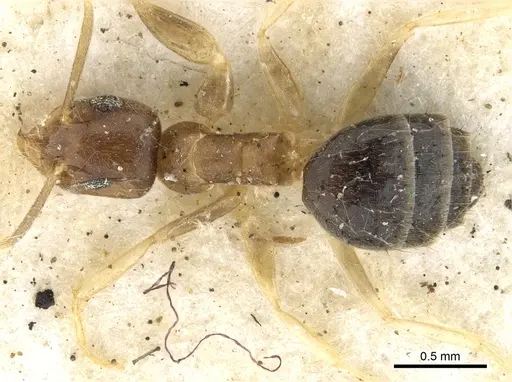
CASENT0909794
View on AntWeb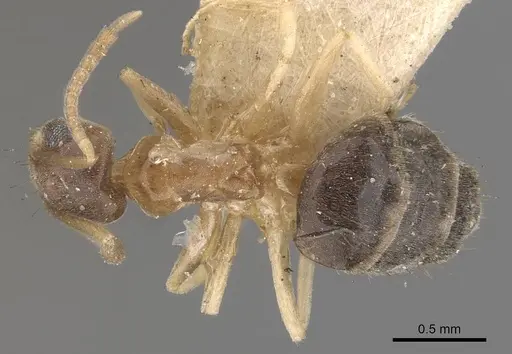
Literature
Loading...Loading products...